
Role of NFC Tags: Transforming Digital Wellness
Mak Kordić
,
February 23, 2026


Long workdays often leave health-conscious professionals feeling drained as endless notifications and digital distractions chip away at mental clarity. Balancing focus with well-being becomes a real challenge when screens dominate daily routines. By adopting innovative NFC tag solutions, you can introduce simple, physical cues that promote mindful device use and help reclaim productive time. This overview explains how Near Field Communication (NFC) empowers smart screen time management for a healthier, more intentional workflow.
Table of Contents
- NFC Tags: Definition and Core Concepts
- Key Types and How NFC Tags Work
- NFC Tags in Health and Wellness Solutions
- Integrating NFC Tags for Screen Time Control
- Risks, Limitations, and Best Practices
NFC Tags: Definition and Core Concepts
Near Field Communication (NFC) represents a sophisticated wireless technology enabling seamless short-range device interactions. Innovative short-range communication enables data exchange through simple, intuitive physical proximity.
NFC operates through a unique communication method that allows devices to interact within an extremely limited range - typically zero to four centimeters. Unlike broader wireless technologies, NFC prioritizes security and simplicity by requiring devices to be physically close. The technology functions at a specific high frequency of 13.56 MHz, which enables precise and controlled data transmission.
NFC technology supports multiple operational modes that expand its practical applications:
- Reader/Writer Mode: Enables one-way data reading from passive tags
- Card Emulation Mode: Transforms devices into smart cards for payments
- Peer-to-Peer Mode: Facilitates direct data sharing between two active devices
Key Technical Specifications of NFC include:
- Maximum communication distance: 0-4 centimeters
- Frequency: 13.56 MHz
- Data transfer rates: 106-424 kbps
- Compliance with international standards like ISO/IEC 14443
NFC tags are passive electronic components containing a microchip and antenna that respond when an NFC-enabled device approaches. These tags can store various data types, from web URLs to authentication credentials, making them versatile tools for digital interactions.
Pro tip: Position NFC tags strategically in environments where quick, touchless interactions can simplify complex digital processes.
Key Types and How NFC Tags Work
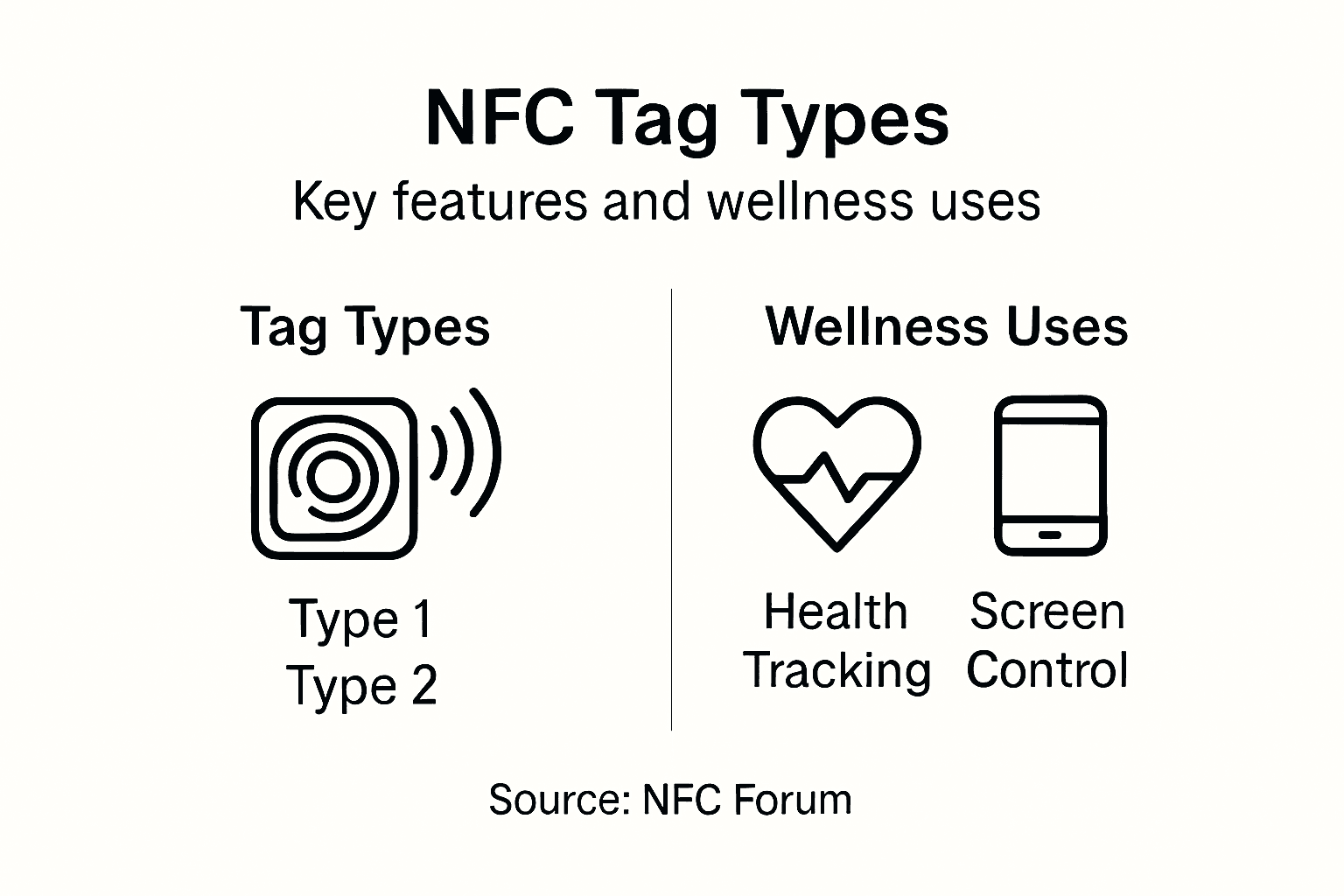
NFC tag types represent a sophisticated classification system that defines the technological capabilities of these compact wireless devices. NFC Forum standardizes five primary tag types, each engineered to meet specific communication and data storage requirements.
These tag types differ significantly in their memory capacity, security features, and operational characteristics. Understanding their unique attributes helps professionals select the most appropriate NFC technology for specific applications.
Key NFC Tag Types and Their Characteristics
NFC tags are categorized into five distinct types:
- Type 1 Tags:
- Low memory capacity
- Smallest storage requirements
- Cost-effective solution for simple tasks
- Type 2 Tags:
- Similar to Type 1
- Slightly more memory
- Commonly used in basic identification scenarios
- Type 3 Tags:
- Higher data transfer speeds
- Popular in Asian transit systems
- Medium memory capacity
- Type 4 Tags:
- High security features
- Large memory storage
- Ideal for payment and access control systems
- Type 5 Tags:
- Extended read range
- Used in logistics and inventory management
- Based on ISO 15693 standard
" Each NFC tag type offers unique capabilities, allowing precise technological matching for specific use cases. "
The operational mechanism of NFC tags involves a passive electronic circuit that becomes activated when an NFC-enabled device approaches within close proximity. When activated, the tag's integrated microchip transmits stored information, enabling quick and secure data exchanges.
Pro tip: Carefully evaluate your specific project requirements before selecting an NFC tag type to ensure optimal performance and cost-effectiveness.
NFC Tags in Health and Wellness Solutions
NFC technology is revolutionizing the health and wellness landscape by providing innovative solutions for patient monitoring, device tracking, and secure data management in healthcare. These compact wireless technologies enable seamless communication between medical devices, wearables, and health tracking systems.
The integration of NFC tags in wellness technologies offers multiple transformative benefits:
- Patient Monitoring:
- Real-time biometric data collection
- Instant health status updates
- Simplified remote tracking
- Medical Device Management:
- Secure device authentication
- Firmware update capabilities
- Supply chain integrity tracking
- Personal Wellness Applications:
- Fitness tracking integration
- Medication adherence monitoring
- Instant health data sharing with professionals
" NFC technology bridges the gap between digital health solutions and tangible, user-friendly experiences. "
Wireless Communication Advantages in health contexts include instantaneous data transfer, minimal physical contact, and enhanced security protocols. NFC enables intuitive interfaces that simplify complex medical interactions, making health monitoring more accessible and user-friendly.
Top 5 Best Smart Rings 2025 [DON'T BUY BEFORE WATCHING!]
The technology supports comprehensive health ecosystems by facilitating seamless communication between wearable sensors, smartphones, and medical databases. This interconnectedness allows for more proactive and personalized health management strategies.
Pro tip: Explore NFC-enabled wellness devices that offer comprehensive health tracking with minimal user intervention.
Integrating NFC Tags for Screen Time Control
NFC technology offers an innovative approach to managing digital habits by providing physical interruption points in our increasingly connected world. Automated tracking systems demonstrate how simple technological interventions can create meaningful behavioral changes.
The integration of NFC tags for screen time control involves strategic placement of physical tags that interact with smartphones, creating deliberate friction in digital consumption. These tags serve as tangible reminders and barriers to mindless scrolling, helping users regain control over their digital interactions.

Key Strategies for NFC Screen Time Management
Effective NFC tag implementation for screen time control includes several powerful approaches:
- Designated Distraction Zones:
- Place NFC tags near potential digital distraction areas
- Require physical interaction to unlock device features
- Create intentional pause before device usage
- Productivity Lockdown:
- Set specific tags to disable social media apps
- Create work-focused environments
- Limit access during critical working hours
- Family Digital Wellness:
- Establish shared screen time management
- Create parent-controlled digital boundaries
- Encourage healthy device interaction patterns
" Physical interruption transforms digital habits more effectively than software-only solutions. "
NFC tags work by requiring users to physically tap or interact with a specific tag, breaking automatic digital behaviors. This small but significant friction point encourages mindful device usage, helping individuals become more intentional about their screen time.
Pro tip: Strategically place NFC tags in locations that naturally interrupt your typical digital consumption patterns.
Risks, Limitations, and Best Practices
Understanding the potential challenges and strategic approaches to NFC technology is crucial for responsible implementation. Comprehensive security protocols help mitigate risks and maximize the potential of these innovative digital wellness tools.
NFC technology, while powerful, presents several nuanced challenges that users and organizations must carefully navigate. The proximity-based communication method creates both unique advantages and potential vulnerabilities that require proactive management and strategic planning.
Key Risks and Mitigation Strategies
Potential risks associated with NFC tag implementation include:
- Privacy Concerns:
- Limited personal data exposure
- Controlled information sharing
- Minimal persistent tracking
- Technical Limitations:
- Short communication range
- Potential interference
- Device compatibility issues
- Security Vulnerabilities:
- Unauthorized tag reading
- Potential data interception
- Need for encryption protocols
" Smart implementation involves understanding both technological capabilities and potential constraints. "
Best practices for NFC tag usage emphasize creating controlled, secure interactions. Users should only tap tags on trusted devices, limit the amount of sensitive information stored on tags, and regularly update their NFC-enabled systems to maintain optimal security.
Practical Security Recommendations include:
1. Use tags for public information only
2. Link tags to easily updatable online profiles
3. Implement tag locking mechanisms
4. Verify device security before interactions
Pro tip: Always maintain a balanced approach by treating NFC tags as convenient tools while remaining vigilant about potential security risks.
Take Control of Your Digital Wellness with NFC Technology
The article highlights a common challenge today: breaking free from autopilot phone habits and reducing excessive screen time that harms focus, sleep, and relationships. NFC tags create physical interruption points that encourage mindful device use and healthier behavior patterns. If you are seeking a proven method to regain control over your digital life, Well O’Clock offers a unique solution that bridges cutting-edge NFC technology with mental wellness goals.
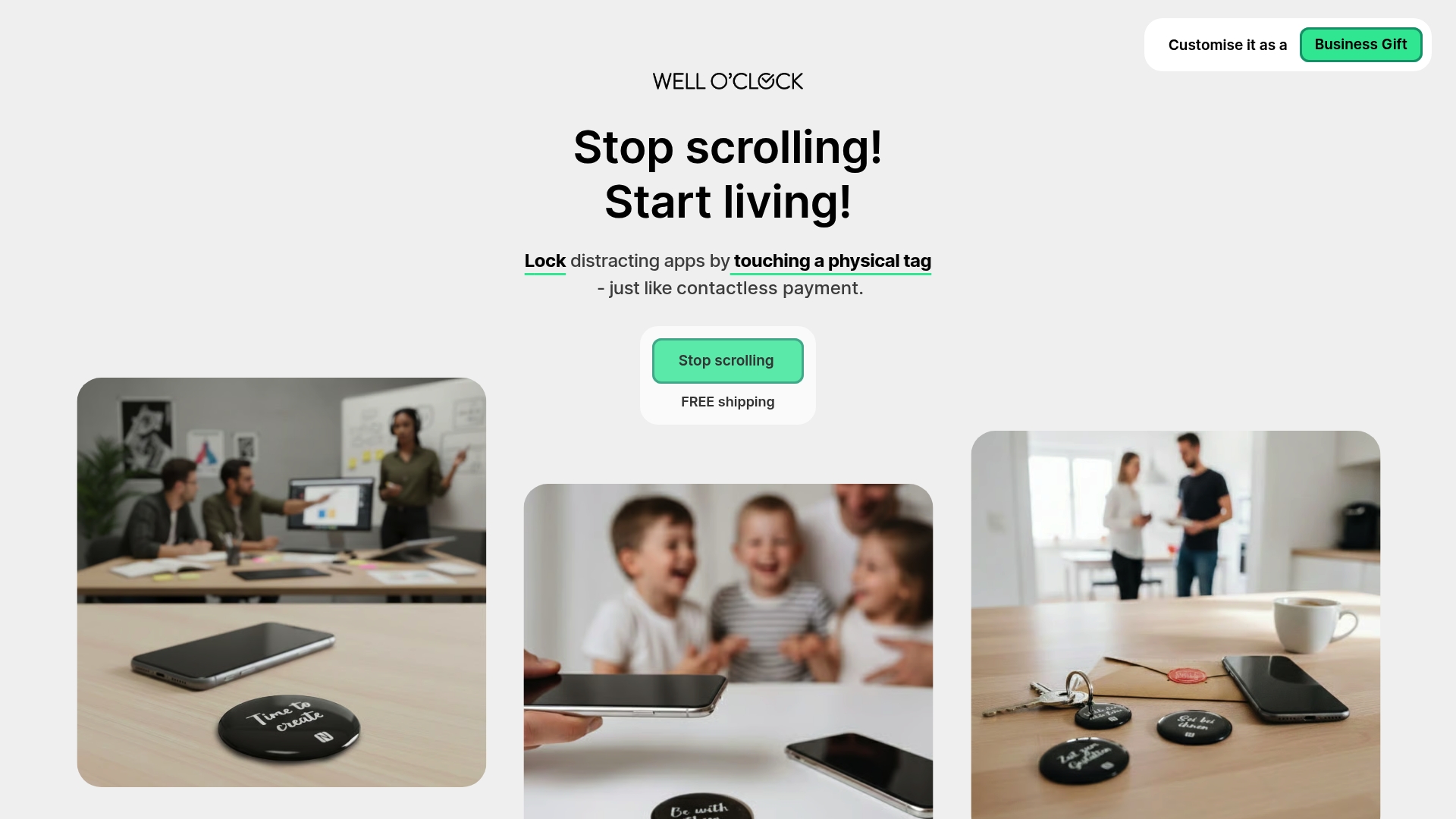
Discover how Well O’Clock’s physical NFC tags work hand-in-hand with a user-friendly app to lock distracting apps at a simple tap. This tangible approach supports improved productivity, reduced anxiety, and better sleep by transforming digital habits into mindful moments. Don’t let screen time control your life any longer. Visit Well O’Clock now and start your journey to a healthier relationship with technology through innovative NFC-driven solutions.
Frequently Asked Questions
How do NFC tags work for digital wellness?
NFC tags work by requiring users to physically tap or interact with the tag, which can help break automatic digital behaviors and encourage more mindful device usage.
What are the benefits of using NFC tags in health and wellness applications?
NFC tags provide real-time updates for patient monitoring, secure device authentication, and easy data sharing for personal wellness applications, making health management more streamlined and effective.
What types of NFC tags are available, and how do they differ in usage?
There are five types of NFC tags, each designed for specific use cases, such as Type 1 for simple tasks, Type 4 for secure payments, and Type 5 for extended read range, catering to various needs within digital wellness.
Can NFC tags enhance family digital wellness?
Yes, NFC tags can be used to create shared screen time management strategies for families, establishing digital boundaries and promoting healthier device interaction patterns.

Mak Kordić
Co founder
Mak Kordić is the founder and CEO of CNJ Digital, an agency based in Ljubljana, where he and his team develop UX/UI and digital products for demanding B2B projects. Over his career, he has led and co-created hundreds of digital solutions and worked with international clients.








Role of NFC Tags: Transforming Digital Wellness
Mak Kordić
,
February 23, 2026
Long workdays often leave health-conscious professionals feeling drained as endless notifications and digital distractions chip away at mental clarity. Balancing focus with well-being becomes a real challenge when screens dominate daily routines. By adopting innovative NFC tag solutions, you can introduce simple, physical cues that promote mindful device use and help reclaim productive time. This overview explains how Near Field Communication (NFC) empowers smart screen time management for a healthier, more intentional workflow.
Table of Contents
- NFC Tags: Definition and Core Concepts
- Key Types and How NFC Tags Work
- NFC Tags in Health and Wellness Solutions
- Integrating NFC Tags for Screen Time Control
- Risks, Limitations, and Best Practices
NFC Tags: Definition and Core Concepts
Near Field Communication (NFC) represents a sophisticated wireless technology enabling seamless short-range device interactions. Innovative short-range communication enables data exchange through simple, intuitive physical proximity.
NFC operates through a unique communication method that allows devices to interact within an extremely limited range - typically zero to four centimeters. Unlike broader wireless technologies, NFC prioritizes security and simplicity by requiring devices to be physically close. The technology functions at a specific high frequency of 13.56 MHz, which enables precise and controlled data transmission.
NFC technology supports multiple operational modes that expand its practical applications:
- Reader/Writer Mode: Enables one-way data reading from passive tags
- Card Emulation Mode: Transforms devices into smart cards for payments
- Peer-to-Peer Mode: Facilitates direct data sharing between two active devices
Key Technical Specifications of NFC include:
- Maximum communication distance: 0-4 centimeters
- Frequency: 13.56 MHz
- Data transfer rates: 106-424 kbps
- Compliance with international standards like ISO/IEC 14443
NFC tags are passive electronic components containing a microchip and antenna that respond when an NFC-enabled device approaches. These tags can store various data types, from web URLs to authentication credentials, making them versatile tools for digital interactions.
Pro tip: Position NFC tags strategically in environments where quick, touchless interactions can simplify complex digital processes.
Key Types and How NFC Tags Work
NFC tag types represent a sophisticated classification system that defines the technological capabilities of these compact wireless devices. NFC Forum standardizes five primary tag types, each engineered to meet specific communication and data storage requirements.
These tag types differ significantly in their memory capacity, security features, and operational characteristics. Understanding their unique attributes helps professionals select the most appropriate NFC technology for specific applications.
Key NFC Tag Types and Their Characteristics
NFC tags are categorized into five distinct types:
- Type 1 Tags:
- Low memory capacity
- Smallest storage requirements
- Cost-effective solution for simple tasks
- Type 2 Tags:
- Similar to Type 1
- Slightly more memory
- Commonly used in basic identification scenarios
- Type 3 Tags:
- Higher data transfer speeds
- Popular in Asian transit systems
- Medium memory capacity
- Type 4 Tags:
- High security features
- Large memory storage
- Ideal for payment and access control systems
- Type 5 Tags:
- Extended read range
- Used in logistics and inventory management
- Based on ISO 15693 standard
" Each NFC tag type offers unique capabilities, allowing precise technological matching for specific use cases. "
The operational mechanism of NFC tags involves a passive electronic circuit that becomes activated when an NFC-enabled device approaches within close proximity. When activated, the tag's integrated microchip transmits stored information, enabling quick and secure data exchanges.
Pro tip: Carefully evaluate your specific project requirements before selecting an NFC tag type to ensure optimal performance and cost-effectiveness.
NFC Tags in Health and Wellness Solutions
NFC technology is revolutionizing the health and wellness landscape by providing innovative solutions for patient monitoring, device tracking, and secure data management in healthcare. These compact wireless technologies enable seamless communication between medical devices, wearables, and health tracking systems.
The integration of NFC tags in wellness technologies offers multiple transformative benefits:
- Patient Monitoring:
- Real-time biometric data collection
- Instant health status updates
- Simplified remote tracking
- Medical Device Management:
- Secure device authentication
- Firmware update capabilities
- Supply chain integrity tracking
- Personal Wellness Applications:
- Fitness tracking integration
- Medication adherence monitoring
- Instant health data sharing with professionals
" NFC technology bridges the gap between digital health solutions and tangible, user-friendly experiences. "
Wireless Communication Advantages in health contexts include instantaneous data transfer, minimal physical contact, and enhanced security protocols. NFC enables intuitive interfaces that simplify complex medical interactions, making health monitoring more accessible and user-friendly.
Top 5 Best Smart Rings 2025 [DON'T BUY BEFORE WATCHING!]
The technology supports comprehensive health ecosystems by facilitating seamless communication between wearable sensors, smartphones, and medical databases. This interconnectedness allows for more proactive and personalized health management strategies.
Pro tip: Explore NFC-enabled wellness devices that offer comprehensive health tracking with minimal user intervention.
Integrating NFC Tags for Screen Time Control
NFC technology offers an innovative approach to managing digital habits by providing physical interruption points in our increasingly connected world. Automated tracking systems demonstrate how simple technological interventions can create meaningful behavioral changes.
The integration of NFC tags for screen time control involves strategic placement of physical tags that interact with smartphones, creating deliberate friction in digital consumption. These tags serve as tangible reminders and barriers to mindless scrolling, helping users regain control over their digital interactions.
Key Strategies for NFC Screen Time Management
Effective NFC tag implementation for screen time control includes several powerful approaches:
- Designated Distraction Zones:
- Place NFC tags near potential digital distraction areas
- Require physical interaction to unlock device features
- Create intentional pause before device usage
- Productivity Lockdown:
- Set specific tags to disable social media apps
- Create work-focused environments
- Limit access during critical working hours
- Family Digital Wellness:
- Establish shared screen time management
- Create parent-controlled digital boundaries
- Encourage healthy device interaction patterns
" Physical interruption transforms digital habits more effectively than software-only solutions. "
NFC tags work by requiring users to physically tap or interact with a specific tag, breaking automatic digital behaviors. This small but significant friction point encourages mindful device usage, helping individuals become more intentional about their screen time.
Pro tip: Strategically place NFC tags in locations that naturally interrupt your typical digital consumption patterns.
Risks, Limitations, and Best Practices
Understanding the potential challenges and strategic approaches to NFC technology is crucial for responsible implementation. Comprehensive security protocols help mitigate risks and maximize the potential of these innovative digital wellness tools.
NFC technology, while powerful, presents several nuanced challenges that users and organizations must carefully navigate. The proximity-based communication method creates both unique advantages and potential vulnerabilities that require proactive management and strategic planning.
Key Risks and Mitigation Strategies
Potential risks associated with NFC tag implementation include:
- Privacy Concerns:
- Limited personal data exposure
- Controlled information sharing
- Minimal persistent tracking
- Technical Limitations:
- Short communication range
- Potential interference
- Device compatibility issues
- Security Vulnerabilities:
- Unauthorized tag reading
- Potential data interception
- Need for encryption protocols
" Smart implementation involves understanding both technological capabilities and potential constraints. "
Best practices for NFC tag usage emphasize creating controlled, secure interactions. Users should only tap tags on trusted devices, limit the amount of sensitive information stored on tags, and regularly update their NFC-enabled systems to maintain optimal security.
Practical Security Recommendations include:
1. Use tags for public information only
2. Link tags to easily updatable online profiles
3. Implement tag locking mechanisms
4. Verify device security before interactions
Pro tip: Always maintain a balanced approach by treating NFC tags as convenient tools while remaining vigilant about potential security risks.
Take Control of Your Digital Wellness with NFC Technology
The article highlights a common challenge today: breaking free from autopilot phone habits and reducing excessive screen time that harms focus, sleep, and relationships. NFC tags create physical interruption points that encourage mindful device use and healthier behavior patterns. If you are seeking a proven method to regain control over your digital life, Well O’Clock offers a unique solution that bridges cutting-edge NFC technology with mental wellness goals.
Discover how Well O’Clock’s physical NFC tags work hand-in-hand with a user-friendly app to lock distracting apps at a simple tap. This tangible approach supports improved productivity, reduced anxiety, and better sleep by transforming digital habits into mindful moments. Don’t let screen time control your life any longer. Visit Well O’Clock now and start your journey to a healthier relationship with technology through innovative NFC-driven solutions.
Frequently Asked Questions
How do NFC tags work for digital wellness?
NFC tags work by requiring users to physically tap or interact with the tag, which can help break automatic digital behaviors and encourage more mindful device usage.
What are the benefits of using NFC tags in health and wellness applications?
NFC tags provide real-time updates for patient monitoring, secure device authentication, and easy data sharing for personal wellness applications, making health management more streamlined and effective.
What types of NFC tags are available, and how do they differ in usage?
There are five types of NFC tags, each designed for specific use cases, such as Type 1 for simple tasks, Type 4 for secure payments, and Type 5 for extended read range, catering to various needs within digital wellness.
Can NFC tags enhance family digital wellness?
Yes, NFC tags can be used to create shared screen time management strategies for families, establishing digital boundaries and promoting healthier device interaction patterns.
Mak Kordić
Co founder
Mak Kordić is the founder and CEO of CNJ Digital, an agency based in Ljubljana, where he and his team develop UX/UI and digital products for demanding B2B projects. Over his career, he has led and co-created hundreds of digital solutions and worked with international clients.
Role of NFC Tags: Transforming Digital Wellness
Mak Kordić
,
February 23, 2026
Long workdays often leave health-conscious professionals feeling drained as endless notifications and digital distractions chip away at mental clarity. Balancing focus with well-being becomes a real challenge when screens dominate daily routines. By adopting innovative NFC tag solutions, you can introduce simple, physical cues that promote mindful device use and help reclaim productive time. This overview explains how Near Field Communication (NFC) empowers smart screen time management for a healthier, more intentional workflow.
Table of Contents
- NFC Tags: Definition and Core Concepts
- Key Types and How NFC Tags Work
- NFC Tags in Health and Wellness Solutions
- Integrating NFC Tags for Screen Time Control
- Risks, Limitations, and Best Practices
NFC Tags: Definition and Core Concepts
Near Field Communication (NFC) represents a sophisticated wireless technology enabling seamless short-range device interactions. Innovative short-range communication enables data exchange through simple, intuitive physical proximity.
NFC operates through a unique communication method that allows devices to interact within an extremely limited range - typically zero to four centimeters. Unlike broader wireless technologies, NFC prioritizes security and simplicity by requiring devices to be physically close. The technology functions at a specific high frequency of 13.56 MHz, which enables precise and controlled data transmission.
NFC technology supports multiple operational modes that expand its practical applications:
- Reader/Writer Mode: Enables one-way data reading from passive tags
- Card Emulation Mode: Transforms devices into smart cards for payments
- Peer-to-Peer Mode: Facilitates direct data sharing between two active devices
Key Technical Specifications of NFC include:
- Maximum communication distance: 0-4 centimeters
- Frequency: 13.56 MHz
- Data transfer rates: 106-424 kbps
- Compliance with international standards like ISO/IEC 14443
NFC tags are passive electronic components containing a microchip and antenna that respond when an NFC-enabled device approaches. These tags can store various data types, from web URLs to authentication credentials, making them versatile tools for digital interactions.
Pro tip: Position NFC tags strategically in environments where quick, touchless interactions can simplify complex digital processes.
Key Types and How NFC Tags Work
NFC tag types represent a sophisticated classification system that defines the technological capabilities of these compact wireless devices. NFC Forum standardizes five primary tag types, each engineered to meet specific communication and data storage requirements.
These tag types differ significantly in their memory capacity, security features, and operational characteristics. Understanding their unique attributes helps professionals select the most appropriate NFC technology for specific applications.
Key NFC Tag Types and Their Characteristics
NFC tags are categorized into five distinct types:
- Type 1 Tags:
- Low memory capacity
- Smallest storage requirements
- Cost-effective solution for simple tasks
- Type 2 Tags:
- Similar to Type 1
- Slightly more memory
- Commonly used in basic identification scenarios
- Type 3 Tags:
- Higher data transfer speeds
- Popular in Asian transit systems
- Medium memory capacity
- Type 4 Tags:
- High security features
- Large memory storage
- Ideal for payment and access control systems
- Type 5 Tags:
- Extended read range
- Used in logistics and inventory management
- Based on ISO 15693 standard
" Each NFC tag type offers unique capabilities, allowing precise technological matching for specific use cases. "
The operational mechanism of NFC tags involves a passive electronic circuit that becomes activated when an NFC-enabled device approaches within close proximity. When activated, the tag's integrated microchip transmits stored information, enabling quick and secure data exchanges.
Pro tip: Carefully evaluate your specific project requirements before selecting an NFC tag type to ensure optimal performance and cost-effectiveness.
NFC Tags in Health and Wellness Solutions
NFC technology is revolutionizing the health and wellness landscape by providing innovative solutions for patient monitoring, device tracking, and secure data management in healthcare. These compact wireless technologies enable seamless communication between medical devices, wearables, and health tracking systems.
The integration of NFC tags in wellness technologies offers multiple transformative benefits:
- Patient Monitoring:
- Real-time biometric data collection
- Instant health status updates
- Simplified remote tracking
- Medical Device Management:
- Secure device authentication
- Firmware update capabilities
- Supply chain integrity tracking
- Personal Wellness Applications:
- Fitness tracking integration
- Medication adherence monitoring
- Instant health data sharing with professionals
" NFC technology bridges the gap between digital health solutions and tangible, user-friendly experiences. "
Wireless Communication Advantages in health contexts include instantaneous data transfer, minimal physical contact, and enhanced security protocols. NFC enables intuitive interfaces that simplify complex medical interactions, making health monitoring more accessible and user-friendly.
Top 5 Best Smart Rings 2025 [DON'T BUY BEFORE WATCHING!]
The technology supports comprehensive health ecosystems by facilitating seamless communication between wearable sensors, smartphones, and medical databases. This interconnectedness allows for more proactive and personalized health management strategies.
Pro tip: Explore NFC-enabled wellness devices that offer comprehensive health tracking with minimal user intervention.
Integrating NFC Tags for Screen Time Control
NFC technology offers an innovative approach to managing digital habits by providing physical interruption points in our increasingly connected world. Automated tracking systems demonstrate how simple technological interventions can create meaningful behavioral changes.
The integration of NFC tags for screen time control involves strategic placement of physical tags that interact with smartphones, creating deliberate friction in digital consumption. These tags serve as tangible reminders and barriers to mindless scrolling, helping users regain control over their digital interactions.
Key Strategies for NFC Screen Time Management
Effective NFC tag implementation for screen time control includes several powerful approaches:
- Designated Distraction Zones:
- Place NFC tags near potential digital distraction areas
- Require physical interaction to unlock device features
- Create intentional pause before device usage
- Productivity Lockdown:
- Set specific tags to disable social media apps
- Create work-focused environments
- Limit access during critical working hours
- Family Digital Wellness:
- Establish shared screen time management
- Create parent-controlled digital boundaries
- Encourage healthy device interaction patterns
" Physical interruption transforms digital habits more effectively than software-only solutions. "
NFC tags work by requiring users to physically tap or interact with a specific tag, breaking automatic digital behaviors. This small but significant friction point encourages mindful device usage, helping individuals become more intentional about their screen time.
Pro tip: Strategically place NFC tags in locations that naturally interrupt your typical digital consumption patterns.
Risks, Limitations, and Best Practices
Understanding the potential challenges and strategic approaches to NFC technology is crucial for responsible implementation. Comprehensive security protocols help mitigate risks and maximize the potential of these innovative digital wellness tools.
NFC technology, while powerful, presents several nuanced challenges that users and organizations must carefully navigate. The proximity-based communication method creates both unique advantages and potential vulnerabilities that require proactive management and strategic planning.
Key Risks and Mitigation Strategies
Potential risks associated with NFC tag implementation include:
- Privacy Concerns:
- Limited personal data exposure
- Controlled information sharing
- Minimal persistent tracking
- Technical Limitations:
- Short communication range
- Potential interference
- Device compatibility issues
- Security Vulnerabilities:
- Unauthorized tag reading
- Potential data interception
- Need for encryption protocols
" Smart implementation involves understanding both technological capabilities and potential constraints. "
Best practices for NFC tag usage emphasize creating controlled, secure interactions. Users should only tap tags on trusted devices, limit the amount of sensitive information stored on tags, and regularly update their NFC-enabled systems to maintain optimal security.
Practical Security Recommendations include:
1. Use tags for public information only
2. Link tags to easily updatable online profiles
3. Implement tag locking mechanisms
4. Verify device security before interactions
Pro tip: Always maintain a balanced approach by treating NFC tags as convenient tools while remaining vigilant about potential security risks.
Take Control of Your Digital Wellness with NFC Technology
The article highlights a common challenge today: breaking free from autopilot phone habits and reducing excessive screen time that harms focus, sleep, and relationships. NFC tags create physical interruption points that encourage mindful device use and healthier behavior patterns. If you are seeking a proven method to regain control over your digital life, Well O’Clock offers a unique solution that bridges cutting-edge NFC technology with mental wellness goals.
Discover how Well O’Clock’s physical NFC tags work hand-in-hand with a user-friendly app to lock distracting apps at a simple tap. This tangible approach supports improved productivity, reduced anxiety, and better sleep by transforming digital habits into mindful moments. Don’t let screen time control your life any longer. Visit Well O’Clock now and start your journey to a healthier relationship with technology through innovative NFC-driven solutions.
Frequently Asked Questions
How do NFC tags work for digital wellness?
NFC tags work by requiring users to physically tap or interact with the tag, which can help break automatic digital behaviors and encourage more mindful device usage.
What are the benefits of using NFC tags in health and wellness applications?
NFC tags provide real-time updates for patient monitoring, secure device authentication, and easy data sharing for personal wellness applications, making health management more streamlined and effective.
What types of NFC tags are available, and how do they differ in usage?
There are five types of NFC tags, each designed for specific use cases, such as Type 1 for simple tasks, Type 4 for secure payments, and Type 5 for extended read range, catering to various needs within digital wellness.
Can NFC tags enhance family digital wellness?
Yes, NFC tags can be used to create shared screen time management strategies for families, establishing digital boundaries and promoting healthier device interaction patterns.
Mak Kordić
Co founder
Mak Kordić is the founder and CEO of CNJ Digital, an agency based in Ljubljana, where he and his team develop UX/UI and digital products for demanding B2B projects. Over his career, he has led and co-created hundreds of digital solutions and worked with international clients.