
6 Key Benefits of Reduced Screen Time for Families
Mak Kordić
,
March 2, 2026


Distractions from screens are everywhere and your family’s focus is often the first to suffer. Too much screen time can break concentration, disrupt sleep, and leave everyone feeling anxious or out of sync. These challenges can seem unavoidable, but there are proven steps to change the story at home.
You will discover actionable ways to reclaim focus, improve sleep, lower stress, and bring back genuine family connection. Research shows that cutting screen time can quickly restore attention, support healthier sleep routines, and even reduce anxiety and depressive symptoms in both kids and adults.
Get ready for practical solutions you can use right away. Each step in this list offers clear strategies that make a real difference and help your household feel more energized, connected, and creative.
Table of Contents
1. Improved Focus And Attention In Daily Tasks
- Why Fragmented Attention Damages Daily Tasks
- The Practical Impact Of Reduced Screen Time
- Bringing This Into Your Daily Life
2. Better Sleep Quality For Every Family Member
- How Screens Damage Sleep At The Biological Level
- The Family Sleep Connection
- Implementing Screen-Free Sleep Hours
3. Lower Stress And Anxiety Levels At Home
- Why Screens Fuel Anxiety And Stress
- The Rapid Benefits Of Screen Reduction
- Creating A Lower-Stress Household
4. Stronger Family Bonds Through Shared Activities
- How Screens Undermine Family Connection
- The Power Of Screen-Free Shared Time
- Creating Meaningful Shared Experiences
5. Boosted Physical Health With More Active Play
- The Physical Toll Of Screen Sedentariness
- How Active Play Transforms Physical Health
6. Greater Creativity And Independent Thinking
- Why Screens Suppress Creative Development
- The Creative Explosion When Screens Stop]
- Fostering Creative Freedom
1. Improved Focus and Attention in Daily Tasks
When your family reduces screen time, something remarkable happens to their ability to concentrate. The constant switching between apps, notifications, and content fragments your attention into smaller pieces, making deep work nearly impossible.
Your brain needs uninterrupted stretches to enter a focused state. Studies show that excessive screen time undermines concentration and productivity. When you cut back on screens, your mind gets the silence it craves.
Why Fragmented Attention Damages Daily Tasks
Imagine trying to read a book while someone taps your shoulder every 30 seconds. That's what constant notifications feel like to your brain. Each interruption resets your focus, forcing you to rebuild concentration from scratch.
This attention fragmentation affects everything your family does. Homework takes longer. Work assignments suffer. Even casual conversations feel harder because people struggle to listen without checking their phones.
The Practical Impact of Reduced Screen Time
When families intentionally reduce screen exposure, focus returns within days. Parents report completing tasks faster. Kids finish homework without needing constant redirection. The improvement isn't subtle.
Here's what happens when screens get controlled:
- Tasks get completed in less time
- Work quality improves noticeably
- Reading comprehension increases
- Decision-making becomes clearer
- Mental fatigue decreases significantly
" Reducing screen time helps restore the sustained attention your brain needs for meaningful work and learning. "
Bringing This Into Your Daily Life
Start by identifying when your family's focus tends to slip. Is it during homework time? Work meetings? Family dinner? That's where screen reduction delivers the biggest payoff.
Create device-free zones during these crucial periods. Not just putting phones away, but removing the temptation entirely. When screens aren't within arm's reach, focus naturally strengthens.
You can use physical tools to make this easier. Methods like minimizing device distractions help families maintain focus without relying on willpower alone.
The beauty of this approach is that improved focus creates a positive cycle. When tasks get done faster, your family feels more accomplished. That success motivates continued screen reduction. Before long, focused attention becomes the new normal.
Pro tip: Establish a "focus hour" where all devices get physically locked away (not just silenced), allowing your family's natural concentration abilities to rebuild and flourish.
2. Better Sleep Quality for Every Family Member
Screens before bed are a sleep killer. The blue light they emit tricks your brain into thinking it's daytime, delaying sleep onset and fragmenting the deep rest your family desperately needs.
When you reduce evening screen time, sleep transforms. Your kids fall asleep faster. Your partner stops tossing and turning. You wake feeling genuinely rested instead of groggy.
How Screens Damage Sleep at the Biological Level
Your body produces melatonin when darkness falls. This hormone tells you it's time to sleep. But screens emit blue light that suppresses melatonin production, essentially lying to your brain about what time it is.
Excessive screen time negatively impacts sleep quality by delaying when you fall asleep and fragmenting your sleep cycles throughout the night. This isn't just about feeling tired the next day.
Poor sleep triggers a cascade of problems. Mood deteriorates. Immune function weakens. Kids struggle in school. The ripple effects touch every area of family life.
The Family Sleep Connection
Here's something many parents miss: your sleep habits directly influence your children's sleep. When parents model good sleep hygiene, kids follow naturally.
This creates a positive family cycle. One person reduces screens, sleeps better, wakes refreshed. Others notice and want the same benefit. Soon the entire household shifts toward healthier sleep patterns.
Family support makes screen reduction sustainable. When everyone's on board, it feels like a shared commitment, not punishment.
The benefits show up quickly:
- Falling asleep 20-40 minutes faster
- Fewer nighttime awakenings
- Deeper, more restorative sleep
- Waking without the alarm feeling urgent
- More consistent sleep schedules
" Managing screen time can improve sleep quality and reduce anxiety and depression, especially when families communicate and support each other through the change. "
Implementing Screen-Free Sleep Hours
Start by creating a device-free zone one hour before bedtime. Not just silent mode. Actual devices out of the bedroom entirely.
Replace screens with calming activities. Reading, gentle stretching, quiet conversation. Your nervous system decompresses naturally without the stimulation.
Consistency matters more than perfection. Your family's internal clock adjusts within a few days when they know screens are off-limits at a set time each evening.
Pro tip: Set a household "screens off" time and stick to it religiously for two weeks, allowing your entire family's natural sleep rhythms to reset and deepen significantly.
3. Lower Stress and Anxiety Levels at Home
Constant notifications, endless scrolling, and social media comparisons create a baseline of chronic stress in your home. Your nervous system stays in overdrive, waiting for the next ping or alert.
When you reduce screens, something shifts. The house feels calmer. Conversations flow easier. Your family's anxiety visibly decreases within days, not weeks.
Why Screens Fuel Anxiety and Stress
Your brain treats notifications like survival threats. Each buzz triggers a small stress response, releasing cortisol and adrenaline. Over hours and days, this compounds into persistent anxiety.
Social media amplifies this effect. You see curated versions of others' lives and unconsciously compare them to your reality. This comparison triggers feelings of inadequacy and stress that linger long after you've closed the app.
Your kids experience the same cycle. Screen time is positively associated with increased anxiety and depression in adolescents, creating psychological distress that manifests as irritability, worry, and emotional dysregulation.
The Rapid Benefits of Screen Reduction
Here's the encouraging part. A study showed that reducing smartphone use to under 2 hours daily for three weeks significantly reduced stress and depressive symptoms.
Three weeks. That's the timeframe for real change. Your family doesn't need months of struggle. Within days, anxiety begins dropping.
Parents report immediate improvements:
- Family conversations become less tense
- Kids stop jumping at every notification
- Bedtime routines require less struggle
- Overall mood improves noticeably
- Patience with each other increases
- Conflicts decrease in frequency and intensity
" Reducing screen time creates a calmer home environment where your entire family's nervous systems can reset and regulate naturally. "
Creating a Lower-Stress Household
Start by identifying your family's highest-stress screen moments. Is it news scrolling at dinner? Social media comparing before bed? Work emails bleeding into family time?
Designate screen-free spaces or times where those anxiety-triggering activities can't happen. The living room during dinner. Bedrooms after 8 PM. Family game night without devices.
Replace screens with grounding activities. Cooking together, walking outside, playing board games. These interactions actually reduce stress hormones while building connection.
Your family's anxiety won't disappear overnight, but the downward trend begins immediately when you interrupt the notification cycle.
Pro tip: Remove phones from sight (not just silenced) during family meals and evening hours for two weeks, allowing stress hormones to naturally decrease and family connections to strengthen.
4. Stronger Family Bonds Through Shared Activities
Screens are relationship assassins. They sit between you and your family, stealing moments that should belong to genuine connection and creating a wall of distraction during shared time.
When you eliminate screens from family time, something magical happens. Conversations deepen. Laughter flows naturally. Your kids actually want to be around you instead of scrolling alone in their rooms.
How Screens Undermine Family Connection
Excessive screen use erodes quality family interaction by reducing face-to-face communication and filling shared moments with digital distractions. Your family can be physically together while emotionally miles apart.
Think about dinner lately. How many phones are on the table? Each one represents a moment stolen from real conversation. Kids miss crucial opportunities to learn how to communicate. Parents miss windows into what their kids are actually thinking and feeling.
Screens fragment your family culture. Instead of shared traditions and inside jokes, each person inhabits their own digital world.
The Power of Screen-Free Shared Time
Limiting screens forces your family back into actual interaction. And something remarkable follows. Your emotional bonds strengthen naturally when you're truly present together.
Screen-free family time strengthens family culture and emotional intelligence, creating developmentally supportive environments where kids learn communication skills and emotional awareness.
Here's what happens when screens disappear:
- Conversations reveal what family members actually care about
- Kids feel genuinely heard and valued
- Parents discover who their kids are becoming
- Humor and inside jokes emerge naturally
- Conflict resolution happens through talking, not avoidance
- Shared memories build stronger bonds
" Quality time requires presence, and presence becomes possible only when screens stop competing for your family's attention. "
Creating Meaningful Shared Experiences
Start small. Pick one activity where screens are completely off-limits. Board game night. Cooking together. A weekly walk without phones.
A screen time detox helps families reset technology habits and prioritize quality time. Structured limits create space for alternative engaging activities that naturally strengthen emotional connection.
The activities matter less than the consistency. Your family needs predictable, protected time together. This consistency teaches kids that they matter more than any notification.
Start with one hour per week completely screen-free. Your family will feel the difference immediately. Soon you'll be protecting these moments fiercely because you've rediscovered what you were missing.
Pro tip: Establish a weekly "device-free adventure" where the entire family commits to one activity together with phones completely out of sight, building anticipation and stronger bonds week after week.
5. Boosted Physical Health with More Active Play
Every hour your kids spend glued to screens is an hour they're not running, climbing, playing sports, or building the physical strength they need. Sedentary screen time is slowly reshaping their bodies in ways parents often don't notice until it's advanced.
When you reclaim those hours for active play, physical transformation follows quickly. Your kids get stronger, faster, and healthier while actually enjoying themselves.
The Physical Toll of Screen Sedentariness
Screens trap your family in stillness. Your body requires movement to develop properly. Without it, muscles weaken, coordination suffers, and cardiovascular health declines.
Children with high screen exposure have higher rates of overweight and obesity. Their bodies never learn how to move efficiently. Posture deteriorates. Core strength never develops.
Reduced screen time correlates with increased outdoor activity and physical health improvements in children, including better cardiovascular health and improved muscle coordination.
How Active Play Transforms Physical Health
When screens disappear, kids naturally gravitate toward movement. They run. They play tag. They build forts and ride bikes. This play isn't just fun, it's essential physical development.
Outdoor activity strengthens bones, develops cardiovascular endurance, and teaches body awareness. Kids who play actively have better balance, faster reflexes, and stronger cores. These gains compound over time.
Limiting screen time decreases sedentary behavior and promotes active lifestyle choices, which are associated with lower obesity risk and better overall fitness in youth.
The physical benefits extend beyond weight and fitness:
- Stronger cardiovascular systems
- Better muscle development and coordination
- Improved bone density
- Enhanced motor skills and balance
- Healthier immune function
- Increased energy and stamina
- Better posture and spinal health
" Active play is medicine. The physical benefits of movement are impossible to replicate with any supplement or intervention. "
Creating Opportunities for Active Play
You don't need expensive equipment or organized sports. Kids thrive with simple opportunities to move freely. Parks, backyards, playgrounds, neighborhood streets.
Start by protecting one outdoor hour per day where screens simply don't exist. Your family will need this time to adjust, but soon kids will choose playing outside over screens. The shift happens naturally when activity becomes the available option.
Variety matters. Walking, biking, ball games, swimming, climbing, dancing. Different activities develop different physical capabilities and keep things interesting.
Pro tip: Schedule outdoor play immediately after school or work before screen temptation starts, establishing a daily activity routine that builds fitness naturally and becomes your family's new default.
6. Greater Creativity and Independent Thinking
Screens are creativity killers. They feed your brain pre-made content, ready-made solutions, and curated entertainment. Your mind becomes a passive consumer instead of an active creator.
When you remove screens, something extraordinary happens. Your kids start building things. They invent games. They solve problems their own way. Their creativity explodes because their brains finally have the space to imagine.
Why Screens Suppress Creative Development
Creativity requires boredom. It requires empty space where your mind can wander and make unexpected connections. Screens eliminate boredom by filling every moment with stimulation.
Passive content consumption trains your brain to accept solutions instead of generating them. Your kids watch someone else solve problems, build things, and create stories. They internalize the message that creativity happens on screens, not in their own minds.
Excessive screen time in early childhood can hinder cognitive and socioemotional development, limiting opportunities for imaginative play that builds independent thinking and critical problem-solving abilities.
The Creative Explosion When Screens Stop
Remove screens and something clicks. Kids get bored, and boredom forces creativity. They build blanket forts. They invent imaginary worlds. They draw, write stories, and solve problems on their own terms.
Reducing screen time is linked to increased creativity by allowing more opportunities for open-ended, imaginative play. Screen-free activities enhance problem-solving skills and encourage the independent thinking that drives innovation.
This isn't forced or artificial. When screens disappear, creativity doesn't need encouragement. It simply emerges as kids follow their natural curiosity and imagination.
The creative benefits ripple across their entire development:
- Original problem-solving approaches
- Imaginative storytelling and worldbuilding
- Artistic expression without templates
- Deeper emotional intelligence
- Stronger focus and sustained attention
- Increased confidence in their own ideas
" Boredom breeds brilliance. The space screens eliminate is exactly where independent thinking grows. "
Fostering Creative Freedom
Start by creating unstructured time where nothing is planned and no devices are available. Provide open-ended materials like building blocks, art supplies, and books. Then step back and let boredom do its work.
Your kids might resist initially. That resistance is actually progress. They're experiencing the boredom that precedes creativity. Within days or weeks, they'll be absorbed in self-directed projects you never could have suggested.
Different kids create differently. Some build. Some draw. Some write. Some organize elaborate games. Trust their process and protect the screen-free time that makes it possible.
Pro tip: Keep art supplies, building materials, and musical instruments easily accessible in common areas, and establish one screen-free afternoon per week where your kids have nothing but time and materials to create.
Below is a comprehensive table summarizing the benefits and strategies discussed throughout the article regarding reducing screen time for families.
Unlock Your Family’s Best Life by Reducing Screen Time
The article highlights key struggles many families face like fragmented attention, poor sleep, heightened anxiety, and weakening relationships all caused by excessive screen use. If your family is searching for a practical way to regain focus, restore restful sleep, lower stress, and deepen bonds, you are not alone. The challenge is breaking autopilot phone habits that steal time and mental clarity.
At Well O’Clock, we provide a tangible solution that helps physically interrupt phone distractions with easy-to-use NFC tags and a supportive mobile app. This system empowers you to lock distracting apps with a simple tap. Imagine reclaiming focused hours during homework or work, improving sleep quality by removing screens before bed, reducing anxiety by breaking constant notification cycles, and building stronger connections through shared device-free moments. Our approach transforms digital habits into healthier family routines that last.
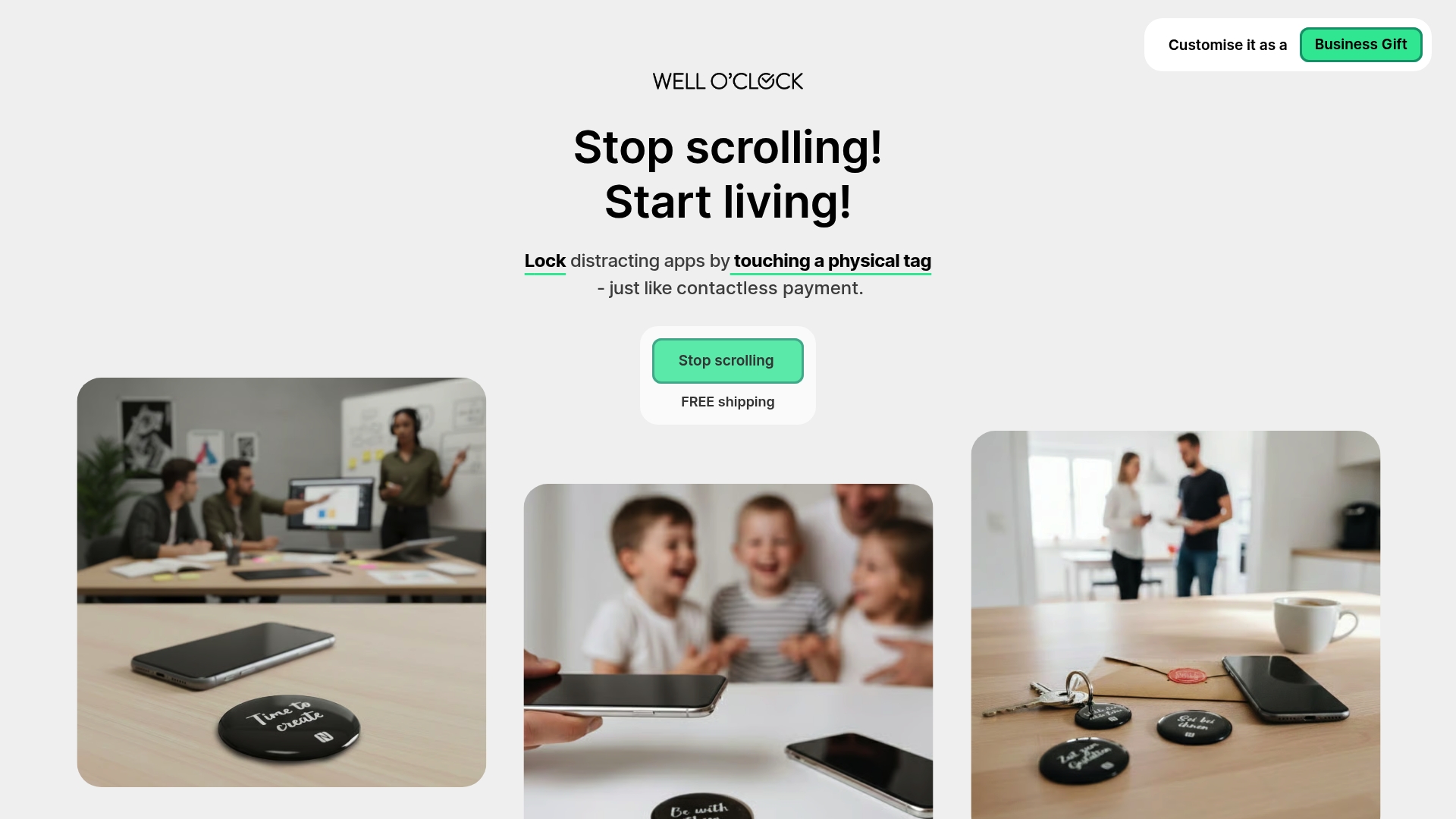
Take control of your family’s digital wellness today and start experiencing the benefits of reduced screen time immediately. Visit Well O’Clock now to explore how our unique system can support your journey toward better focus, deeper sleep, less stress, and richer family interactions. Don’t wait to make this powerful change for your loved ones. Find out more and take the first step at https://welloclock.com.
Frequently Asked Questions
What are the main benefits of reducing screen time for families?
Reducing screen time can improve focus, enhance sleep quality, decrease stress, strengthen family bonds, boost physical health through active play, and foster creativity. Start by designating certain times or areas as screen-free to experience these benefits quickly.
How can I help my family improve their focus by reducing screen time?
You can help improve your family's focus by creating device-free zones during pivotal times, like homework or family meals. Aim to establish these zones within a week to notice enhanced attention and productivity.
What steps can I take to improve my family's sleep quality by managing screen time?
To enhance sleep quality, establish a device-free hour before bed to reduce blue light exposure. Creating this routine may help everyone fall asleep 20-40 minutes faster within the first few nights.
How does reducing screen time lower stress and anxiety in families?
Reducing screen time can lower stress and anxiety by eliminating constant notifications and social media comparisons. Designate specific screen-free times, aiming for at least two weeks of consistent practice to observe noticeable improvements in your family's mood.
What activities can replace screen time to strengthen family bonds?
Engage in activities like board games, cooking together, or outdoor walks to promote connection and communication. Start with a weekly screen-free family night to build stronger relationships and create lasting memories.
How can I encourage my kids to be more active instead of spending time on screens?
Encourage physical activity by scheduling regular outdoor playtimes and limiting screens during those hours. Switch to at least one hour of active play daily, and you'll likely see increased strength and stamina in your kids.

Mak Kordić
Co founder
Mak Kordić is the founder and CEO of CNJ Digital, an agency based in Ljubljana, where he and his team develop UX/UI and digital products for demanding B2B projects. Over his career, he has led and co-created hundreds of digital solutions and worked with international clients.








6 Key Benefits of Reduced Screen Time for Families
Mak Kordić
,
March 2, 2026
Distractions from screens are everywhere and your family’s focus is often the first to suffer. Too much screen time can break concentration, disrupt sleep, and leave everyone feeling anxious or out of sync. These challenges can seem unavoidable, but there are proven steps to change the story at home.
You will discover actionable ways to reclaim focus, improve sleep, lower stress, and bring back genuine family connection. Research shows that cutting screen time can quickly restore attention, support healthier sleep routines, and even reduce anxiety and depressive symptoms in both kids and adults.
Get ready for practical solutions you can use right away. Each step in this list offers clear strategies that make a real difference and help your household feel more energized, connected, and creative.
Table of Contents
1. Improved Focus And Attention In Daily Tasks
- Why Fragmented Attention Damages Daily Tasks
- The Practical Impact Of Reduced Screen Time
- Bringing This Into Your Daily Life
2. Better Sleep Quality For Every Family Member
- How Screens Damage Sleep At The Biological Level
- The Family Sleep Connection
- Implementing Screen-Free Sleep Hours
3. Lower Stress And Anxiety Levels At Home
- Why Screens Fuel Anxiety And Stress
- The Rapid Benefits Of Screen Reduction
- Creating A Lower-Stress Household
4. Stronger Family Bonds Through Shared Activities
- How Screens Undermine Family Connection
- The Power Of Screen-Free Shared Time
- Creating Meaningful Shared Experiences
5. Boosted Physical Health With More Active Play
- The Physical Toll Of Screen Sedentariness
- How Active Play Transforms Physical Health
6. Greater Creativity And Independent Thinking
- Why Screens Suppress Creative Development
- The Creative Explosion When Screens Stop]
- Fostering Creative Freedom
1. Improved Focus and Attention in Daily Tasks
When your family reduces screen time, something remarkable happens to their ability to concentrate. The constant switching between apps, notifications, and content fragments your attention into smaller pieces, making deep work nearly impossible.
Your brain needs uninterrupted stretches to enter a focused state. Studies show that excessive screen time undermines concentration and productivity. When you cut back on screens, your mind gets the silence it craves.
Why Fragmented Attention Damages Daily Tasks
Imagine trying to read a book while someone taps your shoulder every 30 seconds. That's what constant notifications feel like to your brain. Each interruption resets your focus, forcing you to rebuild concentration from scratch.
This attention fragmentation affects everything your family does. Homework takes longer. Work assignments suffer. Even casual conversations feel harder because people struggle to listen without checking their phones.
The Practical Impact of Reduced Screen Time
When families intentionally reduce screen exposure, focus returns within days. Parents report completing tasks faster. Kids finish homework without needing constant redirection. The improvement isn't subtle.
Here's what happens when screens get controlled:
- Tasks get completed in less time
- Work quality improves noticeably
- Reading comprehension increases
- Decision-making becomes clearer
- Mental fatigue decreases significantly
" Reducing screen time helps restore the sustained attention your brain needs for meaningful work and learning. "
Bringing This Into Your Daily Life
Start by identifying when your family's focus tends to slip. Is it during homework time? Work meetings? Family dinner? That's where screen reduction delivers the biggest payoff.
Create device-free zones during these crucial periods. Not just putting phones away, but removing the temptation entirely. When screens aren't within arm's reach, focus naturally strengthens.
You can use physical tools to make this easier. Methods like minimizing device distractions help families maintain focus without relying on willpower alone.
The beauty of this approach is that improved focus creates a positive cycle. When tasks get done faster, your family feels more accomplished. That success motivates continued screen reduction. Before long, focused attention becomes the new normal.
Pro tip: Establish a "focus hour" where all devices get physically locked away (not just silenced), allowing your family's natural concentration abilities to rebuild and flourish.
2. Better Sleep Quality for Every Family Member
Screens before bed are a sleep killer. The blue light they emit tricks your brain into thinking it's daytime, delaying sleep onset and fragmenting the deep rest your family desperately needs.
When you reduce evening screen time, sleep transforms. Your kids fall asleep faster. Your partner stops tossing and turning. You wake feeling genuinely rested instead of groggy.
How Screens Damage Sleep at the Biological Level
Your body produces melatonin when darkness falls. This hormone tells you it's time to sleep. But screens emit blue light that suppresses melatonin production, essentially lying to your brain about what time it is.
Excessive screen time negatively impacts sleep quality by delaying when you fall asleep and fragmenting your sleep cycles throughout the night. This isn't just about feeling tired the next day.
Poor sleep triggers a cascade of problems. Mood deteriorates. Immune function weakens. Kids struggle in school. The ripple effects touch every area of family life.
The Family Sleep Connection
Here's something many parents miss: your sleep habits directly influence your children's sleep. When parents model good sleep hygiene, kids follow naturally.
This creates a positive family cycle. One person reduces screens, sleeps better, wakes refreshed. Others notice and want the same benefit. Soon the entire household shifts toward healthier sleep patterns.
Family support makes screen reduction sustainable. When everyone's on board, it feels like a shared commitment, not punishment.
The benefits show up quickly:
- Falling asleep 20-40 minutes faster
- Fewer nighttime awakenings
- Deeper, more restorative sleep
- Waking without the alarm feeling urgent
- More consistent sleep schedules
" Managing screen time can improve sleep quality and reduce anxiety and depression, especially when families communicate and support each other through the change. "
Implementing Screen-Free Sleep Hours
Start by creating a device-free zone one hour before bedtime. Not just silent mode. Actual devices out of the bedroom entirely.
Replace screens with calming activities. Reading, gentle stretching, quiet conversation. Your nervous system decompresses naturally without the stimulation.
Consistency matters more than perfection. Your family's internal clock adjusts within a few days when they know screens are off-limits at a set time each evening.
Pro tip: Set a household "screens off" time and stick to it religiously for two weeks, allowing your entire family's natural sleep rhythms to reset and deepen significantly.
3. Lower Stress and Anxiety Levels at Home
Constant notifications, endless scrolling, and social media comparisons create a baseline of chronic stress in your home. Your nervous system stays in overdrive, waiting for the next ping or alert.
When you reduce screens, something shifts. The house feels calmer. Conversations flow easier. Your family's anxiety visibly decreases within days, not weeks.
Why Screens Fuel Anxiety and Stress
Your brain treats notifications like survival threats. Each buzz triggers a small stress response, releasing cortisol and adrenaline. Over hours and days, this compounds into persistent anxiety.
Social media amplifies this effect. You see curated versions of others' lives and unconsciously compare them to your reality. This comparison triggers feelings of inadequacy and stress that linger long after you've closed the app.
Your kids experience the same cycle. Screen time is positively associated with increased anxiety and depression in adolescents, creating psychological distress that manifests as irritability, worry, and emotional dysregulation.
The Rapid Benefits of Screen Reduction
Here's the encouraging part. A study showed that reducing smartphone use to under 2 hours daily for three weeks significantly reduced stress and depressive symptoms.
Three weeks. That's the timeframe for real change. Your family doesn't need months of struggle. Within days, anxiety begins dropping.
Parents report immediate improvements:
- Family conversations become less tense
- Kids stop jumping at every notification
- Bedtime routines require less struggle
- Overall mood improves noticeably
- Patience with each other increases
- Conflicts decrease in frequency and intensity
" Reducing screen time creates a calmer home environment where your entire family's nervous systems can reset and regulate naturally. "
Creating a Lower-Stress Household
Start by identifying your family's highest-stress screen moments. Is it news scrolling at dinner? Social media comparing before bed? Work emails bleeding into family time?
Designate screen-free spaces or times where those anxiety-triggering activities can't happen. The living room during dinner. Bedrooms after 8 PM. Family game night without devices.
Replace screens with grounding activities. Cooking together, walking outside, playing board games. These interactions actually reduce stress hormones while building connection.
Your family's anxiety won't disappear overnight, but the downward trend begins immediately when you interrupt the notification cycle.
Pro tip: Remove phones from sight (not just silenced) during family meals and evening hours for two weeks, allowing stress hormones to naturally decrease and family connections to strengthen.
4. Stronger Family Bonds Through Shared Activities
Screens are relationship assassins. They sit between you and your family, stealing moments that should belong to genuine connection and creating a wall of distraction during shared time.
When you eliminate screens from family time, something magical happens. Conversations deepen. Laughter flows naturally. Your kids actually want to be around you instead of scrolling alone in their rooms.
How Screens Undermine Family Connection
Excessive screen use erodes quality family interaction by reducing face-to-face communication and filling shared moments with digital distractions. Your family can be physically together while emotionally miles apart.
Think about dinner lately. How many phones are on the table? Each one represents a moment stolen from real conversation. Kids miss crucial opportunities to learn how to communicate. Parents miss windows into what their kids are actually thinking and feeling.
Screens fragment your family culture. Instead of shared traditions and inside jokes, each person inhabits their own digital world.
The Power of Screen-Free Shared Time
Limiting screens forces your family back into actual interaction. And something remarkable follows. Your emotional bonds strengthen naturally when you're truly present together.
Screen-free family time strengthens family culture and emotional intelligence, creating developmentally supportive environments where kids learn communication skills and emotional awareness.
Here's what happens when screens disappear:
- Conversations reveal what family members actually care about
- Kids feel genuinely heard and valued
- Parents discover who their kids are becoming
- Humor and inside jokes emerge naturally
- Conflict resolution happens through talking, not avoidance
- Shared memories build stronger bonds
" Quality time requires presence, and presence becomes possible only when screens stop competing for your family's attention. "
Creating Meaningful Shared Experiences
Start small. Pick one activity where screens are completely off-limits. Board game night. Cooking together. A weekly walk without phones.
A screen time detox helps families reset technology habits and prioritize quality time. Structured limits create space for alternative engaging activities that naturally strengthen emotional connection.
The activities matter less than the consistency. Your family needs predictable, protected time together. This consistency teaches kids that they matter more than any notification.
Start with one hour per week completely screen-free. Your family will feel the difference immediately. Soon you'll be protecting these moments fiercely because you've rediscovered what you were missing.
Pro tip: Establish a weekly "device-free adventure" where the entire family commits to one activity together with phones completely out of sight, building anticipation and stronger bonds week after week.
5. Boosted Physical Health with More Active Play
Every hour your kids spend glued to screens is an hour they're not running, climbing, playing sports, or building the physical strength they need. Sedentary screen time is slowly reshaping their bodies in ways parents often don't notice until it's advanced.
When you reclaim those hours for active play, physical transformation follows quickly. Your kids get stronger, faster, and healthier while actually enjoying themselves.
The Physical Toll of Screen Sedentariness
Screens trap your family in stillness. Your body requires movement to develop properly. Without it, muscles weaken, coordination suffers, and cardiovascular health declines.
Children with high screen exposure have higher rates of overweight and obesity. Their bodies never learn how to move efficiently. Posture deteriorates. Core strength never develops.
Reduced screen time correlates with increased outdoor activity and physical health improvements in children, including better cardiovascular health and improved muscle coordination.
How Active Play Transforms Physical Health
When screens disappear, kids naturally gravitate toward movement. They run. They play tag. They build forts and ride bikes. This play isn't just fun, it's essential physical development.
Outdoor activity strengthens bones, develops cardiovascular endurance, and teaches body awareness. Kids who play actively have better balance, faster reflexes, and stronger cores. These gains compound over time.
Limiting screen time decreases sedentary behavior and promotes active lifestyle choices, which are associated with lower obesity risk and better overall fitness in youth.
The physical benefits extend beyond weight and fitness:
- Stronger cardiovascular systems
- Better muscle development and coordination
- Improved bone density
- Enhanced motor skills and balance
- Healthier immune function
- Increased energy and stamina
- Better posture and spinal health
" Active play is medicine. The physical benefits of movement are impossible to replicate with any supplement or intervention. "
Creating Opportunities for Active Play
You don't need expensive equipment or organized sports. Kids thrive with simple opportunities to move freely. Parks, backyards, playgrounds, neighborhood streets.
Start by protecting one outdoor hour per day where screens simply don't exist. Your family will need this time to adjust, but soon kids will choose playing outside over screens. The shift happens naturally when activity becomes the available option.
Variety matters. Walking, biking, ball games, swimming, climbing, dancing. Different activities develop different physical capabilities and keep things interesting.
Pro tip: Schedule outdoor play immediately after school or work before screen temptation starts, establishing a daily activity routine that builds fitness naturally and becomes your family's new default.
6. Greater Creativity and Independent Thinking
Screens are creativity killers. They feed your brain pre-made content, ready-made solutions, and curated entertainment. Your mind becomes a passive consumer instead of an active creator.
When you remove screens, something extraordinary happens. Your kids start building things. They invent games. They solve problems their own way. Their creativity explodes because their brains finally have the space to imagine.
Why Screens Suppress Creative Development
Creativity requires boredom. It requires empty space where your mind can wander and make unexpected connections. Screens eliminate boredom by filling every moment with stimulation.
Passive content consumption trains your brain to accept solutions instead of generating them. Your kids watch someone else solve problems, build things, and create stories. They internalize the message that creativity happens on screens, not in their own minds.
Excessive screen time in early childhood can hinder cognitive and socioemotional development, limiting opportunities for imaginative play that builds independent thinking and critical problem-solving abilities.
The Creative Explosion When Screens Stop
Remove screens and something clicks. Kids get bored, and boredom forces creativity. They build blanket forts. They invent imaginary worlds. They draw, write stories, and solve problems on their own terms.
Reducing screen time is linked to increased creativity by allowing more opportunities for open-ended, imaginative play. Screen-free activities enhance problem-solving skills and encourage the independent thinking that drives innovation.
This isn't forced or artificial. When screens disappear, creativity doesn't need encouragement. It simply emerges as kids follow their natural curiosity and imagination.
The creative benefits ripple across their entire development:
- Original problem-solving approaches
- Imaginative storytelling and worldbuilding
- Artistic expression without templates
- Deeper emotional intelligence
- Stronger focus and sustained attention
- Increased confidence in their own ideas
" Boredom breeds brilliance. The space screens eliminate is exactly where independent thinking grows. "
Fostering Creative Freedom
Start by creating unstructured time where nothing is planned and no devices are available. Provide open-ended materials like building blocks, art supplies, and books. Then step back and let boredom do its work.
Your kids might resist initially. That resistance is actually progress. They're experiencing the boredom that precedes creativity. Within days or weeks, they'll be absorbed in self-directed projects you never could have suggested.
Different kids create differently. Some build. Some draw. Some write. Some organize elaborate games. Trust their process and protect the screen-free time that makes it possible.
Pro tip: Keep art supplies, building materials, and musical instruments easily accessible in common areas, and establish one screen-free afternoon per week where your kids have nothing but time and materials to create.
Below is a comprehensive table summarizing the benefits and strategies discussed throughout the article regarding reducing screen time for families.
Unlock Your Family’s Best Life by Reducing Screen Time
The article highlights key struggles many families face like fragmented attention, poor sleep, heightened anxiety, and weakening relationships all caused by excessive screen use. If your family is searching for a practical way to regain focus, restore restful sleep, lower stress, and deepen bonds, you are not alone. The challenge is breaking autopilot phone habits that steal time and mental clarity.
At Well O’Clock, we provide a tangible solution that helps physically interrupt phone distractions with easy-to-use NFC tags and a supportive mobile app. This system empowers you to lock distracting apps with a simple tap. Imagine reclaiming focused hours during homework or work, improving sleep quality by removing screens before bed, reducing anxiety by breaking constant notification cycles, and building stronger connections through shared device-free moments. Our approach transforms digital habits into healthier family routines that last.
Take control of your family’s digital wellness today and start experiencing the benefits of reduced screen time immediately. Visit Well O’Clock now to explore how our unique system can support your journey toward better focus, deeper sleep, less stress, and richer family interactions. Don’t wait to make this powerful change for your loved ones. Find out more and take the first step at https://welloclock.com.
Frequently Asked Questions
What are the main benefits of reducing screen time for families?
Reducing screen time can improve focus, enhance sleep quality, decrease stress, strengthen family bonds, boost physical health through active play, and foster creativity. Start by designating certain times or areas as screen-free to experience these benefits quickly.
How can I help my family improve their focus by reducing screen time?
You can help improve your family's focus by creating device-free zones during pivotal times, like homework or family meals. Aim to establish these zones within a week to notice enhanced attention and productivity.
What steps can I take to improve my family's sleep quality by managing screen time?
To enhance sleep quality, establish a device-free hour before bed to reduce blue light exposure. Creating this routine may help everyone fall asleep 20-40 minutes faster within the first few nights.
How does reducing screen time lower stress and anxiety in families?
Reducing screen time can lower stress and anxiety by eliminating constant notifications and social media comparisons. Designate specific screen-free times, aiming for at least two weeks of consistent practice to observe noticeable improvements in your family's mood.
What activities can replace screen time to strengthen family bonds?
Engage in activities like board games, cooking together, or outdoor walks to promote connection and communication. Start with a weekly screen-free family night to build stronger relationships and create lasting memories.
How can I encourage my kids to be more active instead of spending time on screens?
Encourage physical activity by scheduling regular outdoor playtimes and limiting screens during those hours. Switch to at least one hour of active play daily, and you'll likely see increased strength and stamina in your kids.
Mak Kordić
Co founder
Mak Kordić is the founder and CEO of CNJ Digital, an agency based in Ljubljana, where he and his team develop UX/UI and digital products for demanding B2B projects. Over his career, he has led and co-created hundreds of digital solutions and worked with international clients.
6 Key Benefits of Reduced Screen Time for Families
Mak Kordić
,
March 2, 2026
Distractions from screens are everywhere and your family’s focus is often the first to suffer. Too much screen time can break concentration, disrupt sleep, and leave everyone feeling anxious or out of sync. These challenges can seem unavoidable, but there are proven steps to change the story at home.
You will discover actionable ways to reclaim focus, improve sleep, lower stress, and bring back genuine family connection. Research shows that cutting screen time can quickly restore attention, support healthier sleep routines, and even reduce anxiety and depressive symptoms in both kids and adults.
Get ready for practical solutions you can use right away. Each step in this list offers clear strategies that make a real difference and help your household feel more energized, connected, and creative.
Table of Contents
1. Improved Focus And Attention In Daily Tasks
- Why Fragmented Attention Damages Daily Tasks
- The Practical Impact Of Reduced Screen Time
- Bringing This Into Your Daily Life
2. Better Sleep Quality For Every Family Member
- How Screens Damage Sleep At The Biological Level
- The Family Sleep Connection
- Implementing Screen-Free Sleep Hours
3. Lower Stress And Anxiety Levels At Home
- Why Screens Fuel Anxiety And Stress
- The Rapid Benefits Of Screen Reduction
- Creating A Lower-Stress Household
4. Stronger Family Bonds Through Shared Activities
- How Screens Undermine Family Connection
- The Power Of Screen-Free Shared Time
- Creating Meaningful Shared Experiences
5. Boosted Physical Health With More Active Play
- The Physical Toll Of Screen Sedentariness
- How Active Play Transforms Physical Health
6. Greater Creativity And Independent Thinking
- Why Screens Suppress Creative Development
- The Creative Explosion When Screens Stop]
- Fostering Creative Freedom
1. Improved Focus and Attention in Daily Tasks
When your family reduces screen time, something remarkable happens to their ability to concentrate. The constant switching between apps, notifications, and content fragments your attention into smaller pieces, making deep work nearly impossible.
Your brain needs uninterrupted stretches to enter a focused state. Studies show that excessive screen time undermines concentration and productivity. When you cut back on screens, your mind gets the silence it craves.
Why Fragmented Attention Damages Daily Tasks
Imagine trying to read a book while someone taps your shoulder every 30 seconds. That's what constant notifications feel like to your brain. Each interruption resets your focus, forcing you to rebuild concentration from scratch.
This attention fragmentation affects everything your family does. Homework takes longer. Work assignments suffer. Even casual conversations feel harder because people struggle to listen without checking their phones.
The Practical Impact of Reduced Screen Time
When families intentionally reduce screen exposure, focus returns within days. Parents report completing tasks faster. Kids finish homework without needing constant redirection. The improvement isn't subtle.
Here's what happens when screens get controlled:
- Tasks get completed in less time
- Work quality improves noticeably
- Reading comprehension increases
- Decision-making becomes clearer
- Mental fatigue decreases significantly
" Reducing screen time helps restore the sustained attention your brain needs for meaningful work and learning. "
Bringing This Into Your Daily Life
Start by identifying when your family's focus tends to slip. Is it during homework time? Work meetings? Family dinner? That's where screen reduction delivers the biggest payoff.
Create device-free zones during these crucial periods. Not just putting phones away, but removing the temptation entirely. When screens aren't within arm's reach, focus naturally strengthens.
You can use physical tools to make this easier. Methods like minimizing device distractions help families maintain focus without relying on willpower alone.
The beauty of this approach is that improved focus creates a positive cycle. When tasks get done faster, your family feels more accomplished. That success motivates continued screen reduction. Before long, focused attention becomes the new normal.
Pro tip: Establish a "focus hour" where all devices get physically locked away (not just silenced), allowing your family's natural concentration abilities to rebuild and flourish.
2. Better Sleep Quality for Every Family Member
Screens before bed are a sleep killer. The blue light they emit tricks your brain into thinking it's daytime, delaying sleep onset and fragmenting the deep rest your family desperately needs.
When you reduce evening screen time, sleep transforms. Your kids fall asleep faster. Your partner stops tossing and turning. You wake feeling genuinely rested instead of groggy.
How Screens Damage Sleep at the Biological Level
Your body produces melatonin when darkness falls. This hormone tells you it's time to sleep. But screens emit blue light that suppresses melatonin production, essentially lying to your brain about what time it is.
Excessive screen time negatively impacts sleep quality by delaying when you fall asleep and fragmenting your sleep cycles throughout the night. This isn't just about feeling tired the next day.
Poor sleep triggers a cascade of problems. Mood deteriorates. Immune function weakens. Kids struggle in school. The ripple effects touch every area of family life.
The Family Sleep Connection
Here's something many parents miss: your sleep habits directly influence your children's sleep. When parents model good sleep hygiene, kids follow naturally.
This creates a positive family cycle. One person reduces screens, sleeps better, wakes refreshed. Others notice and want the same benefit. Soon the entire household shifts toward healthier sleep patterns.
Family support makes screen reduction sustainable. When everyone's on board, it feels like a shared commitment, not punishment.
The benefits show up quickly:
- Falling asleep 20-40 minutes faster
- Fewer nighttime awakenings
- Deeper, more restorative sleep
- Waking without the alarm feeling urgent
- More consistent sleep schedules
" Managing screen time can improve sleep quality and reduce anxiety and depression, especially when families communicate and support each other through the change. "
Implementing Screen-Free Sleep Hours
Start by creating a device-free zone one hour before bedtime. Not just silent mode. Actual devices out of the bedroom entirely.
Replace screens with calming activities. Reading, gentle stretching, quiet conversation. Your nervous system decompresses naturally without the stimulation.
Consistency matters more than perfection. Your family's internal clock adjusts within a few days when they know screens are off-limits at a set time each evening.
Pro tip: Set a household "screens off" time and stick to it religiously for two weeks, allowing your entire family's natural sleep rhythms to reset and deepen significantly.
3. Lower Stress and Anxiety Levels at Home
Constant notifications, endless scrolling, and social media comparisons create a baseline of chronic stress in your home. Your nervous system stays in overdrive, waiting for the next ping or alert.
When you reduce screens, something shifts. The house feels calmer. Conversations flow easier. Your family's anxiety visibly decreases within days, not weeks.
Why Screens Fuel Anxiety and Stress
Your brain treats notifications like survival threats. Each buzz triggers a small stress response, releasing cortisol and adrenaline. Over hours and days, this compounds into persistent anxiety.
Social media amplifies this effect. You see curated versions of others' lives and unconsciously compare them to your reality. This comparison triggers feelings of inadequacy and stress that linger long after you've closed the app.
Your kids experience the same cycle. Screen time is positively associated with increased anxiety and depression in adolescents, creating psychological distress that manifests as irritability, worry, and emotional dysregulation.
The Rapid Benefits of Screen Reduction
Here's the encouraging part. A study showed that reducing smartphone use to under 2 hours daily for three weeks significantly reduced stress and depressive symptoms.
Three weeks. That's the timeframe for real change. Your family doesn't need months of struggle. Within days, anxiety begins dropping.
Parents report immediate improvements:
- Family conversations become less tense
- Kids stop jumping at every notification
- Bedtime routines require less struggle
- Overall mood improves noticeably
- Patience with each other increases
- Conflicts decrease in frequency and intensity
" Reducing screen time creates a calmer home environment where your entire family's nervous systems can reset and regulate naturally. "
Creating a Lower-Stress Household
Start by identifying your family's highest-stress screen moments. Is it news scrolling at dinner? Social media comparing before bed? Work emails bleeding into family time?
Designate screen-free spaces or times where those anxiety-triggering activities can't happen. The living room during dinner. Bedrooms after 8 PM. Family game night without devices.
Replace screens with grounding activities. Cooking together, walking outside, playing board games. These interactions actually reduce stress hormones while building connection.
Your family's anxiety won't disappear overnight, but the downward trend begins immediately when you interrupt the notification cycle.
Pro tip: Remove phones from sight (not just silenced) during family meals and evening hours for two weeks, allowing stress hormones to naturally decrease and family connections to strengthen.
4. Stronger Family Bonds Through Shared Activities
Screens are relationship assassins. They sit between you and your family, stealing moments that should belong to genuine connection and creating a wall of distraction during shared time.
When you eliminate screens from family time, something magical happens. Conversations deepen. Laughter flows naturally. Your kids actually want to be around you instead of scrolling alone in their rooms.
How Screens Undermine Family Connection
Excessive screen use erodes quality family interaction by reducing face-to-face communication and filling shared moments with digital distractions. Your family can be physically together while emotionally miles apart.
Think about dinner lately. How many phones are on the table? Each one represents a moment stolen from real conversation. Kids miss crucial opportunities to learn how to communicate. Parents miss windows into what their kids are actually thinking and feeling.
Screens fragment your family culture. Instead of shared traditions and inside jokes, each person inhabits their own digital world.
The Power of Screen-Free Shared Time
Limiting screens forces your family back into actual interaction. And something remarkable follows. Your emotional bonds strengthen naturally when you're truly present together.
Screen-free family time strengthens family culture and emotional intelligence, creating developmentally supportive environments where kids learn communication skills and emotional awareness.
Here's what happens when screens disappear:
- Conversations reveal what family members actually care about
- Kids feel genuinely heard and valued
- Parents discover who their kids are becoming
- Humor and inside jokes emerge naturally
- Conflict resolution happens through talking, not avoidance
- Shared memories build stronger bonds
" Quality time requires presence, and presence becomes possible only when screens stop competing for your family's attention. "
Creating Meaningful Shared Experiences
Start small. Pick one activity where screens are completely off-limits. Board game night. Cooking together. A weekly walk without phones.
A screen time detox helps families reset technology habits and prioritize quality time. Structured limits create space for alternative engaging activities that naturally strengthen emotional connection.
The activities matter less than the consistency. Your family needs predictable, protected time together. This consistency teaches kids that they matter more than any notification.
Start with one hour per week completely screen-free. Your family will feel the difference immediately. Soon you'll be protecting these moments fiercely because you've rediscovered what you were missing.
Pro tip: Establish a weekly "device-free adventure" where the entire family commits to one activity together with phones completely out of sight, building anticipation and stronger bonds week after week.
5. Boosted Physical Health with More Active Play
Every hour your kids spend glued to screens is an hour they're not running, climbing, playing sports, or building the physical strength they need. Sedentary screen time is slowly reshaping their bodies in ways parents often don't notice until it's advanced.
When you reclaim those hours for active play, physical transformation follows quickly. Your kids get stronger, faster, and healthier while actually enjoying themselves.
The Physical Toll of Screen Sedentariness
Screens trap your family in stillness. Your body requires movement to develop properly. Without it, muscles weaken, coordination suffers, and cardiovascular health declines.
Children with high screen exposure have higher rates of overweight and obesity. Their bodies never learn how to move efficiently. Posture deteriorates. Core strength never develops.
Reduced screen time correlates with increased outdoor activity and physical health improvements in children, including better cardiovascular health and improved muscle coordination.
How Active Play Transforms Physical Health
When screens disappear, kids naturally gravitate toward movement. They run. They play tag. They build forts and ride bikes. This play isn't just fun, it's essential physical development.
Outdoor activity strengthens bones, develops cardiovascular endurance, and teaches body awareness. Kids who play actively have better balance, faster reflexes, and stronger cores. These gains compound over time.
Limiting screen time decreases sedentary behavior and promotes active lifestyle choices, which are associated with lower obesity risk and better overall fitness in youth.
The physical benefits extend beyond weight and fitness:
- Stronger cardiovascular systems
- Better muscle development and coordination
- Improved bone density
- Enhanced motor skills and balance
- Healthier immune function
- Increased energy and stamina
- Better posture and spinal health
" Active play is medicine. The physical benefits of movement are impossible to replicate with any supplement or intervention. "
Creating Opportunities for Active Play
You don't need expensive equipment or organized sports. Kids thrive with simple opportunities to move freely. Parks, backyards, playgrounds, neighborhood streets.
Start by protecting one outdoor hour per day where screens simply don't exist. Your family will need this time to adjust, but soon kids will choose playing outside over screens. The shift happens naturally when activity becomes the available option.
Variety matters. Walking, biking, ball games, swimming, climbing, dancing. Different activities develop different physical capabilities and keep things interesting.
Pro tip: Schedule outdoor play immediately after school or work before screen temptation starts, establishing a daily activity routine that builds fitness naturally and becomes your family's new default.
6. Greater Creativity and Independent Thinking
Screens are creativity killers. They feed your brain pre-made content, ready-made solutions, and curated entertainment. Your mind becomes a passive consumer instead of an active creator.
When you remove screens, something extraordinary happens. Your kids start building things. They invent games. They solve problems their own way. Their creativity explodes because their brains finally have the space to imagine.
Why Screens Suppress Creative Development
Creativity requires boredom. It requires empty space where your mind can wander and make unexpected connections. Screens eliminate boredom by filling every moment with stimulation.
Passive content consumption trains your brain to accept solutions instead of generating them. Your kids watch someone else solve problems, build things, and create stories. They internalize the message that creativity happens on screens, not in their own minds.
Excessive screen time in early childhood can hinder cognitive and socioemotional development, limiting opportunities for imaginative play that builds independent thinking and critical problem-solving abilities.
The Creative Explosion When Screens Stop
Remove screens and something clicks. Kids get bored, and boredom forces creativity. They build blanket forts. They invent imaginary worlds. They draw, write stories, and solve problems on their own terms.
Reducing screen time is linked to increased creativity by allowing more opportunities for open-ended, imaginative play. Screen-free activities enhance problem-solving skills and encourage the independent thinking that drives innovation.
This isn't forced or artificial. When screens disappear, creativity doesn't need encouragement. It simply emerges as kids follow their natural curiosity and imagination.
The creative benefits ripple across their entire development:
- Original problem-solving approaches
- Imaginative storytelling and worldbuilding
- Artistic expression without templates
- Deeper emotional intelligence
- Stronger focus and sustained attention
- Increased confidence in their own ideas
" Boredom breeds brilliance. The space screens eliminate is exactly where independent thinking grows. "
Fostering Creative Freedom
Start by creating unstructured time where nothing is planned and no devices are available. Provide open-ended materials like building blocks, art supplies, and books. Then step back and let boredom do its work.
Your kids might resist initially. That resistance is actually progress. They're experiencing the boredom that precedes creativity. Within days or weeks, they'll be absorbed in self-directed projects you never could have suggested.
Different kids create differently. Some build. Some draw. Some write. Some organize elaborate games. Trust their process and protect the screen-free time that makes it possible.
Pro tip: Keep art supplies, building materials, and musical instruments easily accessible in common areas, and establish one screen-free afternoon per week where your kids have nothing but time and materials to create.
Below is a comprehensive table summarizing the benefits and strategies discussed throughout the article regarding reducing screen time for families.
Unlock Your Family’s Best Life by Reducing Screen Time
The article highlights key struggles many families face like fragmented attention, poor sleep, heightened anxiety, and weakening relationships all caused by excessive screen use. If your family is searching for a practical way to regain focus, restore restful sleep, lower stress, and deepen bonds, you are not alone. The challenge is breaking autopilot phone habits that steal time and mental clarity.
At Well O’Clock, we provide a tangible solution that helps physically interrupt phone distractions with easy-to-use NFC tags and a supportive mobile app. This system empowers you to lock distracting apps with a simple tap. Imagine reclaiming focused hours during homework or work, improving sleep quality by removing screens before bed, reducing anxiety by breaking constant notification cycles, and building stronger connections through shared device-free moments. Our approach transforms digital habits into healthier family routines that last.
Take control of your family’s digital wellness today and start experiencing the benefits of reduced screen time immediately. Visit Well O’Clock now to explore how our unique system can support your journey toward better focus, deeper sleep, less stress, and richer family interactions. Don’t wait to make this powerful change for your loved ones. Find out more and take the first step at https://welloclock.com.
Frequently Asked Questions
What are the main benefits of reducing screen time for families?
Reducing screen time can improve focus, enhance sleep quality, decrease stress, strengthen family bonds, boost physical health through active play, and foster creativity. Start by designating certain times or areas as screen-free to experience these benefits quickly.
How can I help my family improve their focus by reducing screen time?
You can help improve your family's focus by creating device-free zones during pivotal times, like homework or family meals. Aim to establish these zones within a week to notice enhanced attention and productivity.
What steps can I take to improve my family's sleep quality by managing screen time?
To enhance sleep quality, establish a device-free hour before bed to reduce blue light exposure. Creating this routine may help everyone fall asleep 20-40 minutes faster within the first few nights.
How does reducing screen time lower stress and anxiety in families?
Reducing screen time can lower stress and anxiety by eliminating constant notifications and social media comparisons. Designate specific screen-free times, aiming for at least two weeks of consistent practice to observe noticeable improvements in your family's mood.
What activities can replace screen time to strengthen family bonds?
Engage in activities like board games, cooking together, or outdoor walks to promote connection and communication. Start with a weekly screen-free family night to build stronger relationships and create lasting memories.
How can I encourage my kids to be more active instead of spending time on screens?
Encourage physical activity by scheduling regular outdoor playtimes and limiting screens during those hours. Switch to at least one hour of active play daily, and you'll likely see increased strength and stamina in your kids.
Mak Kordić
Co founder
Mak Kordić is the founder and CEO of CNJ Digital, an agency based in Ljubljana, where he and his team develop UX/UI and digital products for demanding B2B projects. Over his career, he has led and co-created hundreds of digital solutions and worked with international clients.