
6 Key Advantages of Physical Phone Blockers Explained
Mak Kordić
,
February 24, 2026

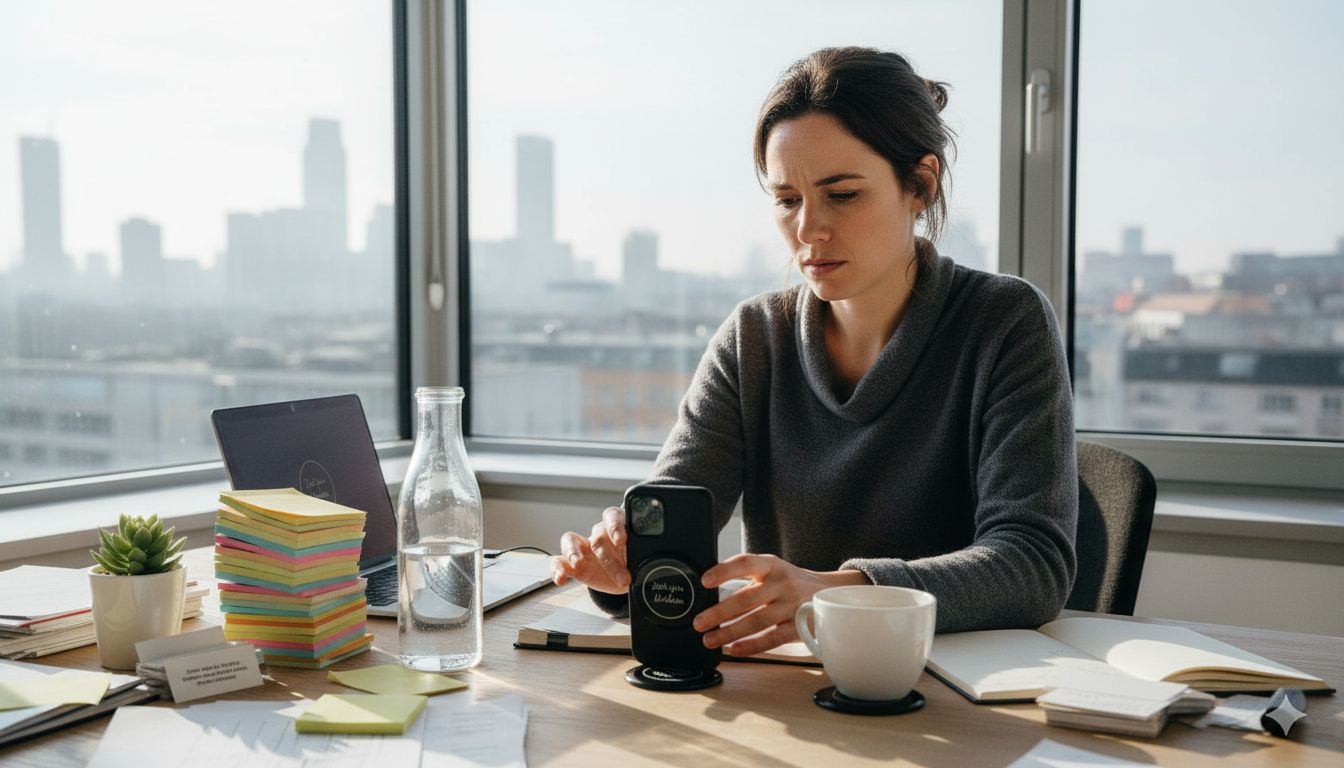
It’s easy to lose control of your focus and well-being when your phone drives your daily routines. Most actions you take, like checking notifications or scrolling through apps, happen automatically without a conscious decision. Research from the University of Surrey reveals that about two-thirds of your daily behaviors are initiated by habit, not by choice. This autopilot mode can drain your concentration, disrupt your sleep, and increase anxiety without you realizing it.
The good news is that you can break free from these cycles. The practical techniques ahead will show you how to disrupt unwanted habits and create healthier boundaries around phone use. By making small changes, you can rebuild intentional routines that support your mental clarity, sleep quality, productivity, and relationships.
Get ready to discover actionable strategies that transform the way you interact with technology. Each step is designed to help you regain control and enjoy tangible benefits in every area of your life.
Table of Contents
1. Boost Focus By Interrupting Autopilot Habits
- How Autopilot Habits Work
- Why This Matters For Your Focus
- How Physical Blockers Interrupt Autopilot
- The Practical Impact
2. Improve Sleep Quality With Device-Free Evenings
- How Evening Screen Time Disrupts Sleep
- The Science of Device-Free Evenings
- Making Device-Free Evenings Work
3. Reduce Anxiety By Creating Clear Tech Boundaries
- How Constant Connectivity Creates Anxiety
- The Power of Tech Boundaries
- Creating Boundaries That Actually Stick
4. Strengthen Relationships Through Present Moments
- Why Presence Matters More Than Time
- The Science of Connection
- How Phones Undermine Connection
- Creating Phone-Free Quality Time
5. Enhance Productivity With Tangible App Control
- Why Digital-Only Solutions Fall Short
- How Tangible Control Improves Workflow
- Real-World Application
- The Compounding Effect
6. Enjoy Easy Setup and Customizable Wellness Tools
- Why Simplicity Matters For Wellness
- The Power of User-Friendly Design
- Customization Without Complexity
- Getting Started Quickly
- Beyond Setup
1. Boost Focus by Interrupting Autopilot Habits
Your brain operates on autopilot far more than you realize. Research shows that approximately two-thirds of daily behaviors happen automatically, driven by habits rather than conscious decisions.
This means you're likely picking up your phone, opening apps, or checking notifications without actually deciding to do so. Your brain recognizes a trigger (boredom, anxiety, a notification sound) and responds with a learned habit before your conscious mind even registers what's happening.
The good news? You can interrupt these autopilot patterns and reclaim your focus.
How Autopilot Habits Work
Habits form through a simple loop: trigger, behavior, reward. Your phone buzzes (trigger), you check it immediately (behavior), and you get a dopamine hit (reward). Over time, this loop becomes automatic.
About 65% of behaviors occur as automatic responses to environmental cues rather than deliberate choices. This explains why you reach for your phone during meetings or when you're supposed to be working.
Why This Matters for Your Focus
Autopilot habits drain your ability to concentrate intentionally. When you're running on autopilot, your prefrontal cortex (the part responsible for focus and decision-making) isn't actively engaged. You're essentially on cruise control.
Breaking autopilot requires conscious interruption. By deliberately disrupting the habit loop, you force your brain back into intentional mode. This is where your focus returns.
How Physical Blockers Interrupt Autopilot
Physical phone blockers work by introducing a tangible friction point in your autopilot routine. Instead of reaching for your phone and reflexively opening an app, you encounter a physical barrier that requires conscious action to overcome.
This friction serves as a wake-up call to your brain. It stops the automatic sequence and forces you to pause and ask yourself: "Do I actually want to do this right now?"
The benefits include:
- Breaks habitual reaching and checking behaviors
- Creates a moment of conscious choice before app access
- Reduces notification-driven distractions
- Helps rewire neural pathways associated with phone use
- Builds awareness of trigger moments throughout your day
The Practical Impact
When you physically interrupt autopilot, something shifts. Your brain engages. You become aware of patterns you never noticed before. That urge to check email during focused work? Now you see it clearly.
" Interrupting autopilot isn't about willpower-it's about changing your environment so your default behavior becomes the healthy choice. "
Over time, this repeated interruption actually rewires your habits. New neural pathways form. What once required conscious effort becomes your new autopilot pattern.
Pro tip: Place your physical blocker in the exact location where you typically reach for your phone when distracted, so the interruption happens at the moment you need it most.
2. Improve Sleep Quality With Device-Free Evenings
Your phone is sabotaging your sleep. When you use devices in the evening, your brain receives a powerful signal that it's time to stay awake, not wind down.
The culprit is blue light and behavioral stimulation. Your devices emit wavelengths that suppress melatonin production, the hormone that tells your body when to sleep. At the same time, scrolling through notifications and content keeps your mind engaged and anxious.
Device-free evenings reverse this pattern and help you sleep deeper.
How Evening Screen Time Disrupts Sleep
Your body operates on a circadian rhythm, an internal clock that regulates sleep-wake cycles. This system relies on light cues to function properly.
When you look at screens after sunset, you're telling your body it's still daytime. Your melatonin production gets suppressed, and your circadian rhythm becomes confused. The result? You lie awake longer, sleep lighter, and wake more frequently during the night.
Studies show that bedtime smartphone use negatively impacts sleep quality, with users experiencing longer time to fall asleep and reduced total sleep duration.
The Science of Device-Free Evenings
Research demonstrates that reducing screen exposure after 9 pm enhances sleep onset and improves daytime functioning. When you eliminate devices from your evening routine, several positive changes happen:
- Melatonin production resumes naturally
- Your nervous system shifts from stimulated to relaxed
- Sleep latency (time to fall asleep) decreases
- Total sleep duration increases
- Daytime alertness and focus improve
Making Device-Free Evenings Work
The goal isn't perfection-it's progress. Start by setting a device cutoff time that works for your schedule. Most research suggests stopping screen use at least one hour before bed, though earlier is better.
Replace phone time with calming alternatives like reading, stretching, or conversation. Physical phone blockers help by removing the temptation during vulnerable moments when your willpower is lowest.
" Device-free evenings aren't about missing out; they're about reclaiming the most restorative hours of your day. "
Your body will thank you within days. Better sleep quality means sharper mornings, improved mood, and stronger immunity. When you prioritize sleep, everything else gets easier.
Pro tip: Place your physical blocker on your phone two hours before bed so you interrupt the evening checking habit before it gains momentum.
3. Reduce Anxiety by Creating Clear Tech Boundaries
Constant connectivity is constant stress. Your phone buzzes with notifications, messages pile up, and the expectation to always be available creates a low-level anxiety that follows you everywhere.
The solution isn't willpower. It's boundaries. When you establish clear rules about when and where you use your phone, you give your nervous system permission to relax.
How Constant Connectivity Creates Anxiety
Your brain wasn't designed for perpetual stimulation. Every notification triggers a small stress response as your body releases cortisol, the fight-or-flight hormone.
Over time, this constant activation becomes your baseline. You feel anxious even when nothing urgent is happening. Your mind stays in a state of partial alertness, unable to fully rest or focus. The anxiety becomes so normal you stop noticing it.
The Power of Tech Boundaries
Boundaries work because they shift control back to you. Instead of your phone dictating your attention throughout the day, you decide when to engage with it.
Research shows that setting boundaries around technology use significantly lowers anxiety and depression symptoms. When you create tech-free times and spaces, your nervous system gets actual downtime to recover.
The benefits accumulate quickly:
- Reduced notification-driven stress responses
- Lower baseline cortisol levels throughout the day
- Improved ability to focus without panic
- Better emotional regulation
- Deeper relaxation during offline hours
- Stronger relationships with people around you
Creating Boundaries That Actually Stick
Vague intentions fail. "I'll use my phone less" doesn't work because it requires constant willpower. Physical boundaries work better because they remove the decision entirely.
Creating clear digital boundaries through intentional device interaction reduces stress by preventing overstimulation. This means setting specific times when your phone is completely off limits.
Examples include:
- Breakfast with your family, phone away
- Afternoon work block from 2 to 4 pm, no interruptions
- Dinner table, devices in another room
- First hour after waking, no phone
- Last hour before bed, all devices locked
" Anxiety decreases when you stop fighting technology and start controlling when it controls you. "
Physical blockers help because they make breaking your boundary intentional rather than automatic. You can't reflexively check your phone if it requires conscious effort to unblock.
Pro tip: Create one tech-free zone first (like your bedroom or dinner table) and establish it as sacred before expanding to other times.
4. Strengthen Relationships Through Present Moments
Your phone is stealing moments you can never get back. When you're with loved ones but mentally scrolling, you're there in body only. Real connection requires presence.
Physical phone blockers create space for genuine interaction. They signal to the people you care about that they matter more than any notification.
Why Presence Matters More Than Time
You can spend hours with someone while feeling disconnected. Conversely, ten minutes of genuine presence can deepen a relationship significantly.
Presence means full attention, eye contact, and emotional engagement. When you're truly present, you pick up on subtle emotional cues. You laugh together. You share vulnerabilities. These moments build the emotional bonds that sustain relationships through difficult times.
The Science of Connection
Positive interpersonal processes like spending quality time together and sharing emotions significantly strengthen relationships. Being present during shared experiences fosters relational satisfaction and emotional intimacy.
Your brain literally synchronizes with people you're connected to during genuine interaction. This synchronization is what creates trust, understanding, and love. No amount of texting can replicate what happens when two people are fully present together.
How Phones Undermine Connection
Even when your phone isn't actively in use, its presence creates what researchers call "phubbing" (phone snubbing). Studies show that having a phone visible on the table reduces the depth of conversation and emotional connection.
Your brain allocates mental resources to monitoring the device, leaving less capacity for genuine engagement. The people you're with feel this. They sense your divided attention and withdraw emotionally.
Creating Phone-Free Quality Time
The most powerful relationships happen in phone-free spaces. By blocking access during key moments, you protect the interactions that matter most.
Examples of intentional presence:
- Meals together with devices in another room
- Weekend mornings without phones for the first hour
- Date nights with phones completely locked away
- Family conversations where phones are physically absent
- One-on-one time with children without digital interruption
Maintaining close connections and focusing on present moments enhances well-being across all ages. These moments accumulate over years into relationships defined by deep trust and intimacy.
" The quality of your relationships directly reflects the quality of your presence in them. "
Pro tip: Establish one regular "phone-free hour" with your most important people each week and protect it fiercely.
5. Enhance Productivity With Tangible App Control
Productivity isn't about working harder. It's about removing friction from the work that matters and adding friction to distractions.
Physical phone blockers give you tangible control over which apps can interrupt your focus. Instead of relying on willpower, you create an actual barrier between yourself and time-wasting applications.
Why Digital-Only Solutions Fall Short
App timers and screen time limits sound good in theory. But they're too easy to override when you're stressed or bored. Your brain recognizes them as suggestions, not boundaries.
Tangible, physical controls work differently. They require actual effort to bypass. This friction creates a moment of decision where you consciously choose to break your focus or stick with your task.
How Tangible Control Improves Workflow
Customizable workflows and task management systems significantly boost productivity by improving transparency and maintaining focus on priorities. When you can physically prevent certain apps from opening during work blocks, you protect your deep work time.
This creates several productivity benefits:
- Eliminates reflexive app checking during focused work
- Reduces context switching that destroys productivity
- Protects uninterrupted blocks for complex tasks
- Creates clear work versus break time boundaries
- Removes the cognitive load of fighting temptation
Real-World Application
Imagine you're working on an important project. Instead of relying on willpower to ignore social media, your physical blocker makes it genuinely inaccessible for the next two hours.
Your brain stops wasting energy on internal negotiation. "Should I check?" No, because checking is literally blocked. This mental clarity alone improves productivity significantly.
Creating intentional device boundaries and minimizing distractions enhances your ability to maintain focus on what matters. Professionals report completing more meaningful work in less total time when using physical blockers.
The Compounding Effect
Productivity gains compound over weeks and months. An extra hour of focused work daily becomes 20 hours monthly, 250 hours yearly.
Those hours accumulate into projects completed, skills developed, and goals achieved. Physical blockers don't just save time in the moment. They reshape what you're capable of accomplishing.
Key advantages for different work styles:
- Deep work professionals: protect uninterrupted focus blocks
- Project managers: maintain task focus during planning phases
- Students: enable genuine study sessions without digital interruption
- Creatives: prevent distraction during brainstorming and writing
- Anyone working from home: establish professional boundaries
" Real productivity control comes from making good choices automatic and bad choices difficult. "
Pro tip: Block social media and messaging apps during your peak focus hours when mental energy is highest and distractions are costliest.
6. Enjoy Easy Setup and Customizable Wellness Tools
Wellness tools should simplify your life, not complicate it. The best solutions work immediately, without requiring hours of configuration or technical expertise.
Physical phone blockers paired with intuitive apps offer straightforward setup and personalized customization. You get powerful control without the learning curve.
Why Simplicity Matters for Wellness
Complicated wellness tools fail because they demand too much friction to use. If setup takes an hour and personalization requires technical skills, most people abandon them.
Effective wellness solutions meet you where you are. They work out of the box while allowing deeper customization as you discover what works for your lifestyle.
The Power of User-Friendly Design
Wellness tools designed with customizable guidance and simple setup processes facilitate easy adoption and sustained engagement. When tools are easy to implement, people actually use them consistently.
Research shows that accessibility directly impacts success. Tools that require minimal setup experience higher adoption rates and better long-term outcomes. You spend less time learning and more time benefiting.
Customization Without Complexity
Every person's wellness journey is different. Your ideal schedule, blocked apps, and focus periods likely differ from your coworker's needs.
Digital wellness tools that offer personalized features and progress tracking adapt to individual needs while remaining simple to use. You customize what matters without navigating overwhelming options.
Key customization benefits:
- Adjust blocking schedules to match your work hours
- Choose which apps to restrict based on personal triggers
- Set different profiles for work, family, and personal time
- Progress tracking shows what's actually working
- Modify settings as your needs evolve
Getting Started Quickly
Setup should take minutes, not hours. Download, connect your physical blocker, choose your initial settings, and you're protecting your focus.
The best tools guide you through initial setup with clear prompts. Then they get out of the way until you need to adjust something. This balance between simplicity and power is what separates effective wellness tools from abandoned ones.
Establishing healthy phone habits requires tools and workflows that fit naturally into your lifestyle. When setup is effortless, you're more likely to start immediately rather than procrastinating.
" The best wellness tool is the one you'll actually use, which means it must be easy enough that setup doesn't become a barrier. "
Beyond Setup
True customization means evolving with your needs. As you discover patterns, you refine your settings. Maybe you realize you need stricter boundaries on weekends or looser ones during family time.
Flexible tools support these adjustments without requiring expert knowledge. Simple toggle switches and scheduling options let you optimize your wellness strategy over weeks and months.
Pro tip: Start with basic setup using default settings, then spend one week observing your patterns before adding advanced customizations.
Take Control of Your Focus and Wellness with Physical Phone Blockers
The article highlights the challenge of autopilot habits draining your focus, the impact of screen time on sleep quality and anxiety, and the need for clear tech boundaries to improve productivity and relationships. If you find yourself struggling to interrupt automatic phone checking, craving better sleep, or seeking a simple way to set tangible boundaries, it is time to explore solutions that help you physically break free from distractions. Concepts like "conscious interruption" and creating "tangible friction points" are key to rewiring your habits for lasting mental clarity.
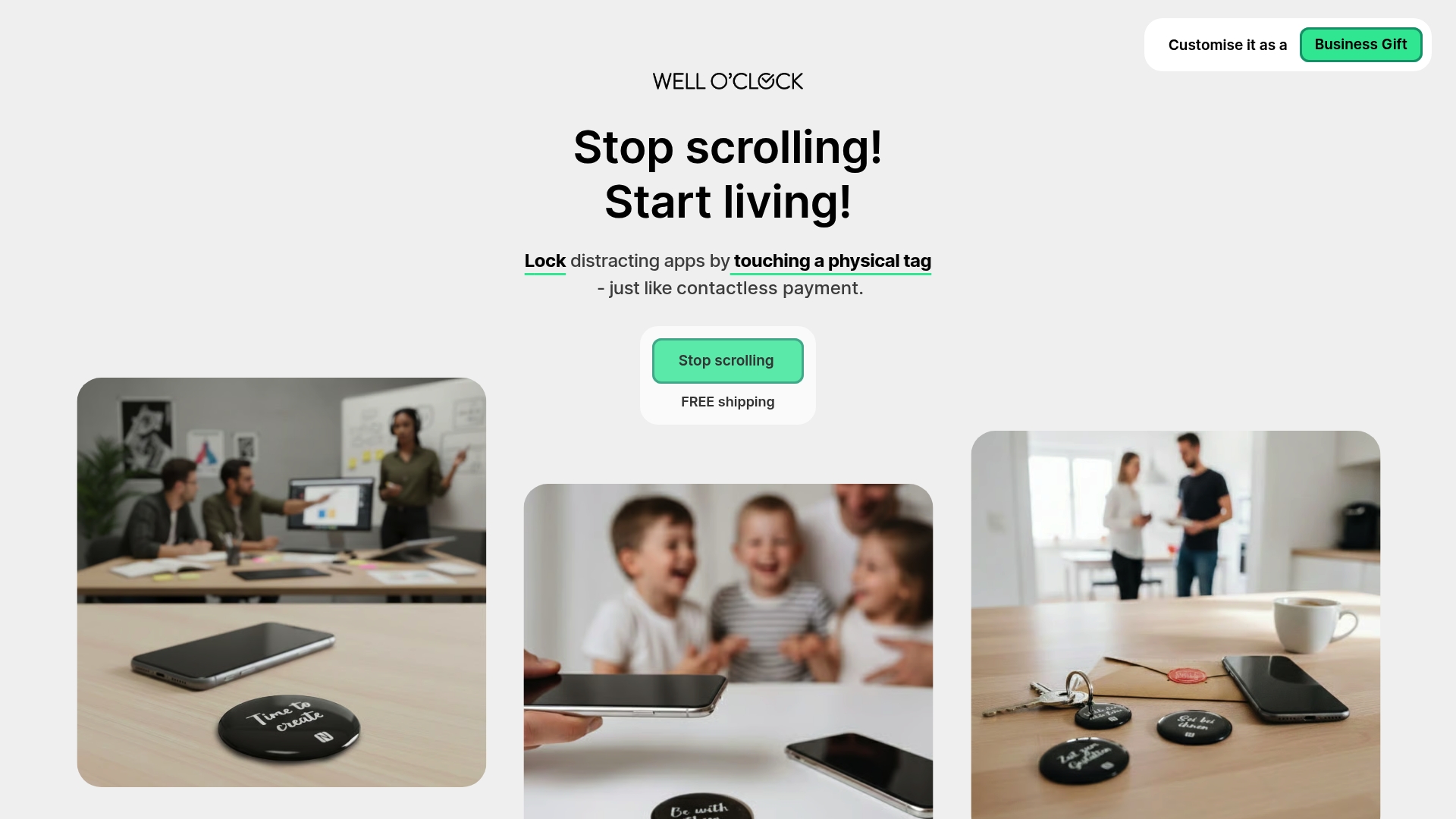
Discover how Well O'Clock combines physical NFC tags with an easy-to-use mobile app to physically block distracting apps at the moment you need it most. This unique approach helps you stop autopilot phone use, reduce notification-driven anxiety, improve focus during work and study, and protect your sleep by establishing device-free evenings. Don’t let digital distractions control your life. Visit Well O'Clock now and start building healthier screen habits today. Explore our simple setup and customizable options that fit seamlessly into your lifestyle.
Learn more how physical blockers transform your daily routine by visiting welloclock.com and take the first step toward a sharper, more balanced you.
Frequently Asked Questions
What are the key benefits of using physical phone blockers?
Physical phone blockers help you reduce distractions, enhance focus, improve sleep quality, and create healthier tech boundaries. By introducing tangible barriers, you make it harder to engage in mindless phone usage and allow yourself to concentrate on important tasks or enjoy quality time with others.
How can physical phone blockers improve my productivity?
Physical phone blockers enhance your productivity by making it more difficult to access distracting apps during work hours. This can lead to increased focus and decreased time spent switching tasks, allowing you to accomplish more meaningful work over time.
Can implementing physical phone blockers help with anxiety?
Yes, physical phone blockers can significantly reduce anxiety by establishing clear boundaries around technology use. By limiting distractions and giving yourself tech-free time, you can lower your baseline stress and create an environment that promotes mental relaxation.
How do I set up my physical phone blocker effectively?
To set up your physical phone blocker effectively, place it in locations where you typically reach for your phone out of habit, such as your work desk or bedside table. This will create a moment of conscious decision-making that interrupts your usual phone-checking behaviors.
What strategies can I use to maintain a device-free evening routine?
Establish a specific cutoff time for device usage in the evening, ideally an hour or more before bed. Replace screen time with calming activities like reading or spending time with family to promote better sleep habits and recovery.
How can physical phone blockers strengthen my relationships?
By using physical phone blockers during interactions with loved ones, you foster genuine engagement and presence. This helps deepen emotional connections and reinforces trust, allowing for more meaningful conversations and shared experiences.

Mak Kordić
Co founder
Mak Kordić is the founder and CEO of CNJ Digital, an agency based in Ljubljana, where he and his team develop UX/UI and digital products for demanding B2B projects. Over his career, he has led and co-created hundreds of digital solutions and worked with international clients.








6 Key Advantages of Physical Phone Blockers Explained
Mak Kordić
,
February 24, 2026
It’s easy to lose control of your focus and well-being when your phone drives your daily routines. Most actions you take, like checking notifications or scrolling through apps, happen automatically without a conscious decision. Research from the University of Surrey reveals that about two-thirds of your daily behaviors are initiated by habit, not by choice. This autopilot mode can drain your concentration, disrupt your sleep, and increase anxiety without you realizing it.
The good news is that you can break free from these cycles. The practical techniques ahead will show you how to disrupt unwanted habits and create healthier boundaries around phone use. By making small changes, you can rebuild intentional routines that support your mental clarity, sleep quality, productivity, and relationships.
Get ready to discover actionable strategies that transform the way you interact with technology. Each step is designed to help you regain control and enjoy tangible benefits in every area of your life.
Table of Contents
1. Boost Focus By Interrupting Autopilot Habits
- How Autopilot Habits Work
- Why This Matters For Your Focus
- How Physical Blockers Interrupt Autopilot
- The Practical Impact
2. Improve Sleep Quality With Device-Free Evenings
- How Evening Screen Time Disrupts Sleep
- The Science of Device-Free Evenings
- Making Device-Free Evenings Work
3. Reduce Anxiety By Creating Clear Tech Boundaries
- How Constant Connectivity Creates Anxiety
- The Power of Tech Boundaries
- Creating Boundaries That Actually Stick
4. Strengthen Relationships Through Present Moments
- Why Presence Matters More Than Time
- The Science of Connection
- How Phones Undermine Connection
- Creating Phone-Free Quality Time
5. Enhance Productivity With Tangible App Control
- Why Digital-Only Solutions Fall Short
- How Tangible Control Improves Workflow
- Real-World Application
- The Compounding Effect
6. Enjoy Easy Setup and Customizable Wellness Tools
- Why Simplicity Matters For Wellness
- The Power of User-Friendly Design
- Customization Without Complexity
- Getting Started Quickly
- Beyond Setup
1. Boost Focus by Interrupting Autopilot Habits
Your brain operates on autopilot far more than you realize. Research shows that approximately two-thirds of daily behaviors happen automatically, driven by habits rather than conscious decisions.
This means you're likely picking up your phone, opening apps, or checking notifications without actually deciding to do so. Your brain recognizes a trigger (boredom, anxiety, a notification sound) and responds with a learned habit before your conscious mind even registers what's happening.
The good news? You can interrupt these autopilot patterns and reclaim your focus.
How Autopilot Habits Work
Habits form through a simple loop: trigger, behavior, reward. Your phone buzzes (trigger), you check it immediately (behavior), and you get a dopamine hit (reward). Over time, this loop becomes automatic.
About 65% of behaviors occur as automatic responses to environmental cues rather than deliberate choices. This explains why you reach for your phone during meetings or when you're supposed to be working.
Why This Matters for Your Focus
Autopilot habits drain your ability to concentrate intentionally. When you're running on autopilot, your prefrontal cortex (the part responsible for focus and decision-making) isn't actively engaged. You're essentially on cruise control.
Breaking autopilot requires conscious interruption. By deliberately disrupting the habit loop, you force your brain back into intentional mode. This is where your focus returns.
How Physical Blockers Interrupt Autopilot
Physical phone blockers work by introducing a tangible friction point in your autopilot routine. Instead of reaching for your phone and reflexively opening an app, you encounter a physical barrier that requires conscious action to overcome.
This friction serves as a wake-up call to your brain. It stops the automatic sequence and forces you to pause and ask yourself: "Do I actually want to do this right now?"
The benefits include:
- Breaks habitual reaching and checking behaviors
- Creates a moment of conscious choice before app access
- Reduces notification-driven distractions
- Helps rewire neural pathways associated with phone use
- Builds awareness of trigger moments throughout your day
The Practical Impact
When you physically interrupt autopilot, something shifts. Your brain engages. You become aware of patterns you never noticed before. That urge to check email during focused work? Now you see it clearly.
" Interrupting autopilot isn't about willpower-it's about changing your environment so your default behavior becomes the healthy choice. "
Over time, this repeated interruption actually rewires your habits. New neural pathways form. What once required conscious effort becomes your new autopilot pattern.
Pro tip: Place your physical blocker in the exact location where you typically reach for your phone when distracted, so the interruption happens at the moment you need it most.
2. Improve Sleep Quality With Device-Free Evenings
Your phone is sabotaging your sleep. When you use devices in the evening, your brain receives a powerful signal that it's time to stay awake, not wind down.
The culprit is blue light and behavioral stimulation. Your devices emit wavelengths that suppress melatonin production, the hormone that tells your body when to sleep. At the same time, scrolling through notifications and content keeps your mind engaged and anxious.
Device-free evenings reverse this pattern and help you sleep deeper.
How Evening Screen Time Disrupts Sleep
Your body operates on a circadian rhythm, an internal clock that regulates sleep-wake cycles. This system relies on light cues to function properly.
When you look at screens after sunset, you're telling your body it's still daytime. Your melatonin production gets suppressed, and your circadian rhythm becomes confused. The result? You lie awake longer, sleep lighter, and wake more frequently during the night.
Studies show that bedtime smartphone use negatively impacts sleep quality, with users experiencing longer time to fall asleep and reduced total sleep duration.
The Science of Device-Free Evenings
Research demonstrates that reducing screen exposure after 9 pm enhances sleep onset and improves daytime functioning. When you eliminate devices from your evening routine, several positive changes happen:
- Melatonin production resumes naturally
- Your nervous system shifts from stimulated to relaxed
- Sleep latency (time to fall asleep) decreases
- Total sleep duration increases
- Daytime alertness and focus improve
Making Device-Free Evenings Work
The goal isn't perfection-it's progress. Start by setting a device cutoff time that works for your schedule. Most research suggests stopping screen use at least one hour before bed, though earlier is better.
Replace phone time with calming alternatives like reading, stretching, or conversation. Physical phone blockers help by removing the temptation during vulnerable moments when your willpower is lowest.
" Device-free evenings aren't about missing out; they're about reclaiming the most restorative hours of your day. "
Your body will thank you within days. Better sleep quality means sharper mornings, improved mood, and stronger immunity. When you prioritize sleep, everything else gets easier.
Pro tip: Place your physical blocker on your phone two hours before bed so you interrupt the evening checking habit before it gains momentum.
3. Reduce Anxiety by Creating Clear Tech Boundaries
Constant connectivity is constant stress. Your phone buzzes with notifications, messages pile up, and the expectation to always be available creates a low-level anxiety that follows you everywhere.
The solution isn't willpower. It's boundaries. When you establish clear rules about when and where you use your phone, you give your nervous system permission to relax.
How Constant Connectivity Creates Anxiety
Your brain wasn't designed for perpetual stimulation. Every notification triggers a small stress response as your body releases cortisol, the fight-or-flight hormone.
Over time, this constant activation becomes your baseline. You feel anxious even when nothing urgent is happening. Your mind stays in a state of partial alertness, unable to fully rest or focus. The anxiety becomes so normal you stop noticing it.
The Power of Tech Boundaries
Boundaries work because they shift control back to you. Instead of your phone dictating your attention throughout the day, you decide when to engage with it.
Research shows that setting boundaries around technology use significantly lowers anxiety and depression symptoms. When you create tech-free times and spaces, your nervous system gets actual downtime to recover.
The benefits accumulate quickly:
- Reduced notification-driven stress responses
- Lower baseline cortisol levels throughout the day
- Improved ability to focus without panic
- Better emotional regulation
- Deeper relaxation during offline hours
- Stronger relationships with people around you
Creating Boundaries That Actually Stick
Vague intentions fail. "I'll use my phone less" doesn't work because it requires constant willpower. Physical boundaries work better because they remove the decision entirely.
Creating clear digital boundaries through intentional device interaction reduces stress by preventing overstimulation. This means setting specific times when your phone is completely off limits.
Examples include:
- Breakfast with your family, phone away
- Afternoon work block from 2 to 4 pm, no interruptions
- Dinner table, devices in another room
- First hour after waking, no phone
- Last hour before bed, all devices locked
" Anxiety decreases when you stop fighting technology and start controlling when it controls you. "
Physical blockers help because they make breaking your boundary intentional rather than automatic. You can't reflexively check your phone if it requires conscious effort to unblock.
Pro tip: Create one tech-free zone first (like your bedroom or dinner table) and establish it as sacred before expanding to other times.
4. Strengthen Relationships Through Present Moments
Your phone is stealing moments you can never get back. When you're with loved ones but mentally scrolling, you're there in body only. Real connection requires presence.
Physical phone blockers create space for genuine interaction. They signal to the people you care about that they matter more than any notification.
Why Presence Matters More Than Time
You can spend hours with someone while feeling disconnected. Conversely, ten minutes of genuine presence can deepen a relationship significantly.
Presence means full attention, eye contact, and emotional engagement. When you're truly present, you pick up on subtle emotional cues. You laugh together. You share vulnerabilities. These moments build the emotional bonds that sustain relationships through difficult times.
The Science of Connection
Positive interpersonal processes like spending quality time together and sharing emotions significantly strengthen relationships. Being present during shared experiences fosters relational satisfaction and emotional intimacy.
Your brain literally synchronizes with people you're connected to during genuine interaction. This synchronization is what creates trust, understanding, and love. No amount of texting can replicate what happens when two people are fully present together.
How Phones Undermine Connection
Even when your phone isn't actively in use, its presence creates what researchers call "phubbing" (phone snubbing). Studies show that having a phone visible on the table reduces the depth of conversation and emotional connection.
Your brain allocates mental resources to monitoring the device, leaving less capacity for genuine engagement. The people you're with feel this. They sense your divided attention and withdraw emotionally.
Creating Phone-Free Quality Time
The most powerful relationships happen in phone-free spaces. By blocking access during key moments, you protect the interactions that matter most.
Examples of intentional presence:
- Meals together with devices in another room
- Weekend mornings without phones for the first hour
- Date nights with phones completely locked away
- Family conversations where phones are physically absent
- One-on-one time with children without digital interruption
Maintaining close connections and focusing on present moments enhances well-being across all ages. These moments accumulate over years into relationships defined by deep trust and intimacy.
" The quality of your relationships directly reflects the quality of your presence in them. "
Pro tip: Establish one regular "phone-free hour" with your most important people each week and protect it fiercely.
5. Enhance Productivity With Tangible App Control
Productivity isn't about working harder. It's about removing friction from the work that matters and adding friction to distractions.
Physical phone blockers give you tangible control over which apps can interrupt your focus. Instead of relying on willpower, you create an actual barrier between yourself and time-wasting applications.
Why Digital-Only Solutions Fall Short
App timers and screen time limits sound good in theory. But they're too easy to override when you're stressed or bored. Your brain recognizes them as suggestions, not boundaries.
Tangible, physical controls work differently. They require actual effort to bypass. This friction creates a moment of decision where you consciously choose to break your focus or stick with your task.
How Tangible Control Improves Workflow
Customizable workflows and task management systems significantly boost productivity by improving transparency and maintaining focus on priorities. When you can physically prevent certain apps from opening during work blocks, you protect your deep work time.
This creates several productivity benefits:
- Eliminates reflexive app checking during focused work
- Reduces context switching that destroys productivity
- Protects uninterrupted blocks for complex tasks
- Creates clear work versus break time boundaries
- Removes the cognitive load of fighting temptation
Real-World Application
Imagine you're working on an important project. Instead of relying on willpower to ignore social media, your physical blocker makes it genuinely inaccessible for the next two hours.
Your brain stops wasting energy on internal negotiation. "Should I check?" No, because checking is literally blocked. This mental clarity alone improves productivity significantly.
Creating intentional device boundaries and minimizing distractions enhances your ability to maintain focus on what matters. Professionals report completing more meaningful work in less total time when using physical blockers.
The Compounding Effect
Productivity gains compound over weeks and months. An extra hour of focused work daily becomes 20 hours monthly, 250 hours yearly.
Those hours accumulate into projects completed, skills developed, and goals achieved. Physical blockers don't just save time in the moment. They reshape what you're capable of accomplishing.
Key advantages for different work styles:
- Deep work professionals: protect uninterrupted focus blocks
- Project managers: maintain task focus during planning phases
- Students: enable genuine study sessions without digital interruption
- Creatives: prevent distraction during brainstorming and writing
- Anyone working from home: establish professional boundaries
" Real productivity control comes from making good choices automatic and bad choices difficult. "
Pro tip: Block social media and messaging apps during your peak focus hours when mental energy is highest and distractions are costliest.
6. Enjoy Easy Setup and Customizable Wellness Tools
Wellness tools should simplify your life, not complicate it. The best solutions work immediately, without requiring hours of configuration or technical expertise.
Physical phone blockers paired with intuitive apps offer straightforward setup and personalized customization. You get powerful control without the learning curve.
Why Simplicity Matters for Wellness
Complicated wellness tools fail because they demand too much friction to use. If setup takes an hour and personalization requires technical skills, most people abandon them.
Effective wellness solutions meet you where you are. They work out of the box while allowing deeper customization as you discover what works for your lifestyle.
The Power of User-Friendly Design
Wellness tools designed with customizable guidance and simple setup processes facilitate easy adoption and sustained engagement. When tools are easy to implement, people actually use them consistently.
Research shows that accessibility directly impacts success. Tools that require minimal setup experience higher adoption rates and better long-term outcomes. You spend less time learning and more time benefiting.
Customization Without Complexity
Every person's wellness journey is different. Your ideal schedule, blocked apps, and focus periods likely differ from your coworker's needs.
Digital wellness tools that offer personalized features and progress tracking adapt to individual needs while remaining simple to use. You customize what matters without navigating overwhelming options.
Key customization benefits:
- Adjust blocking schedules to match your work hours
- Choose which apps to restrict based on personal triggers
- Set different profiles for work, family, and personal time
- Progress tracking shows what's actually working
- Modify settings as your needs evolve
Getting Started Quickly
Setup should take minutes, not hours. Download, connect your physical blocker, choose your initial settings, and you're protecting your focus.
The best tools guide you through initial setup with clear prompts. Then they get out of the way until you need to adjust something. This balance between simplicity and power is what separates effective wellness tools from abandoned ones.
Establishing healthy phone habits requires tools and workflows that fit naturally into your lifestyle. When setup is effortless, you're more likely to start immediately rather than procrastinating.
" The best wellness tool is the one you'll actually use, which means it must be easy enough that setup doesn't become a barrier. "
Beyond Setup
True customization means evolving with your needs. As you discover patterns, you refine your settings. Maybe you realize you need stricter boundaries on weekends or looser ones during family time.
Flexible tools support these adjustments without requiring expert knowledge. Simple toggle switches and scheduling options let you optimize your wellness strategy over weeks and months.
Pro tip: Start with basic setup using default settings, then spend one week observing your patterns before adding advanced customizations.
Take Control of Your Focus and Wellness with Physical Phone Blockers
The article highlights the challenge of autopilot habits draining your focus, the impact of screen time on sleep quality and anxiety, and the need for clear tech boundaries to improve productivity and relationships. If you find yourself struggling to interrupt automatic phone checking, craving better sleep, or seeking a simple way to set tangible boundaries, it is time to explore solutions that help you physically break free from distractions. Concepts like "conscious interruption" and creating "tangible friction points" are key to rewiring your habits for lasting mental clarity.
Discover how Well O'Clock combines physical NFC tags with an easy-to-use mobile app to physically block distracting apps at the moment you need it most. This unique approach helps you stop autopilot phone use, reduce notification-driven anxiety, improve focus during work and study, and protect your sleep by establishing device-free evenings. Don’t let digital distractions control your life. Visit Well O'Clock now and start building healthier screen habits today. Explore our simple setup and customizable options that fit seamlessly into your lifestyle.
Learn more how physical blockers transform your daily routine by visiting welloclock.com and take the first step toward a sharper, more balanced you.
Frequently Asked Questions
What are the key benefits of using physical phone blockers?
Physical phone blockers help you reduce distractions, enhance focus, improve sleep quality, and create healthier tech boundaries. By introducing tangible barriers, you make it harder to engage in mindless phone usage and allow yourself to concentrate on important tasks or enjoy quality time with others.
How can physical phone blockers improve my productivity?
Physical phone blockers enhance your productivity by making it more difficult to access distracting apps during work hours. This can lead to increased focus and decreased time spent switching tasks, allowing you to accomplish more meaningful work over time.
Can implementing physical phone blockers help with anxiety?
Yes, physical phone blockers can significantly reduce anxiety by establishing clear boundaries around technology use. By limiting distractions and giving yourself tech-free time, you can lower your baseline stress and create an environment that promotes mental relaxation.
How do I set up my physical phone blocker effectively?
To set up your physical phone blocker effectively, place it in locations where you typically reach for your phone out of habit, such as your work desk or bedside table. This will create a moment of conscious decision-making that interrupts your usual phone-checking behaviors.
What strategies can I use to maintain a device-free evening routine?
Establish a specific cutoff time for device usage in the evening, ideally an hour or more before bed. Replace screen time with calming activities like reading or spending time with family to promote better sleep habits and recovery.
How can physical phone blockers strengthen my relationships?
By using physical phone blockers during interactions with loved ones, you foster genuine engagement and presence. This helps deepen emotional connections and reinforces trust, allowing for more meaningful conversations and shared experiences.
Mak Kordić
Co founder
Mak Kordić is the founder and CEO of CNJ Digital, an agency based in Ljubljana, where he and his team develop UX/UI and digital products for demanding B2B projects. Over his career, he has led and co-created hundreds of digital solutions and worked with international clients.
6 Key Advantages of Physical Phone Blockers Explained
Mak Kordić
,
February 24, 2026
It’s easy to lose control of your focus and well-being when your phone drives your daily routines. Most actions you take, like checking notifications or scrolling through apps, happen automatically without a conscious decision. Research from the University of Surrey reveals that about two-thirds of your daily behaviors are initiated by habit, not by choice. This autopilot mode can drain your concentration, disrupt your sleep, and increase anxiety without you realizing it.
The good news is that you can break free from these cycles. The practical techniques ahead will show you how to disrupt unwanted habits and create healthier boundaries around phone use. By making small changes, you can rebuild intentional routines that support your mental clarity, sleep quality, productivity, and relationships.
Get ready to discover actionable strategies that transform the way you interact with technology. Each step is designed to help you regain control and enjoy tangible benefits in every area of your life.
Table of Contents
1. Boost Focus By Interrupting Autopilot Habits
- How Autopilot Habits Work
- Why This Matters For Your Focus
- How Physical Blockers Interrupt Autopilot
- The Practical Impact
2. Improve Sleep Quality With Device-Free Evenings
- How Evening Screen Time Disrupts Sleep
- The Science of Device-Free Evenings
- Making Device-Free Evenings Work
3. Reduce Anxiety By Creating Clear Tech Boundaries
- How Constant Connectivity Creates Anxiety
- The Power of Tech Boundaries
- Creating Boundaries That Actually Stick
4. Strengthen Relationships Through Present Moments
- Why Presence Matters More Than Time
- The Science of Connection
- How Phones Undermine Connection
- Creating Phone-Free Quality Time
5. Enhance Productivity With Tangible App Control
- Why Digital-Only Solutions Fall Short
- How Tangible Control Improves Workflow
- Real-World Application
- The Compounding Effect
6. Enjoy Easy Setup and Customizable Wellness Tools
- Why Simplicity Matters For Wellness
- The Power of User-Friendly Design
- Customization Without Complexity
- Getting Started Quickly
- Beyond Setup
1. Boost Focus by Interrupting Autopilot Habits
Your brain operates on autopilot far more than you realize. Research shows that approximately two-thirds of daily behaviors happen automatically, driven by habits rather than conscious decisions.
This means you're likely picking up your phone, opening apps, or checking notifications without actually deciding to do so. Your brain recognizes a trigger (boredom, anxiety, a notification sound) and responds with a learned habit before your conscious mind even registers what's happening.
The good news? You can interrupt these autopilot patterns and reclaim your focus.
How Autopilot Habits Work
Habits form through a simple loop: trigger, behavior, reward. Your phone buzzes (trigger), you check it immediately (behavior), and you get a dopamine hit (reward). Over time, this loop becomes automatic.
About 65% of behaviors occur as automatic responses to environmental cues rather than deliberate choices. This explains why you reach for your phone during meetings or when you're supposed to be working.
Why This Matters for Your Focus
Autopilot habits drain your ability to concentrate intentionally. When you're running on autopilot, your prefrontal cortex (the part responsible for focus and decision-making) isn't actively engaged. You're essentially on cruise control.
Breaking autopilot requires conscious interruption. By deliberately disrupting the habit loop, you force your brain back into intentional mode. This is where your focus returns.
How Physical Blockers Interrupt Autopilot
Physical phone blockers work by introducing a tangible friction point in your autopilot routine. Instead of reaching for your phone and reflexively opening an app, you encounter a physical barrier that requires conscious action to overcome.
This friction serves as a wake-up call to your brain. It stops the automatic sequence and forces you to pause and ask yourself: "Do I actually want to do this right now?"
The benefits include:
- Breaks habitual reaching and checking behaviors
- Creates a moment of conscious choice before app access
- Reduces notification-driven distractions
- Helps rewire neural pathways associated with phone use
- Builds awareness of trigger moments throughout your day
The Practical Impact
When you physically interrupt autopilot, something shifts. Your brain engages. You become aware of patterns you never noticed before. That urge to check email during focused work? Now you see it clearly.
" Interrupting autopilot isn't about willpower-it's about changing your environment so your default behavior becomes the healthy choice. "
Over time, this repeated interruption actually rewires your habits. New neural pathways form. What once required conscious effort becomes your new autopilot pattern.
Pro tip: Place your physical blocker in the exact location where you typically reach for your phone when distracted, so the interruption happens at the moment you need it most.
2. Improve Sleep Quality With Device-Free Evenings
Your phone is sabotaging your sleep. When you use devices in the evening, your brain receives a powerful signal that it's time to stay awake, not wind down.
The culprit is blue light and behavioral stimulation. Your devices emit wavelengths that suppress melatonin production, the hormone that tells your body when to sleep. At the same time, scrolling through notifications and content keeps your mind engaged and anxious.
Device-free evenings reverse this pattern and help you sleep deeper.
How Evening Screen Time Disrupts Sleep
Your body operates on a circadian rhythm, an internal clock that regulates sleep-wake cycles. This system relies on light cues to function properly.
When you look at screens after sunset, you're telling your body it's still daytime. Your melatonin production gets suppressed, and your circadian rhythm becomes confused. The result? You lie awake longer, sleep lighter, and wake more frequently during the night.
Studies show that bedtime smartphone use negatively impacts sleep quality, with users experiencing longer time to fall asleep and reduced total sleep duration.
The Science of Device-Free Evenings
Research demonstrates that reducing screen exposure after 9 pm enhances sleep onset and improves daytime functioning. When you eliminate devices from your evening routine, several positive changes happen:
- Melatonin production resumes naturally
- Your nervous system shifts from stimulated to relaxed
- Sleep latency (time to fall asleep) decreases
- Total sleep duration increases
- Daytime alertness and focus improve
Making Device-Free Evenings Work
The goal isn't perfection-it's progress. Start by setting a device cutoff time that works for your schedule. Most research suggests stopping screen use at least one hour before bed, though earlier is better.
Replace phone time with calming alternatives like reading, stretching, or conversation. Physical phone blockers help by removing the temptation during vulnerable moments when your willpower is lowest.
" Device-free evenings aren't about missing out; they're about reclaiming the most restorative hours of your day. "
Your body will thank you within days. Better sleep quality means sharper mornings, improved mood, and stronger immunity. When you prioritize sleep, everything else gets easier.
Pro tip: Place your physical blocker on your phone two hours before bed so you interrupt the evening checking habit before it gains momentum.
3. Reduce Anxiety by Creating Clear Tech Boundaries
Constant connectivity is constant stress. Your phone buzzes with notifications, messages pile up, and the expectation to always be available creates a low-level anxiety that follows you everywhere.
The solution isn't willpower. It's boundaries. When you establish clear rules about when and where you use your phone, you give your nervous system permission to relax.
How Constant Connectivity Creates Anxiety
Your brain wasn't designed for perpetual stimulation. Every notification triggers a small stress response as your body releases cortisol, the fight-or-flight hormone.
Over time, this constant activation becomes your baseline. You feel anxious even when nothing urgent is happening. Your mind stays in a state of partial alertness, unable to fully rest or focus. The anxiety becomes so normal you stop noticing it.
The Power of Tech Boundaries
Boundaries work because they shift control back to you. Instead of your phone dictating your attention throughout the day, you decide when to engage with it.
Research shows that setting boundaries around technology use significantly lowers anxiety and depression symptoms. When you create tech-free times and spaces, your nervous system gets actual downtime to recover.
The benefits accumulate quickly:
- Reduced notification-driven stress responses
- Lower baseline cortisol levels throughout the day
- Improved ability to focus without panic
- Better emotional regulation
- Deeper relaxation during offline hours
- Stronger relationships with people around you
Creating Boundaries That Actually Stick
Vague intentions fail. "I'll use my phone less" doesn't work because it requires constant willpower. Physical boundaries work better because they remove the decision entirely.
Creating clear digital boundaries through intentional device interaction reduces stress by preventing overstimulation. This means setting specific times when your phone is completely off limits.
Examples include:
- Breakfast with your family, phone away
- Afternoon work block from 2 to 4 pm, no interruptions
- Dinner table, devices in another room
- First hour after waking, no phone
- Last hour before bed, all devices locked
" Anxiety decreases when you stop fighting technology and start controlling when it controls you. "
Physical blockers help because they make breaking your boundary intentional rather than automatic. You can't reflexively check your phone if it requires conscious effort to unblock.
Pro tip: Create one tech-free zone first (like your bedroom or dinner table) and establish it as sacred before expanding to other times.
4. Strengthen Relationships Through Present Moments
Your phone is stealing moments you can never get back. When you're with loved ones but mentally scrolling, you're there in body only. Real connection requires presence.
Physical phone blockers create space for genuine interaction. They signal to the people you care about that they matter more than any notification.
Why Presence Matters More Than Time
You can spend hours with someone while feeling disconnected. Conversely, ten minutes of genuine presence can deepen a relationship significantly.
Presence means full attention, eye contact, and emotional engagement. When you're truly present, you pick up on subtle emotional cues. You laugh together. You share vulnerabilities. These moments build the emotional bonds that sustain relationships through difficult times.
The Science of Connection
Positive interpersonal processes like spending quality time together and sharing emotions significantly strengthen relationships. Being present during shared experiences fosters relational satisfaction and emotional intimacy.
Your brain literally synchronizes with people you're connected to during genuine interaction. This synchronization is what creates trust, understanding, and love. No amount of texting can replicate what happens when two people are fully present together.
How Phones Undermine Connection
Even when your phone isn't actively in use, its presence creates what researchers call "phubbing" (phone snubbing). Studies show that having a phone visible on the table reduces the depth of conversation and emotional connection.
Your brain allocates mental resources to monitoring the device, leaving less capacity for genuine engagement. The people you're with feel this. They sense your divided attention and withdraw emotionally.
Creating Phone-Free Quality Time
The most powerful relationships happen in phone-free spaces. By blocking access during key moments, you protect the interactions that matter most.
Examples of intentional presence:
- Meals together with devices in another room
- Weekend mornings without phones for the first hour
- Date nights with phones completely locked away
- Family conversations where phones are physically absent
- One-on-one time with children without digital interruption
Maintaining close connections and focusing on present moments enhances well-being across all ages. These moments accumulate over years into relationships defined by deep trust and intimacy.
" The quality of your relationships directly reflects the quality of your presence in them. "
Pro tip: Establish one regular "phone-free hour" with your most important people each week and protect it fiercely.
5. Enhance Productivity With Tangible App Control
Productivity isn't about working harder. It's about removing friction from the work that matters and adding friction to distractions.
Physical phone blockers give you tangible control over which apps can interrupt your focus. Instead of relying on willpower, you create an actual barrier between yourself and time-wasting applications.
Why Digital-Only Solutions Fall Short
App timers and screen time limits sound good in theory. But they're too easy to override when you're stressed or bored. Your brain recognizes them as suggestions, not boundaries.
Tangible, physical controls work differently. They require actual effort to bypass. This friction creates a moment of decision where you consciously choose to break your focus or stick with your task.
How Tangible Control Improves Workflow
Customizable workflows and task management systems significantly boost productivity by improving transparency and maintaining focus on priorities. When you can physically prevent certain apps from opening during work blocks, you protect your deep work time.
This creates several productivity benefits:
- Eliminates reflexive app checking during focused work
- Reduces context switching that destroys productivity
- Protects uninterrupted blocks for complex tasks
- Creates clear work versus break time boundaries
- Removes the cognitive load of fighting temptation
Real-World Application
Imagine you're working on an important project. Instead of relying on willpower to ignore social media, your physical blocker makes it genuinely inaccessible for the next two hours.
Your brain stops wasting energy on internal negotiation. "Should I check?" No, because checking is literally blocked. This mental clarity alone improves productivity significantly.
Creating intentional device boundaries and minimizing distractions enhances your ability to maintain focus on what matters. Professionals report completing more meaningful work in less total time when using physical blockers.
The Compounding Effect
Productivity gains compound over weeks and months. An extra hour of focused work daily becomes 20 hours monthly, 250 hours yearly.
Those hours accumulate into projects completed, skills developed, and goals achieved. Physical blockers don't just save time in the moment. They reshape what you're capable of accomplishing.
Key advantages for different work styles:
- Deep work professionals: protect uninterrupted focus blocks
- Project managers: maintain task focus during planning phases
- Students: enable genuine study sessions without digital interruption
- Creatives: prevent distraction during brainstorming and writing
- Anyone working from home: establish professional boundaries
" Real productivity control comes from making good choices automatic and bad choices difficult. "
Pro tip: Block social media and messaging apps during your peak focus hours when mental energy is highest and distractions are costliest.
6. Enjoy Easy Setup and Customizable Wellness Tools
Wellness tools should simplify your life, not complicate it. The best solutions work immediately, without requiring hours of configuration or technical expertise.
Physical phone blockers paired with intuitive apps offer straightforward setup and personalized customization. You get powerful control without the learning curve.
Why Simplicity Matters for Wellness
Complicated wellness tools fail because they demand too much friction to use. If setup takes an hour and personalization requires technical skills, most people abandon them.
Effective wellness solutions meet you where you are. They work out of the box while allowing deeper customization as you discover what works for your lifestyle.
The Power of User-Friendly Design
Wellness tools designed with customizable guidance and simple setup processes facilitate easy adoption and sustained engagement. When tools are easy to implement, people actually use them consistently.
Research shows that accessibility directly impacts success. Tools that require minimal setup experience higher adoption rates and better long-term outcomes. You spend less time learning and more time benefiting.
Customization Without Complexity
Every person's wellness journey is different. Your ideal schedule, blocked apps, and focus periods likely differ from your coworker's needs.
Digital wellness tools that offer personalized features and progress tracking adapt to individual needs while remaining simple to use. You customize what matters without navigating overwhelming options.
Key customization benefits:
- Adjust blocking schedules to match your work hours
- Choose which apps to restrict based on personal triggers
- Set different profiles for work, family, and personal time
- Progress tracking shows what's actually working
- Modify settings as your needs evolve
Getting Started Quickly
Setup should take minutes, not hours. Download, connect your physical blocker, choose your initial settings, and you're protecting your focus.
The best tools guide you through initial setup with clear prompts. Then they get out of the way until you need to adjust something. This balance between simplicity and power is what separates effective wellness tools from abandoned ones.
Establishing healthy phone habits requires tools and workflows that fit naturally into your lifestyle. When setup is effortless, you're more likely to start immediately rather than procrastinating.
" The best wellness tool is the one you'll actually use, which means it must be easy enough that setup doesn't become a barrier. "
Beyond Setup
True customization means evolving with your needs. As you discover patterns, you refine your settings. Maybe you realize you need stricter boundaries on weekends or looser ones during family time.
Flexible tools support these adjustments without requiring expert knowledge. Simple toggle switches and scheduling options let you optimize your wellness strategy over weeks and months.
Pro tip: Start with basic setup using default settings, then spend one week observing your patterns before adding advanced customizations.
Take Control of Your Focus and Wellness with Physical Phone Blockers
The article highlights the challenge of autopilot habits draining your focus, the impact of screen time on sleep quality and anxiety, and the need for clear tech boundaries to improve productivity and relationships. If you find yourself struggling to interrupt automatic phone checking, craving better sleep, or seeking a simple way to set tangible boundaries, it is time to explore solutions that help you physically break free from distractions. Concepts like "conscious interruption" and creating "tangible friction points" are key to rewiring your habits for lasting mental clarity.
Discover how Well O'Clock combines physical NFC tags with an easy-to-use mobile app to physically block distracting apps at the moment you need it most. This unique approach helps you stop autopilot phone use, reduce notification-driven anxiety, improve focus during work and study, and protect your sleep by establishing device-free evenings. Don’t let digital distractions control your life. Visit Well O'Clock now and start building healthier screen habits today. Explore our simple setup and customizable options that fit seamlessly into your lifestyle.
Learn more how physical blockers transform your daily routine by visiting welloclock.com and take the first step toward a sharper, more balanced you.
Frequently Asked Questions
What are the key benefits of using physical phone blockers?
Physical phone blockers help you reduce distractions, enhance focus, improve sleep quality, and create healthier tech boundaries. By introducing tangible barriers, you make it harder to engage in mindless phone usage and allow yourself to concentrate on important tasks or enjoy quality time with others.
How can physical phone blockers improve my productivity?
Physical phone blockers enhance your productivity by making it more difficult to access distracting apps during work hours. This can lead to increased focus and decreased time spent switching tasks, allowing you to accomplish more meaningful work over time.
Can implementing physical phone blockers help with anxiety?
Yes, physical phone blockers can significantly reduce anxiety by establishing clear boundaries around technology use. By limiting distractions and giving yourself tech-free time, you can lower your baseline stress and create an environment that promotes mental relaxation.
How do I set up my physical phone blocker effectively?
To set up your physical phone blocker effectively, place it in locations where you typically reach for your phone out of habit, such as your work desk or bedside table. This will create a moment of conscious decision-making that interrupts your usual phone-checking behaviors.
What strategies can I use to maintain a device-free evening routine?
Establish a specific cutoff time for device usage in the evening, ideally an hour or more before bed. Replace screen time with calming activities like reading or spending time with family to promote better sleep habits and recovery.
How can physical phone blockers strengthen my relationships?
By using physical phone blockers during interactions with loved ones, you foster genuine engagement and presence. This helps deepen emotional connections and reinforces trust, allowing for more meaningful conversations and shared experiences.
Mak Kordić
Co founder
Mak Kordić is the founder and CEO of CNJ Digital, an agency based in Ljubljana, where he and his team develop UX/UI and digital products for demanding B2B projects. Over his career, he has led and co-created hundreds of digital solutions and worked with international clients.