
Top digital detox tips for employees: boost focus fast
Mak Kordić
,
April 28, 2026


You know the feeling. You sit down to do focused work, and within minutes your phone buzzes, a Slack notification pops up, and you have three unread emails demanding attention. Digital exhaustion from constant tool switching and nonstop notifications is quietly draining employee focus, spiking anxiety, and blurring the line between work and personal life. The good news is that practical, research-backed digital detox strategies can reverse this pattern. This article walks you through how to recognize the problem, choose the right approach, and build habits that actually stick.
Table of Contents
- Understand the signs of digital exhaustion
- Criteria for a successful digital detox at work
- Top digital detox strategies for employees
- How detox strategies compare: Impact, effort, and sustainability
- When (and how) to start: Real-world scenarios
- Measuring progress and troubleshooting setbacks
- Take your digital wellness further
- Frequently asked questions
Understand the signs of digital exhaustion
Digital exhaustion is not just feeling tired of your laptop. It is a measurable state of cognitive and emotional depletion caused by overexposure to screens, apps, and digital communication. Symptoms include difficulty concentrating, irritability, trouble sleeping, and a persistent sense of being "always on" even when you are technically off the clock.
The triggers are predictable. Constant app switching, back-to-back video calls, and after-hours Slack messages all chip away at your mental reserves. Developing [mindful tech habits](https://welloclock.com/blog-list/why mindful tech habits matter for wellness) starts with recognizing these patterns in your own day before you can change them.
The scale of this problem is striking. 81% of knowledge workers are constantly connected, and 65% say a digital detox is important, yet only 28% actually do it. That gap between knowing and doing is where most employees get stuck.
Ask yourself these questions to self-assess:
- Do you check your phone within five minutes of waking up?
- Do you feel anxious when you cannot access your email?
- Has your ability to focus on a single task for 30 minutes declined?
- Do you regularly work or scroll on devices within an hour of bedtime?
If you answered yes to two or more, digital exhaustion research suggests you are already in the risk zone.
" The cost of digital overload is not just personal discomfort. It is lost productivity, higher turnover, and a workforce running on empty. "
Criteria for a successful digital detox at work
Not every detox approach works for every workplace. Choosing the wrong method, like going completely offline in a role that requires real-time client communication, sets you up to fail before you start. The right detox fits your actual job, not an idealized version of it.
Structured organizational strategies outperform individual willpower every time. When leadership models healthy digital boundaries, employees feel safe following suit. Without that top-down signal, most people default to staying connected out of fear of missing something important.
Here is a framework for evaluating any detox approach before you commit:
1. Workplace fit: Does this strategy work within your actual role and team expectations?
2. Leadership support: Is your manager or organization willing to model or endorse this behavior?
3. Measurable outcomes: Can you track a change in focus, stress, or sleep within two to four weeks?
4. Personal feasibility: Is this something you can realistically sustain for more than a week?
For a deeper look at how screen time reduction connects to output, the data on productivity boost with screen time reduction is worth reviewing before you pick your approach.
Pro Tip: Before starting any detox, write down your three biggest digital pain points at work. This gives you a personal baseline and makes it easier to measure real progress after two weeks.
Paul Leonardi's research on digital exhaustion reinforces that sustainable change requires systemic support, not just personal resolve.
Top digital detox strategies for employees
These tactics are grounded in research and designed for real workdays, not sabbaticals.
1. Batch your communications. Check email and messages at set times, such as 9 a.m., 1 p.m., and 4 p.m. This alone can dramatically reduce the cognitive cost of constant context switching.
2. Block notifications during deep work. The APA recommends turning off notifications and managing response expectations as a core strategy for healthier technology use.
3. Apply the 20-20-20 rule. Every 20 minutes, look at something 20 feet away for 20 seconds. Nature breaks and the 20-20-20 rule measurably reduce eye strain and mental fatigue.
4. Set a hard stop for after-hours access. No devices after a set evening hour. This boundary protects sleep quality and signals to your brain that the workday is genuinely over.
5. Run device-free meetings. Laptops and phones off the table. Engagement goes up, and meeting length often goes down.
6. Take nature breaks. Even a 10-minute walk outside without your phone resets your attention system in ways that coffee cannot.
For employees who want to improve focus at work, batching communications and blocking notifications are the highest-leverage starting points. Families juggling work and home life can also find value in practical screen time habits that translate well to professional settings.

Pro Tip: Put your phone in a drawer or another room during your first two hours of work. Physical distance from the device reduces the urge to check it by more than 50% for most people.
The health benefits of less screen time extend beyond focus, including better sleep, lower blood pressure, and improved mood. Prioritizing offline time for well-being is not a luxury. It is a performance strategy.
How detox strategies compare: Impact, effort, and sustainability
Team-based detox approaches show rapid gains compared to solo efforts, and studies confirm that even modest reductions in digital use improve productivity when people actually stick with them. Compliance is the hard part, which is why team accountability matters so much.
For a broader look at how to approach screen time management, starting with the two lowest-effort, highest-impact strategies, batching and notification blocking, gives you early wins that build momentum.
When (and how) to start: Real-world scenarios
Timing matters as much as the strategy itself. The greatest benefits come from targeting edge-case moments: after-hours, before bed, and the first 30 minutes of your morning.
Here are practical scenarios to guide your rollout:
- Morning: Do not check your phone until after breakfast. Use the first 30 minutes of your workday for your most important task, not your inbox.
- Commute: If you take public transit, try one commute per week without headphones or a screen. Let your mind wander. It is more restorative than you think.
- Meetings: Propose a no-device rule for your next team meeting and observe the difference in engagement.
- Evenings: Set a device curfew 60 to 90 minutes before bed. Charge your phone outside the bedroom.
A digital detox study found that incremental adoption, starting with one or two changes before adding more, leads to better long-term compliance than trying to overhaul everything at once.
Pro Tip: Recruit one colleague to try a detox strategy with you. Peer accountability doubles the likelihood that you will stick with a new habit past the two-week mark.
If your workspace itself is full of distractions, learning how to [minimize device distractions](https://welloclock.com/blog-list/how-to-minimize device distractions for greater focus) at the environmental level is a smart parallel step.
Measuring progress and troubleshooting setbacks
You cannot improve what you do not measure. Track these three areas weekly:
- Focus span: Can you work without interruption for longer than you could two weeks ago?
- Stress levels: Rate your end-of-day stress on a scale of 1 to 10 each evening.
- Sleep quality: Are you falling asleep faster and waking up less often?
Setbacks are normal. The most common ones are relapsing into old notification habits, facing an unsupportive team culture, or hitting a high-pressure week that makes boundaries feel impossible. When that happens, shrink the goal. Even a 15-minute device-free block counts as a win.
Cutting meetings and after-hours digital activity measurably reduces stress, and stand-up desk users in one study were 42% more productive. Small environmental changes compound over time.
Pro Tip: Keep a simple weekly log with three columns: what you tried, what worked, and what got in the way. Reviewing it every Friday takes five minutes and reveals patterns you would otherwise miss.
For employees ready to go deeper, understanding why it pays to break screen addiction for mental clarity gives you the motivational foundation to push through the hard weeks.
Take your digital wellness further
Building better digital habits is a process, not a one-time fix. The strategies in this article give you a strong starting point, but having the right tools makes the difference between a good intention and a lasting change.
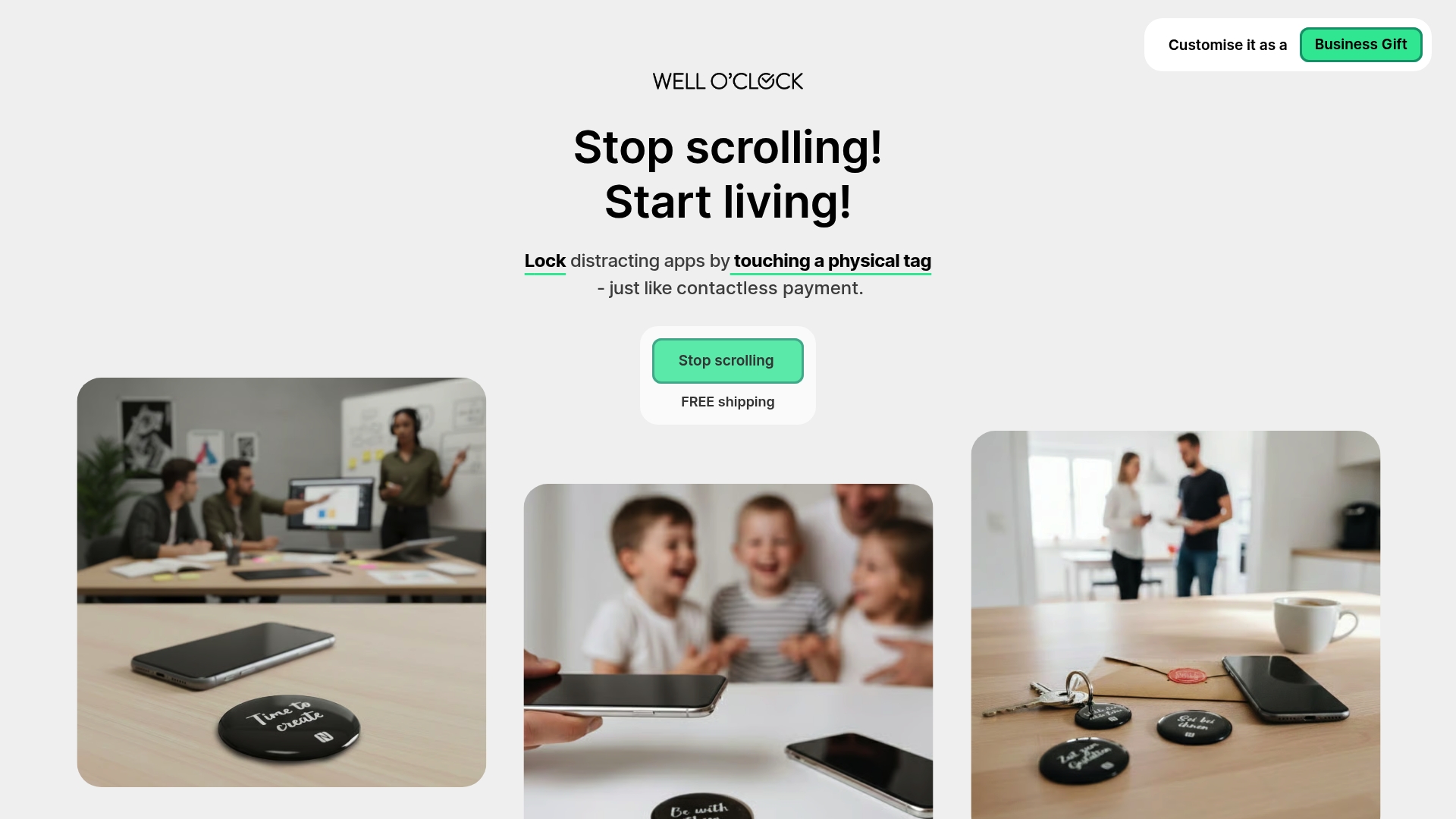
Well O'Clock combines physical NFC tags with a mobile app to help you physically interrupt autopilot phone use, no willpower required. Tap a tag, lock the distracting apps, and get back to what matters. Explore digital wellness tools designed for real workdays, browse screen time productivity tips backed by research, or visit the Well O'Clock blog for more practical guidance on building a healthier relationship with technology.
Frequently asked questions
What is a digital detox for employees?
A digital detox for employees means intentionally stepping back from work devices and apps to lower stress and restore mental clarity. Reducing digital overload consistently improves both focus and overall well-being.
How long should a workplace digital detox last?
You do not need a week-long retreat to see results. Small detox blocks of even one hour per day or designated device-free breaks produce measurable benefits over time.
What are easy first steps for a digital detox at work?
Start by turning off non-essential notifications, batching your email checks to three times a day, and protecting one meeting or lunch break as device-free. The APA recommends these exact steps as foundational moves.
Do digital detox strategies really reduce anxiety?
Yes. Screen time reduction is consistently linked to lower anxiety, better mood, and improved sleep across multiple studies. The effect is real and relatively fast.
Should employers or employees lead digital detox efforts?
Both matter, but structured organizational strategies with visible leadership modeling produce the strongest and most lasting results. Individual actions still add up, especially when leadership sets the tone.

Mak Kordić
Co founder
Mak Kordić is the founder and CEO of CNJ Digital, an agency based in Ljubljana, where he and his team develop UX/UI and digital products for demanding B2B projects. Over his career, he has led and co-created hundreds of digital solutions and worked with international clients.







Top digital detox tips for employees: boost focus fast
Mak Kordić
,
April 28, 2026
You know the feeling. You sit down to do focused work, and within minutes your phone buzzes, a Slack notification pops up, and you have three unread emails demanding attention. Digital exhaustion from constant tool switching and nonstop notifications is quietly draining employee focus, spiking anxiety, and blurring the line between work and personal life. The good news is that practical, research-backed digital detox strategies can reverse this pattern. This article walks you through how to recognize the problem, choose the right approach, and build habits that actually stick.
Table of Contents
- Understand the signs of digital exhaustion
- Criteria for a successful digital detox at work
- Top digital detox strategies for employees
- How detox strategies compare: Impact, effort, and sustainability
- When (and how) to start: Real-world scenarios
- Measuring progress and troubleshooting setbacks
- Take your digital wellness further
- Frequently asked questions
Understand the signs of digital exhaustion
Digital exhaustion is not just feeling tired of your laptop. It is a measurable state of cognitive and emotional depletion caused by overexposure to screens, apps, and digital communication. Symptoms include difficulty concentrating, irritability, trouble sleeping, and a persistent sense of being "always on" even when you are technically off the clock.
The triggers are predictable. Constant app switching, back-to-back video calls, and after-hours Slack messages all chip away at your mental reserves. Developing [mindful tech habits](https://welloclock.com/blog-list/why mindful tech habits matter for wellness) starts with recognizing these patterns in your own day before you can change them.
The scale of this problem is striking. 81% of knowledge workers are constantly connected, and 65% say a digital detox is important, yet only 28% actually do it. That gap between knowing and doing is where most employees get stuck.
Ask yourself these questions to self-assess:
- Do you check your phone within five minutes of waking up?
- Do you feel anxious when you cannot access your email?
- Has your ability to focus on a single task for 30 minutes declined?
- Do you regularly work or scroll on devices within an hour of bedtime?
If you answered yes to two or more, digital exhaustion research suggests you are already in the risk zone.
" The cost of digital overload is not just personal discomfort. It is lost productivity, higher turnover, and a workforce running on empty. "
Criteria for a successful digital detox at work
Not every detox approach works for every workplace. Choosing the wrong method, like going completely offline in a role that requires real-time client communication, sets you up to fail before you start. The right detox fits your actual job, not an idealized version of it.
Structured organizational strategies outperform individual willpower every time. When leadership models healthy digital boundaries, employees feel safe following suit. Without that top-down signal, most people default to staying connected out of fear of missing something important.
Here is a framework for evaluating any detox approach before you commit:
1. Workplace fit: Does this strategy work within your actual role and team expectations?
2. Leadership support: Is your manager or organization willing to model or endorse this behavior?
3. Measurable outcomes: Can you track a change in focus, stress, or sleep within two to four weeks?
4. Personal feasibility: Is this something you can realistically sustain for more than a week?
For a deeper look at how screen time reduction connects to output, the data on productivity boost with screen time reduction is worth reviewing before you pick your approach.
Pro Tip: Before starting any detox, write down your three biggest digital pain points at work. This gives you a personal baseline and makes it easier to measure real progress after two weeks.
Paul Leonardi's research on digital exhaustion reinforces that sustainable change requires systemic support, not just personal resolve.
Top digital detox strategies for employees
These tactics are grounded in research and designed for real workdays, not sabbaticals.
1. Batch your communications. Check email and messages at set times, such as 9 a.m., 1 p.m., and 4 p.m. This alone can dramatically reduce the cognitive cost of constant context switching.
2. Block notifications during deep work. The APA recommends turning off notifications and managing response expectations as a core strategy for healthier technology use.
3. Apply the 20-20-20 rule. Every 20 minutes, look at something 20 feet away for 20 seconds. Nature breaks and the 20-20-20 rule measurably reduce eye strain and mental fatigue.
4. Set a hard stop for after-hours access. No devices after a set evening hour. This boundary protects sleep quality and signals to your brain that the workday is genuinely over.
5. Run device-free meetings. Laptops and phones off the table. Engagement goes up, and meeting length often goes down.
6. Take nature breaks. Even a 10-minute walk outside without your phone resets your attention system in ways that coffee cannot.
For employees who want to improve focus at work, batching communications and blocking notifications are the highest-leverage starting points. Families juggling work and home life can also find value in practical screen time habits that translate well to professional settings.
Pro Tip: Put your phone in a drawer or another room during your first two hours of work. Physical distance from the device reduces the urge to check it by more than 50% for most people.
The health benefits of less screen time extend beyond focus, including better sleep, lower blood pressure, and improved mood. Prioritizing offline time for well-being is not a luxury. It is a performance strategy.
How detox strategies compare: Impact, effort, and sustainability
Team-based detox approaches show rapid gains compared to solo efforts, and studies confirm that even modest reductions in digital use improve productivity when people actually stick with them. Compliance is the hard part, which is why team accountability matters so much.
For a broader look at how to approach screen time management, starting with the two lowest-effort, highest-impact strategies, batching and notification blocking, gives you early wins that build momentum.
When (and how) to start: Real-world scenarios
Timing matters as much as the strategy itself. The greatest benefits come from targeting edge-case moments: after-hours, before bed, and the first 30 minutes of your morning.
Here are practical scenarios to guide your rollout:
- Morning: Do not check your phone until after breakfast. Use the first 30 minutes of your workday for your most important task, not your inbox.
- Commute: If you take public transit, try one commute per week without headphones or a screen. Let your mind wander. It is more restorative than you think.
- Meetings: Propose a no-device rule for your next team meeting and observe the difference in engagement.
- Evenings: Set a device curfew 60 to 90 minutes before bed. Charge your phone outside the bedroom.
A digital detox study found that incremental adoption, starting with one or two changes before adding more, leads to better long-term compliance than trying to overhaul everything at once.
Pro Tip: Recruit one colleague to try a detox strategy with you. Peer accountability doubles the likelihood that you will stick with a new habit past the two-week mark.
If your workspace itself is full of distractions, learning how to [minimize device distractions](https://welloclock.com/blog-list/how-to-minimize device distractions for greater focus) at the environmental level is a smart parallel step.
Measuring progress and troubleshooting setbacks
You cannot improve what you do not measure. Track these three areas weekly:
- Focus span: Can you work without interruption for longer than you could two weeks ago?
- Stress levels: Rate your end-of-day stress on a scale of 1 to 10 each evening.
- Sleep quality: Are you falling asleep faster and waking up less often?
Setbacks are normal. The most common ones are relapsing into old notification habits, facing an unsupportive team culture, or hitting a high-pressure week that makes boundaries feel impossible. When that happens, shrink the goal. Even a 15-minute device-free block counts as a win.
Cutting meetings and after-hours digital activity measurably reduces stress, and stand-up desk users in one study were 42% more productive. Small environmental changes compound over time.
Pro Tip: Keep a simple weekly log with three columns: what you tried, what worked, and what got in the way. Reviewing it every Friday takes five minutes and reveals patterns you would otherwise miss.
For employees ready to go deeper, understanding why it pays to break screen addiction for mental clarity gives you the motivational foundation to push through the hard weeks.
Take your digital wellness further
Building better digital habits is a process, not a one-time fix. The strategies in this article give you a strong starting point, but having the right tools makes the difference between a good intention and a lasting change.
Well O'Clock combines physical NFC tags with a mobile app to help you physically interrupt autopilot phone use, no willpower required. Tap a tag, lock the distracting apps, and get back to what matters. Explore digital wellness tools designed for real workdays, browse screen time productivity tips backed by research, or visit the Well O'Clock blog for more practical guidance on building a healthier relationship with technology.
Frequently asked questions
What is a digital detox for employees?
A digital detox for employees means intentionally stepping back from work devices and apps to lower stress and restore mental clarity. Reducing digital overload consistently improves both focus and overall well-being.
How long should a workplace digital detox last?
You do not need a week-long retreat to see results. Small detox blocks of even one hour per day or designated device-free breaks produce measurable benefits over time.
What are easy first steps for a digital detox at work?
Start by turning off non-essential notifications, batching your email checks to three times a day, and protecting one meeting or lunch break as device-free. The APA recommends these exact steps as foundational moves.
Do digital detox strategies really reduce anxiety?
Yes. Screen time reduction is consistently linked to lower anxiety, better mood, and improved sleep across multiple studies. The effect is real and relatively fast.
Should employers or employees lead digital detox efforts?
Both matter, but structured organizational strategies with visible leadership modeling produce the strongest and most lasting results. Individual actions still add up, especially when leadership sets the tone.
Mak Kordić
Co founder
Mak Kordić is the founder and CEO of CNJ Digital, an agency based in Ljubljana, where he and his team develop UX/UI and digital products for demanding B2B projects. Over his career, he has led and co-created hundreds of digital solutions and worked with international clients.
Top digital detox tips for employees: boost focus fast
Mak Kordić
,
April 28, 2026
You know the feeling. You sit down to do focused work, and within minutes your phone buzzes, a Slack notification pops up, and you have three unread emails demanding attention. Digital exhaustion from constant tool switching and nonstop notifications is quietly draining employee focus, spiking anxiety, and blurring the line between work and personal life. The good news is that practical, research-backed digital detox strategies can reverse this pattern. This article walks you through how to recognize the problem, choose the right approach, and build habits that actually stick.
Table of Contents
- Understand the signs of digital exhaustion
- Criteria for a successful digital detox at work
- Top digital detox strategies for employees
- How detox strategies compare: Impact, effort, and sustainability
- When (and how) to start: Real-world scenarios
- Measuring progress and troubleshooting setbacks
- Take your digital wellness further
- Frequently asked questions
Understand the signs of digital exhaustion
Digital exhaustion is not just feeling tired of your laptop. It is a measurable state of cognitive and emotional depletion caused by overexposure to screens, apps, and digital communication. Symptoms include difficulty concentrating, irritability, trouble sleeping, and a persistent sense of being "always on" even when you are technically off the clock.
The triggers are predictable. Constant app switching, back-to-back video calls, and after-hours Slack messages all chip away at your mental reserves. Developing [mindful tech habits](https://welloclock.com/blog-list/why mindful tech habits matter for wellness) starts with recognizing these patterns in your own day before you can change them.
The scale of this problem is striking. 81% of knowledge workers are constantly connected, and 65% say a digital detox is important, yet only 28% actually do it. That gap between knowing and doing is where most employees get stuck.
Ask yourself these questions to self-assess:
- Do you check your phone within five minutes of waking up?
- Do you feel anxious when you cannot access your email?
- Has your ability to focus on a single task for 30 minutes declined?
- Do you regularly work or scroll on devices within an hour of bedtime?
If you answered yes to two or more, digital exhaustion research suggests you are already in the risk zone.
" The cost of digital overload is not just personal discomfort. It is lost productivity, higher turnover, and a workforce running on empty. "
Criteria for a successful digital detox at work
Not every detox approach works for every workplace. Choosing the wrong method, like going completely offline in a role that requires real-time client communication, sets you up to fail before you start. The right detox fits your actual job, not an idealized version of it.
Structured organizational strategies outperform individual willpower every time. When leadership models healthy digital boundaries, employees feel safe following suit. Without that top-down signal, most people default to staying connected out of fear of missing something important.
Here is a framework for evaluating any detox approach before you commit:
1. Workplace fit: Does this strategy work within your actual role and team expectations?
2. Leadership support: Is your manager or organization willing to model or endorse this behavior?
3. Measurable outcomes: Can you track a change in focus, stress, or sleep within two to four weeks?
4. Personal feasibility: Is this something you can realistically sustain for more than a week?
For a deeper look at how screen time reduction connects to output, the data on productivity boost with screen time reduction is worth reviewing before you pick your approach.
Pro Tip: Before starting any detox, write down your three biggest digital pain points at work. This gives you a personal baseline and makes it easier to measure real progress after two weeks.
Paul Leonardi's research on digital exhaustion reinforces that sustainable change requires systemic support, not just personal resolve.
Top digital detox strategies for employees
These tactics are grounded in research and designed for real workdays, not sabbaticals.
1. Batch your communications. Check email and messages at set times, such as 9 a.m., 1 p.m., and 4 p.m. This alone can dramatically reduce the cognitive cost of constant context switching.
2. Block notifications during deep work. The APA recommends turning off notifications and managing response expectations as a core strategy for healthier technology use.
3. Apply the 20-20-20 rule. Every 20 minutes, look at something 20 feet away for 20 seconds. Nature breaks and the 20-20-20 rule measurably reduce eye strain and mental fatigue.
4. Set a hard stop for after-hours access. No devices after a set evening hour. This boundary protects sleep quality and signals to your brain that the workday is genuinely over.
5. Run device-free meetings. Laptops and phones off the table. Engagement goes up, and meeting length often goes down.
6. Take nature breaks. Even a 10-minute walk outside without your phone resets your attention system in ways that coffee cannot.
For employees who want to improve focus at work, batching communications and blocking notifications are the highest-leverage starting points. Families juggling work and home life can also find value in practical screen time habits that translate well to professional settings.
Pro Tip: Put your phone in a drawer or another room during your first two hours of work. Physical distance from the device reduces the urge to check it by more than 50% for most people.
The health benefits of less screen time extend beyond focus, including better sleep, lower blood pressure, and improved mood. Prioritizing offline time for well-being is not a luxury. It is a performance strategy.
How detox strategies compare: Impact, effort, and sustainability
Team-based detox approaches show rapid gains compared to solo efforts, and studies confirm that even modest reductions in digital use improve productivity when people actually stick with them. Compliance is the hard part, which is why team accountability matters so much.
For a broader look at how to approach screen time management, starting with the two lowest-effort, highest-impact strategies, batching and notification blocking, gives you early wins that build momentum.
When (and how) to start: Real-world scenarios
Timing matters as much as the strategy itself. The greatest benefits come from targeting edge-case moments: after-hours, before bed, and the first 30 minutes of your morning.
Here are practical scenarios to guide your rollout:
- Morning: Do not check your phone until after breakfast. Use the first 30 minutes of your workday for your most important task, not your inbox.
- Commute: If you take public transit, try one commute per week without headphones or a screen. Let your mind wander. It is more restorative than you think.
- Meetings: Propose a no-device rule for your next team meeting and observe the difference in engagement.
- Evenings: Set a device curfew 60 to 90 minutes before bed. Charge your phone outside the bedroom.
A digital detox study found that incremental adoption, starting with one or two changes before adding more, leads to better long-term compliance than trying to overhaul everything at once.
Pro Tip: Recruit one colleague to try a detox strategy with you. Peer accountability doubles the likelihood that you will stick with a new habit past the two-week mark.
If your workspace itself is full of distractions, learning how to [minimize device distractions](https://welloclock.com/blog-list/how-to-minimize device distractions for greater focus) at the environmental level is a smart parallel step.
Measuring progress and troubleshooting setbacks
You cannot improve what you do not measure. Track these three areas weekly:
- Focus span: Can you work without interruption for longer than you could two weeks ago?
- Stress levels: Rate your end-of-day stress on a scale of 1 to 10 each evening.
- Sleep quality: Are you falling asleep faster and waking up less often?
Setbacks are normal. The most common ones are relapsing into old notification habits, facing an unsupportive team culture, or hitting a high-pressure week that makes boundaries feel impossible. When that happens, shrink the goal. Even a 15-minute device-free block counts as a win.
Cutting meetings and after-hours digital activity measurably reduces stress, and stand-up desk users in one study were 42% more productive. Small environmental changes compound over time.
Pro Tip: Keep a simple weekly log with three columns: what you tried, what worked, and what got in the way. Reviewing it every Friday takes five minutes and reveals patterns you would otherwise miss.
For employees ready to go deeper, understanding why it pays to break screen addiction for mental clarity gives you the motivational foundation to push through the hard weeks.
Take your digital wellness further
Building better digital habits is a process, not a one-time fix. The strategies in this article give you a strong starting point, but having the right tools makes the difference between a good intention and a lasting change.
Well O'Clock combines physical NFC tags with a mobile app to help you physically interrupt autopilot phone use, no willpower required. Tap a tag, lock the distracting apps, and get back to what matters. Explore digital wellness tools designed for real workdays, browse screen time productivity tips backed by research, or visit the Well O'Clock blog for more practical guidance on building a healthier relationship with technology.
Frequently asked questions
What is a digital detox for employees?
A digital detox for employees means intentionally stepping back from work devices and apps to lower stress and restore mental clarity. Reducing digital overload consistently improves both focus and overall well-being.
How long should a workplace digital detox last?
You do not need a week-long retreat to see results. Small detox blocks of even one hour per day or designated device-free breaks produce measurable benefits over time.
What are easy first steps for a digital detox at work?
Start by turning off non-essential notifications, batching your email checks to three times a day, and protecting one meeting or lunch break as device-free. The APA recommends these exact steps as foundational moves.
Do digital detox strategies really reduce anxiety?
Yes. Screen time reduction is consistently linked to lower anxiety, better mood, and improved sleep across multiple studies. The effect is real and relatively fast.
Should employers or employees lead digital detox efforts?
Both matter, but structured organizational strategies with visible leadership modeling produce the strongest and most lasting results. Individual actions still add up, especially when leadership sets the tone.
Mak Kordić
Co founder
Mak Kordić is the founder and CEO of CNJ Digital, an agency based in Ljubljana, where he and his team develop UX/UI and digital products for demanding B2B projects. Over his career, he has led and co-created hundreds of digital solutions and worked with international clients.