
How to set phone boundaries for kids in 2026
Mak Kordić
,
March 23, 2026


Managing your child's phone use feels like an uphill battle. You set rules, but they find workarounds. You worry about sleep, mental health, and screen addiction. Research shows that establishing clear phone boundaries correlates with improved child wellbeing, including reduced screen time and better sleep quality. This guide delivers practical, research-backed strategies to help you set effective phone boundaries for kids aged 6 to 14.
Table of Contents
- Understanding The Problem: Why Setting Phone Boundaries Matters
- Preparing To Set Phone Boundaries: Tools And Mindset
- Executing Phone Boundaries: Practical Steps To Implement And Maintain
- Verifying Success And Troubleshooting Common Challenges
- Discover Tools To Support Your Family's Screen Time Goals
Understanding the problem: why setting phone boundaries matters
Excessive phone use among kids creates serious challenges. Around 70 percent of children exceed recommended screen time management limits, leading to measurable harm. Poor sleep, declining academic performance, and mental health struggles all correlate with unmanaged device access.
Not all screen activities pose equal risks. Gaming and social media apps drive higher rates of problematic use compared to educational content or video calls with family. The type of engagement matters as much as total hours.
Excessive screen time is associated with mental health problems including anxiety, depression, and behavior issues in children and adolescents. ADHD symptoms also worsen with prolonged, unstructured phone use. These impacts accumulate over time, making early intervention critical.
" The relationship between screen time and child wellbeing is complex, but clear boundaries consistently show positive outcomes across multiple studies. "
Understanding these risks transforms boundary setting from nagging to necessity. Parents who grasp the stakes find it easier to stay consistent through inevitable pushback. The research validates what many parents already sense: too much phone time hurts kids in measurable ways.
Key risk factors to watch:
- Late night device access disrupting sleep cycles
- Social media use before age 13 increasing anxiety
- Gaming sessions exceeding two hours daily
- Using phones as emotional regulation tools
Recognizing the problem scope prepares you for the next step: gathering the right tools and mindset to create lasting change.
Preparing to set phone boundaries: tools and mindset
Successful boundary setting starts before you have the first conversation with your child. Preparation means understanding available tools, establishing routines, and adopting the right mindset.
Parental controls on Android and iOS devices allow setting screen time limits, restricting apps, and managing content. Android OS 16 and newer iOS versions offer robust native controls. Familiarize yourself with these features before implementing rules.
Your mindset shapes everything. View boundaries as teaching self-regulation, not exerting control. Kids need to learn responsible digital citizenship, and you're the guide. Harsh bans without explanation breed resentment and sneaking.
Establish warm, predictable daily routines first. Simple, consistent habits work better than complicated tracking apps or sudden bans. Routines create structure that makes phone rules feel natural rather than punitive.
Essential preparation steps:
- Research and activate parental controls on all family devices
- Create a daily schedule showing tech-free times
- Discuss upcoming changes with your co-parent or household adults
- Prepare simple explanations for why each rule exists
Discuss rules openly before implementation. Explain your reasoning: better sleep, improved focus, stronger family connections. When children understand the "why," compliance improves dramatically. Avoid vague statements like "because I said so."
Pro Tip: Write down your phone rules together with your child. Post them visibly in a shared space. Physical documentation reduces arguments about what was agreed upon.
Consistency beats perfection. You don't need complicated systems or expensive monitoring software. You need clear rules, warm enforcement, and steady follow-through. This approach to mindful phone use builds lifelong habits rather than temporary compliance.
With tools ready and mindset aligned, you're prepared to implement specific boundaries that stick.

Executing phone boundaries: practical steps to implement and maintain
Implementation transforms preparation into action. Follow these steps to establish phone boundaries that work for your family.
1. Set clear, age-appropriate rules with child involvement. Sit down together and discuss reasonable limits. For ages 6 to 10, consider one hour daily. For ages 11 to 14, two hours might work. Adjust based on individual needs and responsibilities.
2. Use parental controls to enforce agreed limits. Configure app restrictions, content filters, and daily time caps. Set these together initially so your child understands how the technology works. Transparency builds trust.
3. Prohibit phone use in bedrooms, especially at bedtime. Limiting device access in the bedroom is one of the most effective strategies for reducing screen time. Establish a central charging station where all family phones spend the night.
4. Establish tech-free times and zones. Designate family meals, homework time, and the first/last hour of the day as phone-free periods. Create physical zones like the dining table or bedrooms where devices don't belong.
5. Regularly review and adjust rules as children mature. Schedule monthly check-ins to discuss what's working and what needs modification. Parenting restrictions reduce adolescent screen time but their impact declines as children gain independence, so adapt accordingly.
Maintain open communication throughout implementation. Ask your child how the rules feel. Listen to concerns without immediately dismissing them. Adjust when reasonable, but stay firm on core boundaries like bedroom bans.
Model healthy phone habits yourself. Children notice when parents scroll during dinner but forbid kids from doing the same. Your behavior sets the real standard, regardless of stated rules.
Pro Tip: Use positive reinforcement for compliance. Celebrate screen-free family evenings or acknowledge when your child self-regulates without reminders. Recognition motivates better than criticism.
For additional support, explore practical screen time tips and evidence-based approaches to healthy screen time habits that complement your boundary-setting efforts.
With boundaries in place, the next challenge is verifying they're working and troubleshooting inevitable obstacles.
Verifying success and troubleshooting common challenges
How do you know if your phone boundaries are working? Look for specific indicators rather than vague feelings.
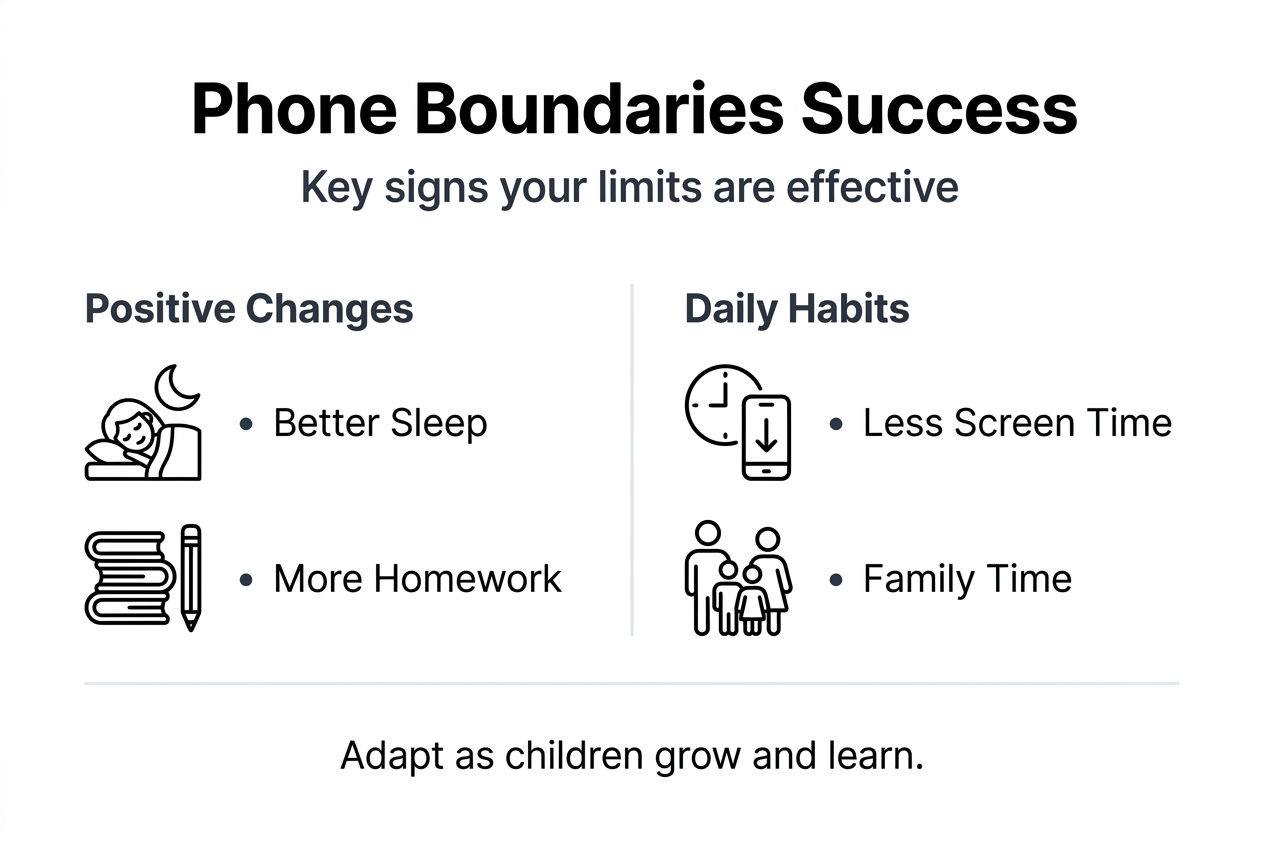
Signs of success include measurably reduced daily screen time, improved sleep patterns, better homework completion, and more engaged family interactions. Track these markers over weeks, not days. Real change takes time.
Challenges emerge as children test limits and assert independence. Pushback intensifies around ages 12 to 14 when peer influence peaks. Expect resistance and plan responses in advance.
Common obstacles and solutions:
- Child claims "everyone else has unlimited access" → Validate feelings but hold firm; research actual peer norms with other parents
- Sneaking devices after bedtime → Install the charging station in your bedroom; make physical access impossible
- Arguments about "educational" screen time → Distinguish active learning from passive consumption; set separate limits
- Rules working initially but fading → Schedule monthly reviews; adjust boundaries collaboratively before resentment builds
The effect of high restriction diminished with age, so flexibility and communication are key. As children demonstrate responsibility, gradually expand freedoms. Tie increased privileges to consistent compliance with existing rules.
Maintain warmth and consistency even during conflicts. Harsh enforcement damages relationships without improving outcomes. Explain consequences calmly and follow through without anger.
Avoid sudden, dramatic bans when problems arise. Instead, address specific behaviors: "I noticed you stayed up past 11 scrolling last night. Let's talk about what happened and how to prevent it."
Use positive reinforcement strategically. Acknowledge self-regulation attempts even when imperfect. Building intrinsic motivation matters more than perfect compliance.
Be ready to revisit tools and habits periodically. What works for a seven year old won't work at thirteen. Regular adjustments demonstrate that rules serve development, not control. For ongoing support, explore strategies to reduce screen time naturally that align with your family's evolving needs.
Troubleshooting requires patience, but the payoff justifies the effort. Children who learn healthy phone habits now carry those skills into adulthood.
Discover tools to support your family's screen time goals
Setting phone boundaries works best with the right support tools. Well O'Clock offers a unique approach combining physical NFC tags with app-locking technology, helping families create tangible interruptions to autopilot phone use.

Unlike software-only solutions, Well O'Clock's system requires a physical action to unlock distracting apps. This outside-the-phone approach helps children build awareness around their device habits. Parents can customize which apps lock, when they lock, and where unlock tags are placed.
Explore Well O'Clock digital wellbeing tools designed to support your phone boundary efforts with child-friendly controls. Join a growing community of families prioritizing mindful tech habits for better focus, wellness, and stronger connections.
FAQ
How can I involve my child in setting phone boundaries?
Discuss rules openly and explain their benefits for sleep, focus, and wellbeing. Encourage your child to suggest reasonable limits and participate in deciding consequences. This collaborative approach increases buy-in and helps children take ownership of their digital habits rather than viewing boundaries as imposed punishments.
What are effective ways to enforce phone rules without constant monitoring?
Model healthy phone habits yourself by following the same rules you set for your children. Use consistent daily routines that naturally limit device access, like charging stations and tech-free meal times. Positive reinforcement for compliance works better than surveillance, building intrinsic motivation rather than dependence on external monitoring.
How should phone boundaries evolve as my child gets older?
Gradually increase freedom as your child demonstrates consistent responsibility and self-regulation. Maintain ongoing dialogue about why rules exist and invite input on appropriate adjustments. Balance expanding privileges with continued structure, recognizing that adolescents need both autonomy and guidance as they develop mature digital citizenship skills.
Are parental controls enough to manage screen time effectively?
Parental controls help enforce agreed limits but don't replace active parenting and relationship-building. Technology is a tool, not a babysitter; parents need active involvement in children's digital lives. Combine technological safeguards with open communication, role modeling, and teaching critical thinking about media consumption for comprehensive screen time management.

Mak Kordić
Co founder
Mak Kordić is the founder and CEO of CNJ Digital, an agency based in Ljubljana, where he and his team develop UX/UI and digital products for demanding B2B projects. Over his career, he has led and co-created hundreds of digital solutions and worked with international clients.








How to set phone boundaries for kids in 2026
Mak Kordić
,
March 23, 2026
Managing your child's phone use feels like an uphill battle. You set rules, but they find workarounds. You worry about sleep, mental health, and screen addiction. Research shows that establishing clear phone boundaries correlates with improved child wellbeing, including reduced screen time and better sleep quality. This guide delivers practical, research-backed strategies to help you set effective phone boundaries for kids aged 6 to 14.
Table of Contents
- Understanding The Problem: Why Setting Phone Boundaries Matters
- Preparing To Set Phone Boundaries: Tools And Mindset
- Executing Phone Boundaries: Practical Steps To Implement And Maintain
- Verifying Success And Troubleshooting Common Challenges
- Discover Tools To Support Your Family's Screen Time Goals
Understanding the problem: why setting phone boundaries matters
Excessive phone use among kids creates serious challenges. Around 70 percent of children exceed recommended screen time management limits, leading to measurable harm. Poor sleep, declining academic performance, and mental health struggles all correlate with unmanaged device access.
Not all screen activities pose equal risks. Gaming and social media apps drive higher rates of problematic use compared to educational content or video calls with family. The type of engagement matters as much as total hours.
Excessive screen time is associated with mental health problems including anxiety, depression, and behavior issues in children and adolescents. ADHD symptoms also worsen with prolonged, unstructured phone use. These impacts accumulate over time, making early intervention critical.
" The relationship between screen time and child wellbeing is complex, but clear boundaries consistently show positive outcomes across multiple studies. "
Understanding these risks transforms boundary setting from nagging to necessity. Parents who grasp the stakes find it easier to stay consistent through inevitable pushback. The research validates what many parents already sense: too much phone time hurts kids in measurable ways.
Key risk factors to watch:
- Late night device access disrupting sleep cycles
- Social media use before age 13 increasing anxiety
- Gaming sessions exceeding two hours daily
- Using phones as emotional regulation tools
Recognizing the problem scope prepares you for the next step: gathering the right tools and mindset to create lasting change.
Preparing to set phone boundaries: tools and mindset
Successful boundary setting starts before you have the first conversation with your child. Preparation means understanding available tools, establishing routines, and adopting the right mindset.
Parental controls on Android and iOS devices allow setting screen time limits, restricting apps, and managing content. Android OS 16 and newer iOS versions offer robust native controls. Familiarize yourself with these features before implementing rules.
Your mindset shapes everything. View boundaries as teaching self-regulation, not exerting control. Kids need to learn responsible digital citizenship, and you're the guide. Harsh bans without explanation breed resentment and sneaking.
Establish warm, predictable daily routines first. Simple, consistent habits work better than complicated tracking apps or sudden bans. Routines create structure that makes phone rules feel natural rather than punitive.
Essential preparation steps:
- Research and activate parental controls on all family devices
- Create a daily schedule showing tech-free times
- Discuss upcoming changes with your co-parent or household adults
- Prepare simple explanations for why each rule exists
Discuss rules openly before implementation. Explain your reasoning: better sleep, improved focus, stronger family connections. When children understand the "why," compliance improves dramatically. Avoid vague statements like "because I said so."
Pro Tip: Write down your phone rules together with your child. Post them visibly in a shared space. Physical documentation reduces arguments about what was agreed upon.
Consistency beats perfection. You don't need complicated systems or expensive monitoring software. You need clear rules, warm enforcement, and steady follow-through. This approach to mindful phone use builds lifelong habits rather than temporary compliance.
With tools ready and mindset aligned, you're prepared to implement specific boundaries that stick.
Executing phone boundaries: practical steps to implement and maintain
Implementation transforms preparation into action. Follow these steps to establish phone boundaries that work for your family.
1. Set clear, age-appropriate rules with child involvement. Sit down together and discuss reasonable limits. For ages 6 to 10, consider one hour daily. For ages 11 to 14, two hours might work. Adjust based on individual needs and responsibilities.
2. Use parental controls to enforce agreed limits. Configure app restrictions, content filters, and daily time caps. Set these together initially so your child understands how the technology works. Transparency builds trust.
3. Prohibit phone use in bedrooms, especially at bedtime. Limiting device access in the bedroom is one of the most effective strategies for reducing screen time. Establish a central charging station where all family phones spend the night.
4. Establish tech-free times and zones. Designate family meals, homework time, and the first/last hour of the day as phone-free periods. Create physical zones like the dining table or bedrooms where devices don't belong.
5. Regularly review and adjust rules as children mature. Schedule monthly check-ins to discuss what's working and what needs modification. Parenting restrictions reduce adolescent screen time but their impact declines as children gain independence, so adapt accordingly.
Maintain open communication throughout implementation. Ask your child how the rules feel. Listen to concerns without immediately dismissing them. Adjust when reasonable, but stay firm on core boundaries like bedroom bans.
Model healthy phone habits yourself. Children notice when parents scroll during dinner but forbid kids from doing the same. Your behavior sets the real standard, regardless of stated rules.
Pro Tip: Use positive reinforcement for compliance. Celebrate screen-free family evenings or acknowledge when your child self-regulates without reminders. Recognition motivates better than criticism.
For additional support, explore practical screen time tips and evidence-based approaches to healthy screen time habits that complement your boundary-setting efforts.
With boundaries in place, the next challenge is verifying they're working and troubleshooting inevitable obstacles.
Verifying success and troubleshooting common challenges
How do you know if your phone boundaries are working? Look for specific indicators rather than vague feelings.
Signs of success include measurably reduced daily screen time, improved sleep patterns, better homework completion, and more engaged family interactions. Track these markers over weeks, not days. Real change takes time.
Challenges emerge as children test limits and assert independence. Pushback intensifies around ages 12 to 14 when peer influence peaks. Expect resistance and plan responses in advance.
Common obstacles and solutions:
- Child claims "everyone else has unlimited access" → Validate feelings but hold firm; research actual peer norms with other parents
- Sneaking devices after bedtime → Install the charging station in your bedroom; make physical access impossible
- Arguments about "educational" screen time → Distinguish active learning from passive consumption; set separate limits
- Rules working initially but fading → Schedule monthly reviews; adjust boundaries collaboratively before resentment builds
The effect of high restriction diminished with age, so flexibility and communication are key. As children demonstrate responsibility, gradually expand freedoms. Tie increased privileges to consistent compliance with existing rules.
Maintain warmth and consistency even during conflicts. Harsh enforcement damages relationships without improving outcomes. Explain consequences calmly and follow through without anger.
Avoid sudden, dramatic bans when problems arise. Instead, address specific behaviors: "I noticed you stayed up past 11 scrolling last night. Let's talk about what happened and how to prevent it."
Use positive reinforcement strategically. Acknowledge self-regulation attempts even when imperfect. Building intrinsic motivation matters more than perfect compliance.
Be ready to revisit tools and habits periodically. What works for a seven year old won't work at thirteen. Regular adjustments demonstrate that rules serve development, not control. For ongoing support, explore strategies to reduce screen time naturally that align with your family's evolving needs.
Troubleshooting requires patience, but the payoff justifies the effort. Children who learn healthy phone habits now carry those skills into adulthood.
Discover tools to support your family's screen time goals
Setting phone boundaries works best with the right support tools. Well O'Clock offers a unique approach combining physical NFC tags with app-locking technology, helping families create tangible interruptions to autopilot phone use.
Unlike software-only solutions, Well O'Clock's system requires a physical action to unlock distracting apps. This outside-the-phone approach helps children build awareness around their device habits. Parents can customize which apps lock, when they lock, and where unlock tags are placed.
Explore Well O'Clock digital wellbeing tools designed to support your phone boundary efforts with child-friendly controls. Join a growing community of families prioritizing mindful tech habits for better focus, wellness, and stronger connections.
FAQ
How can I involve my child in setting phone boundaries?
Discuss rules openly and explain their benefits for sleep, focus, and wellbeing. Encourage your child to suggest reasonable limits and participate in deciding consequences. This collaborative approach increases buy-in and helps children take ownership of their digital habits rather than viewing boundaries as imposed punishments.
What are effective ways to enforce phone rules without constant monitoring?
Model healthy phone habits yourself by following the same rules you set for your children. Use consistent daily routines that naturally limit device access, like charging stations and tech-free meal times. Positive reinforcement for compliance works better than surveillance, building intrinsic motivation rather than dependence on external monitoring.
How should phone boundaries evolve as my child gets older?
Gradually increase freedom as your child demonstrates consistent responsibility and self-regulation. Maintain ongoing dialogue about why rules exist and invite input on appropriate adjustments. Balance expanding privileges with continued structure, recognizing that adolescents need both autonomy and guidance as they develop mature digital citizenship skills.
Are parental controls enough to manage screen time effectively?
Parental controls help enforce agreed limits but don't replace active parenting and relationship-building. Technology is a tool, not a babysitter; parents need active involvement in children's digital lives. Combine technological safeguards with open communication, role modeling, and teaching critical thinking about media consumption for comprehensive screen time management.
Mak Kordić
Co founder
Mak Kordić is the founder and CEO of CNJ Digital, an agency based in Ljubljana, where he and his team develop UX/UI and digital products for demanding B2B projects. Over his career, he has led and co-created hundreds of digital solutions and worked with international clients.
How to set phone boundaries for kids in 2026
Mak Kordić
,
March 23, 2026
Managing your child's phone use feels like an uphill battle. You set rules, but they find workarounds. You worry about sleep, mental health, and screen addiction. Research shows that establishing clear phone boundaries correlates with improved child wellbeing, including reduced screen time and better sleep quality. This guide delivers practical, research-backed strategies to help you set effective phone boundaries for kids aged 6 to 14.
Table of Contents
- Understanding The Problem: Why Setting Phone Boundaries Matters
- Preparing To Set Phone Boundaries: Tools And Mindset
- Executing Phone Boundaries: Practical Steps To Implement And Maintain
- Verifying Success And Troubleshooting Common Challenges
- Discover Tools To Support Your Family's Screen Time Goals
Understanding the problem: why setting phone boundaries matters
Excessive phone use among kids creates serious challenges. Around 70 percent of children exceed recommended screen time management limits, leading to measurable harm. Poor sleep, declining academic performance, and mental health struggles all correlate with unmanaged device access.
Not all screen activities pose equal risks. Gaming and social media apps drive higher rates of problematic use compared to educational content or video calls with family. The type of engagement matters as much as total hours.
Excessive screen time is associated with mental health problems including anxiety, depression, and behavior issues in children and adolescents. ADHD symptoms also worsen with prolonged, unstructured phone use. These impacts accumulate over time, making early intervention critical.
" The relationship between screen time and child wellbeing is complex, but clear boundaries consistently show positive outcomes across multiple studies. "
Understanding these risks transforms boundary setting from nagging to necessity. Parents who grasp the stakes find it easier to stay consistent through inevitable pushback. The research validates what many parents already sense: too much phone time hurts kids in measurable ways.
Key risk factors to watch:
- Late night device access disrupting sleep cycles
- Social media use before age 13 increasing anxiety
- Gaming sessions exceeding two hours daily
- Using phones as emotional regulation tools
Recognizing the problem scope prepares you for the next step: gathering the right tools and mindset to create lasting change.
Preparing to set phone boundaries: tools and mindset
Successful boundary setting starts before you have the first conversation with your child. Preparation means understanding available tools, establishing routines, and adopting the right mindset.
Parental controls on Android and iOS devices allow setting screen time limits, restricting apps, and managing content. Android OS 16 and newer iOS versions offer robust native controls. Familiarize yourself with these features before implementing rules.
Your mindset shapes everything. View boundaries as teaching self-regulation, not exerting control. Kids need to learn responsible digital citizenship, and you're the guide. Harsh bans without explanation breed resentment and sneaking.
Establish warm, predictable daily routines first. Simple, consistent habits work better than complicated tracking apps or sudden bans. Routines create structure that makes phone rules feel natural rather than punitive.
Essential preparation steps:
- Research and activate parental controls on all family devices
- Create a daily schedule showing tech-free times
- Discuss upcoming changes with your co-parent or household adults
- Prepare simple explanations for why each rule exists
Discuss rules openly before implementation. Explain your reasoning: better sleep, improved focus, stronger family connections. When children understand the "why," compliance improves dramatically. Avoid vague statements like "because I said so."
Pro Tip: Write down your phone rules together with your child. Post them visibly in a shared space. Physical documentation reduces arguments about what was agreed upon.
Consistency beats perfection. You don't need complicated systems or expensive monitoring software. You need clear rules, warm enforcement, and steady follow-through. This approach to mindful phone use builds lifelong habits rather than temporary compliance.
With tools ready and mindset aligned, you're prepared to implement specific boundaries that stick.
Executing phone boundaries: practical steps to implement and maintain
Implementation transforms preparation into action. Follow these steps to establish phone boundaries that work for your family.
1. Set clear, age-appropriate rules with child involvement. Sit down together and discuss reasonable limits. For ages 6 to 10, consider one hour daily. For ages 11 to 14, two hours might work. Adjust based on individual needs and responsibilities.
2. Use parental controls to enforce agreed limits. Configure app restrictions, content filters, and daily time caps. Set these together initially so your child understands how the technology works. Transparency builds trust.
3. Prohibit phone use in bedrooms, especially at bedtime. Limiting device access in the bedroom is one of the most effective strategies for reducing screen time. Establish a central charging station where all family phones spend the night.
4. Establish tech-free times and zones. Designate family meals, homework time, and the first/last hour of the day as phone-free periods. Create physical zones like the dining table or bedrooms where devices don't belong.
5. Regularly review and adjust rules as children mature. Schedule monthly check-ins to discuss what's working and what needs modification. Parenting restrictions reduce adolescent screen time but their impact declines as children gain independence, so adapt accordingly.
Maintain open communication throughout implementation. Ask your child how the rules feel. Listen to concerns without immediately dismissing them. Adjust when reasonable, but stay firm on core boundaries like bedroom bans.
Model healthy phone habits yourself. Children notice when parents scroll during dinner but forbid kids from doing the same. Your behavior sets the real standard, regardless of stated rules.
Pro Tip: Use positive reinforcement for compliance. Celebrate screen-free family evenings or acknowledge when your child self-regulates without reminders. Recognition motivates better than criticism.
For additional support, explore practical screen time tips and evidence-based approaches to healthy screen time habits that complement your boundary-setting efforts.
With boundaries in place, the next challenge is verifying they're working and troubleshooting inevitable obstacles.
Verifying success and troubleshooting common challenges
How do you know if your phone boundaries are working? Look for specific indicators rather than vague feelings.
Signs of success include measurably reduced daily screen time, improved sleep patterns, better homework completion, and more engaged family interactions. Track these markers over weeks, not days. Real change takes time.
Challenges emerge as children test limits and assert independence. Pushback intensifies around ages 12 to 14 when peer influence peaks. Expect resistance and plan responses in advance.
Common obstacles and solutions:
- Child claims "everyone else has unlimited access" → Validate feelings but hold firm; research actual peer norms with other parents
- Sneaking devices after bedtime → Install the charging station in your bedroom; make physical access impossible
- Arguments about "educational" screen time → Distinguish active learning from passive consumption; set separate limits
- Rules working initially but fading → Schedule monthly reviews; adjust boundaries collaboratively before resentment builds
The effect of high restriction diminished with age, so flexibility and communication are key. As children demonstrate responsibility, gradually expand freedoms. Tie increased privileges to consistent compliance with existing rules.
Maintain warmth and consistency even during conflicts. Harsh enforcement damages relationships without improving outcomes. Explain consequences calmly and follow through without anger.
Avoid sudden, dramatic bans when problems arise. Instead, address specific behaviors: "I noticed you stayed up past 11 scrolling last night. Let's talk about what happened and how to prevent it."
Use positive reinforcement strategically. Acknowledge self-regulation attempts even when imperfect. Building intrinsic motivation matters more than perfect compliance.
Be ready to revisit tools and habits periodically. What works for a seven year old won't work at thirteen. Regular adjustments demonstrate that rules serve development, not control. For ongoing support, explore strategies to reduce screen time naturally that align with your family's evolving needs.
Troubleshooting requires patience, but the payoff justifies the effort. Children who learn healthy phone habits now carry those skills into adulthood.
Discover tools to support your family's screen time goals
Setting phone boundaries works best with the right support tools. Well O'Clock offers a unique approach combining physical NFC tags with app-locking technology, helping families create tangible interruptions to autopilot phone use.
Unlike software-only solutions, Well O'Clock's system requires a physical action to unlock distracting apps. This outside-the-phone approach helps children build awareness around their device habits. Parents can customize which apps lock, when they lock, and where unlock tags are placed.
Explore Well O'Clock digital wellbeing tools designed to support your phone boundary efforts with child-friendly controls. Join a growing community of families prioritizing mindful tech habits for better focus, wellness, and stronger connections.
FAQ
How can I involve my child in setting phone boundaries?
Discuss rules openly and explain their benefits for sleep, focus, and wellbeing. Encourage your child to suggest reasonable limits and participate in deciding consequences. This collaborative approach increases buy-in and helps children take ownership of their digital habits rather than viewing boundaries as imposed punishments.
What are effective ways to enforce phone rules without constant monitoring?
Model healthy phone habits yourself by following the same rules you set for your children. Use consistent daily routines that naturally limit device access, like charging stations and tech-free meal times. Positive reinforcement for compliance works better than surveillance, building intrinsic motivation rather than dependence on external monitoring.
How should phone boundaries evolve as my child gets older?
Gradually increase freedom as your child demonstrates consistent responsibility and self-regulation. Maintain ongoing dialogue about why rules exist and invite input on appropriate adjustments. Balance expanding privileges with continued structure, recognizing that adolescents need both autonomy and guidance as they develop mature digital citizenship skills.
Are parental controls enough to manage screen time effectively?
Parental controls help enforce agreed limits but don't replace active parenting and relationship-building. Technology is a tool, not a babysitter; parents need active involvement in children's digital lives. Combine technological safeguards with open communication, role modeling, and teaching critical thinking about media consumption for comprehensive screen time management.
Mak Kordić
Co founder
Mak Kordić is the founder and CEO of CNJ Digital, an agency based in Ljubljana, where he and his team develop UX/UI and digital products for demanding B2B projects. Over his career, he has led and co-created hundreds of digital solutions and worked with international clients.