
Evening screen time reduction guide for better sleep 2026
Mak Kordić
,
March 31, 2026
Evening screen time disrupts sleep and mental well-being for millions of people. The culprit is blue light exposure combined with stimulating content that keeps your brain alert when it should be winding down. This guide provides evidence-backed strategies to reduce evening screen time effectively, helping you improve sleep quality, sharpen focus, and reclaim your mental clarity. You'll learn the science behind screen impacts, practical preparation steps, a detailed execution plan, and methods to verify your progress while overcoming common challenges.
Table of Contents
- Understanding The Problem: Blue Light And Screen Impact On Sleep And Focus
- Preparation: Tools And Strategies To Reduce Blue Light And Screen Exposure
- Execution: Step-By-Step Guide To Reducing Evening Screen Time
- Verification And Troubleshooting: Assessing Your Progress And Overcoming Challenges
- Explore Tools And Resources To Support Your Screen Time Reduction
- Frequently Asked Questions
Understanding the problem: blue light and screen impact on sleep and focus
Your phone, tablet, and computer emit blue light in the 460-480 nm wavelength range. This specific spectrum directly suppresses melatonin production, the hormone that signals your body to prepare for sleep. When you scroll through social media or watch videos in the evening, you're essentially telling your brain it's still daytime.
Research shows blue light exposure demonstrated the strongest direct edge weight with sleep problems. Evening exposure can delay sleep onset by up to 90 minutes depending on brightness and duration. The impact isn't just about the light color. Brightness intensity, exposure timing, and how long you stare at screens all contribute to the disruption.
Content type plays an equally important role. Fast-paced videos, engaging social media feeds, and interactive games keep your brain in an active state. Your mind processes information, reacts to stimuli, and stays alert. Conversely, slow-paced content like audiobooks or calming videos helps your brain transition toward rest. Studies confirm the type of content consumed impacts sleep quality, with stimulating material keeping the mind active while familiar, gentle content encourages relaxation.
Three key factors determine screen impact on your sleep:
- Brightness level: Higher brightness intensifies melatonin suppression
- Exposure timing: Screens within two hours of bedtime cause the most disruption
- Content engagement: Interactive or stimulating content delays mental relaxation
Understanding these mechanisms helps you recognize why simply using a blue light filter isn't enough. You need a comprehensive approach addressing brightness, timing, and content selection. The screen time impacts on wellness extend beyond sleep, affecting focus, mood, and productivity throughout your day.
Pro Tip: Track your current evening screen habits for three days before making changes. Note when you start using devices, brightness settings, and content types. This baseline helps you identify specific patterns to target.
Preparation: tools and strategies to reduce blue light and screen exposure
Before implementing changes, set up your environment and devices for success. Start by adjusting your screen brightness. Research shows lowering brightness from 100 lux to 30 lux reduces melatonin suppression by approximately 50%. Most devices allow manual brightness control or automatic adjustment based on ambient light.
Next, modify your device color temperature. Switch to warm tones around 2400 K in the evening. The difference is substantial: a 2400 K LED emits 19 times less melanopic lux than a 4000 K LED at equal brightness. This single adjustment dramatically reduces blue light exposure without requiring you to stop using devices entirely.
Most smartphones and computers include built-in blue light filters. Enable these features to activate automatically at sunset or a specific time. Apps like f.lux or Night Shift provide additional customization options. These tools shift your screen's color spectrum toward warmer tones, reducing the blue wavelength emission that disrupts melatonin.
Prepare alternative activities before you need them. Stock your nightstand with physical books, keep a journal nearby, or set up a comfortable space for stretching or meditation. When the urge to scroll hits, you'll have immediate alternatives ready. This preparation removes friction from choosing healthier evening habits.
Adopt the right mindset from the start. View screen time reduction as adding value to your life, not restricting enjoyment. You're choosing better sleep, sharper focus, and improved mental health. This reframe helps you stick with changes when temptation strikes. Explore practical screen time tips to build sustainable habits that fit your lifestyle.
Pro Tip: Use the blue light sleep calculator to see exactly how your current screen settings affect melatonin levels. Input your device brightness and color temperature to get personalized recommendations.
Execution: step-by-step guide to reducing evening screen time
Implement your screen time reduction plan systematically. Follow these steps to maximize success and build lasting habits.
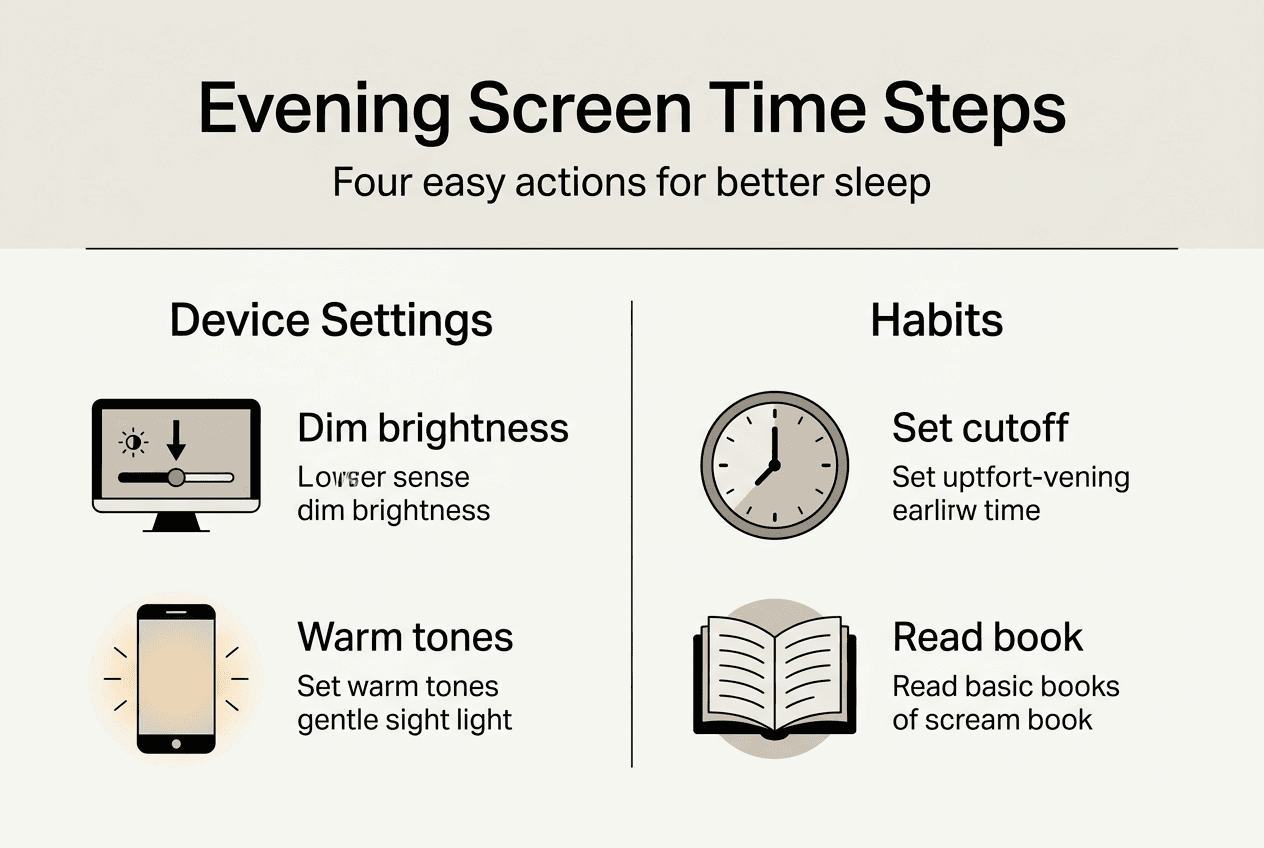
1. Set a consistent evening cutoff time for all screens, ideally 1-2 hours before your target bedtime. If you plan to sleep at 10:30 PM, stop using devices by 8:30 PM. Consistency trains your brain to expect this transition.
2. Configure device settings to support your cutoff time. Enable Do Not Disturb mode, activate blue light filters to maximum, and reduce brightness to 30 lux or lower. Most phones allow scheduled automation for these changes.
3. Restrict notifications after your cutoff time. Disable alerts from social media, email, and news apps. Keep only essential contacts able to reach you for emergencies.
4. Curate your evening content deliberately. If you must use screens before cutoff, choose slow-paced, familiar content. Avoid social media feeds, action movies, or work-related material that activates your brain.
5. Replace screen time with offline activities. Read physical books, practice gentle yoga, write in a journal, or have face-to-face conversations. Research confirms digital detox paired with offline activities significantly improves psychological well-being and physiological markers.
6. Implement household rules if you live with others. Studies show strict parental rules on evening smartphone use increase sleep duration by 40 minutes, improving academic performance. Apply similar boundaries for yourself or your family.
The combined strategy delivers the best results. Start with device settings, add time limits, curate content, and gradually increase offline activities. Learn how to reduce screen time naturally by building habits that feel effortless over time.
Pro Tip: Place your phone in another room after your cutoff time. Physical distance removes the temptation to check notifications and makes it easier to stick with offline activities. Follow a step by step screen time reduction plan to build momentum gradually.
Verification and troubleshooting: assessing your progress and overcoming challenges
Measure your progress through both subjective and objective indicators. Track your sleep onset time each night. Note how long it takes to fall asleep after getting into bed. Most people see improvements within one to two weeks of consistent evening screen time reduction.
Monitor sleep duration and quality. Use a sleep journal or app to record total hours slept and how rested you feel upon waking. Pay attention to daytime alertness, mood stability, and productivity levels. These indicators reveal whether your changes are working. Research shows psychometric scores and heart-rate variability improve with structured digital detox, providing measurable evidence of success.
Common challenges will test your commitment:
- Cravings for phone use: Your brain has formed strong habits around evening scrolling. The urge will feel intense initially but diminishes within two weeks.
- Social pressure: Friends or family may text or call during your screen-free time. Communicate your new boundaries clearly and ask for support.
- Work demands: Urgent emails or messages can feel impossible to ignore. Set clear work hours and stick to them unless genuine emergencies arise.
- Boredom: Without screens, evenings may feel empty at first. This discomfort signals your brain is adjusting to healthier patterns.
Adjust your approach based on what you observe. If you're still struggling to fall asleep, extend your cutoff time earlier or reduce screen brightness further. If offline activities feel boring, experiment with different options until you find genuinely enjoyable alternatives. Progress isn't linear. Some nights will be easier than others.
Use these strategies to stay on track:
- Set phone reminders 30 minutes before your cutoff time to start winding down
- Create a designated phone-free zone in your bedroom
- Find an accountability partner who shares your goals
- Celebrate small wins like falling asleep 10 minutes faster
Discover how to minimize device distractions throughout your day, not just in the evening. Daytime habits influence evening patterns.
Pro Tip: If you slip up and use screens past your cutoff time, don't abandon your entire plan. Simply resume the next evening. Consistency over time matters more than perfection.
Explore tools and resources to support your screen time reduction
Reducing evening screen time becomes easier with the right support and tools. Well O'Clock offers practical guidance tailored to individuals seeking better sleep, improved focus, and healthier digital habits. The platform combines physical solutions with digital tools to help you break autopilot phone behaviors.
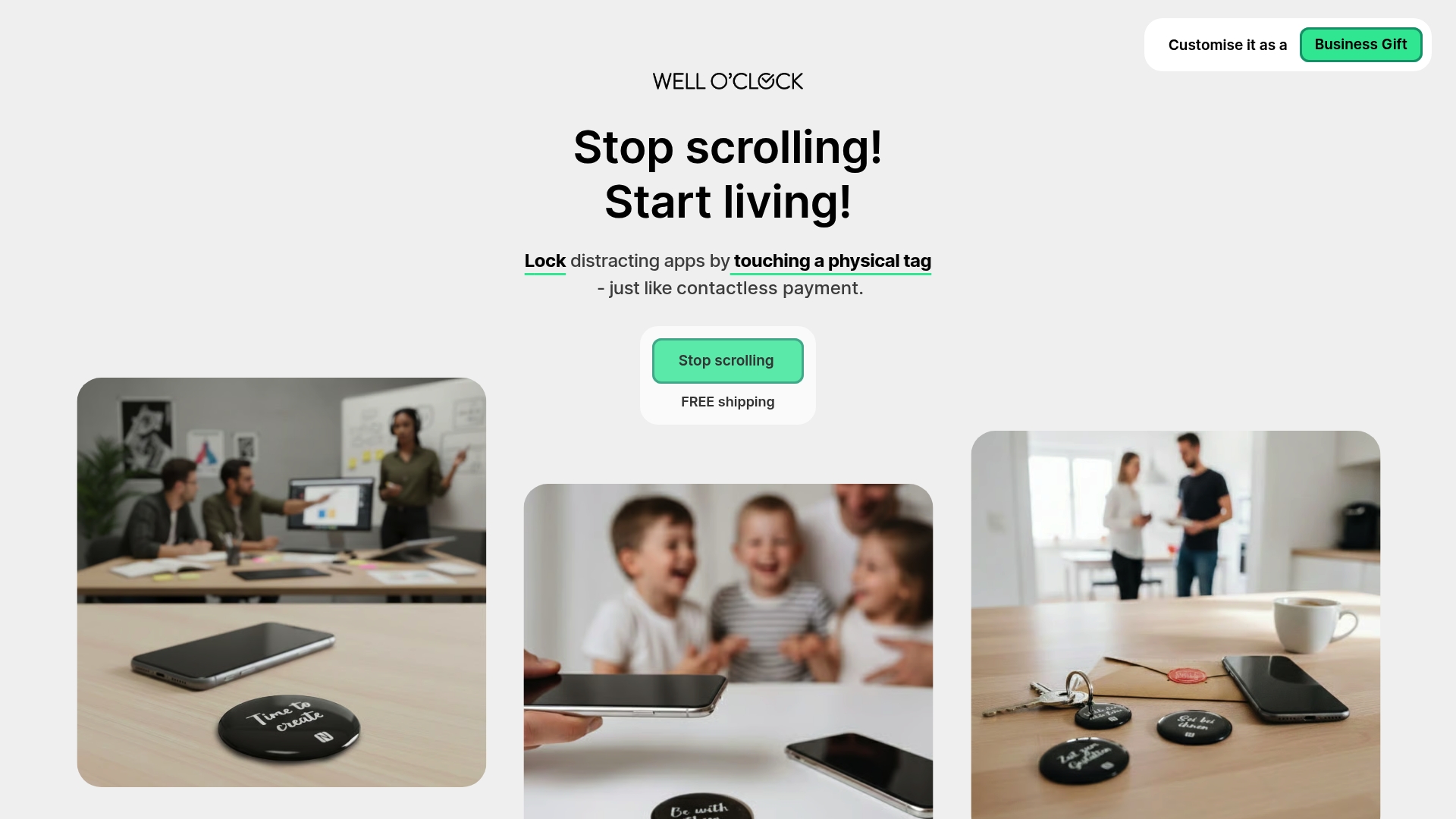
Start small and build sustainable habits with practical screen time reduction tips designed for busy lifestyles. These strategies work whether you're managing your own habits or supporting family members in reducing evening device use.
Visit the Well O'Clock homepage to explore additional articles, tools, and community resources. You'll find evidence-based approaches to improving mental well-being, productivity, and sleep quality through healthier screen time habits. The platform emphasizes tangible solutions that create lasting behavioral change.
Frequently asked questions
How does blue light specifically affect my sleep?
Blue light suppresses melatonin secretion, the hormone that signals your body to prepare for sleep. This suppression delays your ability to fall asleep and disrupts your natural circadian rhythm. The effect is strongest with blue wavelengths around 460-480 nm, which screens emit in high concentrations.
What are the best practical steps to reduce evening screen time?
Dim your screen brightness to 30 lux or lower and activate blue light filters in the evening. Set a consistent cutoff time for device use, ideally 1-2 hours before bed, and replace screen time with relaxing offline activities like reading or meditation. These combined strategies address brightness, duration, and content stimulation. Find more practical screen time reduction tips to build sustainable habits.
How long does it take to see improvement in sleep after reducing evening screen time?
Within two weeks of consistent evening screen time reduction, most people experience better sleep onset and quality. Studies show structured digital detox over two weeks was linked to measurable improvements in sleep and psychological well-being. You may notice changes in daytime alertness and mood even sooner.
Can I still use screens in the evening if I apply blue light filters?
Blue light filters help but don't eliminate all disruption. Content type and engagement level still affect your brain's ability to relax. If you must use screens, choose slow-paced, familiar content and keep sessions brief. Combining filters with reduced brightness and shorter duration provides better results than filters alone.
What offline activities work best as screen replacements?
Reading physical books, journaling, gentle stretching, meditation, and face-to-face conversations all promote relaxation without screen stimulation. Choose activities you genuinely enjoy so they feel rewarding rather than restrictive. Experiment with different options to find what helps you unwind most effectively.

Mak Kordić
Co founder
Mak Kordić is the founder and CEO of CNJ Digital, an agency based in Ljubljana, where he and his team develop UX/UI and digital products for demanding B2B projects. Over his career, he has led and co-created hundreds of digital solutions and worked with international clients.








Evening screen time reduction guide for better sleep 2026
Mak Kordić
,
March 31, 2026
Evening screen time disrupts sleep and mental well-being for millions of people. The culprit is blue light exposure combined with stimulating content that keeps your brain alert when it should be winding down. This guide provides evidence-backed strategies to reduce evening screen time effectively, helping you improve sleep quality, sharpen focus, and reclaim your mental clarity. You'll learn the science behind screen impacts, practical preparation steps, a detailed execution plan, and methods to verify your progress while overcoming common challenges.
Table of Contents
- Understanding The Problem: Blue Light And Screen Impact On Sleep And Focus
- Preparation: Tools And Strategies To Reduce Blue Light And Screen Exposure
- Execution: Step-By-Step Guide To Reducing Evening Screen Time
- Verification And Troubleshooting: Assessing Your Progress And Overcoming Challenges
- Explore Tools And Resources To Support Your Screen Time Reduction
- Frequently Asked Questions
Understanding the problem: blue light and screen impact on sleep and focus
Your phone, tablet, and computer emit blue light in the 460-480 nm wavelength range. This specific spectrum directly suppresses melatonin production, the hormone that signals your body to prepare for sleep. When you scroll through social media or watch videos in the evening, you're essentially telling your brain it's still daytime.
Research shows blue light exposure demonstrated the strongest direct edge weight with sleep problems. Evening exposure can delay sleep onset by up to 90 minutes depending on brightness and duration. The impact isn't just about the light color. Brightness intensity, exposure timing, and how long you stare at screens all contribute to the disruption.
Content type plays an equally important role. Fast-paced videos, engaging social media feeds, and interactive games keep your brain in an active state. Your mind processes information, reacts to stimuli, and stays alert. Conversely, slow-paced content like audiobooks or calming videos helps your brain transition toward rest. Studies confirm the type of content consumed impacts sleep quality, with stimulating material keeping the mind active while familiar, gentle content encourages relaxation.
Three key factors determine screen impact on your sleep:
- Brightness level: Higher brightness intensifies melatonin suppression
- Exposure timing: Screens within two hours of bedtime cause the most disruption
- Content engagement: Interactive or stimulating content delays mental relaxation
Understanding these mechanisms helps you recognize why simply using a blue light filter isn't enough. You need a comprehensive approach addressing brightness, timing, and content selection. The screen time impacts on wellness extend beyond sleep, affecting focus, mood, and productivity throughout your day.
Pro Tip: Track your current evening screen habits for three days before making changes. Note when you start using devices, brightness settings, and content types. This baseline helps you identify specific patterns to target.
Preparation: tools and strategies to reduce blue light and screen exposure
Before implementing changes, set up your environment and devices for success. Start by adjusting your screen brightness. Research shows lowering brightness from 100 lux to 30 lux reduces melatonin suppression by approximately 50%. Most devices allow manual brightness control or automatic adjustment based on ambient light.
Next, modify your device color temperature. Switch to warm tones around 2400 K in the evening. The difference is substantial: a 2400 K LED emits 19 times less melanopic lux than a 4000 K LED at equal brightness. This single adjustment dramatically reduces blue light exposure without requiring you to stop using devices entirely.
Most smartphones and computers include built-in blue light filters. Enable these features to activate automatically at sunset or a specific time. Apps like f.lux or Night Shift provide additional customization options. These tools shift your screen's color spectrum toward warmer tones, reducing the blue wavelength emission that disrupts melatonin.
Prepare alternative activities before you need them. Stock your nightstand with physical books, keep a journal nearby, or set up a comfortable space for stretching or meditation. When the urge to scroll hits, you'll have immediate alternatives ready. This preparation removes friction from choosing healthier evening habits.
Adopt the right mindset from the start. View screen time reduction as adding value to your life, not restricting enjoyment. You're choosing better sleep, sharper focus, and improved mental health. This reframe helps you stick with changes when temptation strikes. Explore practical screen time tips to build sustainable habits that fit your lifestyle.
Pro Tip: Use the blue light sleep calculator to see exactly how your current screen settings affect melatonin levels. Input your device brightness and color temperature to get personalized recommendations.
Execution: step-by-step guide to reducing evening screen time
Implement your screen time reduction plan systematically. Follow these steps to maximize success and build lasting habits.
1. Set a consistent evening cutoff time for all screens, ideally 1-2 hours before your target bedtime. If you plan to sleep at 10:30 PM, stop using devices by 8:30 PM. Consistency trains your brain to expect this transition.
2. Configure device settings to support your cutoff time. Enable Do Not Disturb mode, activate blue light filters to maximum, and reduce brightness to 30 lux or lower. Most phones allow scheduled automation for these changes.
3. Restrict notifications after your cutoff time. Disable alerts from social media, email, and news apps. Keep only essential contacts able to reach you for emergencies.
4. Curate your evening content deliberately. If you must use screens before cutoff, choose slow-paced, familiar content. Avoid social media feeds, action movies, or work-related material that activates your brain.
5. Replace screen time with offline activities. Read physical books, practice gentle yoga, write in a journal, or have face-to-face conversations. Research confirms digital detox paired with offline activities significantly improves psychological well-being and physiological markers.
6. Implement household rules if you live with others. Studies show strict parental rules on evening smartphone use increase sleep duration by 40 minutes, improving academic performance. Apply similar boundaries for yourself or your family.
The combined strategy delivers the best results. Start with device settings, add time limits, curate content, and gradually increase offline activities. Learn how to reduce screen time naturally by building habits that feel effortless over time.
Pro Tip: Place your phone in another room after your cutoff time. Physical distance removes the temptation to check notifications and makes it easier to stick with offline activities. Follow a step by step screen time reduction plan to build momentum gradually.
Verification and troubleshooting: assessing your progress and overcoming challenges
Measure your progress through both subjective and objective indicators. Track your sleep onset time each night. Note how long it takes to fall asleep after getting into bed. Most people see improvements within one to two weeks of consistent evening screen time reduction.
Monitor sleep duration and quality. Use a sleep journal or app to record total hours slept and how rested you feel upon waking. Pay attention to daytime alertness, mood stability, and productivity levels. These indicators reveal whether your changes are working. Research shows psychometric scores and heart-rate variability improve with structured digital detox, providing measurable evidence of success.
Common challenges will test your commitment:
- Cravings for phone use: Your brain has formed strong habits around evening scrolling. The urge will feel intense initially but diminishes within two weeks.
- Social pressure: Friends or family may text or call during your screen-free time. Communicate your new boundaries clearly and ask for support.
- Work demands: Urgent emails or messages can feel impossible to ignore. Set clear work hours and stick to them unless genuine emergencies arise.
- Boredom: Without screens, evenings may feel empty at first. This discomfort signals your brain is adjusting to healthier patterns.
Adjust your approach based on what you observe. If you're still struggling to fall asleep, extend your cutoff time earlier or reduce screen brightness further. If offline activities feel boring, experiment with different options until you find genuinely enjoyable alternatives. Progress isn't linear. Some nights will be easier than others.
Use these strategies to stay on track:
- Set phone reminders 30 minutes before your cutoff time to start winding down
- Create a designated phone-free zone in your bedroom
- Find an accountability partner who shares your goals
- Celebrate small wins like falling asleep 10 minutes faster
Discover how to minimize device distractions throughout your day, not just in the evening. Daytime habits influence evening patterns.
Pro Tip: If you slip up and use screens past your cutoff time, don't abandon your entire plan. Simply resume the next evening. Consistency over time matters more than perfection.
Explore tools and resources to support your screen time reduction
Reducing evening screen time becomes easier with the right support and tools. Well O'Clock offers practical guidance tailored to individuals seeking better sleep, improved focus, and healthier digital habits. The platform combines physical solutions with digital tools to help you break autopilot phone behaviors.
Start small and build sustainable habits with practical screen time reduction tips designed for busy lifestyles. These strategies work whether you're managing your own habits or supporting family members in reducing evening device use.
Visit the Well O'Clock homepage to explore additional articles, tools, and community resources. You'll find evidence-based approaches to improving mental well-being, productivity, and sleep quality through healthier screen time habits. The platform emphasizes tangible solutions that create lasting behavioral change.
Frequently asked questions
How does blue light specifically affect my sleep?
Blue light suppresses melatonin secretion, the hormone that signals your body to prepare for sleep. This suppression delays your ability to fall asleep and disrupts your natural circadian rhythm. The effect is strongest with blue wavelengths around 460-480 nm, which screens emit in high concentrations.
What are the best practical steps to reduce evening screen time?
Dim your screen brightness to 30 lux or lower and activate blue light filters in the evening. Set a consistent cutoff time for device use, ideally 1-2 hours before bed, and replace screen time with relaxing offline activities like reading or meditation. These combined strategies address brightness, duration, and content stimulation. Find more practical screen time reduction tips to build sustainable habits.
How long does it take to see improvement in sleep after reducing evening screen time?
Within two weeks of consistent evening screen time reduction, most people experience better sleep onset and quality. Studies show structured digital detox over two weeks was linked to measurable improvements in sleep and psychological well-being. You may notice changes in daytime alertness and mood even sooner.
Can I still use screens in the evening if I apply blue light filters?
Blue light filters help but don't eliminate all disruption. Content type and engagement level still affect your brain's ability to relax. If you must use screens, choose slow-paced, familiar content and keep sessions brief. Combining filters with reduced brightness and shorter duration provides better results than filters alone.
What offline activities work best as screen replacements?
Reading physical books, journaling, gentle stretching, meditation, and face-to-face conversations all promote relaxation without screen stimulation. Choose activities you genuinely enjoy so they feel rewarding rather than restrictive. Experiment with different options to find what helps you unwind most effectively.
Mak Kordić
Co founder
Mak Kordić is the founder and CEO of CNJ Digital, an agency based in Ljubljana, where he and his team develop UX/UI and digital products for demanding B2B projects. Over his career, he has led and co-created hundreds of digital solutions and worked with international clients.
Evening screen time reduction guide for better sleep 2026
Mak Kordić
,
March 31, 2026
Evening screen time disrupts sleep and mental well-being for millions of people. The culprit is blue light exposure combined with stimulating content that keeps your brain alert when it should be winding down. This guide provides evidence-backed strategies to reduce evening screen time effectively, helping you improve sleep quality, sharpen focus, and reclaim your mental clarity. You'll learn the science behind screen impacts, practical preparation steps, a detailed execution plan, and methods to verify your progress while overcoming common challenges.
Table of Contents
- Understanding The Problem: Blue Light And Screen Impact On Sleep And Focus
- Preparation: Tools And Strategies To Reduce Blue Light And Screen Exposure
- Execution: Step-By-Step Guide To Reducing Evening Screen Time
- Verification And Troubleshooting: Assessing Your Progress And Overcoming Challenges
- Explore Tools And Resources To Support Your Screen Time Reduction
- Frequently Asked Questions
Understanding the problem: blue light and screen impact on sleep and focus
Your phone, tablet, and computer emit blue light in the 460-480 nm wavelength range. This specific spectrum directly suppresses melatonin production, the hormone that signals your body to prepare for sleep. When you scroll through social media or watch videos in the evening, you're essentially telling your brain it's still daytime.
Research shows blue light exposure demonstrated the strongest direct edge weight with sleep problems. Evening exposure can delay sleep onset by up to 90 minutes depending on brightness and duration. The impact isn't just about the light color. Brightness intensity, exposure timing, and how long you stare at screens all contribute to the disruption.
Content type plays an equally important role. Fast-paced videos, engaging social media feeds, and interactive games keep your brain in an active state. Your mind processes information, reacts to stimuli, and stays alert. Conversely, slow-paced content like audiobooks or calming videos helps your brain transition toward rest. Studies confirm the type of content consumed impacts sleep quality, with stimulating material keeping the mind active while familiar, gentle content encourages relaxation.
Three key factors determine screen impact on your sleep:
- Brightness level: Higher brightness intensifies melatonin suppression
- Exposure timing: Screens within two hours of bedtime cause the most disruption
- Content engagement: Interactive or stimulating content delays mental relaxation
Understanding these mechanisms helps you recognize why simply using a blue light filter isn't enough. You need a comprehensive approach addressing brightness, timing, and content selection. The screen time impacts on wellness extend beyond sleep, affecting focus, mood, and productivity throughout your day.
Pro Tip: Track your current evening screen habits for three days before making changes. Note when you start using devices, brightness settings, and content types. This baseline helps you identify specific patterns to target.
Preparation: tools and strategies to reduce blue light and screen exposure
Before implementing changes, set up your environment and devices for success. Start by adjusting your screen brightness. Research shows lowering brightness from 100 lux to 30 lux reduces melatonin suppression by approximately 50%. Most devices allow manual brightness control or automatic adjustment based on ambient light.
Next, modify your device color temperature. Switch to warm tones around 2400 K in the evening. The difference is substantial: a 2400 K LED emits 19 times less melanopic lux than a 4000 K LED at equal brightness. This single adjustment dramatically reduces blue light exposure without requiring you to stop using devices entirely.
Most smartphones and computers include built-in blue light filters. Enable these features to activate automatically at sunset or a specific time. Apps like f.lux or Night Shift provide additional customization options. These tools shift your screen's color spectrum toward warmer tones, reducing the blue wavelength emission that disrupts melatonin.
Prepare alternative activities before you need them. Stock your nightstand with physical books, keep a journal nearby, or set up a comfortable space for stretching or meditation. When the urge to scroll hits, you'll have immediate alternatives ready. This preparation removes friction from choosing healthier evening habits.
Adopt the right mindset from the start. View screen time reduction as adding value to your life, not restricting enjoyment. You're choosing better sleep, sharper focus, and improved mental health. This reframe helps you stick with changes when temptation strikes. Explore practical screen time tips to build sustainable habits that fit your lifestyle.
Pro Tip: Use the blue light sleep calculator to see exactly how your current screen settings affect melatonin levels. Input your device brightness and color temperature to get personalized recommendations.
Execution: step-by-step guide to reducing evening screen time
Implement your screen time reduction plan systematically. Follow these steps to maximize success and build lasting habits.
1. Set a consistent evening cutoff time for all screens, ideally 1-2 hours before your target bedtime. If you plan to sleep at 10:30 PM, stop using devices by 8:30 PM. Consistency trains your brain to expect this transition.
2. Configure device settings to support your cutoff time. Enable Do Not Disturb mode, activate blue light filters to maximum, and reduce brightness to 30 lux or lower. Most phones allow scheduled automation for these changes.
3. Restrict notifications after your cutoff time. Disable alerts from social media, email, and news apps. Keep only essential contacts able to reach you for emergencies.
4. Curate your evening content deliberately. If you must use screens before cutoff, choose slow-paced, familiar content. Avoid social media feeds, action movies, or work-related material that activates your brain.
5. Replace screen time with offline activities. Read physical books, practice gentle yoga, write in a journal, or have face-to-face conversations. Research confirms digital detox paired with offline activities significantly improves psychological well-being and physiological markers.
6. Implement household rules if you live with others. Studies show strict parental rules on evening smartphone use increase sleep duration by 40 minutes, improving academic performance. Apply similar boundaries for yourself or your family.
The combined strategy delivers the best results. Start with device settings, add time limits, curate content, and gradually increase offline activities. Learn how to reduce screen time naturally by building habits that feel effortless over time.
Pro Tip: Place your phone in another room after your cutoff time. Physical distance removes the temptation to check notifications and makes it easier to stick with offline activities. Follow a step by step screen time reduction plan to build momentum gradually.
Verification and troubleshooting: assessing your progress and overcoming challenges
Measure your progress through both subjective and objective indicators. Track your sleep onset time each night. Note how long it takes to fall asleep after getting into bed. Most people see improvements within one to two weeks of consistent evening screen time reduction.
Monitor sleep duration and quality. Use a sleep journal or app to record total hours slept and how rested you feel upon waking. Pay attention to daytime alertness, mood stability, and productivity levels. These indicators reveal whether your changes are working. Research shows psychometric scores and heart-rate variability improve with structured digital detox, providing measurable evidence of success.
Common challenges will test your commitment:
- Cravings for phone use: Your brain has formed strong habits around evening scrolling. The urge will feel intense initially but diminishes within two weeks.
- Social pressure: Friends or family may text or call during your screen-free time. Communicate your new boundaries clearly and ask for support.
- Work demands: Urgent emails or messages can feel impossible to ignore. Set clear work hours and stick to them unless genuine emergencies arise.
- Boredom: Without screens, evenings may feel empty at first. This discomfort signals your brain is adjusting to healthier patterns.
Adjust your approach based on what you observe. If you're still struggling to fall asleep, extend your cutoff time earlier or reduce screen brightness further. If offline activities feel boring, experiment with different options until you find genuinely enjoyable alternatives. Progress isn't linear. Some nights will be easier than others.
Use these strategies to stay on track:
- Set phone reminders 30 minutes before your cutoff time to start winding down
- Create a designated phone-free zone in your bedroom
- Find an accountability partner who shares your goals
- Celebrate small wins like falling asleep 10 minutes faster
Discover how to minimize device distractions throughout your day, not just in the evening. Daytime habits influence evening patterns.
Pro Tip: If you slip up and use screens past your cutoff time, don't abandon your entire plan. Simply resume the next evening. Consistency over time matters more than perfection.
Explore tools and resources to support your screen time reduction
Reducing evening screen time becomes easier with the right support and tools. Well O'Clock offers practical guidance tailored to individuals seeking better sleep, improved focus, and healthier digital habits. The platform combines physical solutions with digital tools to help you break autopilot phone behaviors.
Start small and build sustainable habits with practical screen time reduction tips designed for busy lifestyles. These strategies work whether you're managing your own habits or supporting family members in reducing evening device use.
Visit the Well O'Clock homepage to explore additional articles, tools, and community resources. You'll find evidence-based approaches to improving mental well-being, productivity, and sleep quality through healthier screen time habits. The platform emphasizes tangible solutions that create lasting behavioral change.
Frequently asked questions
How does blue light specifically affect my sleep?
Blue light suppresses melatonin secretion, the hormone that signals your body to prepare for sleep. This suppression delays your ability to fall asleep and disrupts your natural circadian rhythm. The effect is strongest with blue wavelengths around 460-480 nm, which screens emit in high concentrations.
What are the best practical steps to reduce evening screen time?
Dim your screen brightness to 30 lux or lower and activate blue light filters in the evening. Set a consistent cutoff time for device use, ideally 1-2 hours before bed, and replace screen time with relaxing offline activities like reading or meditation. These combined strategies address brightness, duration, and content stimulation. Find more practical screen time reduction tips to build sustainable habits.
How long does it take to see improvement in sleep after reducing evening screen time?
Within two weeks of consistent evening screen time reduction, most people experience better sleep onset and quality. Studies show structured digital detox over two weeks was linked to measurable improvements in sleep and psychological well-being. You may notice changes in daytime alertness and mood even sooner.
Can I still use screens in the evening if I apply blue light filters?
Blue light filters help but don't eliminate all disruption. Content type and engagement level still affect your brain's ability to relax. If you must use screens, choose slow-paced, familiar content and keep sessions brief. Combining filters with reduced brightness and shorter duration provides better results than filters alone.
What offline activities work best as screen replacements?
Reading physical books, journaling, gentle stretching, meditation, and face-to-face conversations all promote relaxation without screen stimulation. Choose activities you genuinely enjoy so they feel rewarding rather than restrictive. Experiment with different options to find what helps you unwind most effectively.
Mak Kordić
Co founder
Mak Kordić is the founder and CEO of CNJ Digital, an agency based in Ljubljana, where he and his team develop UX/UI and digital products for demanding B2B projects. Over his career, he has led and co-created hundreds of digital solutions and worked with international clients.