
Manage excessive screen time effects for better health
Mak Kordić
,
April 7, 2026

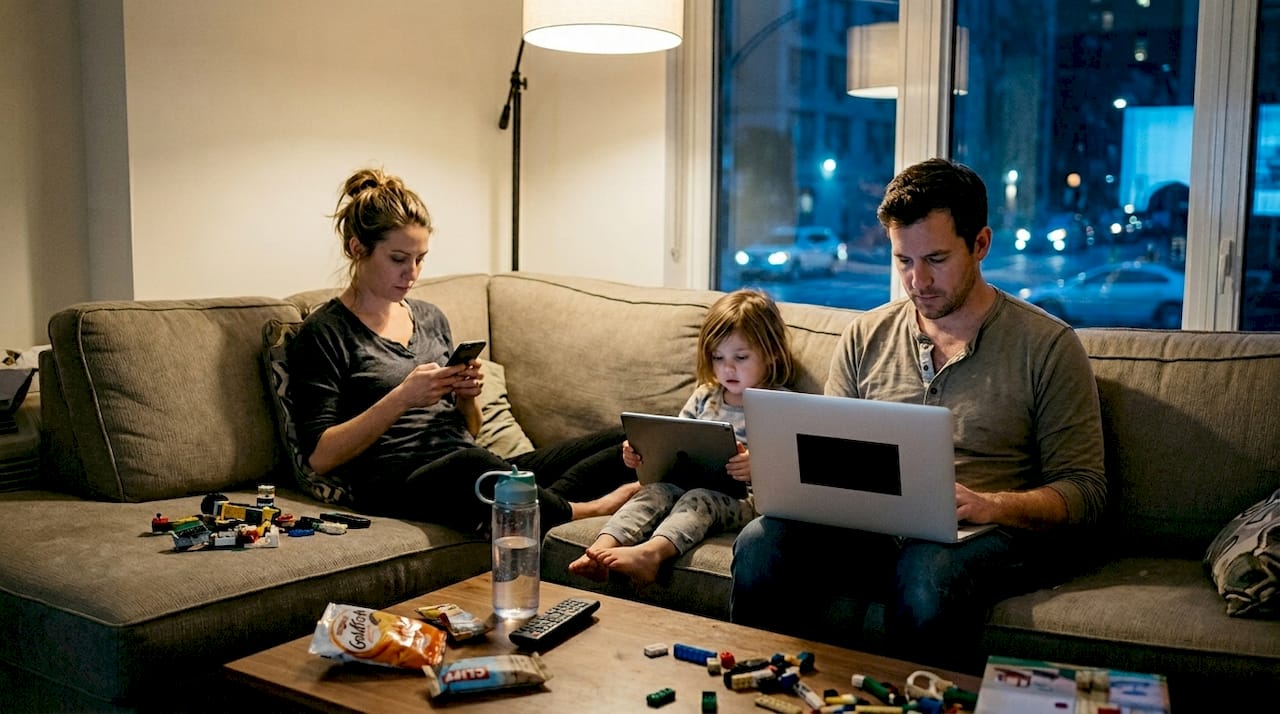
Desk workers now spend nearly 100 hours per week on screens, causing an 18.6% drop in productivity due to visual discomfort and cognitive fatigue. This staggering exposure affects not just workplace performance but also mental health, sleep quality, and family relationships. Both parents managing children's digital habits and professionals seeking sharper focus face similar challenges: how to balance necessary technology use with genuine well-being. This guide examines the evidence-based effects of excessive screen time on mood, attention, and daily functioning, then provides practical strategies to help you reclaim mental clarity and productivity in 2026.
Table of Contents
- Understanding The Mental Health Impacts Of Excessive Screen Time
- How Excessive Screen Time Reduces Productivity And Focus In Adults
- The Role Of Content Quality And Context In Screen Time Effects
- Practical Strategies For Managing Screen Time Effectively In Families And Workplaces
- Explore Tools To Help Manage Your Screen Time Smarter
- FAQ
Understanding the mental health impacts of excessive screen time
Excessive screen time refers to prolonged digital device use that interferes with sleep, physical activity, and social connection. Children and adolescents face the highest vulnerability during critical developmental periods when their brains are forming essential neural pathways. Recent research reveals that excessive screen time increases anxiety and depression through multiple interconnected mechanisms.
The primary pathways linking screens to mental health problems include disrupted circadian rhythms from blue light exposure, reduced physical movement leading to lower endorphin production, and social isolation when digital interaction replaces face-to-face connection. When young people spend four or more hours daily on recreational screens, they show statistically significant increases in anxiety symptoms and depressive episodes compared to peers with moderate use.
The type of content consumed plays a crucial moderating role. Passive scrolling through social media feeds creates different neural responses than active video calls with grandparents or educational gaming with parental involvement. Unsupervised exposure to age-inappropriate material amplifies negative effects, while quality content viewed together can support learning and bonding.
Key mental health warning signs include:
- Persistent irritability when devices are unavailable
- Sleep disturbances or delayed bedtime routines
- Withdrawal from previously enjoyed offline activities
- Declining academic or social performance
- Increased complaints of loneliness despite constant connectivity
Dr. Sarah Chen, a pediatric psychologist specializing in digital wellness, emphasizes: "The adolescent brain is uniquely susceptible to the dopamine-driven reward cycles of social media and gaming. Establishing balanced screen habits during these formative years protects long-term mental wellness and builds healthy self-regulation skills that last into adulthood."
Parents can monitor kids screen time more effectively by understanding these mechanisms and recognizing early warning signs before patterns become entrenched. The goal is not complete elimination but rather intentional, supervised use that supports development rather than hindering it.
How excessive screen time reduces productivity and focus in adults
Office workers face a different but equally serious challenge. The average desk employee now logs nearly 100 hours weekly on screens, resulting in measurable productivity losses. This constant exposure creates a cascade of physical and cognitive symptoms that compound throughout the workday.
Digital eye strain affects approximately 65% of adults who work on computers. Symptoms include burning sensations, blurred vision, headaches, and difficulty focusing on distant objects after prolonged near work. These physical discomforts reduce work quality and increase error rates, particularly during afternoon hours when fatigue accumulates.

Cognitive overload represents another significant productivity drain. The human brain processes visual information from screens differently than from printed materials, requiring more mental energy to extract and retain the same information. Constant tab-switching and notification interruptions fragment attention, making deep work nearly impossible.
Blue light exposure from screens suppresses melatonin production, disrupting sleep quality even when devices are used hours before bedtime. Poor sleep then creates a vicious cycle: tired workers rely more heavily on screens for stimulation, further degrading sleep architecture. Meanwhile, dopamine spikes from email notifications and social media checks create addictive patterns that make voluntary disengagement increasingly difficult.
Professionals can boost productivity with screen time reduction through targeted interventions that address both physical and behavioral factors.
Pro Tip: Implement the 20-20-20 rule to combat digital eye strain. Every 20 minutes, look at something 20 feet away for 20 seconds. This simple practice resets eye muscles and reduces cumulative fatigue. Pair this with turning off non-essential notifications during focus blocks to reclaim uninterrupted work time.
The role of content quality and context in screen time effects
Recent scientific debates have challenged simplistic "screen time is bad" narratives by revealing nuanced relationships between digital use and outcomes. A comprehensive analysis shows that harms depend on content and context, with many associations proving weaker than initially believed. This research shift has profound implications for how families and workplaces approach screen management.
The distinction between passive consumption and active engagement proves critical. A toddler watching educational videos with a parent who pauses to ask questions and reinforce concepts experiences entirely different developmental effects than a child left alone with an iPad showing random YouTube content. The former supports language development and bonding, while the latter may delay speech acquisition and reduce parent-child interaction quality.
World Health Organization and American Academy of Pediatrics guidelines now emphasize content quality and co-viewing over rigid time limits alone. They recognize that 30 minutes of high-quality educational programming watched together provides more value than zero screen time if that restriction creates family conflict or prevents valuable learning opportunities.
For adults, the same principles apply. Spending three hours researching a work project or taking an online course produces different cognitive effects than three hours scrolling social media feeds. The former engages executive function and builds knowledge, while the latter often leaves users feeling depleted and regretful.
Effective screen time management strategies focus on optimizing both duration and quality rather than pursuing arbitrary reduction targets.
Pro Tip: Audit your screen content for one week by categorizing each session as active (creating, learning, connecting) or passive (scrolling, binging, mindless browsing). This awareness often reveals surprising patterns and helps prioritize high-value digital activities while cutting low-value time wasters.
Practical strategies for managing screen time effectively in families and workplaces
Evidence-based guidelines provide clear starting points for different age groups. Children under 2 should have no screen time except video calls with family. Ages 2 to 5 benefit from a maximum of one hour daily of high-quality programming watched with caregivers. School-age children and teens need individualized limits based on sleep quality, academic performance, and physical activity levels, typically ranging from one to two hours of recreational screen time.
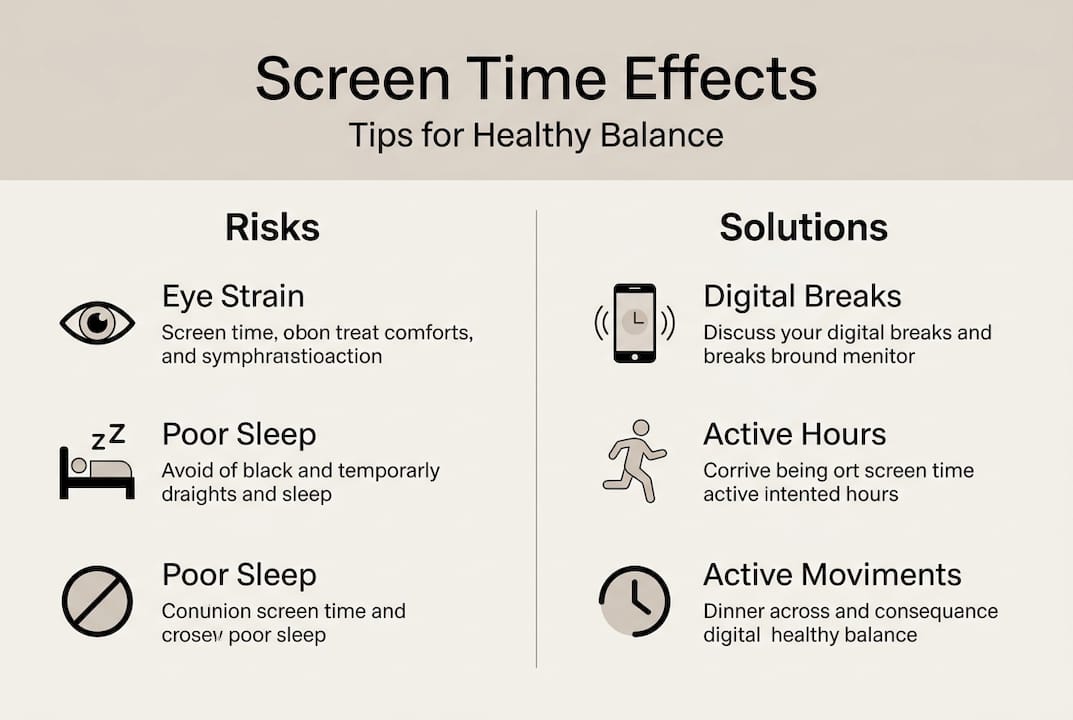
Research demonstrates that reducing smartphone screen time for just three weeks produces measurable mental health improvements, with effects ranging from small to medium in magnitude. These benefits include reduced anxiety symptoms, improved sleep onset, and enhanced mood stability.
For parents implementing family screen boundaries:
1. Establish device-free zones in bedrooms and during meals to protect sleep and family connection
2. Create a charging station outside bedrooms where all devices sleep overnight
3. Schedule specific tech-free hours for outdoor play, reading, or creative activities
4. Model balanced use by following the same rules you set for children
5. Use parental controls to filter content rather than relying solely on trust
6. Designate weekend technology sabbaths where the entire family unplugs together
Workplace strategies require different approaches but similar intentionality:
- Schedule three 10-minute screen breaks throughout the day for eye rest and movement
- Position monitors at arm's length with the top of the screen at or slightly below eye level
- Use blue light filtering glasses or software during evening work sessions
- Batch-check email at designated times rather than maintaining constant inbox vigilance
- Enable "do not disturb" modes during deep work blocks requiring sustained concentration
- Take walking meetings when possible to reduce cumulative sitting and screen time
Addressing the behavioral addiction component requires understanding dopamine's role. Each notification triggers a small dopamine release, training your brain to crave constant checking. Breaking this cycle means turning off non-essential notifications, using grayscale mode to reduce visual appeal, and physically separating from devices during focus time.
Families can explore screen time reduction tips for busy families and natural screen time reduction methods to find approaches that fit their unique situations. Understanding the psychology behind breaking screen addiction helps create lasting change rather than temporary compliance.
The WHO and AAP screen time guidelines offer detailed recommendations by age group that balance developmental needs with practical realities of modern life.
Pro Tip: Implement a "digital sunset" routine 60 minutes before bedtime. Replace screens with calming activities like reading, gentle stretching, or conversation. This practice signals your brain to begin melatonin production naturally, improving both sleep onset and quality. For children, make this a consistent ritual that includes bath time, stories, and connection rather than battles over device surrender.
Explore tools to help manage your screen time smarter
Managing screen time effectively requires more than willpower. It demands practical tools and systems that make healthier habits easier to maintain. Well O'Clock offers innovative solutions combining physical NFC tags with mobile apps to help families and professionals interrupt automatic phone-reaching behaviors and build intentional technology use.
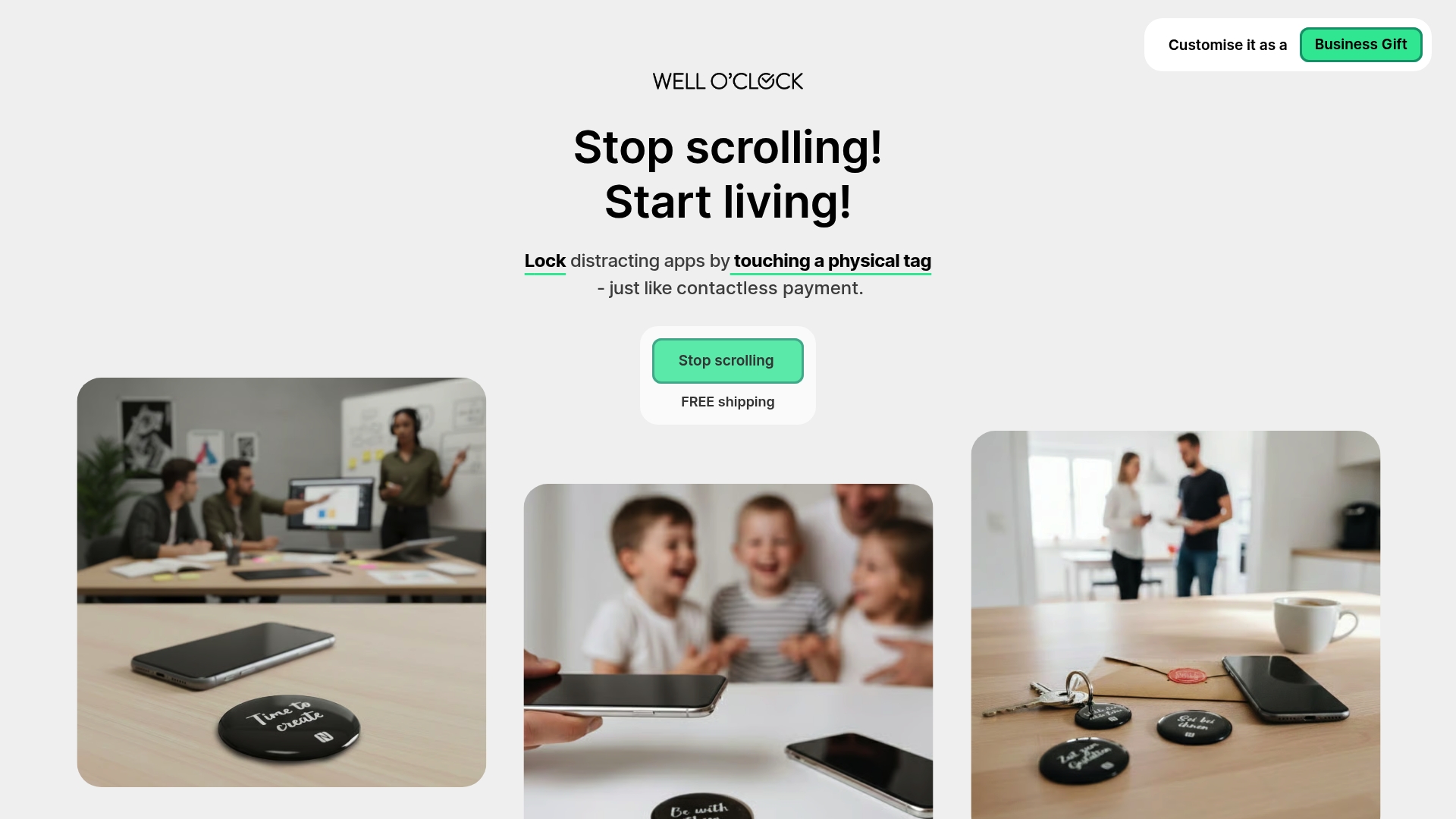
Whether you're a parent seeking to establish healthier family patterns or a professional aiming to reclaim focus and productivity, exploring evidence-based approaches makes lasting change achievable. Discover practical screen time tips for families and learn how to boost productivity by reducing screen time through targeted strategies that fit your lifestyle and goals.
FAQ
How much screen time is too much for children?
Children under 2 should have no screen time except video calls with family members. Ages 2 to 5 benefit from a maximum of one hour daily of high-quality programming watched with caregivers. School-age children need individualized limits based on sleep quality, academic performance, and physical activity, typically one to two hours of recreational use. The WHO and AAP screen time recommendations provide detailed guidance by developmental stage to help parents set appropriate boundaries that protect mental health and development.
Can reducing screen time improve adult productivity quickly?
Studies show that mental health improvements from screen time reduction may appear within three weeks, though individual results vary based on baseline usage and implementation consistency. Reducing distractions and digital fatigue helps professionals regain focus efficiency relatively quickly. Most workers notice improved concentration and reduced eye strain within the first week of implementing structured screen breaks and notification management. Explore strategies for screen time reduction and productivity to accelerate your results.
What are signs someone is addicted to their screen?
Common signs include inability to reduce use despite wanting to, anxiety or irritability when away from devices, sleep disruption from late-night scrolling, and decreased engagement in previously enjoyed offline activities. Physical symptoms like eye strain, headaches, and neck pain that persist despite discomfort also indicate problematic use patterns. Recognizing these warning signs helps individuals seek timely coping strategies before patterns become deeply entrenched. Learn more about signs of screen addiction and evidence-based approaches to regain control.
How can families balance screen time with healthy activities?
Encourage scheduled tech-free times like family meals and outdoor play, create device-free zones in bedrooms, and prioritize co-viewing educational content when screens are used. Modeling balanced screen use by adults reinforces healthy family habits more effectively than rules alone. Establish weekend activities that naturally exclude devices, such as hiking, board games, or cooking projects together. Find practical approaches for balancing screen time and activities that fit your family's unique dynamics and schedules.

Mak Kordić
Co founder
Mak Kordić is the founder and CEO of CNJ Digital, an agency based in Ljubljana, where he and his team develop UX/UI and digital products for demanding B2B projects. Over his career, he has led and co-created hundreds of digital solutions and worked with international clients.








Manage excessive screen time effects for better health
Mak Kordić
,
April 7, 2026
Desk workers now spend nearly 100 hours per week on screens, causing an 18.6% drop in productivity due to visual discomfort and cognitive fatigue. This staggering exposure affects not just workplace performance but also mental health, sleep quality, and family relationships. Both parents managing children's digital habits and professionals seeking sharper focus face similar challenges: how to balance necessary technology use with genuine well-being. This guide examines the evidence-based effects of excessive screen time on mood, attention, and daily functioning, then provides practical strategies to help you reclaim mental clarity and productivity in 2026.
Table of Contents
- Understanding The Mental Health Impacts Of Excessive Screen Time
- How Excessive Screen Time Reduces Productivity And Focus In Adults
- The Role Of Content Quality And Context In Screen Time Effects
- Practical Strategies For Managing Screen Time Effectively In Families And Workplaces
- Explore Tools To Help Manage Your Screen Time Smarter
- FAQ
Understanding the mental health impacts of excessive screen time
Excessive screen time refers to prolonged digital device use that interferes with sleep, physical activity, and social connection. Children and adolescents face the highest vulnerability during critical developmental periods when their brains are forming essential neural pathways. Recent research reveals that excessive screen time increases anxiety and depression through multiple interconnected mechanisms.
The primary pathways linking screens to mental health problems include disrupted circadian rhythms from blue light exposure, reduced physical movement leading to lower endorphin production, and social isolation when digital interaction replaces face-to-face connection. When young people spend four or more hours daily on recreational screens, they show statistically significant increases in anxiety symptoms and depressive episodes compared to peers with moderate use.
The type of content consumed plays a crucial moderating role. Passive scrolling through social media feeds creates different neural responses than active video calls with grandparents or educational gaming with parental involvement. Unsupervised exposure to age-inappropriate material amplifies negative effects, while quality content viewed together can support learning and bonding.
Key mental health warning signs include:
- Persistent irritability when devices are unavailable
- Sleep disturbances or delayed bedtime routines
- Withdrawal from previously enjoyed offline activities
- Declining academic or social performance
- Increased complaints of loneliness despite constant connectivity
Dr. Sarah Chen, a pediatric psychologist specializing in digital wellness, emphasizes: "The adolescent brain is uniquely susceptible to the dopamine-driven reward cycles of social media and gaming. Establishing balanced screen habits during these formative years protects long-term mental wellness and builds healthy self-regulation skills that last into adulthood."
Parents can monitor kids screen time more effectively by understanding these mechanisms and recognizing early warning signs before patterns become entrenched. The goal is not complete elimination but rather intentional, supervised use that supports development rather than hindering it.
How excessive screen time reduces productivity and focus in adults
Office workers face a different but equally serious challenge. The average desk employee now logs nearly 100 hours weekly on screens, resulting in measurable productivity losses. This constant exposure creates a cascade of physical and cognitive symptoms that compound throughout the workday.
Digital eye strain affects approximately 65% of adults who work on computers. Symptoms include burning sensations, blurred vision, headaches, and difficulty focusing on distant objects after prolonged near work. These physical discomforts reduce work quality and increase error rates, particularly during afternoon hours when fatigue accumulates.
Cognitive overload represents another significant productivity drain. The human brain processes visual information from screens differently than from printed materials, requiring more mental energy to extract and retain the same information. Constant tab-switching and notification interruptions fragment attention, making deep work nearly impossible.
Blue light exposure from screens suppresses melatonin production, disrupting sleep quality even when devices are used hours before bedtime. Poor sleep then creates a vicious cycle: tired workers rely more heavily on screens for stimulation, further degrading sleep architecture. Meanwhile, dopamine spikes from email notifications and social media checks create addictive patterns that make voluntary disengagement increasingly difficult.
Professionals can boost productivity with screen time reduction through targeted interventions that address both physical and behavioral factors.
Pro Tip: Implement the 20-20-20 rule to combat digital eye strain. Every 20 minutes, look at something 20 feet away for 20 seconds. This simple practice resets eye muscles and reduces cumulative fatigue. Pair this with turning off non-essential notifications during focus blocks to reclaim uninterrupted work time.
The role of content quality and context in screen time effects
Recent scientific debates have challenged simplistic "screen time is bad" narratives by revealing nuanced relationships between digital use and outcomes. A comprehensive analysis shows that harms depend on content and context, with many associations proving weaker than initially believed. This research shift has profound implications for how families and workplaces approach screen management.
The distinction between passive consumption and active engagement proves critical. A toddler watching educational videos with a parent who pauses to ask questions and reinforce concepts experiences entirely different developmental effects than a child left alone with an iPad showing random YouTube content. The former supports language development and bonding, while the latter may delay speech acquisition and reduce parent-child interaction quality.
World Health Organization and American Academy of Pediatrics guidelines now emphasize content quality and co-viewing over rigid time limits alone. They recognize that 30 minutes of high-quality educational programming watched together provides more value than zero screen time if that restriction creates family conflict or prevents valuable learning opportunities.
For adults, the same principles apply. Spending three hours researching a work project or taking an online course produces different cognitive effects than three hours scrolling social media feeds. The former engages executive function and builds knowledge, while the latter often leaves users feeling depleted and regretful.
Effective screen time management strategies focus on optimizing both duration and quality rather than pursuing arbitrary reduction targets.
Pro Tip: Audit your screen content for one week by categorizing each session as active (creating, learning, connecting) or passive (scrolling, binging, mindless browsing). This awareness often reveals surprising patterns and helps prioritize high-value digital activities while cutting low-value time wasters.
Practical strategies for managing screen time effectively in families and workplaces
Evidence-based guidelines provide clear starting points for different age groups. Children under 2 should have no screen time except video calls with family. Ages 2 to 5 benefit from a maximum of one hour daily of high-quality programming watched with caregivers. School-age children and teens need individualized limits based on sleep quality, academic performance, and physical activity levels, typically ranging from one to two hours of recreational screen time.
Research demonstrates that reducing smartphone screen time for just three weeks produces measurable mental health improvements, with effects ranging from small to medium in magnitude. These benefits include reduced anxiety symptoms, improved sleep onset, and enhanced mood stability.
For parents implementing family screen boundaries:
1. Establish device-free zones in bedrooms and during meals to protect sleep and family connection
2. Create a charging station outside bedrooms where all devices sleep overnight
3. Schedule specific tech-free hours for outdoor play, reading, or creative activities
4. Model balanced use by following the same rules you set for children
5. Use parental controls to filter content rather than relying solely on trust
6. Designate weekend technology sabbaths where the entire family unplugs together
Workplace strategies require different approaches but similar intentionality:
- Schedule three 10-minute screen breaks throughout the day for eye rest and movement
- Position monitors at arm's length with the top of the screen at or slightly below eye level
- Use blue light filtering glasses or software during evening work sessions
- Batch-check email at designated times rather than maintaining constant inbox vigilance
- Enable "do not disturb" modes during deep work blocks requiring sustained concentration
- Take walking meetings when possible to reduce cumulative sitting and screen time
Addressing the behavioral addiction component requires understanding dopamine's role. Each notification triggers a small dopamine release, training your brain to crave constant checking. Breaking this cycle means turning off non-essential notifications, using grayscale mode to reduce visual appeal, and physically separating from devices during focus time.
Families can explore screen time reduction tips for busy families and natural screen time reduction methods to find approaches that fit their unique situations. Understanding the psychology behind breaking screen addiction helps create lasting change rather than temporary compliance.
The WHO and AAP screen time guidelines offer detailed recommendations by age group that balance developmental needs with practical realities of modern life.
Pro Tip: Implement a "digital sunset" routine 60 minutes before bedtime. Replace screens with calming activities like reading, gentle stretching, or conversation. This practice signals your brain to begin melatonin production naturally, improving both sleep onset and quality. For children, make this a consistent ritual that includes bath time, stories, and connection rather than battles over device surrender.
Explore tools to help manage your screen time smarter
Managing screen time effectively requires more than willpower. It demands practical tools and systems that make healthier habits easier to maintain. Well O'Clock offers innovative solutions combining physical NFC tags with mobile apps to help families and professionals interrupt automatic phone-reaching behaviors and build intentional technology use.
Whether you're a parent seeking to establish healthier family patterns or a professional aiming to reclaim focus and productivity, exploring evidence-based approaches makes lasting change achievable. Discover practical screen time tips for families and learn how to boost productivity by reducing screen time through targeted strategies that fit your lifestyle and goals.
FAQ
How much screen time is too much for children?
Children under 2 should have no screen time except video calls with family members. Ages 2 to 5 benefit from a maximum of one hour daily of high-quality programming watched with caregivers. School-age children need individualized limits based on sleep quality, academic performance, and physical activity, typically one to two hours of recreational use. The WHO and AAP screen time recommendations provide detailed guidance by developmental stage to help parents set appropriate boundaries that protect mental health and development.
Can reducing screen time improve adult productivity quickly?
Studies show that mental health improvements from screen time reduction may appear within three weeks, though individual results vary based on baseline usage and implementation consistency. Reducing distractions and digital fatigue helps professionals regain focus efficiency relatively quickly. Most workers notice improved concentration and reduced eye strain within the first week of implementing structured screen breaks and notification management. Explore strategies for screen time reduction and productivity to accelerate your results.
What are signs someone is addicted to their screen?
Common signs include inability to reduce use despite wanting to, anxiety or irritability when away from devices, sleep disruption from late-night scrolling, and decreased engagement in previously enjoyed offline activities. Physical symptoms like eye strain, headaches, and neck pain that persist despite discomfort also indicate problematic use patterns. Recognizing these warning signs helps individuals seek timely coping strategies before patterns become deeply entrenched. Learn more about signs of screen addiction and evidence-based approaches to regain control.
How can families balance screen time with healthy activities?
Encourage scheduled tech-free times like family meals and outdoor play, create device-free zones in bedrooms, and prioritize co-viewing educational content when screens are used. Modeling balanced screen use by adults reinforces healthy family habits more effectively than rules alone. Establish weekend activities that naturally exclude devices, such as hiking, board games, or cooking projects together. Find practical approaches for balancing screen time and activities that fit your family's unique dynamics and schedules.
Mak Kordić
Co founder
Mak Kordić is the founder and CEO of CNJ Digital, an agency based in Ljubljana, where he and his team develop UX/UI and digital products for demanding B2B projects. Over his career, he has led and co-created hundreds of digital solutions and worked with international clients.
Manage excessive screen time effects for better health
Mak Kordić
,
April 7, 2026
Desk workers now spend nearly 100 hours per week on screens, causing an 18.6% drop in productivity due to visual discomfort and cognitive fatigue. This staggering exposure affects not just workplace performance but also mental health, sleep quality, and family relationships. Both parents managing children's digital habits and professionals seeking sharper focus face similar challenges: how to balance necessary technology use with genuine well-being. This guide examines the evidence-based effects of excessive screen time on mood, attention, and daily functioning, then provides practical strategies to help you reclaim mental clarity and productivity in 2026.
Table of Contents
- Understanding The Mental Health Impacts Of Excessive Screen Time
- How Excessive Screen Time Reduces Productivity And Focus In Adults
- The Role Of Content Quality And Context In Screen Time Effects
- Practical Strategies For Managing Screen Time Effectively In Families And Workplaces
- Explore Tools To Help Manage Your Screen Time Smarter
- FAQ
Understanding the mental health impacts of excessive screen time
Excessive screen time refers to prolonged digital device use that interferes with sleep, physical activity, and social connection. Children and adolescents face the highest vulnerability during critical developmental periods when their brains are forming essential neural pathways. Recent research reveals that excessive screen time increases anxiety and depression through multiple interconnected mechanisms.
The primary pathways linking screens to mental health problems include disrupted circadian rhythms from blue light exposure, reduced physical movement leading to lower endorphin production, and social isolation when digital interaction replaces face-to-face connection. When young people spend four or more hours daily on recreational screens, they show statistically significant increases in anxiety symptoms and depressive episodes compared to peers with moderate use.
The type of content consumed plays a crucial moderating role. Passive scrolling through social media feeds creates different neural responses than active video calls with grandparents or educational gaming with parental involvement. Unsupervised exposure to age-inappropriate material amplifies negative effects, while quality content viewed together can support learning and bonding.
Key mental health warning signs include:
- Persistent irritability when devices are unavailable
- Sleep disturbances or delayed bedtime routines
- Withdrawal from previously enjoyed offline activities
- Declining academic or social performance
- Increased complaints of loneliness despite constant connectivity
Dr. Sarah Chen, a pediatric psychologist specializing in digital wellness, emphasizes: "The adolescent brain is uniquely susceptible to the dopamine-driven reward cycles of social media and gaming. Establishing balanced screen habits during these formative years protects long-term mental wellness and builds healthy self-regulation skills that last into adulthood."
Parents can monitor kids screen time more effectively by understanding these mechanisms and recognizing early warning signs before patterns become entrenched. The goal is not complete elimination but rather intentional, supervised use that supports development rather than hindering it.
How excessive screen time reduces productivity and focus in adults
Office workers face a different but equally serious challenge. The average desk employee now logs nearly 100 hours weekly on screens, resulting in measurable productivity losses. This constant exposure creates a cascade of physical and cognitive symptoms that compound throughout the workday.
Digital eye strain affects approximately 65% of adults who work on computers. Symptoms include burning sensations, blurred vision, headaches, and difficulty focusing on distant objects after prolonged near work. These physical discomforts reduce work quality and increase error rates, particularly during afternoon hours when fatigue accumulates.
Cognitive overload represents another significant productivity drain. The human brain processes visual information from screens differently than from printed materials, requiring more mental energy to extract and retain the same information. Constant tab-switching and notification interruptions fragment attention, making deep work nearly impossible.
Blue light exposure from screens suppresses melatonin production, disrupting sleep quality even when devices are used hours before bedtime. Poor sleep then creates a vicious cycle: tired workers rely more heavily on screens for stimulation, further degrading sleep architecture. Meanwhile, dopamine spikes from email notifications and social media checks create addictive patterns that make voluntary disengagement increasingly difficult.
Professionals can boost productivity with screen time reduction through targeted interventions that address both physical and behavioral factors.
Pro Tip: Implement the 20-20-20 rule to combat digital eye strain. Every 20 minutes, look at something 20 feet away for 20 seconds. This simple practice resets eye muscles and reduces cumulative fatigue. Pair this with turning off non-essential notifications during focus blocks to reclaim uninterrupted work time.
The role of content quality and context in screen time effects
Recent scientific debates have challenged simplistic "screen time is bad" narratives by revealing nuanced relationships between digital use and outcomes. A comprehensive analysis shows that harms depend on content and context, with many associations proving weaker than initially believed. This research shift has profound implications for how families and workplaces approach screen management.
The distinction between passive consumption and active engagement proves critical. A toddler watching educational videos with a parent who pauses to ask questions and reinforce concepts experiences entirely different developmental effects than a child left alone with an iPad showing random YouTube content. The former supports language development and bonding, while the latter may delay speech acquisition and reduce parent-child interaction quality.
World Health Organization and American Academy of Pediatrics guidelines now emphasize content quality and co-viewing over rigid time limits alone. They recognize that 30 minutes of high-quality educational programming watched together provides more value than zero screen time if that restriction creates family conflict or prevents valuable learning opportunities.
For adults, the same principles apply. Spending three hours researching a work project or taking an online course produces different cognitive effects than three hours scrolling social media feeds. The former engages executive function and builds knowledge, while the latter often leaves users feeling depleted and regretful.
Effective screen time management strategies focus on optimizing both duration and quality rather than pursuing arbitrary reduction targets.
Pro Tip: Audit your screen content for one week by categorizing each session as active (creating, learning, connecting) or passive (scrolling, binging, mindless browsing). This awareness often reveals surprising patterns and helps prioritize high-value digital activities while cutting low-value time wasters.
Practical strategies for managing screen time effectively in families and workplaces
Evidence-based guidelines provide clear starting points for different age groups. Children under 2 should have no screen time except video calls with family. Ages 2 to 5 benefit from a maximum of one hour daily of high-quality programming watched with caregivers. School-age children and teens need individualized limits based on sleep quality, academic performance, and physical activity levels, typically ranging from one to two hours of recreational screen time.
Research demonstrates that reducing smartphone screen time for just three weeks produces measurable mental health improvements, with effects ranging from small to medium in magnitude. These benefits include reduced anxiety symptoms, improved sleep onset, and enhanced mood stability.
For parents implementing family screen boundaries:
1. Establish device-free zones in bedrooms and during meals to protect sleep and family connection
2. Create a charging station outside bedrooms where all devices sleep overnight
3. Schedule specific tech-free hours for outdoor play, reading, or creative activities
4. Model balanced use by following the same rules you set for children
5. Use parental controls to filter content rather than relying solely on trust
6. Designate weekend technology sabbaths where the entire family unplugs together
Workplace strategies require different approaches but similar intentionality:
- Schedule three 10-minute screen breaks throughout the day for eye rest and movement
- Position monitors at arm's length with the top of the screen at or slightly below eye level
- Use blue light filtering glasses or software during evening work sessions
- Batch-check email at designated times rather than maintaining constant inbox vigilance
- Enable "do not disturb" modes during deep work blocks requiring sustained concentration
- Take walking meetings when possible to reduce cumulative sitting and screen time
Addressing the behavioral addiction component requires understanding dopamine's role. Each notification triggers a small dopamine release, training your brain to crave constant checking. Breaking this cycle means turning off non-essential notifications, using grayscale mode to reduce visual appeal, and physically separating from devices during focus time.
Families can explore screen time reduction tips for busy families and natural screen time reduction methods to find approaches that fit their unique situations. Understanding the psychology behind breaking screen addiction helps create lasting change rather than temporary compliance.
The WHO and AAP screen time guidelines offer detailed recommendations by age group that balance developmental needs with practical realities of modern life.
Pro Tip: Implement a "digital sunset" routine 60 minutes before bedtime. Replace screens with calming activities like reading, gentle stretching, or conversation. This practice signals your brain to begin melatonin production naturally, improving both sleep onset and quality. For children, make this a consistent ritual that includes bath time, stories, and connection rather than battles over device surrender.
Explore tools to help manage your screen time smarter
Managing screen time effectively requires more than willpower. It demands practical tools and systems that make healthier habits easier to maintain. Well O'Clock offers innovative solutions combining physical NFC tags with mobile apps to help families and professionals interrupt automatic phone-reaching behaviors and build intentional technology use.
Whether you're a parent seeking to establish healthier family patterns or a professional aiming to reclaim focus and productivity, exploring evidence-based approaches makes lasting change achievable. Discover practical screen time tips for families and learn how to boost productivity by reducing screen time through targeted strategies that fit your lifestyle and goals.
FAQ
How much screen time is too much for children?
Children under 2 should have no screen time except video calls with family members. Ages 2 to 5 benefit from a maximum of one hour daily of high-quality programming watched with caregivers. School-age children need individualized limits based on sleep quality, academic performance, and physical activity, typically one to two hours of recreational use. The WHO and AAP screen time recommendations provide detailed guidance by developmental stage to help parents set appropriate boundaries that protect mental health and development.
Can reducing screen time improve adult productivity quickly?
Studies show that mental health improvements from screen time reduction may appear within three weeks, though individual results vary based on baseline usage and implementation consistency. Reducing distractions and digital fatigue helps professionals regain focus efficiency relatively quickly. Most workers notice improved concentration and reduced eye strain within the first week of implementing structured screen breaks and notification management. Explore strategies for screen time reduction and productivity to accelerate your results.
What are signs someone is addicted to their screen?
Common signs include inability to reduce use despite wanting to, anxiety or irritability when away from devices, sleep disruption from late-night scrolling, and decreased engagement in previously enjoyed offline activities. Physical symptoms like eye strain, headaches, and neck pain that persist despite discomfort also indicate problematic use patterns. Recognizing these warning signs helps individuals seek timely coping strategies before patterns become deeply entrenched. Learn more about signs of screen addiction and evidence-based approaches to regain control.
How can families balance screen time with healthy activities?
Encourage scheduled tech-free times like family meals and outdoor play, create device-free zones in bedrooms, and prioritize co-viewing educational content when screens are used. Modeling balanced screen use by adults reinforces healthy family habits more effectively than rules alone. Establish weekend activities that naturally exclude devices, such as hiking, board games, or cooking projects together. Find practical approaches for balancing screen time and activities that fit your family's unique dynamics and schedules.
Mak Kordić
Co founder
Mak Kordić is the founder and CEO of CNJ Digital, an agency based in Ljubljana, where he and his team develop UX/UI and digital products for demanding B2B projects. Over his career, he has led and co-created hundreds of digital solutions and worked with international clients.