
What is autopilot phone behavior and how to break it
Mak Kordić
,
March 24, 2026


You reach for your phone without thinking, check it 144 times daily, and often can't remember why you picked it up. This unconscious pattern, called autopilot phone behavior, isn't a character flaw or lack of discipline. It's your brain responding exactly as evolution designed it to, exploited by technology engineered to hijack your attention. Understanding the neuroscience behind these automatic habits reveals why willpower alone fails and what actually works to regain control. This article breaks down the brain mechanisms driving autopilot phone use and provides practical, evidence-based strategies to rebuild conscious digital habits for better focus, mental clarity, and productivity.
Table of Contents
- What Is Autopilot Phone Behavior? Understanding The Brain's Role
- How Technology Exploits Brain Mechanisms: The Role Of Notifications And Rewards
- Why Willpower Is Not Enough: Neuroscience Insights On Breaking Autopilot Phone Habits
- Practical Steps To Break Autopilot Phone Behavior And Regain Control
- Discover Tools To Regain Control Over Your Phone Use
What is autopilot phone behavior? Understanding the brain's role
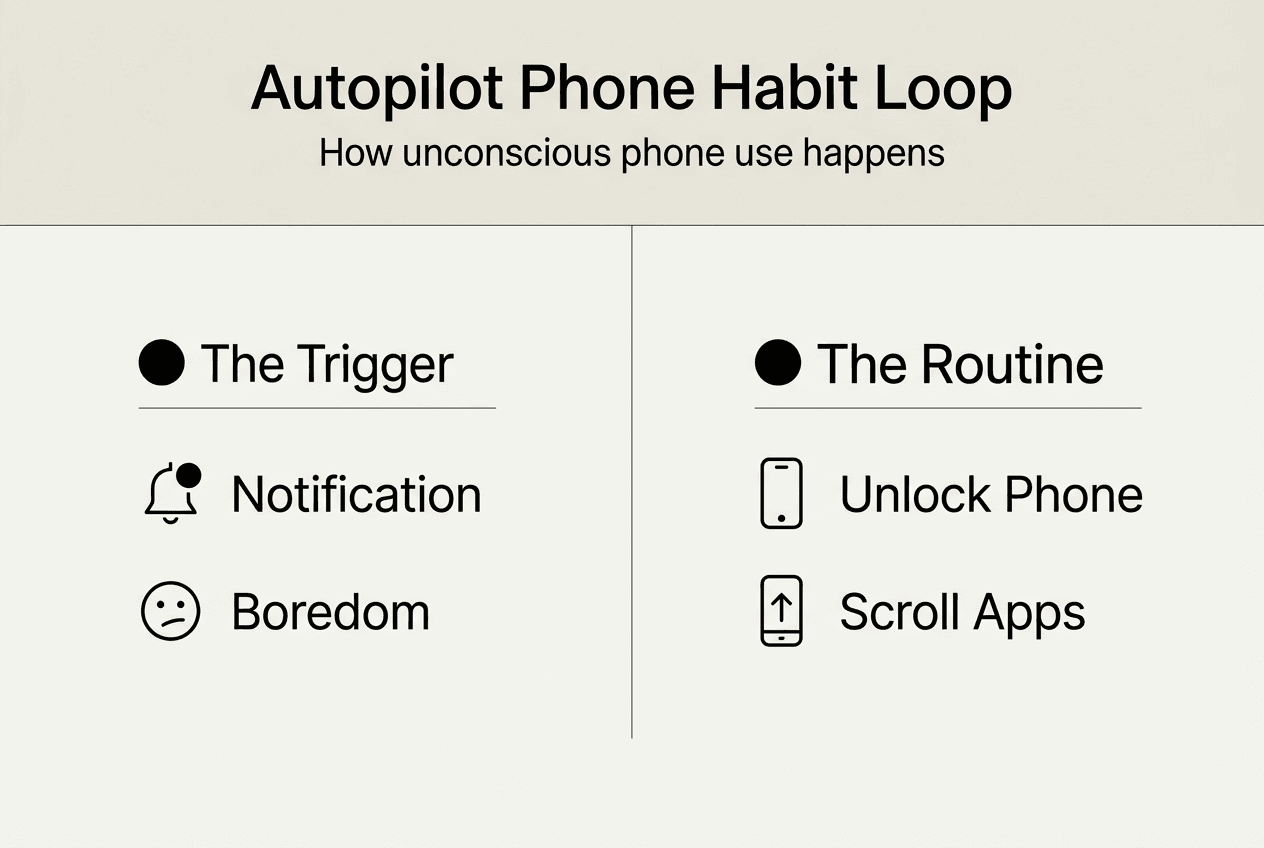
Autopilot phone behavior describes the unconscious, habitual pattern of reaching for your device without deliberate intention. You unlock your screen, scroll through apps, and check notifications automatically, often forgetting what triggered the action. This isn't weakness. It's habit formation, a three-step neurological process called The Habit Loop: cue, routine, and reward.
The cycle works like this: a cue (notification buzz, boredom, waiting in line) triggers a routine (grabbing your phone, opening an app). The routine delivers a reward (interesting content, social validation, distraction from discomfort), which releases dopamine and reinforces the loop. Over time, your brain automates this sequence, making phone checking feel involuntary. The neural pathways strengthen with each repetition until the behavior becomes deeply ingrained.
What makes phone habits especially powerful is variable ratio reinforcement, the same mechanism that makes slot machines addictive. You never know which notification will contain something valuable, so your brain treats every alert as potentially rewarding. This unpredictability drives obsessive behavior far more effectively than consistent rewards would.
Notifications exploit another biological vulnerability: the orienting response. When your phone buzzes, your brain's attention hijack occurs within 100-200 milliseconds, faster than conscious awareness. This evolved survival mechanism helped ancestors detect predators but now redirects focus to every digital ping.
Key elements of autopilot phone behavior:
- Unconscious triggers activate automatic routines
- Dopamine rewards strengthen neural pathways
- Variable reinforcement creates compulsive patterns
- Fast neural circuits bypass conscious decision-making
Pro Tip: Track when you reach for your phone automatically. Notice the cue (boredom, stress, transition moments) to identify your specific habit triggers.
" The habit loop operates below conscious awareness, which is why trying harder rarely works. Your brain has already decided to reach for the phone before you realize it. "
Understanding autopilot phone use impact reveals this isn't a personal failing. Technology companies deliberately engineer these responses using decades of behavioral psychology research.
How technology exploits brain mechanisms: the role of notifications and rewards
App developers don't accidentally create addictive products. They deliberately design interfaces that exploit the exact neural systems described above, maximizing engagement by triggering dopamine pathways unpredictably. The attention economy runs on this principle: tech companies compete for your most valuable, scarcest resource, your attention.
Notifications serve as engineered cues that activate your habit loop constantly. The average person receives 46 to 96 notifications daily, each one a potential trigger. This relentless stream keeps your brain in a state of anticipation, always ready for the next dopamine hit. You check your phone 144 times per day not because you lack discipline but because the system works exactly as designed.
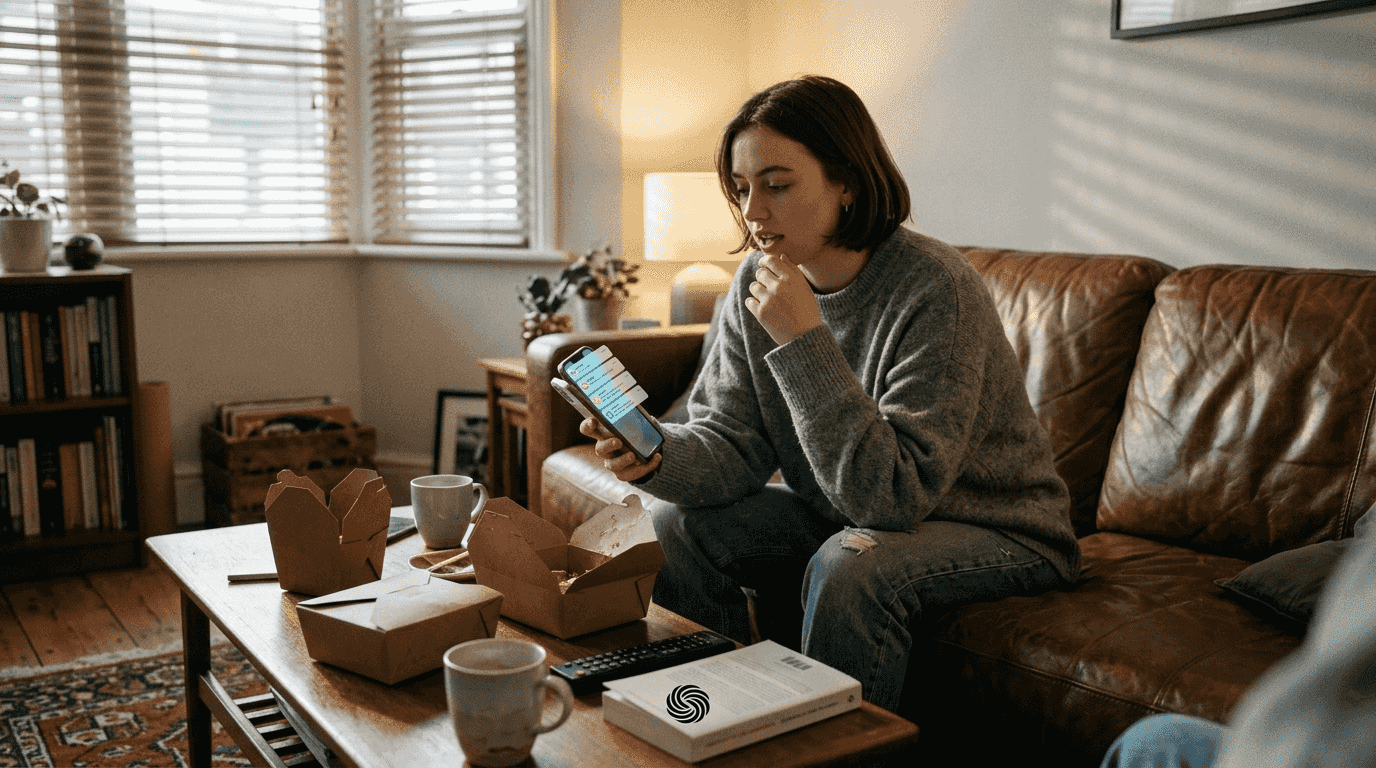
Variable ratio reinforcement schedules make this particularly insidious. Sometimes a notification contains urgent information, sometimes it's trivial, and you can't predict which. Surprise rewards trigger dopamine surges that reinforce the checking behavior more powerfully than predictable rewards. Your brain learns that any notification might be important, so it treats all of them as worth investigating immediately.
How apps exploit your brain:
1. Red notification badges create visual urgency that triggers anxiety until cleared
2. Infinite scroll removes natural stopping points, keeping you engaged indefinitely
3. Social validation metrics (likes, comments, shares) provide unpredictable social rewards
4. Autoplay features eliminate friction between content pieces
5. Personalized algorithms show content calculated to maximize your engagement time
These design choices aren't neutral. They represent billions of dollars in research and A/B testing aimed at one goal: keeping you on the platform longer. Every feature exists because data showed it increased engagement metrics, regardless of impact on your phone addiction effects or mental health.
The numbers tell the story:
- 144 average daily phone checks
- 46 to 96 notifications received per day
- 100 to 200 milliseconds for attention hijack
- Billions spent on engagement optimization
Pro Tip: Check your Screen Time settings to see which apps send the most notifications. The apps interrupting you most frequently are often the least valuable.
" Tech platforms don't sell products to you. They sell your attention to advertisers. Every notification, every algorithmic feed adjustment, every design choice optimizes for one metric: time spent on the platform. "
Recognizing these deliberate exploitation strategies helps you understand that autopilot phone behavior results from sophisticated behavioral engineering, not personal weakness. The system is designed to override your conscious intentions.
Why willpower is not enough: neuroscience insights on breaking autopilot phone habits
You've probably tried to cut back on phone use through sheer determination. You set rules, made promises to yourself, and genuinely intended to change. Then you found yourself scrolling Instagram again, barely remembering picking up the device. This pattern repeats because willpower targets the wrong neural system.
Resisting phone urges requires recruiting your brain's long-term motivation circuits to override automatic habit pathways. These conscious control systems operate slowly, consume significant mental energy, and fatigue quickly. Meanwhile, the habit loop runs on fast, efficient neural circuits that never tire. It's like trying to outrun a car on foot.
Most phone reduction strategies fail because they don't address neural causes sufficiently. Placing your phone across the room adds minor friction but leaves notification systems intact. Deleting one app while keeping others maintains the reward pathways. Setting screen time limits relies on future-you having willpower that present-you already exhausted.
The neuroscience reveals a fundamental mismatch. Autopilot phone behavior operates through:
1. Fast, automatic neural pathways that bypass conscious thought
2. Dopamine-driven reward systems evolved over millions of years
3. Habit loops strengthened by thousands of repetitions
4. Engineered triggers designed by teams of behavioral psychologists
Willpower-based solutions counter with:
1. Slow, deliberate cognitive processes that require constant effort
2. Abstract future goals competing against immediate rewards
3. Finite mental energy that depletes throughout the day
4. Individual determination against billion-dollar engagement systems
Research shows phone addiction is driven by defaults that encourage constant interruptions, not character flaws. Your phone arrives configured to maximize engagement: notifications enabled for every app, attention-grabbing interfaces, frictionless access to infinite content. These settings exploit your neural vulnerabilities systematically.
Pro Tip: Notice when you break your phone rules. The pattern usually shows willpower failing during stress, fatigue, or transition moments when conscious control is weakest and automatic habits are strongest.
Effective strategies must work with your brain's architecture, not against it. This means changing the environment that triggers habits rather than relying on constant self-monitoring. It means eliminating cues before they activate the automatic routine. It means understanding that monitoring phone use benefits come from systematic changes, not heroic willpower.
The solution isn't trying harder. It's working smarter by targeting the actual neural mechanisms that drive behavior.
Practical steps to break autopilot phone behavior and regain control
Now that you understand why autopilot phone behavior persists, you can apply strategies that actually work by addressing root neural causes. These evidence-based approaches modify your environment, eliminate triggers, and rebuild conscious control without relying on exhaustible willpower.
Start by building boundaries with notification control. Turn off all non-essential notifications immediately. Every alert you eliminate removes a cue that triggers the habit loop. Keep only truly urgent notifications (calls from family, critical work messages) and batch-check everything else at scheduled times. This single change dramatically reduces attention hijacking throughout your day.
Create friction between impulse and action:
- Establish phone parking spots (drawer, different room, car glovebox) during focus time
- Remove social media apps from your home screen, requiring search to access them
- Enable grayscale mode to make your screen less visually rewarding
- Use app timers that require conscious override rather than passive limits
- Log out of apps after each use, adding login friction to automatic opening
Schedule specific phone-free blocks using Focus or Do Not Disturb modes. Your brain adapts to predictable patterns more easily than sporadic restrictions. Set consistent times for deep work, meals, morning routines, and before bed when your phone stays completely off or in another room. This builds new habits through repetition rather than constant decision-making.
Practice mindful phone use by implementing a simple rule: pause for three seconds before unlocking your screen. Ask yourself what you intend to do and whether it's necessary right now. This tiny delay activates conscious decision-making circuits, interrupting the automatic habit pathway. You'll be surprised how often the answer is "nothing important."
Implement a healthy phone use workflow that combines multiple strategies. No single technique works perfectly, but layered approaches address different aspects of the habit loop simultaneously. You might disable notifications (eliminate cues), park your phone during work (add friction), use grayscale (reduce rewards), and practice the pause rule (activate conscious control).
Pro Tip: Start with just one or two changes and master them before adding more. Trying to overhaul everything at once often leads to abandoning all strategies when willpower fades.
Research confirms that prolonged screen time negatively affects focus and emotional regulation. The strategies above reverse these effects by helping you reduce screen time naturally through environmental design rather than constant self-discipline. You'll notice improvements in concentration, sleep quality, and mental clarity within days.
The benefits compound over time. Breaking phone habits delivers a 35% productivity boost by reclaiming attention previously fragmented across dozens of daily interruptions. You'll rediscover the ability to think deeply, engage fully in conversations, and experience moments without the compulsion to document or share them.
These aren't temporary fixes. They're sustainable changes that work with your neuroscience, not against it. You're not fighting your brain anymore. You're redesigning your environment to support the behavior you actually want.
Discover tools to regain control over your phone use
Breaking autopilot phone behavior requires more than knowledge. It demands practical tools that make conscious phone use easier than unconscious scrolling. Well O'Clock offers a unique physical solution that adds tangible friction to automatic phone habits.
The system combines NFC tags with a mobile app, creating a physical checkpoint before you can access distracting apps. Instead of relying on willpower to resist the unlock impulse, you must physically tap your phone to a tag placed somewhere intentional. This simple action interrupts the automatic habit loop, forcing conscious awareness before the routine completes.
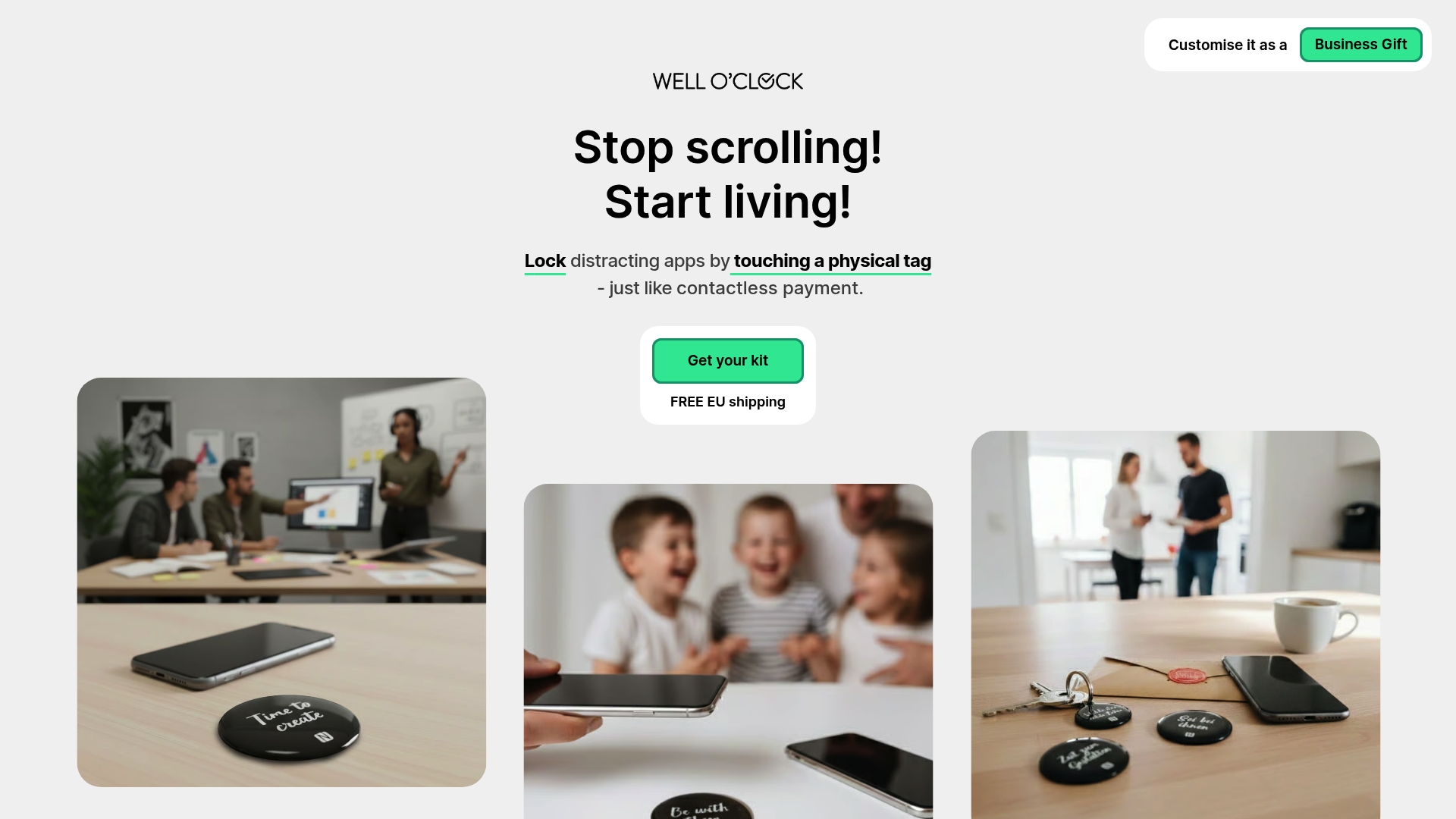
This approach addresses the core problem: autopilot behavior bypasses conscious decision-making. By requiring a physical action separate from your phone, Well O'Clock reactivates the deliberate neural pathways that autopilot habits circumvent. You can't mindlessly scroll when you must first walk to another room and tap a tag.
The solution integrates seamlessly with the strategies outlined above, providing the environmental change and friction that neuroscience shows actually works for lasting behavior change.
Frequently asked questions
What is autopilot phone behavior?
Autopilot phone behavior is the unconscious, habitual pattern of checking your phone without deliberate intention. Your brain follows an automatic cue-routine-reward loop that makes reaching for your device feel involuntary, often without remembering why you picked it up.
Why can't I stop checking my phone even when I want to?
Phone checking operates through fast, automatic neural circuits that bypass conscious control. Apps deliberately exploit dopamine reward systems and variable reinforcement schedules, making the behavior compulsive. Willpower uses slow, exhaustible mental resources that can't compete with engineered habit triggers.
How many times does the average person check their phone daily?
The average person checks their phone 144 times per day and receives 46 to 96 notifications daily. Each notification triggers an attention hijack within 100 to 200 milliseconds, faster than conscious awareness, which drives the constant checking pattern.
What strategies actually work to reduce autopilot phone use?
Effective strategies address neural mechanisms rather than relying on willpower. Disable non-essential notifications to eliminate cues, create phone parking spots to add friction, use scheduled phone-free blocks to build new habits, and practice a three-second pause before unlocking to activate conscious control.
How long does it take to break autopilot phone habits?
Breaking deeply ingrained phone habits typically requires 4 to 8 weeks of consistent environmental changes and new routines. The timeline varies based on how long you've had the habits and how thoroughly you modify triggers, but most people notice reduced compulsive checking within the first week of implementing multiple strategies simultaneously.

Mak Kordić
Co founder
Mak Kordić is the founder and CEO of CNJ Digital, an agency based in Ljubljana, where he and his team develop UX/UI and digital products for demanding B2B projects. Over his career, he has led and co-created hundreds of digital solutions and worked with international clients.








What is autopilot phone behavior and how to break it
Mak Kordić
,
March 24, 2026
You reach for your phone without thinking, check it 144 times daily, and often can't remember why you picked it up. This unconscious pattern, called autopilot phone behavior, isn't a character flaw or lack of discipline. It's your brain responding exactly as evolution designed it to, exploited by technology engineered to hijack your attention. Understanding the neuroscience behind these automatic habits reveals why willpower alone fails and what actually works to regain control. This article breaks down the brain mechanisms driving autopilot phone use and provides practical, evidence-based strategies to rebuild conscious digital habits for better focus, mental clarity, and productivity.
Table of Contents
- What Is Autopilot Phone Behavior? Understanding The Brain's Role
- How Technology Exploits Brain Mechanisms: The Role Of Notifications And Rewards
- Why Willpower Is Not Enough: Neuroscience Insights On Breaking Autopilot Phone Habits
- Practical Steps To Break Autopilot Phone Behavior And Regain Control
- Discover Tools To Regain Control Over Your Phone Use
What is autopilot phone behavior? Understanding the brain's role
Autopilot phone behavior describes the unconscious, habitual pattern of reaching for your device without deliberate intention. You unlock your screen, scroll through apps, and check notifications automatically, often forgetting what triggered the action. This isn't weakness. It's habit formation, a three-step neurological process called The Habit Loop: cue, routine, and reward.
The cycle works like this: a cue (notification buzz, boredom, waiting in line) triggers a routine (grabbing your phone, opening an app). The routine delivers a reward (interesting content, social validation, distraction from discomfort), which releases dopamine and reinforces the loop. Over time, your brain automates this sequence, making phone checking feel involuntary. The neural pathways strengthen with each repetition until the behavior becomes deeply ingrained.
What makes phone habits especially powerful is variable ratio reinforcement, the same mechanism that makes slot machines addictive. You never know which notification will contain something valuable, so your brain treats every alert as potentially rewarding. This unpredictability drives obsessive behavior far more effectively than consistent rewards would.
Notifications exploit another biological vulnerability: the orienting response. When your phone buzzes, your brain's attention hijack occurs within 100-200 milliseconds, faster than conscious awareness. This evolved survival mechanism helped ancestors detect predators but now redirects focus to every digital ping.
Key elements of autopilot phone behavior:
- Unconscious triggers activate automatic routines
- Dopamine rewards strengthen neural pathways
- Variable reinforcement creates compulsive patterns
- Fast neural circuits bypass conscious decision-making
Pro Tip: Track when you reach for your phone automatically. Notice the cue (boredom, stress, transition moments) to identify your specific habit triggers.
" The habit loop operates below conscious awareness, which is why trying harder rarely works. Your brain has already decided to reach for the phone before you realize it. "
Understanding autopilot phone use impact reveals this isn't a personal failing. Technology companies deliberately engineer these responses using decades of behavioral psychology research.
How technology exploits brain mechanisms: the role of notifications and rewards
App developers don't accidentally create addictive products. They deliberately design interfaces that exploit the exact neural systems described above, maximizing engagement by triggering dopamine pathways unpredictably. The attention economy runs on this principle: tech companies compete for your most valuable, scarcest resource, your attention.
Notifications serve as engineered cues that activate your habit loop constantly. The average person receives 46 to 96 notifications daily, each one a potential trigger. This relentless stream keeps your brain in a state of anticipation, always ready for the next dopamine hit. You check your phone 144 times per day not because you lack discipline but because the system works exactly as designed.
Variable ratio reinforcement schedules make this particularly insidious. Sometimes a notification contains urgent information, sometimes it's trivial, and you can't predict which. Surprise rewards trigger dopamine surges that reinforce the checking behavior more powerfully than predictable rewards. Your brain learns that any notification might be important, so it treats all of them as worth investigating immediately.
How apps exploit your brain:
1. Red notification badges create visual urgency that triggers anxiety until cleared
2. Infinite scroll removes natural stopping points, keeping you engaged indefinitely
3. Social validation metrics (likes, comments, shares) provide unpredictable social rewards
4. Autoplay features eliminate friction between content pieces
5. Personalized algorithms show content calculated to maximize your engagement time
These design choices aren't neutral. They represent billions of dollars in research and A/B testing aimed at one goal: keeping you on the platform longer. Every feature exists because data showed it increased engagement metrics, regardless of impact on your phone addiction effects or mental health.
The numbers tell the story:
- 144 average daily phone checks
- 46 to 96 notifications received per day
- 100 to 200 milliseconds for attention hijack
- Billions spent on engagement optimization
Pro Tip: Check your Screen Time settings to see which apps send the most notifications. The apps interrupting you most frequently are often the least valuable.
" Tech platforms don't sell products to you. They sell your attention to advertisers. Every notification, every algorithmic feed adjustment, every design choice optimizes for one metric: time spent on the platform. "
Recognizing these deliberate exploitation strategies helps you understand that autopilot phone behavior results from sophisticated behavioral engineering, not personal weakness. The system is designed to override your conscious intentions.
Why willpower is not enough: neuroscience insights on breaking autopilot phone habits
You've probably tried to cut back on phone use through sheer determination. You set rules, made promises to yourself, and genuinely intended to change. Then you found yourself scrolling Instagram again, barely remembering picking up the device. This pattern repeats because willpower targets the wrong neural system.
Resisting phone urges requires recruiting your brain's long-term motivation circuits to override automatic habit pathways. These conscious control systems operate slowly, consume significant mental energy, and fatigue quickly. Meanwhile, the habit loop runs on fast, efficient neural circuits that never tire. It's like trying to outrun a car on foot.
Most phone reduction strategies fail because they don't address neural causes sufficiently. Placing your phone across the room adds minor friction but leaves notification systems intact. Deleting one app while keeping others maintains the reward pathways. Setting screen time limits relies on future-you having willpower that present-you already exhausted.
The neuroscience reveals a fundamental mismatch. Autopilot phone behavior operates through:
1. Fast, automatic neural pathways that bypass conscious thought
2. Dopamine-driven reward systems evolved over millions of years
3. Habit loops strengthened by thousands of repetitions
4. Engineered triggers designed by teams of behavioral psychologists
Willpower-based solutions counter with:
1. Slow, deliberate cognitive processes that require constant effort
2. Abstract future goals competing against immediate rewards
3. Finite mental energy that depletes throughout the day
4. Individual determination against billion-dollar engagement systems
Research shows phone addiction is driven by defaults that encourage constant interruptions, not character flaws. Your phone arrives configured to maximize engagement: notifications enabled for every app, attention-grabbing interfaces, frictionless access to infinite content. These settings exploit your neural vulnerabilities systematically.
Pro Tip: Notice when you break your phone rules. The pattern usually shows willpower failing during stress, fatigue, or transition moments when conscious control is weakest and automatic habits are strongest.
Effective strategies must work with your brain's architecture, not against it. This means changing the environment that triggers habits rather than relying on constant self-monitoring. It means eliminating cues before they activate the automatic routine. It means understanding that monitoring phone use benefits come from systematic changes, not heroic willpower.
The solution isn't trying harder. It's working smarter by targeting the actual neural mechanisms that drive behavior.
Practical steps to break autopilot phone behavior and regain control
Now that you understand why autopilot phone behavior persists, you can apply strategies that actually work by addressing root neural causes. These evidence-based approaches modify your environment, eliminate triggers, and rebuild conscious control without relying on exhaustible willpower.
Start by building boundaries with notification control. Turn off all non-essential notifications immediately. Every alert you eliminate removes a cue that triggers the habit loop. Keep only truly urgent notifications (calls from family, critical work messages) and batch-check everything else at scheduled times. This single change dramatically reduces attention hijacking throughout your day.
Create friction between impulse and action:
- Establish phone parking spots (drawer, different room, car glovebox) during focus time
- Remove social media apps from your home screen, requiring search to access them
- Enable grayscale mode to make your screen less visually rewarding
- Use app timers that require conscious override rather than passive limits
- Log out of apps after each use, adding login friction to automatic opening
Schedule specific phone-free blocks using Focus or Do Not Disturb modes. Your brain adapts to predictable patterns more easily than sporadic restrictions. Set consistent times for deep work, meals, morning routines, and before bed when your phone stays completely off or in another room. This builds new habits through repetition rather than constant decision-making.
Practice mindful phone use by implementing a simple rule: pause for three seconds before unlocking your screen. Ask yourself what you intend to do and whether it's necessary right now. This tiny delay activates conscious decision-making circuits, interrupting the automatic habit pathway. You'll be surprised how often the answer is "nothing important."
Implement a healthy phone use workflow that combines multiple strategies. No single technique works perfectly, but layered approaches address different aspects of the habit loop simultaneously. You might disable notifications (eliminate cues), park your phone during work (add friction), use grayscale (reduce rewards), and practice the pause rule (activate conscious control).
Pro Tip: Start with just one or two changes and master them before adding more. Trying to overhaul everything at once often leads to abandoning all strategies when willpower fades.
Research confirms that prolonged screen time negatively affects focus and emotional regulation. The strategies above reverse these effects by helping you reduce screen time naturally through environmental design rather than constant self-discipline. You'll notice improvements in concentration, sleep quality, and mental clarity within days.
The benefits compound over time. Breaking phone habits delivers a 35% productivity boost by reclaiming attention previously fragmented across dozens of daily interruptions. You'll rediscover the ability to think deeply, engage fully in conversations, and experience moments without the compulsion to document or share them.
These aren't temporary fixes. They're sustainable changes that work with your neuroscience, not against it. You're not fighting your brain anymore. You're redesigning your environment to support the behavior you actually want.
Discover tools to regain control over your phone use
Breaking autopilot phone behavior requires more than knowledge. It demands practical tools that make conscious phone use easier than unconscious scrolling. Well O'Clock offers a unique physical solution that adds tangible friction to automatic phone habits.
The system combines NFC tags with a mobile app, creating a physical checkpoint before you can access distracting apps. Instead of relying on willpower to resist the unlock impulse, you must physically tap your phone to a tag placed somewhere intentional. This simple action interrupts the automatic habit loop, forcing conscious awareness before the routine completes.
This approach addresses the core problem: autopilot behavior bypasses conscious decision-making. By requiring a physical action separate from your phone, Well O'Clock reactivates the deliberate neural pathways that autopilot habits circumvent. You can't mindlessly scroll when you must first walk to another room and tap a tag.
The solution integrates seamlessly with the strategies outlined above, providing the environmental change and friction that neuroscience shows actually works for lasting behavior change.
Frequently asked questions
What is autopilot phone behavior?
Autopilot phone behavior is the unconscious, habitual pattern of checking your phone without deliberate intention. Your brain follows an automatic cue-routine-reward loop that makes reaching for your device feel involuntary, often without remembering why you picked it up.
Why can't I stop checking my phone even when I want to?
Phone checking operates through fast, automatic neural circuits that bypass conscious control. Apps deliberately exploit dopamine reward systems and variable reinforcement schedules, making the behavior compulsive. Willpower uses slow, exhaustible mental resources that can't compete with engineered habit triggers.
How many times does the average person check their phone daily?
The average person checks their phone 144 times per day and receives 46 to 96 notifications daily. Each notification triggers an attention hijack within 100 to 200 milliseconds, faster than conscious awareness, which drives the constant checking pattern.
What strategies actually work to reduce autopilot phone use?
Effective strategies address neural mechanisms rather than relying on willpower. Disable non-essential notifications to eliminate cues, create phone parking spots to add friction, use scheduled phone-free blocks to build new habits, and practice a three-second pause before unlocking to activate conscious control.
How long does it take to break autopilot phone habits?
Breaking deeply ingrained phone habits typically requires 4 to 8 weeks of consistent environmental changes and new routines. The timeline varies based on how long you've had the habits and how thoroughly you modify triggers, but most people notice reduced compulsive checking within the first week of implementing multiple strategies simultaneously.
Mak Kordić
Co founder
Mak Kordić is the founder and CEO of CNJ Digital, an agency based in Ljubljana, where he and his team develop UX/UI and digital products for demanding B2B projects. Over his career, he has led and co-created hundreds of digital solutions and worked with international clients.
What is autopilot phone behavior and how to break it
Mak Kordić
,
March 24, 2026
You reach for your phone without thinking, check it 144 times daily, and often can't remember why you picked it up. This unconscious pattern, called autopilot phone behavior, isn't a character flaw or lack of discipline. It's your brain responding exactly as evolution designed it to, exploited by technology engineered to hijack your attention. Understanding the neuroscience behind these automatic habits reveals why willpower alone fails and what actually works to regain control. This article breaks down the brain mechanisms driving autopilot phone use and provides practical, evidence-based strategies to rebuild conscious digital habits for better focus, mental clarity, and productivity.
Table of Contents
- What Is Autopilot Phone Behavior? Understanding The Brain's Role
- How Technology Exploits Brain Mechanisms: The Role Of Notifications And Rewards
- Why Willpower Is Not Enough: Neuroscience Insights On Breaking Autopilot Phone Habits
- Practical Steps To Break Autopilot Phone Behavior And Regain Control
- Discover Tools To Regain Control Over Your Phone Use
What is autopilot phone behavior? Understanding the brain's role
Autopilot phone behavior describes the unconscious, habitual pattern of reaching for your device without deliberate intention. You unlock your screen, scroll through apps, and check notifications automatically, often forgetting what triggered the action. This isn't weakness. It's habit formation, a three-step neurological process called The Habit Loop: cue, routine, and reward.
The cycle works like this: a cue (notification buzz, boredom, waiting in line) triggers a routine (grabbing your phone, opening an app). The routine delivers a reward (interesting content, social validation, distraction from discomfort), which releases dopamine and reinforces the loop. Over time, your brain automates this sequence, making phone checking feel involuntary. The neural pathways strengthen with each repetition until the behavior becomes deeply ingrained.
What makes phone habits especially powerful is variable ratio reinforcement, the same mechanism that makes slot machines addictive. You never know which notification will contain something valuable, so your brain treats every alert as potentially rewarding. This unpredictability drives obsessive behavior far more effectively than consistent rewards would.
Notifications exploit another biological vulnerability: the orienting response. When your phone buzzes, your brain's attention hijack occurs within 100-200 milliseconds, faster than conscious awareness. This evolved survival mechanism helped ancestors detect predators but now redirects focus to every digital ping.
Key elements of autopilot phone behavior:
- Unconscious triggers activate automatic routines
- Dopamine rewards strengthen neural pathways
- Variable reinforcement creates compulsive patterns
- Fast neural circuits bypass conscious decision-making
Pro Tip: Track when you reach for your phone automatically. Notice the cue (boredom, stress, transition moments) to identify your specific habit triggers.
" The habit loop operates below conscious awareness, which is why trying harder rarely works. Your brain has already decided to reach for the phone before you realize it. "
Understanding autopilot phone use impact reveals this isn't a personal failing. Technology companies deliberately engineer these responses using decades of behavioral psychology research.
How technology exploits brain mechanisms: the role of notifications and rewards
App developers don't accidentally create addictive products. They deliberately design interfaces that exploit the exact neural systems described above, maximizing engagement by triggering dopamine pathways unpredictably. The attention economy runs on this principle: tech companies compete for your most valuable, scarcest resource, your attention.
Notifications serve as engineered cues that activate your habit loop constantly. The average person receives 46 to 96 notifications daily, each one a potential trigger. This relentless stream keeps your brain in a state of anticipation, always ready for the next dopamine hit. You check your phone 144 times per day not because you lack discipline but because the system works exactly as designed.
Variable ratio reinforcement schedules make this particularly insidious. Sometimes a notification contains urgent information, sometimes it's trivial, and you can't predict which. Surprise rewards trigger dopamine surges that reinforce the checking behavior more powerfully than predictable rewards. Your brain learns that any notification might be important, so it treats all of them as worth investigating immediately.
How apps exploit your brain:
1. Red notification badges create visual urgency that triggers anxiety until cleared
2. Infinite scroll removes natural stopping points, keeping you engaged indefinitely
3. Social validation metrics (likes, comments, shares) provide unpredictable social rewards
4. Autoplay features eliminate friction between content pieces
5. Personalized algorithms show content calculated to maximize your engagement time
These design choices aren't neutral. They represent billions of dollars in research and A/B testing aimed at one goal: keeping you on the platform longer. Every feature exists because data showed it increased engagement metrics, regardless of impact on your phone addiction effects or mental health.
The numbers tell the story:
- 144 average daily phone checks
- 46 to 96 notifications received per day
- 100 to 200 milliseconds for attention hijack
- Billions spent on engagement optimization
Pro Tip: Check your Screen Time settings to see which apps send the most notifications. The apps interrupting you most frequently are often the least valuable.
" Tech platforms don't sell products to you. They sell your attention to advertisers. Every notification, every algorithmic feed adjustment, every design choice optimizes for one metric: time spent on the platform. "
Recognizing these deliberate exploitation strategies helps you understand that autopilot phone behavior results from sophisticated behavioral engineering, not personal weakness. The system is designed to override your conscious intentions.
Why willpower is not enough: neuroscience insights on breaking autopilot phone habits
You've probably tried to cut back on phone use through sheer determination. You set rules, made promises to yourself, and genuinely intended to change. Then you found yourself scrolling Instagram again, barely remembering picking up the device. This pattern repeats because willpower targets the wrong neural system.
Resisting phone urges requires recruiting your brain's long-term motivation circuits to override automatic habit pathways. These conscious control systems operate slowly, consume significant mental energy, and fatigue quickly. Meanwhile, the habit loop runs on fast, efficient neural circuits that never tire. It's like trying to outrun a car on foot.
Most phone reduction strategies fail because they don't address neural causes sufficiently. Placing your phone across the room adds minor friction but leaves notification systems intact. Deleting one app while keeping others maintains the reward pathways. Setting screen time limits relies on future-you having willpower that present-you already exhausted.
The neuroscience reveals a fundamental mismatch. Autopilot phone behavior operates through:
1. Fast, automatic neural pathways that bypass conscious thought
2. Dopamine-driven reward systems evolved over millions of years
3. Habit loops strengthened by thousands of repetitions
4. Engineered triggers designed by teams of behavioral psychologists
Willpower-based solutions counter with:
1. Slow, deliberate cognitive processes that require constant effort
2. Abstract future goals competing against immediate rewards
3. Finite mental energy that depletes throughout the day
4. Individual determination against billion-dollar engagement systems
Research shows phone addiction is driven by defaults that encourage constant interruptions, not character flaws. Your phone arrives configured to maximize engagement: notifications enabled for every app, attention-grabbing interfaces, frictionless access to infinite content. These settings exploit your neural vulnerabilities systematically.
Pro Tip: Notice when you break your phone rules. The pattern usually shows willpower failing during stress, fatigue, or transition moments when conscious control is weakest and automatic habits are strongest.
Effective strategies must work with your brain's architecture, not against it. This means changing the environment that triggers habits rather than relying on constant self-monitoring. It means eliminating cues before they activate the automatic routine. It means understanding that monitoring phone use benefits come from systematic changes, not heroic willpower.
The solution isn't trying harder. It's working smarter by targeting the actual neural mechanisms that drive behavior.
Practical steps to break autopilot phone behavior and regain control
Now that you understand why autopilot phone behavior persists, you can apply strategies that actually work by addressing root neural causes. These evidence-based approaches modify your environment, eliminate triggers, and rebuild conscious control without relying on exhaustible willpower.
Start by building boundaries with notification control. Turn off all non-essential notifications immediately. Every alert you eliminate removes a cue that triggers the habit loop. Keep only truly urgent notifications (calls from family, critical work messages) and batch-check everything else at scheduled times. This single change dramatically reduces attention hijacking throughout your day.
Create friction between impulse and action:
- Establish phone parking spots (drawer, different room, car glovebox) during focus time
- Remove social media apps from your home screen, requiring search to access them
- Enable grayscale mode to make your screen less visually rewarding
- Use app timers that require conscious override rather than passive limits
- Log out of apps after each use, adding login friction to automatic opening
Schedule specific phone-free blocks using Focus or Do Not Disturb modes. Your brain adapts to predictable patterns more easily than sporadic restrictions. Set consistent times for deep work, meals, morning routines, and before bed when your phone stays completely off or in another room. This builds new habits through repetition rather than constant decision-making.
Practice mindful phone use by implementing a simple rule: pause for three seconds before unlocking your screen. Ask yourself what you intend to do and whether it's necessary right now. This tiny delay activates conscious decision-making circuits, interrupting the automatic habit pathway. You'll be surprised how often the answer is "nothing important."
Implement a healthy phone use workflow that combines multiple strategies. No single technique works perfectly, but layered approaches address different aspects of the habit loop simultaneously. You might disable notifications (eliminate cues), park your phone during work (add friction), use grayscale (reduce rewards), and practice the pause rule (activate conscious control).
Pro Tip: Start with just one or two changes and master them before adding more. Trying to overhaul everything at once often leads to abandoning all strategies when willpower fades.
Research confirms that prolonged screen time negatively affects focus and emotional regulation. The strategies above reverse these effects by helping you reduce screen time naturally through environmental design rather than constant self-discipline. You'll notice improvements in concentration, sleep quality, and mental clarity within days.
The benefits compound over time. Breaking phone habits delivers a 35% productivity boost by reclaiming attention previously fragmented across dozens of daily interruptions. You'll rediscover the ability to think deeply, engage fully in conversations, and experience moments without the compulsion to document or share them.
These aren't temporary fixes. They're sustainable changes that work with your neuroscience, not against it. You're not fighting your brain anymore. You're redesigning your environment to support the behavior you actually want.
Discover tools to regain control over your phone use
Breaking autopilot phone behavior requires more than knowledge. It demands practical tools that make conscious phone use easier than unconscious scrolling. Well O'Clock offers a unique physical solution that adds tangible friction to automatic phone habits.
The system combines NFC tags with a mobile app, creating a physical checkpoint before you can access distracting apps. Instead of relying on willpower to resist the unlock impulse, you must physically tap your phone to a tag placed somewhere intentional. This simple action interrupts the automatic habit loop, forcing conscious awareness before the routine completes.
This approach addresses the core problem: autopilot behavior bypasses conscious decision-making. By requiring a physical action separate from your phone, Well O'Clock reactivates the deliberate neural pathways that autopilot habits circumvent. You can't mindlessly scroll when you must first walk to another room and tap a tag.
The solution integrates seamlessly with the strategies outlined above, providing the environmental change and friction that neuroscience shows actually works for lasting behavior change.
Frequently asked questions
What is autopilot phone behavior?
Autopilot phone behavior is the unconscious, habitual pattern of checking your phone without deliberate intention. Your brain follows an automatic cue-routine-reward loop that makes reaching for your device feel involuntary, often without remembering why you picked it up.
Why can't I stop checking my phone even when I want to?
Phone checking operates through fast, automatic neural circuits that bypass conscious control. Apps deliberately exploit dopamine reward systems and variable reinforcement schedules, making the behavior compulsive. Willpower uses slow, exhaustible mental resources that can't compete with engineered habit triggers.
How many times does the average person check their phone daily?
The average person checks their phone 144 times per day and receives 46 to 96 notifications daily. Each notification triggers an attention hijack within 100 to 200 milliseconds, faster than conscious awareness, which drives the constant checking pattern.
What strategies actually work to reduce autopilot phone use?
Effective strategies address neural mechanisms rather than relying on willpower. Disable non-essential notifications to eliminate cues, create phone parking spots to add friction, use scheduled phone-free blocks to build new habits, and practice a three-second pause before unlocking to activate conscious control.
How long does it take to break autopilot phone habits?
Breaking deeply ingrained phone habits typically requires 4 to 8 weeks of consistent environmental changes and new routines. The timeline varies based on how long you've had the habits and how thoroughly you modify triggers, but most people notice reduced compulsive checking within the first week of implementing multiple strategies simultaneously.
Mak Kordić
Co founder
Mak Kordić is the founder and CEO of CNJ Digital, an agency based in Ljubljana, where he and his team develop UX/UI and digital products for demanding B2B projects. Over his career, he has led and co-created hundreds of digital solutions and worked with international clients.