
Why monitor phone use: 40% more mental clarity in 2026
Mak Kordić
,
March 10, 2026


Checking your phone repeatedly throughout the day isn't just a harmless habit. Research shows that frequent phone checking increases anxiety symptoms by nearly 30%, disrupting your mental clarity and overall well-being. For health-conscious individuals seeking to break free from phone addiction, monitoring phone use offers a powerful first step. This guide reveals why tracking your phone habits works, how physical tools amplify results, and practical steps to reclaim focus and peace in 2026.
Table of Contents
- Understanding The Impact Of Excessive Phone Use
- Why Monitoring Phone Use Matters: Mechanisms And Benefits
- Common Misconceptions About Phone Use Monitoring
- Comparing Phone Monitoring Strategies: Digital Vs Physical Tools
- Practical Steps To Monitor And Control Phone Use Effectively
- Conclusion: Embracing Monitoring To Reclaim Mental Clarity And Well-Being
- Discover Tools To Support Healthy Phone Use
- Frequently Asked Questions
Understanding the impact of excessive phone use
Excessive phone use fragments your attention span, making deep focus nearly impossible. Every notification pull and habitual scroll chips away at your cognitive resources. Your brain struggles to maintain concentration when constantly interrupted by digital stimuli.
Phone addiction triggers measurable anxiety increases and disrupts sleep architecture. The impact of excessive phone use extends beyond daytime productivity into nighttime recovery. Blue light exposure and stimulating content before bed delay melatonin production and reduce restorative sleep phases.
Research confirms the sleep connection. Sleep quality scores improved by 18% after implementing phone monitoring and limiting bedtime use. Participants reported falling asleep faster and waking more refreshed when they tracked and reduced evening phone exposure.
Productivity suffers under the weight of constant phone notifications. Each ping triggers a mental context switch that takes 23 minutes on average to fully recover from. These interruptions accumulate throughout your day, leaving you mentally exhausted without completing meaningful work.
Real world examples highlight these patterns clearly:
- Professionals report difficulty completing focused tasks when phones remain within arm's reach
- Students experience lower academic performance correlating with higher phone use during study sessions
- Parents struggle with presence and connection when phones compete for attention during family time
The phone addiction effects ripple across every life domain. Mental fatigue, relationship strain, and reduced life satisfaction all trace back to unmonitored phone habits. Understanding these impacts motivates the behavior change needed to reclaim your mental clarity and well-being.
Why monitoring phone use matters: mechanisms and benefits
Monitoring phone use interrupts the automatic, unconscious checking behavior that defines phone addiction. When you track your usage, you introduce awareness into a previously mindless loop. This awareness creates a pause between impulse and action, giving you choice instead of autopilot.
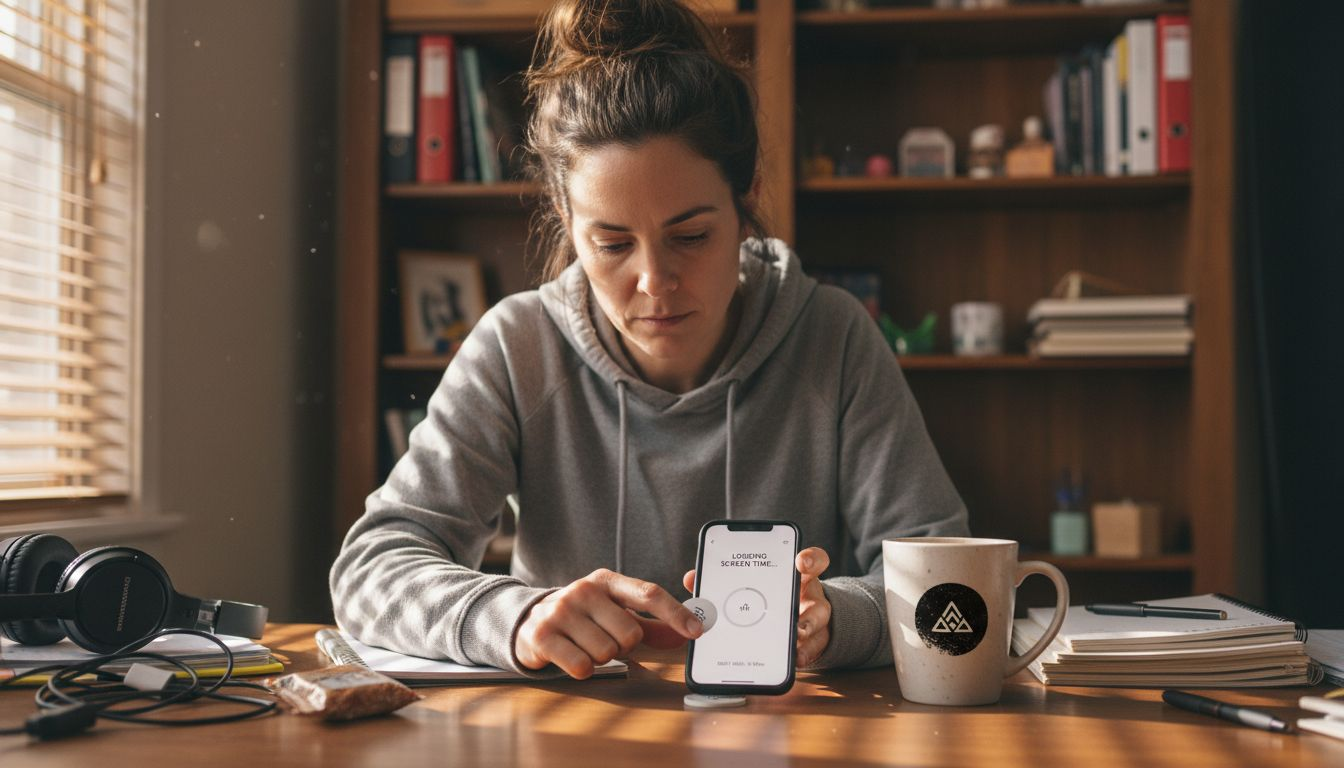
Reducing phone interactions restores cognitive resources previously consumed by constant task switching. Your brain can allocate energy toward sustained attention and creative problem solving. Users experienced a 40% increase in deep focus periods after monitoring and limiting phone use, demonstrating measurable cognitive benefits.
Consequences for kids' of endless screen time
Monitoring cuts exposure to blue light and anxiety-inducing content, especially at night. Evening phone use suppresses melatonin and activates stress responses when you encounter stimulating news or social media. Tracking helps you recognize and adjust these patterns before they disrupt your sleep cycle.
Physical interventions prove more effective than digital apps alone at breaking phone habits. Apps live inside the device you're trying to avoid, creating an inherent conflict. Interrupting phone checking habits requires external tools that create friction before you can access distracting apps.
The benefits of effective monitoring compound quickly:
- Improved sleep quality through reduced evening screen exposure
- Lower anxiety levels as you break the checking compulsion
- Enhanced concentration lasting 40% longer during focused work
- Increased productivity from fewer context switches and interruptions
- Better relationships through more present, engaged interactions
Pro Tip: Combine digital tracking with physical barriers like NFC tags that require deliberate action to unlock apps. This dual approach addresses both awareness and automatic behavior patterns simultaneously.
Reducing screen time benefits extend beyond immediate focus improvements. Long term monitoring establishes healthier baseline habits that protect your mental clarity and overall wellness for years ahead.
Common misconceptions about phone use monitoring
Many people believe that tracking screen time alone will change their behavior. Reality proves different. Only about 12% of users modify habits based solely on screen time data without additional interventions. Awareness without action rarely creates lasting change.
Another misconception suggests phone monitoring only helps after addiction becomes severe. Research shows the opposite. Early monitoring reduces the risk of developing chronic phone addiction by approximately 50%. Prevention works far better than attempting to reverse entrenched habits later.
Digital apps without physical components often fail to break habitual checking. You access these apps on the same device you're trying to avoid, creating a paradox. Opening your phone to check monitoring stats frequently triggers the exact distraction loops you meant to prevent.
Some assume willpower alone suffices to control phone use. This ignores how phone interfaces intentionally exploit psychological vulnerabilities. Misconceptions about phone use monitoring prevent people from adopting strategies that actually work.
Effective monitoring requires combining multiple approaches:
- App-based tracking provides data and awareness
- Physical tools create tangible barriers to automatic checking
- Environmental changes remove phones from high-temptation situations
- Social support reinforces accountability and motivation
The belief that monitoring feels restrictive or punishing also limits adoption. Properly implemented monitoring actually increases freedom by returning control over your attention. You choose when to engage with your phone rather than responding to every notification impulse.
Understanding false beliefs on phone addiction helps you avoid ineffective strategies and adopt evidence-based methods. Recognizing these misconceptions sets the foundation for successful behavior change and sustained mental clarity improvements.
Comparing phone monitoring strategies: digital vs physical tools
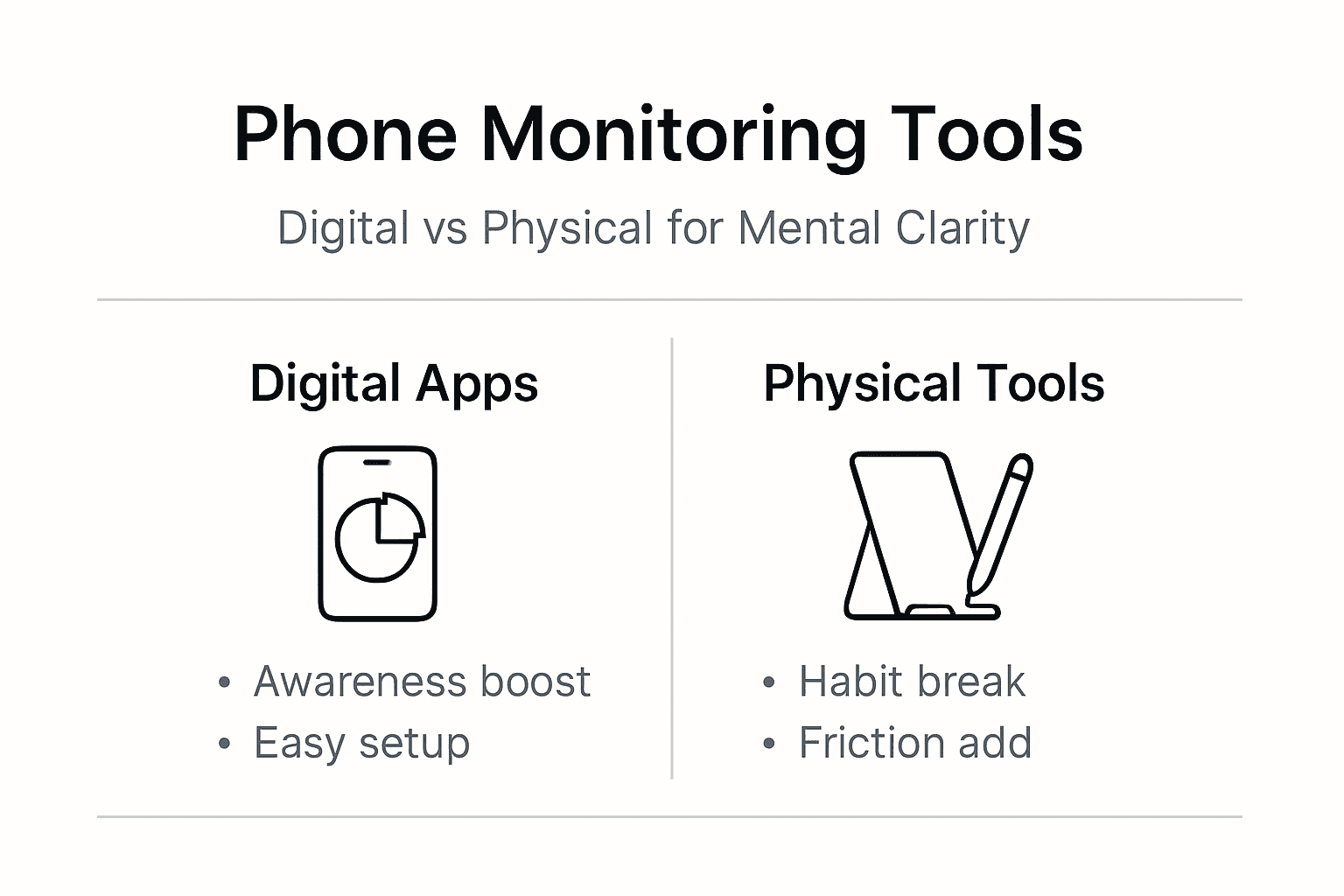
Different monitoring approaches offer varying effectiveness levels for breaking phone addiction. Digital-only tracking apps provide valuable data about your screen time patterns. They show which apps consume your attention and when you check your phone most frequently. However, this awareness alone rarely translates into sustained behavior change.
Cognitive behavioral strategies add goal setting and self-reflection to basic tracking. You identify triggers, set usage limits, and practice alternative responses to phone impulses. These methods improve outcomes when you maintain high commitment and motivation. Success depends heavily on your internal drive and consistent effort.
Physical external interventions like NFC tags disrupt habitual phone access at the source. They create a tangible barrier between impulse and action. Physical blockers advantages include removing phones from immediate reach and requiring deliberate steps to unlock distracting apps.
Success rates increase substantially with combined digital and physical approaches. You gain both awareness from tracking and friction from physical barriers. This dual strategy addresses the cognitive and automatic components of phone addiction simultaneously.
The monitoring strategy comparison reveals clear patterns. Physical tools consistently outperform purely digital solutions. Apps provide helpful data but lack the disruptive power needed to break deeply ingrained checking habits.
Pro Tip: Start with physical barriers for your most problematic apps, then add digital tracking to measure progress. This order prioritizes immediate behavior change over passive awareness.
Different users benefit from different combinations. Busy professionals often need strong physical barriers during work hours. Parents might focus on evening phone restrictions to improve family presence. Choose strategies matching your specific triggers and goals for maximum effectiveness.
Practical steps to monitor and control phone use effectively
Identify your phone use patterns and triggers before implementing any monitoring strategy. Track when you reach for your phone, which apps pull you in, and what emotions or situations precede checking. This baseline data reveals where intervention creates the most impact.
Set up physical NFC tags to interrupt habitual checking at identified trigger points. Place tags where you work, sleep, or spend family time. Configure tags to lock distracting apps when tapped, requiring deliberate choice to override. This physical step creates the friction needed to break automatic patterns.
Combine physical barriers with app-based monitoring for comprehensive awareness:
1. Install a screen time tracking app to measure baseline usage across all apps
2. Set specific reduction goals based on your current patterns and desired outcomes
3. Place NFC tags strategically to block access during high-risk times
4. Review daily progress each evening to identify successful strategies and remaining challenges
5. Adjust tag placement and app restrictions weekly as habits evolve
Track progress using measurable metrics beyond simple screen time. Monitor check frequency, longest focus periods, sleep onset time, and subjective wellbeing. Effective monitoring steps emphasize multiple indicators that capture the full impact of reduced phone use.
Integrate monitoring into daily habits with clear routines. Tap your NFC tag when starting focused work, arriving home, or preparing for bed. These consistent rituals reinforce new patterns until they become automatic. Consistency matters far more than perfection when building lasting change.
Prepare for challenges and relapses with adaptive strategies. Difficult days will happen when stress or boredom trigger old checking habits. Plan alternative responses like brief walks, stretching, or calling a friend. Practical screen time tips include having these backup strategies ready before cravings hit.
Pro Tip: Set a weekly review session to celebrate progress and troubleshoot obstacles. This regular reflection maintains motivation and allows strategy adjustments based on real results.
Maintain monitoring systems through environmental design. Keep chargers outside your bedroom, delete tempting apps from your home screen, and enable grayscale mode to reduce visual appeal. These structural changes support your monitoring efforts passively throughout each day.
Conclusion: embracing monitoring to reclaim mental clarity and well-being
Monitoring phone use provides the critical foundation for breaking addictive habits that drain your mental clarity. Without tracking and awareness, phone addiction operates invisibly, consuming attention and energy you need for meaningful work and relationships.
Combining physical and digital tools delivers the best health and productivity benefits. Digital tracking builds awareness while physical barriers create the friction needed to interrupt automatic checking. This dual approach addresses both the conscious and unconscious drivers of phone overuse.
Reducing phone use leads to concrete improvements across multiple life domains:
- Better sleep quality with faster onset and deeper rest phases
- Lower anxiety levels as checking compulsions fade
- Enhanced focus lasting 40% longer during important tasks
- Stronger relationships through increased presence and engagement
Early and consistent monitoring helps maintain control before patterns become entrenched. Starting now in 2026 positions you ahead of the addiction curve rather than struggling to recover later. Prevention requires far less effort than breaking severe phone dependency.
Adopting these evidence-based strategies sets a foundation for long-term well-being and balanced phone use. Your phone can serve you without controlling you. Monitoring transforms your relationship with technology from reactive and compulsive to intentional and healthy. The mental clarity and peace you gain compound daily, creating space for what truly matters in your life.
Discover tools to support healthy phone use
Ready to put these insights into action? Well O'Clock offers innovative solutions that combine the power of physical and digital interventions. Our NFC tag system creates tangible barriers that disrupt phone addiction cycles, giving you the friction needed for lasting behavior change.
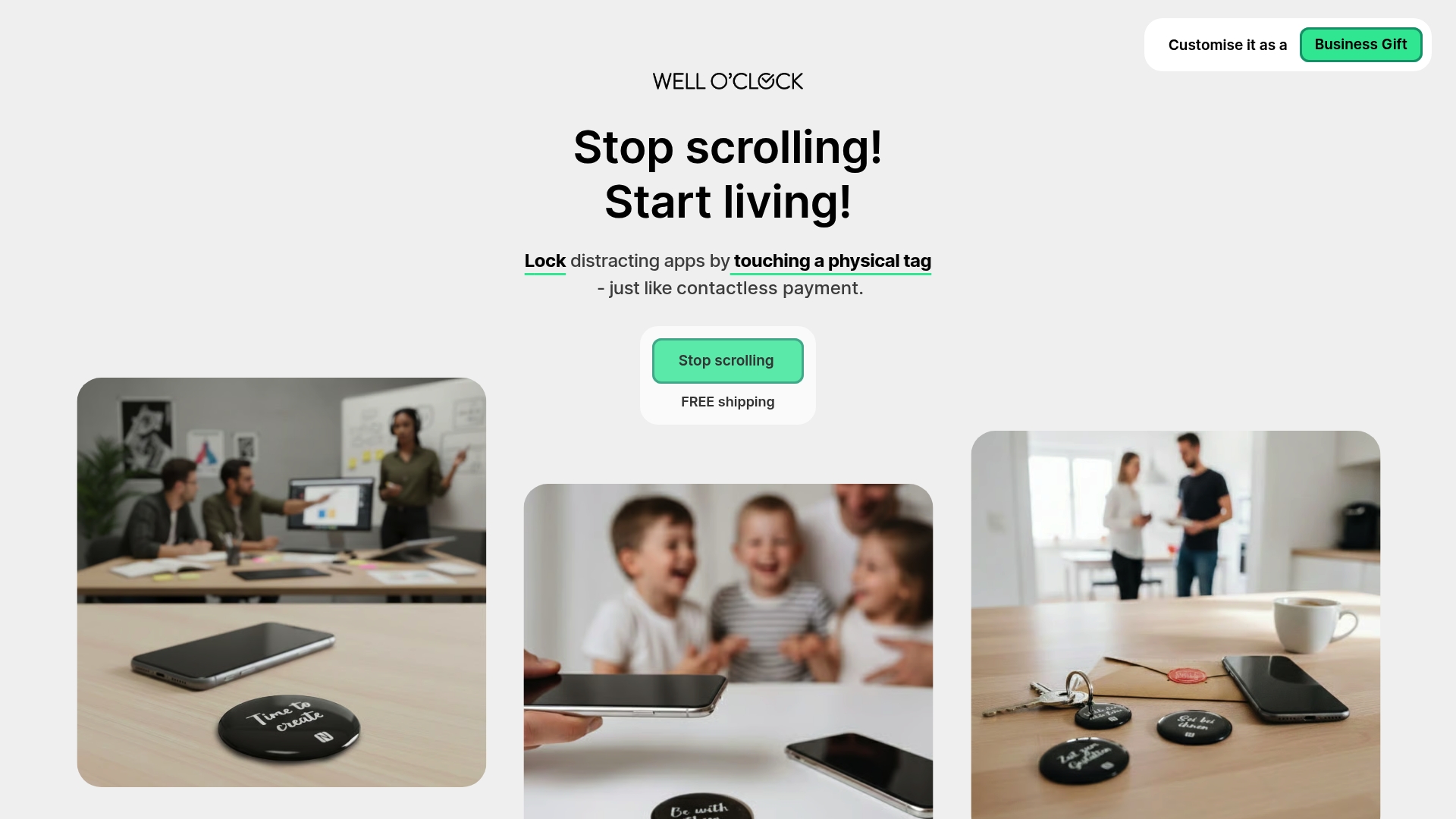
Explore how physical NFC tag solutions work seamlessly with your existing apps to lock distractions and protect your focus time. Follow our smart phone use workflow to implement a complete monitoring system tailored to your lifestyle. Visit Well O'Clock today to discover tools and guides that help you reclaim your time, boost mental clarity, and build healthier digital habits for 2026 and beyond.
Frequently asked questions
How quickly does monitoring phone use improve mental clarity?
Most people notice improved focus within the first week of consistent monitoring. Measurable benefits like 40% longer concentration periods typically appear after two to three weeks of combining physical barriers with digital tracking.
Can I monitor phone use without deleting my favorite apps?
Yes, effective monitoring restricts access timing rather than removing apps entirely. Physical NFC tags let you lock distracting apps during focus periods while keeping them available when appropriate. This approach balances control with flexibility.
Why do physical tools work better than monitoring apps alone?
Physical tools like NFC tags create external friction that interrupts automatic checking before it starts. Apps live inside the device you're trying to avoid, making them easy to ignore or bypass when impulses strike. External barriers require deliberate effort to override.
How do I choose which apps to monitor and restrict?
Start by tracking your usage for three days without restrictions to identify your most time-consuming and distracting apps. Focus monitoring efforts on apps you check compulsively rather than those you use intentionally for specific purposes. Social media, news, and gaming apps typically benefit most from restrictions.
What happens if I relapse into old phone checking habits?
Relapses are normal during behavior change and don't erase your progress. Treat them as learning opportunities to identify overlooked triggers. Adjust your NFC tag placement, strengthen physical barriers during vulnerable times, and reconnect with your motivation for reducing phone use. Consistency over weeks matters more than perfection each day.

Mak Kordić
Co founder
Mak Kordić is the founder and CEO of CNJ Digital, an agency based in Ljubljana, where he and his team develop UX/UI and digital products for demanding B2B projects. Over his career, he has led and co-created hundreds of digital solutions and worked with international clients.








Why monitor phone use: 40% more mental clarity in 2026
Mak Kordić
,
March 10, 2026
Checking your phone repeatedly throughout the day isn't just a harmless habit. Research shows that frequent phone checking increases anxiety symptoms by nearly 30%, disrupting your mental clarity and overall well-being. For health-conscious individuals seeking to break free from phone addiction, monitoring phone use offers a powerful first step. This guide reveals why tracking your phone habits works, how physical tools amplify results, and practical steps to reclaim focus and peace in 2026.
Table of Contents
- Understanding The Impact Of Excessive Phone Use
- Why Monitoring Phone Use Matters: Mechanisms And Benefits
- Common Misconceptions About Phone Use Monitoring
- Comparing Phone Monitoring Strategies: Digital Vs Physical Tools
- Practical Steps To Monitor And Control Phone Use Effectively
- Conclusion: Embracing Monitoring To Reclaim Mental Clarity And Well-Being
- Discover Tools To Support Healthy Phone Use
- Frequently Asked Questions
Understanding the impact of excessive phone use
Excessive phone use fragments your attention span, making deep focus nearly impossible. Every notification pull and habitual scroll chips away at your cognitive resources. Your brain struggles to maintain concentration when constantly interrupted by digital stimuli.
Phone addiction triggers measurable anxiety increases and disrupts sleep architecture. The impact of excessive phone use extends beyond daytime productivity into nighttime recovery. Blue light exposure and stimulating content before bed delay melatonin production and reduce restorative sleep phases.
Research confirms the sleep connection. Sleep quality scores improved by 18% after implementing phone monitoring and limiting bedtime use. Participants reported falling asleep faster and waking more refreshed when they tracked and reduced evening phone exposure.
Productivity suffers under the weight of constant phone notifications. Each ping triggers a mental context switch that takes 23 minutes on average to fully recover from. These interruptions accumulate throughout your day, leaving you mentally exhausted without completing meaningful work.
Real world examples highlight these patterns clearly:
- Professionals report difficulty completing focused tasks when phones remain within arm's reach
- Students experience lower academic performance correlating with higher phone use during study sessions
- Parents struggle with presence and connection when phones compete for attention during family time
The phone addiction effects ripple across every life domain. Mental fatigue, relationship strain, and reduced life satisfaction all trace back to unmonitored phone habits. Understanding these impacts motivates the behavior change needed to reclaim your mental clarity and well-being.
Why monitoring phone use matters: mechanisms and benefits
Monitoring phone use interrupts the automatic, unconscious checking behavior that defines phone addiction. When you track your usage, you introduce awareness into a previously mindless loop. This awareness creates a pause between impulse and action, giving you choice instead of autopilot.
Reducing phone interactions restores cognitive resources previously consumed by constant task switching. Your brain can allocate energy toward sustained attention and creative problem solving. Users experienced a 40% increase in deep focus periods after monitoring and limiting phone use, demonstrating measurable cognitive benefits.
Consequences for kids' of endless screen time
Monitoring cuts exposure to blue light and anxiety-inducing content, especially at night. Evening phone use suppresses melatonin and activates stress responses when you encounter stimulating news or social media. Tracking helps you recognize and adjust these patterns before they disrupt your sleep cycle.
Physical interventions prove more effective than digital apps alone at breaking phone habits. Apps live inside the device you're trying to avoid, creating an inherent conflict. Interrupting phone checking habits requires external tools that create friction before you can access distracting apps.
The benefits of effective monitoring compound quickly:
- Improved sleep quality through reduced evening screen exposure
- Lower anxiety levels as you break the checking compulsion
- Enhanced concentration lasting 40% longer during focused work
- Increased productivity from fewer context switches and interruptions
- Better relationships through more present, engaged interactions
Pro Tip: Combine digital tracking with physical barriers like NFC tags that require deliberate action to unlock apps. This dual approach addresses both awareness and automatic behavior patterns simultaneously.
Reducing screen time benefits extend beyond immediate focus improvements. Long term monitoring establishes healthier baseline habits that protect your mental clarity and overall wellness for years ahead.
Common misconceptions about phone use monitoring
Many people believe that tracking screen time alone will change their behavior. Reality proves different. Only about 12% of users modify habits based solely on screen time data without additional interventions. Awareness without action rarely creates lasting change.
Another misconception suggests phone monitoring only helps after addiction becomes severe. Research shows the opposite. Early monitoring reduces the risk of developing chronic phone addiction by approximately 50%. Prevention works far better than attempting to reverse entrenched habits later.
Digital apps without physical components often fail to break habitual checking. You access these apps on the same device you're trying to avoid, creating a paradox. Opening your phone to check monitoring stats frequently triggers the exact distraction loops you meant to prevent.
Some assume willpower alone suffices to control phone use. This ignores how phone interfaces intentionally exploit psychological vulnerabilities. Misconceptions about phone use monitoring prevent people from adopting strategies that actually work.
Effective monitoring requires combining multiple approaches:
- App-based tracking provides data and awareness
- Physical tools create tangible barriers to automatic checking
- Environmental changes remove phones from high-temptation situations
- Social support reinforces accountability and motivation
The belief that monitoring feels restrictive or punishing also limits adoption. Properly implemented monitoring actually increases freedom by returning control over your attention. You choose when to engage with your phone rather than responding to every notification impulse.
Understanding false beliefs on phone addiction helps you avoid ineffective strategies and adopt evidence-based methods. Recognizing these misconceptions sets the foundation for successful behavior change and sustained mental clarity improvements.
Comparing phone monitoring strategies: digital vs physical tools
Different monitoring approaches offer varying effectiveness levels for breaking phone addiction. Digital-only tracking apps provide valuable data about your screen time patterns. They show which apps consume your attention and when you check your phone most frequently. However, this awareness alone rarely translates into sustained behavior change.
Cognitive behavioral strategies add goal setting and self-reflection to basic tracking. You identify triggers, set usage limits, and practice alternative responses to phone impulses. These methods improve outcomes when you maintain high commitment and motivation. Success depends heavily on your internal drive and consistent effort.
Physical external interventions like NFC tags disrupt habitual phone access at the source. They create a tangible barrier between impulse and action. Physical blockers advantages include removing phones from immediate reach and requiring deliberate steps to unlock distracting apps.
Success rates increase substantially with combined digital and physical approaches. You gain both awareness from tracking and friction from physical barriers. This dual strategy addresses the cognitive and automatic components of phone addiction simultaneously.
The monitoring strategy comparison reveals clear patterns. Physical tools consistently outperform purely digital solutions. Apps provide helpful data but lack the disruptive power needed to break deeply ingrained checking habits.
Pro Tip: Start with physical barriers for your most problematic apps, then add digital tracking to measure progress. This order prioritizes immediate behavior change over passive awareness.
Different users benefit from different combinations. Busy professionals often need strong physical barriers during work hours. Parents might focus on evening phone restrictions to improve family presence. Choose strategies matching your specific triggers and goals for maximum effectiveness.
Practical steps to monitor and control phone use effectively
Identify your phone use patterns and triggers before implementing any monitoring strategy. Track when you reach for your phone, which apps pull you in, and what emotions or situations precede checking. This baseline data reveals where intervention creates the most impact.
Set up physical NFC tags to interrupt habitual checking at identified trigger points. Place tags where you work, sleep, or spend family time. Configure tags to lock distracting apps when tapped, requiring deliberate choice to override. This physical step creates the friction needed to break automatic patterns.
Combine physical barriers with app-based monitoring for comprehensive awareness:
1. Install a screen time tracking app to measure baseline usage across all apps
2. Set specific reduction goals based on your current patterns and desired outcomes
3. Place NFC tags strategically to block access during high-risk times
4. Review daily progress each evening to identify successful strategies and remaining challenges
5. Adjust tag placement and app restrictions weekly as habits evolve
Track progress using measurable metrics beyond simple screen time. Monitor check frequency, longest focus periods, sleep onset time, and subjective wellbeing. Effective monitoring steps emphasize multiple indicators that capture the full impact of reduced phone use.
Integrate monitoring into daily habits with clear routines. Tap your NFC tag when starting focused work, arriving home, or preparing for bed. These consistent rituals reinforce new patterns until they become automatic. Consistency matters far more than perfection when building lasting change.
Prepare for challenges and relapses with adaptive strategies. Difficult days will happen when stress or boredom trigger old checking habits. Plan alternative responses like brief walks, stretching, or calling a friend. Practical screen time tips include having these backup strategies ready before cravings hit.
Pro Tip: Set a weekly review session to celebrate progress and troubleshoot obstacles. This regular reflection maintains motivation and allows strategy adjustments based on real results.
Maintain monitoring systems through environmental design. Keep chargers outside your bedroom, delete tempting apps from your home screen, and enable grayscale mode to reduce visual appeal. These structural changes support your monitoring efforts passively throughout each day.
Conclusion: embracing monitoring to reclaim mental clarity and well-being
Monitoring phone use provides the critical foundation for breaking addictive habits that drain your mental clarity. Without tracking and awareness, phone addiction operates invisibly, consuming attention and energy you need for meaningful work and relationships.
Combining physical and digital tools delivers the best health and productivity benefits. Digital tracking builds awareness while physical barriers create the friction needed to interrupt automatic checking. This dual approach addresses both the conscious and unconscious drivers of phone overuse.
Reducing phone use leads to concrete improvements across multiple life domains:
- Better sleep quality with faster onset and deeper rest phases
- Lower anxiety levels as checking compulsions fade
- Enhanced focus lasting 40% longer during important tasks
- Stronger relationships through increased presence and engagement
Early and consistent monitoring helps maintain control before patterns become entrenched. Starting now in 2026 positions you ahead of the addiction curve rather than struggling to recover later. Prevention requires far less effort than breaking severe phone dependency.
Adopting these evidence-based strategies sets a foundation for long-term well-being and balanced phone use. Your phone can serve you without controlling you. Monitoring transforms your relationship with technology from reactive and compulsive to intentional and healthy. The mental clarity and peace you gain compound daily, creating space for what truly matters in your life.
Discover tools to support healthy phone use
Ready to put these insights into action? Well O'Clock offers innovative solutions that combine the power of physical and digital interventions. Our NFC tag system creates tangible barriers that disrupt phone addiction cycles, giving you the friction needed for lasting behavior change.
Explore how physical NFC tag solutions work seamlessly with your existing apps to lock distractions and protect your focus time. Follow our smart phone use workflow to implement a complete monitoring system tailored to your lifestyle. Visit Well O'Clock today to discover tools and guides that help you reclaim your time, boost mental clarity, and build healthier digital habits for 2026 and beyond.
Frequently asked questions
How quickly does monitoring phone use improve mental clarity?
Most people notice improved focus within the first week of consistent monitoring. Measurable benefits like 40% longer concentration periods typically appear after two to three weeks of combining physical barriers with digital tracking.
Can I monitor phone use without deleting my favorite apps?
Yes, effective monitoring restricts access timing rather than removing apps entirely. Physical NFC tags let you lock distracting apps during focus periods while keeping them available when appropriate. This approach balances control with flexibility.
Why do physical tools work better than monitoring apps alone?
Physical tools like NFC tags create external friction that interrupts automatic checking before it starts. Apps live inside the device you're trying to avoid, making them easy to ignore or bypass when impulses strike. External barriers require deliberate effort to override.
How do I choose which apps to monitor and restrict?
Start by tracking your usage for three days without restrictions to identify your most time-consuming and distracting apps. Focus monitoring efforts on apps you check compulsively rather than those you use intentionally for specific purposes. Social media, news, and gaming apps typically benefit most from restrictions.
What happens if I relapse into old phone checking habits?
Relapses are normal during behavior change and don't erase your progress. Treat them as learning opportunities to identify overlooked triggers. Adjust your NFC tag placement, strengthen physical barriers during vulnerable times, and reconnect with your motivation for reducing phone use. Consistency over weeks matters more than perfection each day.
Mak Kordić
Co founder
Mak Kordić is the founder and CEO of CNJ Digital, an agency based in Ljubljana, where he and his team develop UX/UI and digital products for demanding B2B projects. Over his career, he has led and co-created hundreds of digital solutions and worked with international clients.
Why monitor phone use: 40% more mental clarity in 2026
Mak Kordić
,
March 10, 2026
Checking your phone repeatedly throughout the day isn't just a harmless habit. Research shows that frequent phone checking increases anxiety symptoms by nearly 30%, disrupting your mental clarity and overall well-being. For health-conscious individuals seeking to break free from phone addiction, monitoring phone use offers a powerful first step. This guide reveals why tracking your phone habits works, how physical tools amplify results, and practical steps to reclaim focus and peace in 2026.
Table of Contents
- Understanding The Impact Of Excessive Phone Use
- Why Monitoring Phone Use Matters: Mechanisms And Benefits
- Common Misconceptions About Phone Use Monitoring
- Comparing Phone Monitoring Strategies: Digital Vs Physical Tools
- Practical Steps To Monitor And Control Phone Use Effectively
- Conclusion: Embracing Monitoring To Reclaim Mental Clarity And Well-Being
- Discover Tools To Support Healthy Phone Use
- Frequently Asked Questions
Understanding the impact of excessive phone use
Excessive phone use fragments your attention span, making deep focus nearly impossible. Every notification pull and habitual scroll chips away at your cognitive resources. Your brain struggles to maintain concentration when constantly interrupted by digital stimuli.
Phone addiction triggers measurable anxiety increases and disrupts sleep architecture. The impact of excessive phone use extends beyond daytime productivity into nighttime recovery. Blue light exposure and stimulating content before bed delay melatonin production and reduce restorative sleep phases.
Research confirms the sleep connection. Sleep quality scores improved by 18% after implementing phone monitoring and limiting bedtime use. Participants reported falling asleep faster and waking more refreshed when they tracked and reduced evening phone exposure.
Productivity suffers under the weight of constant phone notifications. Each ping triggers a mental context switch that takes 23 minutes on average to fully recover from. These interruptions accumulate throughout your day, leaving you mentally exhausted without completing meaningful work.
Real world examples highlight these patterns clearly:
- Professionals report difficulty completing focused tasks when phones remain within arm's reach
- Students experience lower academic performance correlating with higher phone use during study sessions
- Parents struggle with presence and connection when phones compete for attention during family time
The phone addiction effects ripple across every life domain. Mental fatigue, relationship strain, and reduced life satisfaction all trace back to unmonitored phone habits. Understanding these impacts motivates the behavior change needed to reclaim your mental clarity and well-being.
Why monitoring phone use matters: mechanisms and benefits
Monitoring phone use interrupts the automatic, unconscious checking behavior that defines phone addiction. When you track your usage, you introduce awareness into a previously mindless loop. This awareness creates a pause between impulse and action, giving you choice instead of autopilot.
Reducing phone interactions restores cognitive resources previously consumed by constant task switching. Your brain can allocate energy toward sustained attention and creative problem solving. Users experienced a 40% increase in deep focus periods after monitoring and limiting phone use, demonstrating measurable cognitive benefits.
Consequences for kids' of endless screen time
Monitoring cuts exposure to blue light and anxiety-inducing content, especially at night. Evening phone use suppresses melatonin and activates stress responses when you encounter stimulating news or social media. Tracking helps you recognize and adjust these patterns before they disrupt your sleep cycle.
Physical interventions prove more effective than digital apps alone at breaking phone habits. Apps live inside the device you're trying to avoid, creating an inherent conflict. Interrupting phone checking habits requires external tools that create friction before you can access distracting apps.
The benefits of effective monitoring compound quickly:
- Improved sleep quality through reduced evening screen exposure
- Lower anxiety levels as you break the checking compulsion
- Enhanced concentration lasting 40% longer during focused work
- Increased productivity from fewer context switches and interruptions
- Better relationships through more present, engaged interactions
Pro Tip: Combine digital tracking with physical barriers like NFC tags that require deliberate action to unlock apps. This dual approach addresses both awareness and automatic behavior patterns simultaneously.
Reducing screen time benefits extend beyond immediate focus improvements. Long term monitoring establishes healthier baseline habits that protect your mental clarity and overall wellness for years ahead.
Common misconceptions about phone use monitoring
Many people believe that tracking screen time alone will change their behavior. Reality proves different. Only about 12% of users modify habits based solely on screen time data without additional interventions. Awareness without action rarely creates lasting change.
Another misconception suggests phone monitoring only helps after addiction becomes severe. Research shows the opposite. Early monitoring reduces the risk of developing chronic phone addiction by approximately 50%. Prevention works far better than attempting to reverse entrenched habits later.
Digital apps without physical components often fail to break habitual checking. You access these apps on the same device you're trying to avoid, creating a paradox. Opening your phone to check monitoring stats frequently triggers the exact distraction loops you meant to prevent.
Some assume willpower alone suffices to control phone use. This ignores how phone interfaces intentionally exploit psychological vulnerabilities. Misconceptions about phone use monitoring prevent people from adopting strategies that actually work.
Effective monitoring requires combining multiple approaches:
- App-based tracking provides data and awareness
- Physical tools create tangible barriers to automatic checking
- Environmental changes remove phones from high-temptation situations
- Social support reinforces accountability and motivation
The belief that monitoring feels restrictive or punishing also limits adoption. Properly implemented monitoring actually increases freedom by returning control over your attention. You choose when to engage with your phone rather than responding to every notification impulse.
Understanding false beliefs on phone addiction helps you avoid ineffective strategies and adopt evidence-based methods. Recognizing these misconceptions sets the foundation for successful behavior change and sustained mental clarity improvements.
Comparing phone monitoring strategies: digital vs physical tools
Different monitoring approaches offer varying effectiveness levels for breaking phone addiction. Digital-only tracking apps provide valuable data about your screen time patterns. They show which apps consume your attention and when you check your phone most frequently. However, this awareness alone rarely translates into sustained behavior change.
Cognitive behavioral strategies add goal setting and self-reflection to basic tracking. You identify triggers, set usage limits, and practice alternative responses to phone impulses. These methods improve outcomes when you maintain high commitment and motivation. Success depends heavily on your internal drive and consistent effort.
Physical external interventions like NFC tags disrupt habitual phone access at the source. They create a tangible barrier between impulse and action. Physical blockers advantages include removing phones from immediate reach and requiring deliberate steps to unlock distracting apps.
Success rates increase substantially with combined digital and physical approaches. You gain both awareness from tracking and friction from physical barriers. This dual strategy addresses the cognitive and automatic components of phone addiction simultaneously.
The monitoring strategy comparison reveals clear patterns. Physical tools consistently outperform purely digital solutions. Apps provide helpful data but lack the disruptive power needed to break deeply ingrained checking habits.
Pro Tip: Start with physical barriers for your most problematic apps, then add digital tracking to measure progress. This order prioritizes immediate behavior change over passive awareness.
Different users benefit from different combinations. Busy professionals often need strong physical barriers during work hours. Parents might focus on evening phone restrictions to improve family presence. Choose strategies matching your specific triggers and goals for maximum effectiveness.
Practical steps to monitor and control phone use effectively
Identify your phone use patterns and triggers before implementing any monitoring strategy. Track when you reach for your phone, which apps pull you in, and what emotions or situations precede checking. This baseline data reveals where intervention creates the most impact.
Set up physical NFC tags to interrupt habitual checking at identified trigger points. Place tags where you work, sleep, or spend family time. Configure tags to lock distracting apps when tapped, requiring deliberate choice to override. This physical step creates the friction needed to break automatic patterns.
Combine physical barriers with app-based monitoring for comprehensive awareness:
1. Install a screen time tracking app to measure baseline usage across all apps
2. Set specific reduction goals based on your current patterns and desired outcomes
3. Place NFC tags strategically to block access during high-risk times
4. Review daily progress each evening to identify successful strategies and remaining challenges
5. Adjust tag placement and app restrictions weekly as habits evolve
Track progress using measurable metrics beyond simple screen time. Monitor check frequency, longest focus periods, sleep onset time, and subjective wellbeing. Effective monitoring steps emphasize multiple indicators that capture the full impact of reduced phone use.
Integrate monitoring into daily habits with clear routines. Tap your NFC tag when starting focused work, arriving home, or preparing for bed. These consistent rituals reinforce new patterns until they become automatic. Consistency matters far more than perfection when building lasting change.
Prepare for challenges and relapses with adaptive strategies. Difficult days will happen when stress or boredom trigger old checking habits. Plan alternative responses like brief walks, stretching, or calling a friend. Practical screen time tips include having these backup strategies ready before cravings hit.
Pro Tip: Set a weekly review session to celebrate progress and troubleshoot obstacles. This regular reflection maintains motivation and allows strategy adjustments based on real results.
Maintain monitoring systems through environmental design. Keep chargers outside your bedroom, delete tempting apps from your home screen, and enable grayscale mode to reduce visual appeal. These structural changes support your monitoring efforts passively throughout each day.
Conclusion: embracing monitoring to reclaim mental clarity and well-being
Monitoring phone use provides the critical foundation for breaking addictive habits that drain your mental clarity. Without tracking and awareness, phone addiction operates invisibly, consuming attention and energy you need for meaningful work and relationships.
Combining physical and digital tools delivers the best health and productivity benefits. Digital tracking builds awareness while physical barriers create the friction needed to interrupt automatic checking. This dual approach addresses both the conscious and unconscious drivers of phone overuse.
Reducing phone use leads to concrete improvements across multiple life domains:
- Better sleep quality with faster onset and deeper rest phases
- Lower anxiety levels as checking compulsions fade
- Enhanced focus lasting 40% longer during important tasks
- Stronger relationships through increased presence and engagement
Early and consistent monitoring helps maintain control before patterns become entrenched. Starting now in 2026 positions you ahead of the addiction curve rather than struggling to recover later. Prevention requires far less effort than breaking severe phone dependency.
Adopting these evidence-based strategies sets a foundation for long-term well-being and balanced phone use. Your phone can serve you without controlling you. Monitoring transforms your relationship with technology from reactive and compulsive to intentional and healthy. The mental clarity and peace you gain compound daily, creating space for what truly matters in your life.
Discover tools to support healthy phone use
Ready to put these insights into action? Well O'Clock offers innovative solutions that combine the power of physical and digital interventions. Our NFC tag system creates tangible barriers that disrupt phone addiction cycles, giving you the friction needed for lasting behavior change.
Explore how physical NFC tag solutions work seamlessly with your existing apps to lock distractions and protect your focus time. Follow our smart phone use workflow to implement a complete monitoring system tailored to your lifestyle. Visit Well O'Clock today to discover tools and guides that help you reclaim your time, boost mental clarity, and build healthier digital habits for 2026 and beyond.
Frequently asked questions
How quickly does monitoring phone use improve mental clarity?
Most people notice improved focus within the first week of consistent monitoring. Measurable benefits like 40% longer concentration periods typically appear after two to three weeks of combining physical barriers with digital tracking.
Can I monitor phone use without deleting my favorite apps?
Yes, effective monitoring restricts access timing rather than removing apps entirely. Physical NFC tags let you lock distracting apps during focus periods while keeping them available when appropriate. This approach balances control with flexibility.
Why do physical tools work better than monitoring apps alone?
Physical tools like NFC tags create external friction that interrupts automatic checking before it starts. Apps live inside the device you're trying to avoid, making them easy to ignore or bypass when impulses strike. External barriers require deliberate effort to override.
How do I choose which apps to monitor and restrict?
Start by tracking your usage for three days without restrictions to identify your most time-consuming and distracting apps. Focus monitoring efforts on apps you check compulsively rather than those you use intentionally for specific purposes. Social media, news, and gaming apps typically benefit most from restrictions.
What happens if I relapse into old phone checking habits?
Relapses are normal during behavior change and don't erase your progress. Treat them as learning opportunities to identify overlooked triggers. Adjust your NFC tag placement, strengthen physical barriers during vulnerable times, and reconnect with your motivation for reducing phone use. Consistency over weeks matters more than perfection each day.
Mak Kordić
Co founder
Mak Kordić is the founder and CEO of CNJ Digital, an agency based in Ljubljana, where he and his team develop UX/UI and digital products for demanding B2B projects. Over his career, he has led and co-created hundreds of digital solutions and worked with international clients.