
Why Break Phone Habits? 35% Productivity Boost Proven
Mak Kordić
,
March 9, 2026


You check your phone 96 times daily on average, each tap triggering dopamine loops that wire compulsive behavior deep into your brain. This neurological hijacking impairs focus, disrupts sleep, and fuels anxiety. Breaking phone habits isn't about willpower alone; it requires understanding how these patterns form and using proven physical interruptions to reclaim mental clarity, boost productivity, and improve well-being.
Table of Contents
- The Neurological And Behavioral Mechanics Of Phone Habits
- Quantified Impact Of Excessive Phone Use On Mental Health And Productivity
- Common Misconceptions About Phone Addiction And Habit-Breaking
- Frameworks And Tools For Breaking Phone Habits
- Case Studies Demonstrating Success In Breaking Phone Habits
- Practical Steps To Break Your Phone Habits Today
- Discover Tools To Break Phone Habits With Well O'Clock
The Neurological and Behavioral Mechanics of Phone Habits
Your brain treats phone notifications like slot machine wins. Every ping, buzz, or screen light triggers a dopamine-driven reward cycle that reinforces compulsive checking. This isn't weakness; it's neuroscience. Tech companies design apps to exploit these circuits, creating behavioral loops that operate below conscious awareness.
Autopilot behavior takes over when you unlock your phone without remembering why. Habitual phone use reduces sustained attention spans by 40%, fragmenting focus across the day. Your prefrontal cortex, responsible for executive function and self-control, becomes overwhelmed by constant micro-interruptions. Each check feels brief, but the cumulative impact of excessive phone use compounds into chronic attention deficits.
These patterns strengthen through repetition. Your basal ganglia encodes phone-checking as an automatic routine, bypassing rational decision-making entirely. Breaking this requires more than awareness; you need external prompts that physically interrupt the loop before your hand reaches the device.
" The average person unlocks their phone 96 times per day, creating a constant state of partial attention that degrades cognitive performance and emotional regulation. "
Key neurological factors driving phone habits:
- Dopamine anticipation creates craving loops stronger than the reward itself
- Hippocampus links specific contexts with phone-checking behaviors
- Amygdala heightens anxiety when separated from devices, reinforcing dependency
- Prefrontal cortex fatigue reduces impulse control after repeated checking
Quantified Impact of Excessive Phone Use on Mental Health and Productivity
The costs extend beyond lost time. Excessive phone use measurably damages productivity, sleep architecture, and mental health markers. Research demonstrates that reducing phone use by 30% improves productivity by 21% and sleep quality by 25% within weeks. These aren't marginal gains; they represent substantial life quality improvements.

Autopilot phone use fragments work sessions into ineffective bursts. Your brain requires 23 minutes on average to refocus after an interruption, yet most people check their phones every 12 minutes. This creates a perpetual state of task-switching that tanks deep work capacity and creative problem-solving.
Top three measurable impacts of excessive phone use:
1. Productivity collapse: Frequent checking reduces work output by 40% compared to focused sessions, with error rates increasing proportionally as attention fragments.
2. Sleep disruption: Blue light exposure and pre-sleep scrolling delay melatonin release by 90 minutes, reducing REM sleep cycles critical for memory consolidation and emotional regulation.
3. Anxiety escalation: Compulsive checking behaviors correlate with 30% higher baseline anxiety levels, creating a feedback loop where [phone addiction effects](https://welloclock.com/blog-list/phone-addiction-how-it-disrupts-well-being) worsen the symptoms users seek to escape.
Controlled trials show anxiety reduction from structured phone breaks occurs rapidly. Your nervous system begins regulating within days when compulsive checking patterns break. Improved sleep follows as circadian rhythms stabilize without late-night screen exposure.
Common Misconceptions About Phone Addiction and Habit-Breaking
Most people misunderstand why their attempts to reduce phone use fail. These misconceptions prevent effective habit change and perpetuate frustration cycles.
Myth 1: Phone addiction is a willpower problem. Your brain's reward circuits don't respond to conscious effort alone. Neurological habit loops bypass willpower entirely, operating through automatic cues and responses. Blaming yourself for lacking self-control ignores how dopamine-driven mechanisms override rational intentions.
breaking your phone addiction is easier than you think
Myth 2: Turning off notifications solves the problem. Research shows disabling notifications alone yields only 15% usage reduction. Habitual checking persists because the autopilot behavior isn't triggered solely by alerts. Your brain checks proactively, anticipating potential rewards even without prompts.
Myth 3: Digital apps can break digital habits. Software solutions live inside the problem environment. App-based blockers require the same device that triggers compulsive use, creating enforcement paradoxes. Users override digital restrictions easily because the phone itself remains the cue context.
Effective habit-breaking requires physical interruptions that exist outside your phone's ecosystem. These external prompts disrupt autopilot sequences before they activate, giving your prefrontal cortex time to engage conscious decision-making.
Key misconceptions blocking progress:
- Believing awareness alone changes behavior
- Underestimating how deeply phone habits embed neurologically
- Expecting quick fixes without addressing underlying reward circuits
- Trusting digital-only solutions that remain vulnerable to overrides
Pro Tip: Combine physical prompts with behavioral awareness tracking. Write down each time you reach for your phone without intention, then place a physical object like a stress ball where you normally grab your device. This dual approach retrains both conscious and automatic systems.
Frameworks and Tools for Breaking Phone Habits
The Fogg Behavior Model explains why some interventions succeed while others fail. Behavior happens when three elements converge simultaneously: motivation, ability, and prompt. Most phone habit solutions target only motivation, leaving the automatic prompt-response cycle intact.
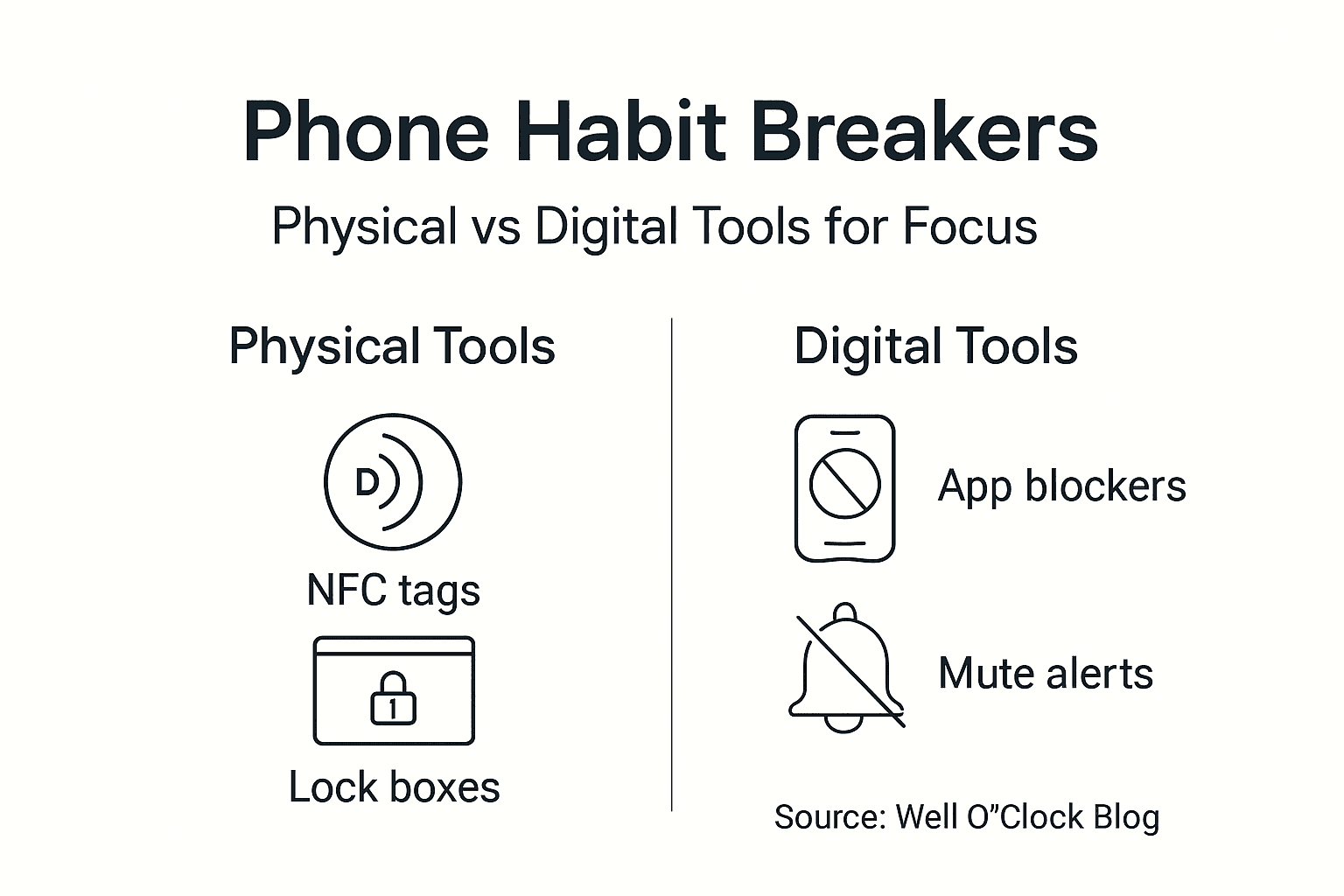
Physical NFC tags increase habit-breaking success by 40% because they interrupt the prompt component. These tangible devices require deliberate physical interaction, inserting friction into automatic sequences. Your hand reaches for the phone, but encounters a tag first, triggering conscious evaluation before the dopamine loop activates.
Comparing digital versus physical interventions reveals stark differences. Combined physical and digital controls outperform digital-only approaches by 35% in sustained behavior change. The physical component creates environmental modification that persists regardless of willpower fluctuations.
Effective tools and frameworks:
- NFC lockout tags: Tap to unlock apps, creating intentional friction that breaks autopilot checking
- Time-based app restrictions: Schedule focus periods using device settings paired with physical reminders
- Environmental redesign: Remove charging cables from bedside, place phones in another room during work blocks
- Behavioral tracking: Log each phone interaction to build awareness of unconscious patterns
Pro Tip: Apply the Fogg Model deliberately. Reduce ability by physically distancing your phone. Lower motivation by tracking how checking disrupts goals you care about. Most critically, eliminate automatic prompts by changing your environment so visual phone cues disappear from habitual contexts.
Visit the Well O'Clock blog for comprehensive guides on implementing effective phone habit tools that integrate behavioral science with practical interventions.
Case Studies Demonstrating Success in Breaking Phone Habits
Real-world evidence validates physical intervention methods. Office workers using physical lockout tags improved productivity by 35% over six weeks, with gains persisting at three-month follow-up. These weren't minor tweaks; participants reported completing 40% more deep work sessions weekly.
Structured phone breaks produced measurable mental health improvements. Participants implementing scheduled device-free periods experienced 30% anxiety reduction within four weeks. Sleep quality improved simultaneously as pre-bed scrolling decreased, with REM cycles extending by an average of 35 minutes nightly.
User satisfaction with physical phone blockers exceeded expectations. Participants initially skeptical of external tools reported the highest adherence rates because physical prompts provided concrete feedback loops absent in willpower-based approaches.
Key findings from intervention studies:
- 83% of participants sustained reduced phone use beyond the study period when using physical tools
- Productivity gains appeared within two weeks, before participants fully adapted to new routines
- Anxiety improvements correlated directly with reduced compulsive checking frequency
- Physical interventions required less ongoing cognitive effort than digital-only methods
35% productivity boost achieved through physical phone lockout systems demonstrates that environmental modification outperforms reliance on self-control alone. Your environment shapes behavior more powerfully than conscious intention, making external tools essential for sustained change.
Practical Steps to Break Your Phone Habits Today
Implementing evidence-based strategies starts now. These actionable steps combine behavioral frameworks with physical tools for maximum effectiveness.
1. Identify your personal phone usage patterns. Track every phone interaction for three days without trying to change behavior. Note contexts, triggers, and emotional states. This baseline reveals autopilot patterns your conscious mind misses.
2. Implement physical interruptions immediately. Use NFC tags or lockout devices that require deliberate action before accessing distracting apps. Place these tags in locations you visit during focus periods, creating mandatory pause points.
3. Apply the Fogg Behavior Model strategically. Align all three components: reduce ability by physically distancing your phone during work, lower motivation by visualizing goals phone use undermines, and eliminate automatic prompts by removing devices from sight in habitual contexts.
4. Schedule regular phone-free periods daily. Start with 90-minute blocks where your phone stays in another room. Minimize device distractions by creating rituals around these periods, such as replacing morning scrolling with journaling or movement.
5. Build accountability systems externally. Share your goals with someone who will check in weekly. Physical tokens like placing a dollar in a jar for each unintended check create tangible consequences that reinforce new patterns.
6. Redesign your environment to support change. Charge your phone outside your bedroom. Remove social media apps from your home screen. Create smart workflows for healthy phone use that separate essential functions from time-wasting apps.
These steps to reduce screen time naturally work because they address neurological habit mechanisms rather than relying on willpower. Follow this comprehensive guide for preventing device addiction to understand family-wide implementation strategies.
Pro Tip: Consistency matters more than perfection. Missing a phone-free block doesn't erase progress. Physical cues and environmental changes compound over time, rewiring automatic behaviors through repetition rather than flawless execution.
Discover Tools to Break Phone Habits with Well O'Clock
You've learned how phone habits form neurologically and why physical interruptions outperform digital-only solutions. Well O'Clock specializes in translating this science into practical tools that integrate behavioral frameworks with tangible interventions.
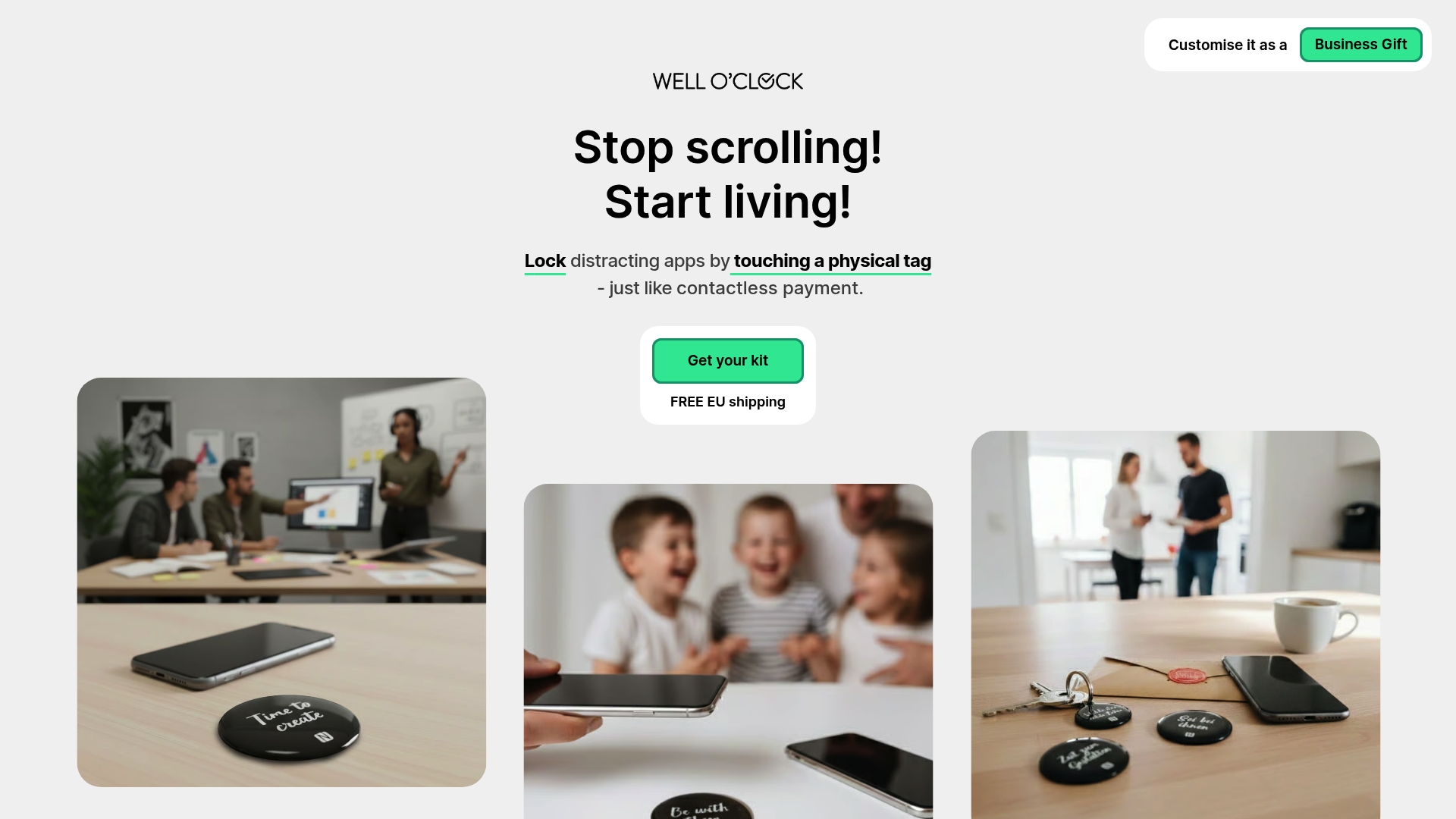
Our platform combines expert-backed articles with physical NFC tag systems designed to disrupt autopilot phone checking. These tools insert intentional friction at the moment your hand reaches for your device, giving your prefrontal cortex time to engage conscious decision-making before dopamine loops activate.
Explore our comprehensive blog resources covering everything from NFC tags and digital wellness to detailed strategies for reducing screen time naturally. Each article provides actionable guidance grounded in behavioral science and validated through real-world case studies demonstrating measurable improvements in productivity, sleep, and mental clarity.
FAQ
What makes phone addiction different from simple bad habits?
Phone addiction involves dopamine-driven reward loops and autopilot behavior that operate below conscious awareness. Unlike simple habits you can break through awareness alone, phone addiction rewires brain circuits in ways that bypass rational decision-making entirely. Your basal ganglia encodes checking as an automatic routine, making it far more resistant to willpower-based interventions.
Are physical interruptions uncomfortable or intrusive?
Physical interruptions function as gentle prompts rather than harsh restrictions. They create intentional friction that interrupts autopilot checking without preventing legitimate phone use. Many users report increased satisfaction and sense of control because these tools provide clear feedback about unconscious patterns. The brief pause before accessing apps allows conscious evaluation, restoring agency that compulsive habits had eliminated.
Can reducing phone use really improve mental health quickly?
Structured phone breaks reduce anxiety levels by 30% within weeks according to controlled trials. Your nervous system begins regulating rapidly once compulsive checking patterns break. Improved sleep quality follows as circadian rhythms stabilize without late-night screen exposure. Productivity gains appear even faster, often within two weeks, as sustained attention capacity rebuilds.
How can I maintain motivation when habit-breaking feels difficult?
Use the Fogg Behavior Model to align motivation, ability, and prompts systematically. Set small, achievable goals like one 90-minute phone-free block daily rather than attempting total abstinence. Celebrate progress visibly by tracking consecutive successful days. Physical tools reduce reliance on motivation alone by changing your environment, making habit change easier through external support rather than willpower reserves that deplete under stress.

Mak Kordić
Co founder
Mak Kordić is the founder and CEO of CNJ Digital, an agency based in Ljubljana, where he and his team develop UX/UI and digital products for demanding B2B projects. Over his career, he has led and co-created hundreds of digital solutions and worked with international clients.








Why Break Phone Habits? 35% Productivity Boost Proven
Mak Kordić
,
March 9, 2026
You check your phone 96 times daily on average, each tap triggering dopamine loops that wire compulsive behavior deep into your brain. This neurological hijacking impairs focus, disrupts sleep, and fuels anxiety. Breaking phone habits isn't about willpower alone; it requires understanding how these patterns form and using proven physical interruptions to reclaim mental clarity, boost productivity, and improve well-being.
Table of Contents
- The Neurological And Behavioral Mechanics Of Phone Habits
- Quantified Impact Of Excessive Phone Use On Mental Health And Productivity
- Common Misconceptions About Phone Addiction And Habit-Breaking
- Frameworks And Tools For Breaking Phone Habits
- Case Studies Demonstrating Success In Breaking Phone Habits
- Practical Steps To Break Your Phone Habits Today
- Discover Tools To Break Phone Habits With Well O'Clock
The Neurological and Behavioral Mechanics of Phone Habits
Your brain treats phone notifications like slot machine wins. Every ping, buzz, or screen light triggers a dopamine-driven reward cycle that reinforces compulsive checking. This isn't weakness; it's neuroscience. Tech companies design apps to exploit these circuits, creating behavioral loops that operate below conscious awareness.
Autopilot behavior takes over when you unlock your phone without remembering why. Habitual phone use reduces sustained attention spans by 40%, fragmenting focus across the day. Your prefrontal cortex, responsible for executive function and self-control, becomes overwhelmed by constant micro-interruptions. Each check feels brief, but the cumulative impact of excessive phone use compounds into chronic attention deficits.
These patterns strengthen through repetition. Your basal ganglia encodes phone-checking as an automatic routine, bypassing rational decision-making entirely. Breaking this requires more than awareness; you need external prompts that physically interrupt the loop before your hand reaches the device.
" The average person unlocks their phone 96 times per day, creating a constant state of partial attention that degrades cognitive performance and emotional regulation. "
Key neurological factors driving phone habits:
- Dopamine anticipation creates craving loops stronger than the reward itself
- Hippocampus links specific contexts with phone-checking behaviors
- Amygdala heightens anxiety when separated from devices, reinforcing dependency
- Prefrontal cortex fatigue reduces impulse control after repeated checking
Quantified Impact of Excessive Phone Use on Mental Health and Productivity
The costs extend beyond lost time. Excessive phone use measurably damages productivity, sleep architecture, and mental health markers. Research demonstrates that reducing phone use by 30% improves productivity by 21% and sleep quality by 25% within weeks. These aren't marginal gains; they represent substantial life quality improvements.
Autopilot phone use fragments work sessions into ineffective bursts. Your brain requires 23 minutes on average to refocus after an interruption, yet most people check their phones every 12 minutes. This creates a perpetual state of task-switching that tanks deep work capacity and creative problem-solving.
Top three measurable impacts of excessive phone use:
1. Productivity collapse: Frequent checking reduces work output by 40% compared to focused sessions, with error rates increasing proportionally as attention fragments.
2. Sleep disruption: Blue light exposure and pre-sleep scrolling delay melatonin release by 90 minutes, reducing REM sleep cycles critical for memory consolidation and emotional regulation.
3. Anxiety escalation: Compulsive checking behaviors correlate with 30% higher baseline anxiety levels, creating a feedback loop where [phone addiction effects](https://welloclock.com/blog-list/phone-addiction-how-it-disrupts-well-being) worsen the symptoms users seek to escape.
Controlled trials show anxiety reduction from structured phone breaks occurs rapidly. Your nervous system begins regulating within days when compulsive checking patterns break. Improved sleep follows as circadian rhythms stabilize without late-night screen exposure.
Common Misconceptions About Phone Addiction and Habit-Breaking
Most people misunderstand why their attempts to reduce phone use fail. These misconceptions prevent effective habit change and perpetuate frustration cycles.
Myth 1: Phone addiction is a willpower problem. Your brain's reward circuits don't respond to conscious effort alone. Neurological habit loops bypass willpower entirely, operating through automatic cues and responses. Blaming yourself for lacking self-control ignores how dopamine-driven mechanisms override rational intentions.
breaking your phone addiction is easier than you think
Myth 2: Turning off notifications solves the problem. Research shows disabling notifications alone yields only 15% usage reduction. Habitual checking persists because the autopilot behavior isn't triggered solely by alerts. Your brain checks proactively, anticipating potential rewards even without prompts.
Myth 3: Digital apps can break digital habits. Software solutions live inside the problem environment. App-based blockers require the same device that triggers compulsive use, creating enforcement paradoxes. Users override digital restrictions easily because the phone itself remains the cue context.
Effective habit-breaking requires physical interruptions that exist outside your phone's ecosystem. These external prompts disrupt autopilot sequences before they activate, giving your prefrontal cortex time to engage conscious decision-making.
Key misconceptions blocking progress:
- Believing awareness alone changes behavior
- Underestimating how deeply phone habits embed neurologically
- Expecting quick fixes without addressing underlying reward circuits
- Trusting digital-only solutions that remain vulnerable to overrides
Pro Tip: Combine physical prompts with behavioral awareness tracking. Write down each time you reach for your phone without intention, then place a physical object like a stress ball where you normally grab your device. This dual approach retrains both conscious and automatic systems.
Frameworks and Tools for Breaking Phone Habits
The Fogg Behavior Model explains why some interventions succeed while others fail. Behavior happens when three elements converge simultaneously: motivation, ability, and prompt. Most phone habit solutions target only motivation, leaving the automatic prompt-response cycle intact.
Physical NFC tags increase habit-breaking success by 40% because they interrupt the prompt component. These tangible devices require deliberate physical interaction, inserting friction into automatic sequences. Your hand reaches for the phone, but encounters a tag first, triggering conscious evaluation before the dopamine loop activates.
Comparing digital versus physical interventions reveals stark differences. Combined physical and digital controls outperform digital-only approaches by 35% in sustained behavior change. The physical component creates environmental modification that persists regardless of willpower fluctuations.
Effective tools and frameworks:
- NFC lockout tags: Tap to unlock apps, creating intentional friction that breaks autopilot checking
- Time-based app restrictions: Schedule focus periods using device settings paired with physical reminders
- Environmental redesign: Remove charging cables from bedside, place phones in another room during work blocks
- Behavioral tracking: Log each phone interaction to build awareness of unconscious patterns
Pro Tip: Apply the Fogg Model deliberately. Reduce ability by physically distancing your phone. Lower motivation by tracking how checking disrupts goals you care about. Most critically, eliminate automatic prompts by changing your environment so visual phone cues disappear from habitual contexts.
Visit the Well O'Clock blog for comprehensive guides on implementing effective phone habit tools that integrate behavioral science with practical interventions.
Case Studies Demonstrating Success in Breaking Phone Habits
Real-world evidence validates physical intervention methods. Office workers using physical lockout tags improved productivity by 35% over six weeks, with gains persisting at three-month follow-up. These weren't minor tweaks; participants reported completing 40% more deep work sessions weekly.
Structured phone breaks produced measurable mental health improvements. Participants implementing scheduled device-free periods experienced 30% anxiety reduction within four weeks. Sleep quality improved simultaneously as pre-bed scrolling decreased, with REM cycles extending by an average of 35 minutes nightly.
User satisfaction with physical phone blockers exceeded expectations. Participants initially skeptical of external tools reported the highest adherence rates because physical prompts provided concrete feedback loops absent in willpower-based approaches.
Key findings from intervention studies:
- 83% of participants sustained reduced phone use beyond the study period when using physical tools
- Productivity gains appeared within two weeks, before participants fully adapted to new routines
- Anxiety improvements correlated directly with reduced compulsive checking frequency
- Physical interventions required less ongoing cognitive effort than digital-only methods
35% productivity boost achieved through physical phone lockout systems demonstrates that environmental modification outperforms reliance on self-control alone. Your environment shapes behavior more powerfully than conscious intention, making external tools essential for sustained change.
Practical Steps to Break Your Phone Habits Today
Implementing evidence-based strategies starts now. These actionable steps combine behavioral frameworks with physical tools for maximum effectiveness.
1. Identify your personal phone usage patterns. Track every phone interaction for three days without trying to change behavior. Note contexts, triggers, and emotional states. This baseline reveals autopilot patterns your conscious mind misses.
2. Implement physical interruptions immediately. Use NFC tags or lockout devices that require deliberate action before accessing distracting apps. Place these tags in locations you visit during focus periods, creating mandatory pause points.
3. Apply the Fogg Behavior Model strategically. Align all three components: reduce ability by physically distancing your phone during work, lower motivation by visualizing goals phone use undermines, and eliminate automatic prompts by removing devices from sight in habitual contexts.
4. Schedule regular phone-free periods daily. Start with 90-minute blocks where your phone stays in another room. Minimize device distractions by creating rituals around these periods, such as replacing morning scrolling with journaling or movement.
5. Build accountability systems externally. Share your goals with someone who will check in weekly. Physical tokens like placing a dollar in a jar for each unintended check create tangible consequences that reinforce new patterns.
6. Redesign your environment to support change. Charge your phone outside your bedroom. Remove social media apps from your home screen. Create smart workflows for healthy phone use that separate essential functions from time-wasting apps.
These steps to reduce screen time naturally work because they address neurological habit mechanisms rather than relying on willpower. Follow this comprehensive guide for preventing device addiction to understand family-wide implementation strategies.
Pro Tip: Consistency matters more than perfection. Missing a phone-free block doesn't erase progress. Physical cues and environmental changes compound over time, rewiring automatic behaviors through repetition rather than flawless execution.
Discover Tools to Break Phone Habits with Well O'Clock
You've learned how phone habits form neurologically and why physical interruptions outperform digital-only solutions. Well O'Clock specializes in translating this science into practical tools that integrate behavioral frameworks with tangible interventions.
Our platform combines expert-backed articles with physical NFC tag systems designed to disrupt autopilot phone checking. These tools insert intentional friction at the moment your hand reaches for your device, giving your prefrontal cortex time to engage conscious decision-making before dopamine loops activate.
Explore our comprehensive blog resources covering everything from NFC tags and digital wellness to detailed strategies for reducing screen time naturally. Each article provides actionable guidance grounded in behavioral science and validated through real-world case studies demonstrating measurable improvements in productivity, sleep, and mental clarity.
FAQ
What makes phone addiction different from simple bad habits?
Phone addiction involves dopamine-driven reward loops and autopilot behavior that operate below conscious awareness. Unlike simple habits you can break through awareness alone, phone addiction rewires brain circuits in ways that bypass rational decision-making entirely. Your basal ganglia encodes checking as an automatic routine, making it far more resistant to willpower-based interventions.
Are physical interruptions uncomfortable or intrusive?
Physical interruptions function as gentle prompts rather than harsh restrictions. They create intentional friction that interrupts autopilot checking without preventing legitimate phone use. Many users report increased satisfaction and sense of control because these tools provide clear feedback about unconscious patterns. The brief pause before accessing apps allows conscious evaluation, restoring agency that compulsive habits had eliminated.
Can reducing phone use really improve mental health quickly?
Structured phone breaks reduce anxiety levels by 30% within weeks according to controlled trials. Your nervous system begins regulating rapidly once compulsive checking patterns break. Improved sleep quality follows as circadian rhythms stabilize without late-night screen exposure. Productivity gains appear even faster, often within two weeks, as sustained attention capacity rebuilds.
How can I maintain motivation when habit-breaking feels difficult?
Use the Fogg Behavior Model to align motivation, ability, and prompts systematically. Set small, achievable goals like one 90-minute phone-free block daily rather than attempting total abstinence. Celebrate progress visibly by tracking consecutive successful days. Physical tools reduce reliance on motivation alone by changing your environment, making habit change easier through external support rather than willpower reserves that deplete under stress.
Mak Kordić
Co founder
Mak Kordić is the founder and CEO of CNJ Digital, an agency based in Ljubljana, where he and his team develop UX/UI and digital products for demanding B2B projects. Over his career, he has led and co-created hundreds of digital solutions and worked with international clients.
Why Break Phone Habits? 35% Productivity Boost Proven
Mak Kordić
,
March 9, 2026
You check your phone 96 times daily on average, each tap triggering dopamine loops that wire compulsive behavior deep into your brain. This neurological hijacking impairs focus, disrupts sleep, and fuels anxiety. Breaking phone habits isn't about willpower alone; it requires understanding how these patterns form and using proven physical interruptions to reclaim mental clarity, boost productivity, and improve well-being.
Table of Contents
- The Neurological And Behavioral Mechanics Of Phone Habits
- Quantified Impact Of Excessive Phone Use On Mental Health And Productivity
- Common Misconceptions About Phone Addiction And Habit-Breaking
- Frameworks And Tools For Breaking Phone Habits
- Case Studies Demonstrating Success In Breaking Phone Habits
- Practical Steps To Break Your Phone Habits Today
- Discover Tools To Break Phone Habits With Well O'Clock
The Neurological and Behavioral Mechanics of Phone Habits
Your brain treats phone notifications like slot machine wins. Every ping, buzz, or screen light triggers a dopamine-driven reward cycle that reinforces compulsive checking. This isn't weakness; it's neuroscience. Tech companies design apps to exploit these circuits, creating behavioral loops that operate below conscious awareness.
Autopilot behavior takes over when you unlock your phone without remembering why. Habitual phone use reduces sustained attention spans by 40%, fragmenting focus across the day. Your prefrontal cortex, responsible for executive function and self-control, becomes overwhelmed by constant micro-interruptions. Each check feels brief, but the cumulative impact of excessive phone use compounds into chronic attention deficits.
These patterns strengthen through repetition. Your basal ganglia encodes phone-checking as an automatic routine, bypassing rational decision-making entirely. Breaking this requires more than awareness; you need external prompts that physically interrupt the loop before your hand reaches the device.
" The average person unlocks their phone 96 times per day, creating a constant state of partial attention that degrades cognitive performance and emotional regulation. "
Key neurological factors driving phone habits:
- Dopamine anticipation creates craving loops stronger than the reward itself
- Hippocampus links specific contexts with phone-checking behaviors
- Amygdala heightens anxiety when separated from devices, reinforcing dependency
- Prefrontal cortex fatigue reduces impulse control after repeated checking
Quantified Impact of Excessive Phone Use on Mental Health and Productivity
The costs extend beyond lost time. Excessive phone use measurably damages productivity, sleep architecture, and mental health markers. Research demonstrates that reducing phone use by 30% improves productivity by 21% and sleep quality by 25% within weeks. These aren't marginal gains; they represent substantial life quality improvements.
Autopilot phone use fragments work sessions into ineffective bursts. Your brain requires 23 minutes on average to refocus after an interruption, yet most people check their phones every 12 minutes. This creates a perpetual state of task-switching that tanks deep work capacity and creative problem-solving.
Top three measurable impacts of excessive phone use:
1. Productivity collapse: Frequent checking reduces work output by 40% compared to focused sessions, with error rates increasing proportionally as attention fragments.
2. Sleep disruption: Blue light exposure and pre-sleep scrolling delay melatonin release by 90 minutes, reducing REM sleep cycles critical for memory consolidation and emotional regulation.
3. Anxiety escalation: Compulsive checking behaviors correlate with 30% higher baseline anxiety levels, creating a feedback loop where [phone addiction effects](https://welloclock.com/blog-list/phone-addiction-how-it-disrupts-well-being) worsen the symptoms users seek to escape.
Controlled trials show anxiety reduction from structured phone breaks occurs rapidly. Your nervous system begins regulating within days when compulsive checking patterns break. Improved sleep follows as circadian rhythms stabilize without late-night screen exposure.
Common Misconceptions About Phone Addiction and Habit-Breaking
Most people misunderstand why their attempts to reduce phone use fail. These misconceptions prevent effective habit change and perpetuate frustration cycles.
Myth 1: Phone addiction is a willpower problem. Your brain's reward circuits don't respond to conscious effort alone. Neurological habit loops bypass willpower entirely, operating through automatic cues and responses. Blaming yourself for lacking self-control ignores how dopamine-driven mechanisms override rational intentions.
breaking your phone addiction is easier than you think
Myth 2: Turning off notifications solves the problem. Research shows disabling notifications alone yields only 15% usage reduction. Habitual checking persists because the autopilot behavior isn't triggered solely by alerts. Your brain checks proactively, anticipating potential rewards even without prompts.
Myth 3: Digital apps can break digital habits. Software solutions live inside the problem environment. App-based blockers require the same device that triggers compulsive use, creating enforcement paradoxes. Users override digital restrictions easily because the phone itself remains the cue context.
Effective habit-breaking requires physical interruptions that exist outside your phone's ecosystem. These external prompts disrupt autopilot sequences before they activate, giving your prefrontal cortex time to engage conscious decision-making.
Key misconceptions blocking progress:
- Believing awareness alone changes behavior
- Underestimating how deeply phone habits embed neurologically
- Expecting quick fixes without addressing underlying reward circuits
- Trusting digital-only solutions that remain vulnerable to overrides
Pro Tip: Combine physical prompts with behavioral awareness tracking. Write down each time you reach for your phone without intention, then place a physical object like a stress ball where you normally grab your device. This dual approach retrains both conscious and automatic systems.
Frameworks and Tools for Breaking Phone Habits
The Fogg Behavior Model explains why some interventions succeed while others fail. Behavior happens when three elements converge simultaneously: motivation, ability, and prompt. Most phone habit solutions target only motivation, leaving the automatic prompt-response cycle intact.
Physical NFC tags increase habit-breaking success by 40% because they interrupt the prompt component. These tangible devices require deliberate physical interaction, inserting friction into automatic sequences. Your hand reaches for the phone, but encounters a tag first, triggering conscious evaluation before the dopamine loop activates.
Comparing digital versus physical interventions reveals stark differences. Combined physical and digital controls outperform digital-only approaches by 35% in sustained behavior change. The physical component creates environmental modification that persists regardless of willpower fluctuations.
Effective tools and frameworks:
- NFC lockout tags: Tap to unlock apps, creating intentional friction that breaks autopilot checking
- Time-based app restrictions: Schedule focus periods using device settings paired with physical reminders
- Environmental redesign: Remove charging cables from bedside, place phones in another room during work blocks
- Behavioral tracking: Log each phone interaction to build awareness of unconscious patterns
Pro Tip: Apply the Fogg Model deliberately. Reduce ability by physically distancing your phone. Lower motivation by tracking how checking disrupts goals you care about. Most critically, eliminate automatic prompts by changing your environment so visual phone cues disappear from habitual contexts.
Visit the Well O'Clock blog for comprehensive guides on implementing effective phone habit tools that integrate behavioral science with practical interventions.
Case Studies Demonstrating Success in Breaking Phone Habits
Real-world evidence validates physical intervention methods. Office workers using physical lockout tags improved productivity by 35% over six weeks, with gains persisting at three-month follow-up. These weren't minor tweaks; participants reported completing 40% more deep work sessions weekly.
Structured phone breaks produced measurable mental health improvements. Participants implementing scheduled device-free periods experienced 30% anxiety reduction within four weeks. Sleep quality improved simultaneously as pre-bed scrolling decreased, with REM cycles extending by an average of 35 minutes nightly.
User satisfaction with physical phone blockers exceeded expectations. Participants initially skeptical of external tools reported the highest adherence rates because physical prompts provided concrete feedback loops absent in willpower-based approaches.
Key findings from intervention studies:
- 83% of participants sustained reduced phone use beyond the study period when using physical tools
- Productivity gains appeared within two weeks, before participants fully adapted to new routines
- Anxiety improvements correlated directly with reduced compulsive checking frequency
- Physical interventions required less ongoing cognitive effort than digital-only methods
35% productivity boost achieved through physical phone lockout systems demonstrates that environmental modification outperforms reliance on self-control alone. Your environment shapes behavior more powerfully than conscious intention, making external tools essential for sustained change.
Practical Steps to Break Your Phone Habits Today
Implementing evidence-based strategies starts now. These actionable steps combine behavioral frameworks with physical tools for maximum effectiveness.
1. Identify your personal phone usage patterns. Track every phone interaction for three days without trying to change behavior. Note contexts, triggers, and emotional states. This baseline reveals autopilot patterns your conscious mind misses.
2. Implement physical interruptions immediately. Use NFC tags or lockout devices that require deliberate action before accessing distracting apps. Place these tags in locations you visit during focus periods, creating mandatory pause points.
3. Apply the Fogg Behavior Model strategically. Align all three components: reduce ability by physically distancing your phone during work, lower motivation by visualizing goals phone use undermines, and eliminate automatic prompts by removing devices from sight in habitual contexts.
4. Schedule regular phone-free periods daily. Start with 90-minute blocks where your phone stays in another room. Minimize device distractions by creating rituals around these periods, such as replacing morning scrolling with journaling or movement.
5. Build accountability systems externally. Share your goals with someone who will check in weekly. Physical tokens like placing a dollar in a jar for each unintended check create tangible consequences that reinforce new patterns.
6. Redesign your environment to support change. Charge your phone outside your bedroom. Remove social media apps from your home screen. Create smart workflows for healthy phone use that separate essential functions from time-wasting apps.
These steps to reduce screen time naturally work because they address neurological habit mechanisms rather than relying on willpower. Follow this comprehensive guide for preventing device addiction to understand family-wide implementation strategies.
Pro Tip: Consistency matters more than perfection. Missing a phone-free block doesn't erase progress. Physical cues and environmental changes compound over time, rewiring automatic behaviors through repetition rather than flawless execution.
Discover Tools to Break Phone Habits with Well O'Clock
You've learned how phone habits form neurologically and why physical interruptions outperform digital-only solutions. Well O'Clock specializes in translating this science into practical tools that integrate behavioral frameworks with tangible interventions.
Our platform combines expert-backed articles with physical NFC tag systems designed to disrupt autopilot phone checking. These tools insert intentional friction at the moment your hand reaches for your device, giving your prefrontal cortex time to engage conscious decision-making before dopamine loops activate.
Explore our comprehensive blog resources covering everything from NFC tags and digital wellness to detailed strategies for reducing screen time naturally. Each article provides actionable guidance grounded in behavioral science and validated through real-world case studies demonstrating measurable improvements in productivity, sleep, and mental clarity.
FAQ
What makes phone addiction different from simple bad habits?
Phone addiction involves dopamine-driven reward loops and autopilot behavior that operate below conscious awareness. Unlike simple habits you can break through awareness alone, phone addiction rewires brain circuits in ways that bypass rational decision-making entirely. Your basal ganglia encodes checking as an automatic routine, making it far more resistant to willpower-based interventions.
Are physical interruptions uncomfortable or intrusive?
Physical interruptions function as gentle prompts rather than harsh restrictions. They create intentional friction that interrupts autopilot checking without preventing legitimate phone use. Many users report increased satisfaction and sense of control because these tools provide clear feedback about unconscious patterns. The brief pause before accessing apps allows conscious evaluation, restoring agency that compulsive habits had eliminated.
Can reducing phone use really improve mental health quickly?
Structured phone breaks reduce anxiety levels by 30% within weeks according to controlled trials. Your nervous system begins regulating rapidly once compulsive checking patterns break. Improved sleep quality follows as circadian rhythms stabilize without late-night screen exposure. Productivity gains appear even faster, often within two weeks, as sustained attention capacity rebuilds.
How can I maintain motivation when habit-breaking feels difficult?
Use the Fogg Behavior Model to align motivation, ability, and prompts systematically. Set small, achievable goals like one 90-minute phone-free block daily rather than attempting total abstinence. Celebrate progress visibly by tracking consecutive successful days. Physical tools reduce reliance on motivation alone by changing your environment, making habit change easier through external support rather than willpower reserves that deplete under stress.
Mak Kordić
Co founder
Mak Kordić is the founder and CEO of CNJ Digital, an agency based in Ljubljana, where he and his team develop UX/UI and digital products for demanding B2B projects. Over his career, he has led and co-created hundreds of digital solutions and worked with international clients.