
Why prioritize offline time for mental well-being in 2026
Mak Kordić
,
March 24, 2026


Every time you glance at your phone, your brain pays a hidden cost. Micro-checks on devices place a cumulative load on your attention system, draining mental resources faster than you realize. Most people believe constant connectivity and multitasking boost productivity, yet research reveals the opposite. Your brain wasn't designed for perpetual digital engagement. This article explains why prioritizing offline time restores focus, emotional balance, and mental health, offering practical strategies to reclaim your attention in 2026.
Table of Contents
- How Constant Digital Engagement Impacts Your Brain And Mental Health
- Why Offline Time Is Essential For Cognitive Restoration And Emotional Balance
- Balancing Digital Use: Intentional Habits And Practical Strategies
- The Mental Health Benefits Of Prioritizing Offline Time
- Explore Tools To Help Prioritize Offline Time And Improve Well-Being
How constant digital engagement impacts your brain and mental health
Your brain operates with finite attentional resources. Every notification, email check, and app switch depletes this limited pool. Frequent quick checks overload your attention system, creating cognitive fatigue that compounds throughout the day. You might not notice the drain after one interruption, but dozens of micro-checks leave you mentally exhausted by evening.
Task switching between digital platforms slows processing in your prefrontal cortex. This brain region handles executive functions like planning and decision-making. When you bounce between apps, your prefrontal cortex must constantly reorient, burning mental fuel without productive output. The result? Reducing device distractions becomes essential for maintaining cognitive efficiency.
Constant digital engagement fragments your focus and heightens emotional reactivity. Your nervous system remains in a state of mild activation, responding to each ping and vibration. This chronic arousal prevents deep concentration and makes you more susceptible to stress and irritability. Over time, this pattern disrupts sleep quality, creating a vicious cycle where poor rest further impairs attention and emotional regulation.
The cognitive costs extend beyond immediate fatigue. Multitasking reduces performance and decreases information retention. When you split attention between digital tasks, your brain encodes memories less effectively. Students who multitask during study sessions recall less material. Professionals who juggle multiple screens produce lower-quality work. Your brain simply cannot process information deeply while managing competing digital inputs.
Consider these specific impacts:
- Attention fragmentation increases error rates in complex tasks
- Emotional reactivity spikes during periods of heavy screen use
- Sleep disruption from evening device use impairs next-day cognitive function
- Memory consolidation weakens when digital engagement replaces rest periods
" The brain's attention system wasn't designed for the constant digital bombardment we face today. Each interruption extracts a small cognitive toll that accumulates into significant mental fatigue. "
Heavy screen use correlates with measurable changes in brain activity patterns. Neuroimaging studies show reduced activation in regions responsible for sustained attention after prolonged digital engagement. Your brain adapts to expect frequent stimulation, making it harder to maintain focus during offline activities. This adaptation explains why mindful tech habits matter for long-term cognitive health.

Why offline time is essential for cognitive restoration and emotional balance
Your brain relies on two distinct attention systems. Directed attention requires conscious effort and mental energy. You use it when focusing on work, reading dense material, or solving problems. This system depletes quickly under sustained use. Involuntary attention operates automatically, triggered by naturally interesting stimuli that don't demand cognitive effort. Understanding this distinction reveals why offline time proves so restorative.
Attention Restoration Theory explains how natural environments replenish depleted attention. When you step into nature, elements like rustling leaves, flowing water, or cloud patterns capture your involuntary attention through soft fascination. This gentle engagement allows your directed attention system to recover. The theory identifies four key components: being away (physical or mental distance), extent (rich enough to engage the mind), fascination (effortless attention capture), and compatibility (matching your purposes and inclinations).
Directed attention is limited and requires specific conditions to recharge. Digital environments fail to provide these conditions because they constantly demand active engagement. Even passive scrolling requires decision-making about what to view next. Natural settings offer the psychological distance your brain needs. A 20-minute walk in a park provides more restoration than 20 minutes browsing social media.
Offline time reduces the emotional reactivity amplified by heavy screen use. Digital platforms often present emotionally charged content designed to capture attention. Your nervous system responds to each provocative headline or dramatic image. This repeated activation keeps your stress response elevated. Stepping away allows your emotional regulation systems to recalibrate, lowering baseline anxiety and improving mood stability.
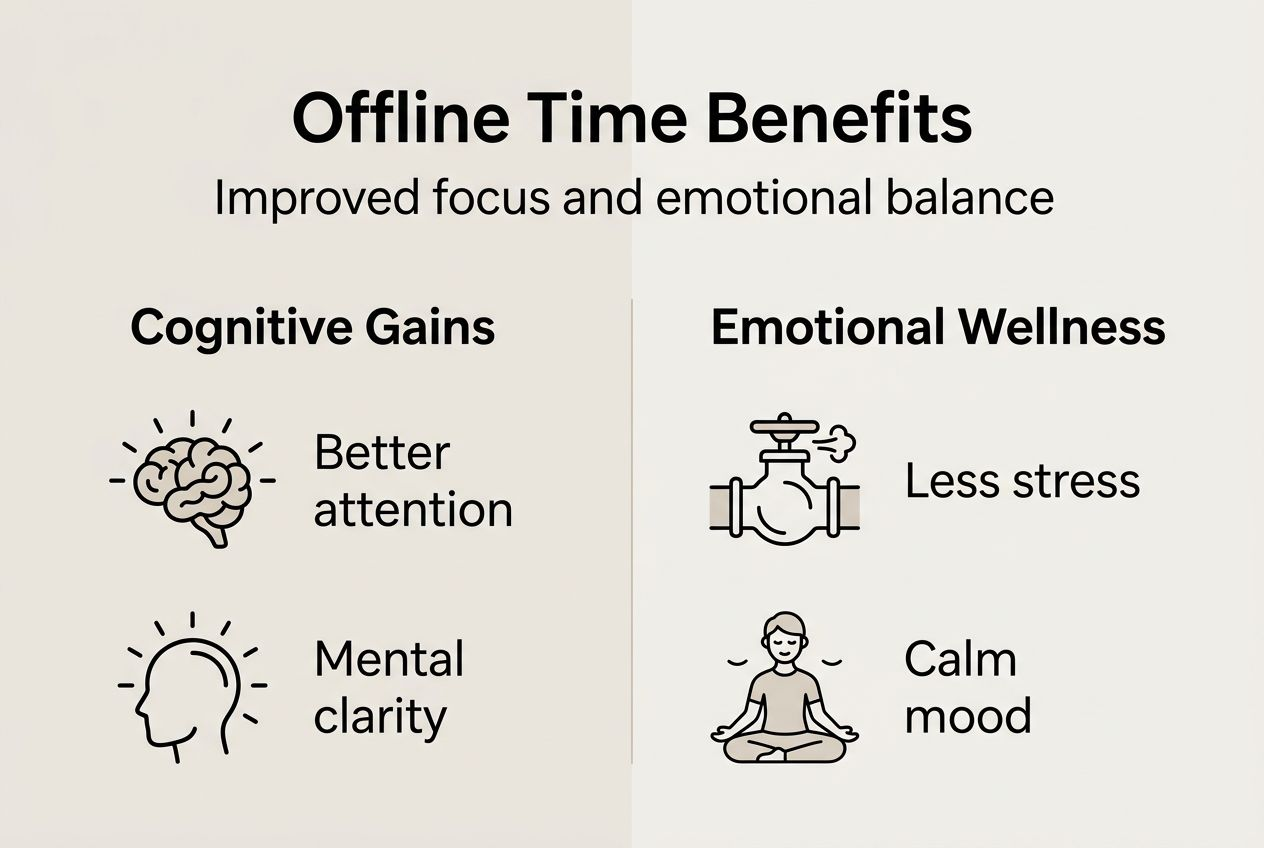
Pro Tip: Schedule 15-minute nature breaks during your workday. Even viewing nature through a window provides measurable attention restoration benefits when outdoor access isn't possible.
Your brain's biological wiring demands offline periods for optimal function. Offline time isn't a wellness trend but a neurological necessity. During rest periods away from screens, your brain consolidates memories, processes emotions, and clears metabolic waste through the glymphatic system. These essential maintenance functions occur primarily during sleep and quiet waking states, not during active digital engagement.
The restoration process follows predictable patterns:
- First 10 minutes offline: Nervous system begins downregulating
- 20-30 minutes: Directed attention starts recovering measurably
- 60+ minutes: Significant restoration of cognitive resources occurs
- Regular practice: Brain adapts to require less constant stimulation
Natural environments accelerate restoration through multiple mechanisms. Phytoncides (airborne chemicals from plants) reduce stress hormones. Natural light regulates circadian rhythms. Physical movement in outdoor settings combines cardiovascular benefits with attention restoration. These factors work synergistically, explaining why reducing screen time naturally through outdoor activities proves particularly effective.
Balancing digital use: intentional habits and practical strategies
How you use technology matters as much as how much you use it. Intentional technology use links to better attentional control and psychological well-being, while passive use degrades both. Intentional use means approaching devices with specific goals, time limits, and awareness. Passive use involves mindless scrolling, automatic checking, and reactive responses to notifications. The distinction determines whether technology serves or sabotages your mental health.
Goal-setting transforms digital engagement from reactive to purposeful. Before picking up your phone, identify exactly what you need to accomplish. Complete that task, then put the device down. This simple practice prevents the drift from intentional checking email to unconsciously browsing for 30 minutes. Time regulation works similarly. Set specific windows for digital tasks rather than maintaining constant availability.
Aligning technology use with your values creates natural boundaries. If you value deep relationships, limit social media that replaces face-to-face connection. If you prioritize learning, choose educational content over entertainment feeds. This values-based approach makes screen time management feel less restrictive because you're choosing activities that genuinely matter to you.
Digital self-control tools effectively reduce overuse and improve digital wellbeing. These tools include app timers, website blockers, and lockout mechanisms. Research confirms their effectiveness when combined with genuine motivation for change. The key is selecting tools that match your specific challenges rather than applying generic solutions.
Pro Tip: Start with one 30-minute offline block daily rather than attempting dramatic reductions. Gradual changes prove more sustainable than drastic overhauls.
Implement these practical steps to cultivate intentional digital habits:
1. Establish device-free zones in your home, particularly bedrooms and dining areas
2. Schedule specific offline periods daily, treating them as non-negotiable appointments
3. Replace morning phone checking with an alternative routine like stretching or journaling
4. Use grayscale mode to reduce visual appeal of apps designed to capture attention
5. Delete apps that don't align with your goals, keeping only essential tools
6. Practice single-tasking by closing all apps except the one you're actively using
Gradual screen time reduction enhances productivity and mental clarity more effectively than abrupt changes. Your brain needs time to adjust to lower stimulation levels. Reduce daily screen time by 15-minute increments weekly until reaching your target. This approach prevents the discomfort and rebound that often derail aggressive reduction attempts.
The most effective strategy combines multiple approaches. Use scheduled offline blocks for daily restoration while practicing intentional use during connected periods. Incorporate gradual reduction to lower overall screen time sustainably. This multi-pronged approach addresses both immediate attention restoration needs and long-term habit change, making it easier to break screen addiction permanently.
The mental health benefits of prioritizing offline time
The mental health crisis among young people correlates strongly with increased screen time. Excessive screen time links to increased anxiety, depression, and behavioral problems in youth. Adolescents spending over seven hours daily on screens show double the risk of depression diagnosis compared to those with one-hour daily use. ADHD diagnoses have increased 43% over the past decade, paralleling the rise in smartphone adoption and social media use.
Prioritizing offline time reverses many screen-related mental health declines. Digital detox improves attention, stress levels, and social connectedness. Participants in digital detox studies report better sleep quality, reduced anxiety, and improved mood after just one week of reduced screen time. These benefits compound over time as your brain adapts to lower stimulation levels and recovers baseline functioning.
Sleep quality improves dramatically with evening screen reduction. Blue light from devices suppresses melatonin production, delaying sleep onset. The cognitive stimulation from digital content keeps your mind active when it should be winding down. Eliminating screens two hours before bed normalizes circadian rhythms, leading to faster sleep onset, longer deep sleep phases, and better next-day cognitive performance. This single change often produces the most noticeable mental health improvements.
Digital detox fosters social connectedness often eroded by screen time. Face-to-face interactions require attention and emotional presence that digital communication doesn't demand. When you prioritize offline time, you create space for deeper relationships. You notice social cues, engage in extended conversations, and build stronger emotional bonds. These real-world connections provide mental health benefits that digital interactions cannot replicate.
Physical activity during offline periods amplifies mental health benefits. Exercise reduces anxiety and depression through multiple mechanisms: endorphin release, stress hormone reduction, and improved sleep quality. Combining movement with screen-free time addresses mental health from multiple angles simultaneously. A 30-minute walk provides attention restoration, cardiovascular benefits, and mood improvement in one activity.
The mental health advantages extend across age groups and lifestyles:
- Children show improved attention spans and academic performance
- Adolescents report reduced anxiety and better peer relationships
- Adults experience lower stress and increased productivity
- Older adults maintain cognitive function and social engagement
Understanding screen time's impact on wellness helps you appreciate why offline time matters so profoundly. Your mental health depends on regular breaks from digital stimulation. The benefits of reduced screen time multiply when you replace screen hours with restorative activities like nature exposure, physical movement, creative pursuits, or meaningful social connection.
Explore tools to help prioritize offline time and improve well-being
Transforming your relationship with technology requires more than willpower. Practical tools and structured support make sustainable change possible. Our platform offers resources specifically designed to help you manage screen time effectively and build healthier digital habits. We understand the challenges of breaking ingrained patterns because we've helped thousands of people reclaim their attention and mental wellness.
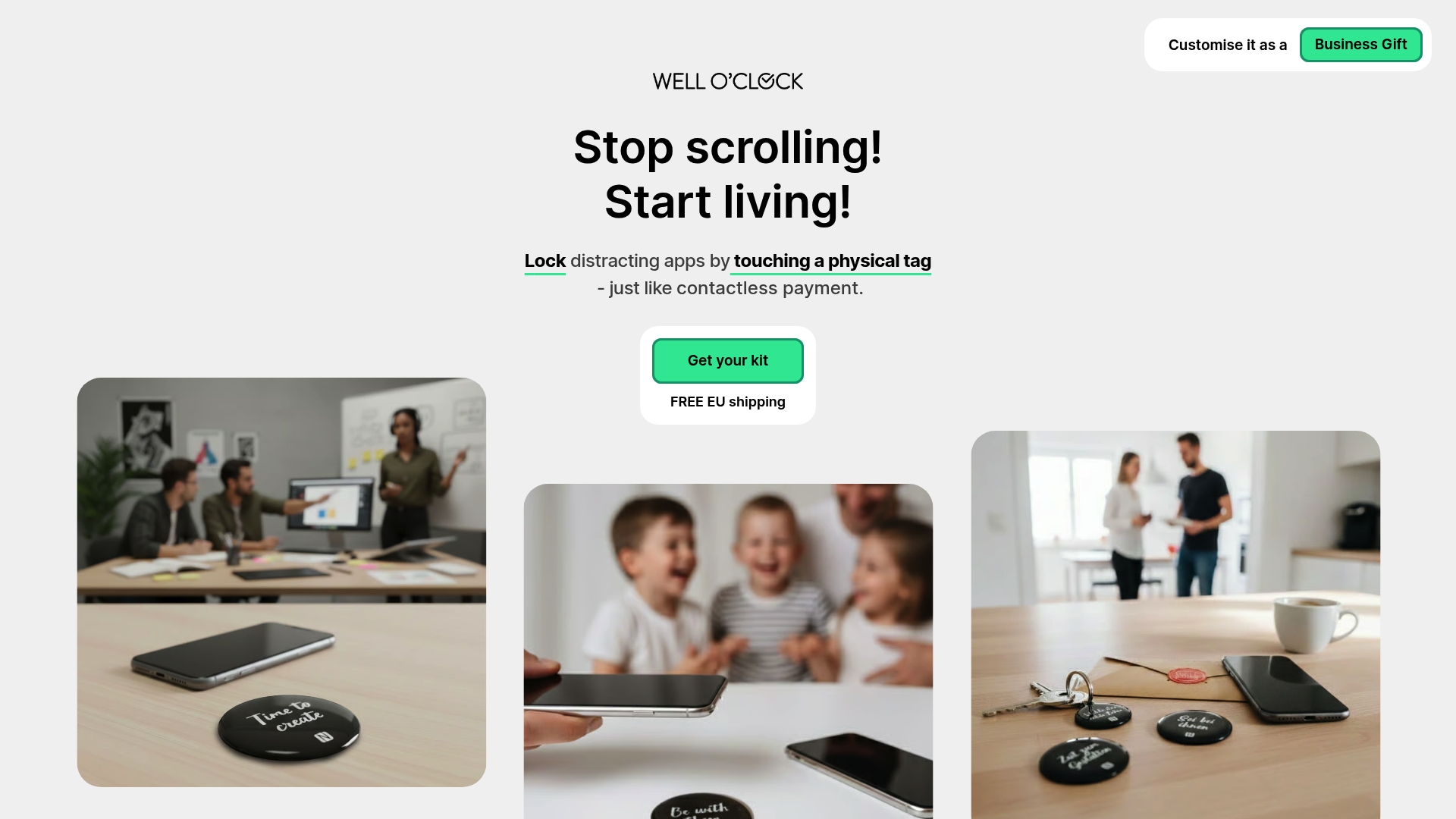
Discover comprehensive guides, evidence-based strategies, and innovative technology solutions at Well O'Clock. Our approach combines physical tools with digital support to interrupt automatic phone reaching. You'll find practical frameworks for setting boundaries, tracking progress, and maintaining motivation during the transition to balanced technology use. Join a community committed to improving mental wellness through intentional offline time and healthier digital habits.
FAQ
How often should I take offline breaks?
Taking short offline breaks every 60 to 90 minutes helps restore attention and reduce cognitive fatigue. Even brief five-minute breaks away from screens benefit your focus and mental clarity. Your brain's directed attention system depletes quickly under sustained digital engagement, so regular restoration periods maintain optimal cognitive performance throughout the day.
Can offline time really improve sleep quality?
Reducing nighttime screen use helps normalize circadian rhythms disrupted by blue light exposure from devices. Less digital engagement before bed correlates with deeper, more restful sleep and faster sleep onset. The cognitive stimulation from screens keeps your mind active when it should be winding down, so eliminating devices two hours before bed produces measurable sleep improvements.
What practical steps can help me reduce screen time consistently?
Set clear daily screen limits and establish specific offline routines to create sustainable habits. Use digital self-control tools like app timers or lockout mechanisms to enforce boundaries. Schedule designated offline activities such as walks, reading, or hobbies to replace screen time with restorative alternatives. Reducing screen time naturally through gradual changes proves more effective than dramatic restrictions.
Does the type of screen time matter for mental health?
Intentional, goal-directed technology use supports well-being while passive scrolling degrades mental health and attention. Active learning or purposeful communication provides cognitive benefits that mindless browsing cannot match. The quality and intention behind your screen time matter as much as the total duration, so focusing on how you engage with devices proves as important as limiting overall use.

Mak Kordić
Co founder
Mak Kordić is the founder and CEO of CNJ Digital, an agency based in Ljubljana, where he and his team develop UX/UI and digital products for demanding B2B projects. Over his career, he has led and co-created hundreds of digital solutions and worked with international clients.








Why prioritize offline time for mental well-being in 2026
Mak Kordić
,
March 24, 2026
Every time you glance at your phone, your brain pays a hidden cost. Micro-checks on devices place a cumulative load on your attention system, draining mental resources faster than you realize. Most people believe constant connectivity and multitasking boost productivity, yet research reveals the opposite. Your brain wasn't designed for perpetual digital engagement. This article explains why prioritizing offline time restores focus, emotional balance, and mental health, offering practical strategies to reclaim your attention in 2026.
Table of Contents
- How Constant Digital Engagement Impacts Your Brain And Mental Health
- Why Offline Time Is Essential For Cognitive Restoration And Emotional Balance
- Balancing Digital Use: Intentional Habits And Practical Strategies
- The Mental Health Benefits Of Prioritizing Offline Time
- Explore Tools To Help Prioritize Offline Time And Improve Well-Being
How constant digital engagement impacts your brain and mental health
Your brain operates with finite attentional resources. Every notification, email check, and app switch depletes this limited pool. Frequent quick checks overload your attention system, creating cognitive fatigue that compounds throughout the day. You might not notice the drain after one interruption, but dozens of micro-checks leave you mentally exhausted by evening.
Task switching between digital platforms slows processing in your prefrontal cortex. This brain region handles executive functions like planning and decision-making. When you bounce between apps, your prefrontal cortex must constantly reorient, burning mental fuel without productive output. The result? Reducing device distractions becomes essential for maintaining cognitive efficiency.
Constant digital engagement fragments your focus and heightens emotional reactivity. Your nervous system remains in a state of mild activation, responding to each ping and vibration. This chronic arousal prevents deep concentration and makes you more susceptible to stress and irritability. Over time, this pattern disrupts sleep quality, creating a vicious cycle where poor rest further impairs attention and emotional regulation.
The cognitive costs extend beyond immediate fatigue. Multitasking reduces performance and decreases information retention. When you split attention between digital tasks, your brain encodes memories less effectively. Students who multitask during study sessions recall less material. Professionals who juggle multiple screens produce lower-quality work. Your brain simply cannot process information deeply while managing competing digital inputs.
Consider these specific impacts:
- Attention fragmentation increases error rates in complex tasks
- Emotional reactivity spikes during periods of heavy screen use
- Sleep disruption from evening device use impairs next-day cognitive function
- Memory consolidation weakens when digital engagement replaces rest periods
" The brain's attention system wasn't designed for the constant digital bombardment we face today. Each interruption extracts a small cognitive toll that accumulates into significant mental fatigue. "
Heavy screen use correlates with measurable changes in brain activity patterns. Neuroimaging studies show reduced activation in regions responsible for sustained attention after prolonged digital engagement. Your brain adapts to expect frequent stimulation, making it harder to maintain focus during offline activities. This adaptation explains why mindful tech habits matter for long-term cognitive health.
Why offline time is essential for cognitive restoration and emotional balance
Your brain relies on two distinct attention systems. Directed attention requires conscious effort and mental energy. You use it when focusing on work, reading dense material, or solving problems. This system depletes quickly under sustained use. Involuntary attention operates automatically, triggered by naturally interesting stimuli that don't demand cognitive effort. Understanding this distinction reveals why offline time proves so restorative.
Attention Restoration Theory explains how natural environments replenish depleted attention. When you step into nature, elements like rustling leaves, flowing water, or cloud patterns capture your involuntary attention through soft fascination. This gentle engagement allows your directed attention system to recover. The theory identifies four key components: being away (physical or mental distance), extent (rich enough to engage the mind), fascination (effortless attention capture), and compatibility (matching your purposes and inclinations).
Directed attention is limited and requires specific conditions to recharge. Digital environments fail to provide these conditions because they constantly demand active engagement. Even passive scrolling requires decision-making about what to view next. Natural settings offer the psychological distance your brain needs. A 20-minute walk in a park provides more restoration than 20 minutes browsing social media.
Offline time reduces the emotional reactivity amplified by heavy screen use. Digital platforms often present emotionally charged content designed to capture attention. Your nervous system responds to each provocative headline or dramatic image. This repeated activation keeps your stress response elevated. Stepping away allows your emotional regulation systems to recalibrate, lowering baseline anxiety and improving mood stability.
Pro Tip: Schedule 15-minute nature breaks during your workday. Even viewing nature through a window provides measurable attention restoration benefits when outdoor access isn't possible.
Your brain's biological wiring demands offline periods for optimal function. Offline time isn't a wellness trend but a neurological necessity. During rest periods away from screens, your brain consolidates memories, processes emotions, and clears metabolic waste through the glymphatic system. These essential maintenance functions occur primarily during sleep and quiet waking states, not during active digital engagement.
The restoration process follows predictable patterns:
- First 10 minutes offline: Nervous system begins downregulating
- 20-30 minutes: Directed attention starts recovering measurably
- 60+ minutes: Significant restoration of cognitive resources occurs
- Regular practice: Brain adapts to require less constant stimulation
Natural environments accelerate restoration through multiple mechanisms. Phytoncides (airborne chemicals from plants) reduce stress hormones. Natural light regulates circadian rhythms. Physical movement in outdoor settings combines cardiovascular benefits with attention restoration. These factors work synergistically, explaining why reducing screen time naturally through outdoor activities proves particularly effective.
Balancing digital use: intentional habits and practical strategies
How you use technology matters as much as how much you use it. Intentional technology use links to better attentional control and psychological well-being, while passive use degrades both. Intentional use means approaching devices with specific goals, time limits, and awareness. Passive use involves mindless scrolling, automatic checking, and reactive responses to notifications. The distinction determines whether technology serves or sabotages your mental health.
Goal-setting transforms digital engagement from reactive to purposeful. Before picking up your phone, identify exactly what you need to accomplish. Complete that task, then put the device down. This simple practice prevents the drift from intentional checking email to unconsciously browsing for 30 minutes. Time regulation works similarly. Set specific windows for digital tasks rather than maintaining constant availability.
Aligning technology use with your values creates natural boundaries. If you value deep relationships, limit social media that replaces face-to-face connection. If you prioritize learning, choose educational content over entertainment feeds. This values-based approach makes screen time management feel less restrictive because you're choosing activities that genuinely matter to you.
Digital self-control tools effectively reduce overuse and improve digital wellbeing. These tools include app timers, website blockers, and lockout mechanisms. Research confirms their effectiveness when combined with genuine motivation for change. The key is selecting tools that match your specific challenges rather than applying generic solutions.
Pro Tip: Start with one 30-minute offline block daily rather than attempting dramatic reductions. Gradual changes prove more sustainable than drastic overhauls.
Implement these practical steps to cultivate intentional digital habits:
1. Establish device-free zones in your home, particularly bedrooms and dining areas
2. Schedule specific offline periods daily, treating them as non-negotiable appointments
3. Replace morning phone checking with an alternative routine like stretching or journaling
4. Use grayscale mode to reduce visual appeal of apps designed to capture attention
5. Delete apps that don't align with your goals, keeping only essential tools
6. Practice single-tasking by closing all apps except the one you're actively using
Gradual screen time reduction enhances productivity and mental clarity more effectively than abrupt changes. Your brain needs time to adjust to lower stimulation levels. Reduce daily screen time by 15-minute increments weekly until reaching your target. This approach prevents the discomfort and rebound that often derail aggressive reduction attempts.
The most effective strategy combines multiple approaches. Use scheduled offline blocks for daily restoration while practicing intentional use during connected periods. Incorporate gradual reduction to lower overall screen time sustainably. This multi-pronged approach addresses both immediate attention restoration needs and long-term habit change, making it easier to break screen addiction permanently.
The mental health benefits of prioritizing offline time
The mental health crisis among young people correlates strongly with increased screen time. Excessive screen time links to increased anxiety, depression, and behavioral problems in youth. Adolescents spending over seven hours daily on screens show double the risk of depression diagnosis compared to those with one-hour daily use. ADHD diagnoses have increased 43% over the past decade, paralleling the rise in smartphone adoption and social media use.
Prioritizing offline time reverses many screen-related mental health declines. Digital detox improves attention, stress levels, and social connectedness. Participants in digital detox studies report better sleep quality, reduced anxiety, and improved mood after just one week of reduced screen time. These benefits compound over time as your brain adapts to lower stimulation levels and recovers baseline functioning.
Sleep quality improves dramatically with evening screen reduction. Blue light from devices suppresses melatonin production, delaying sleep onset. The cognitive stimulation from digital content keeps your mind active when it should be winding down. Eliminating screens two hours before bed normalizes circadian rhythms, leading to faster sleep onset, longer deep sleep phases, and better next-day cognitive performance. This single change often produces the most noticeable mental health improvements.
Digital detox fosters social connectedness often eroded by screen time. Face-to-face interactions require attention and emotional presence that digital communication doesn't demand. When you prioritize offline time, you create space for deeper relationships. You notice social cues, engage in extended conversations, and build stronger emotional bonds. These real-world connections provide mental health benefits that digital interactions cannot replicate.
Physical activity during offline periods amplifies mental health benefits. Exercise reduces anxiety and depression through multiple mechanisms: endorphin release, stress hormone reduction, and improved sleep quality. Combining movement with screen-free time addresses mental health from multiple angles simultaneously. A 30-minute walk provides attention restoration, cardiovascular benefits, and mood improvement in one activity.
The mental health advantages extend across age groups and lifestyles:
- Children show improved attention spans and academic performance
- Adolescents report reduced anxiety and better peer relationships
- Adults experience lower stress and increased productivity
- Older adults maintain cognitive function and social engagement
Understanding screen time's impact on wellness helps you appreciate why offline time matters so profoundly. Your mental health depends on regular breaks from digital stimulation. The benefits of reduced screen time multiply when you replace screen hours with restorative activities like nature exposure, physical movement, creative pursuits, or meaningful social connection.
Explore tools to help prioritize offline time and improve well-being
Transforming your relationship with technology requires more than willpower. Practical tools and structured support make sustainable change possible. Our platform offers resources specifically designed to help you manage screen time effectively and build healthier digital habits. We understand the challenges of breaking ingrained patterns because we've helped thousands of people reclaim their attention and mental wellness.
Discover comprehensive guides, evidence-based strategies, and innovative technology solutions at Well O'Clock. Our approach combines physical tools with digital support to interrupt automatic phone reaching. You'll find practical frameworks for setting boundaries, tracking progress, and maintaining motivation during the transition to balanced technology use. Join a community committed to improving mental wellness through intentional offline time and healthier digital habits.
FAQ
How often should I take offline breaks?
Taking short offline breaks every 60 to 90 minutes helps restore attention and reduce cognitive fatigue. Even brief five-minute breaks away from screens benefit your focus and mental clarity. Your brain's directed attention system depletes quickly under sustained digital engagement, so regular restoration periods maintain optimal cognitive performance throughout the day.
Can offline time really improve sleep quality?
Reducing nighttime screen use helps normalize circadian rhythms disrupted by blue light exposure from devices. Less digital engagement before bed correlates with deeper, more restful sleep and faster sleep onset. The cognitive stimulation from screens keeps your mind active when it should be winding down, so eliminating devices two hours before bed produces measurable sleep improvements.
What practical steps can help me reduce screen time consistently?
Set clear daily screen limits and establish specific offline routines to create sustainable habits. Use digital self-control tools like app timers or lockout mechanisms to enforce boundaries. Schedule designated offline activities such as walks, reading, or hobbies to replace screen time with restorative alternatives. Reducing screen time naturally through gradual changes proves more effective than dramatic restrictions.
Does the type of screen time matter for mental health?
Intentional, goal-directed technology use supports well-being while passive scrolling degrades mental health and attention. Active learning or purposeful communication provides cognitive benefits that mindless browsing cannot match. The quality and intention behind your screen time matter as much as the total duration, so focusing on how you engage with devices proves as important as limiting overall use.
Mak Kordić
Co founder
Mak Kordić is the founder and CEO of CNJ Digital, an agency based in Ljubljana, where he and his team develop UX/UI and digital products for demanding B2B projects. Over his career, he has led and co-created hundreds of digital solutions and worked with international clients.
Why prioritize offline time for mental well-being in 2026
Mak Kordić
,
March 24, 2026
Every time you glance at your phone, your brain pays a hidden cost. Micro-checks on devices place a cumulative load on your attention system, draining mental resources faster than you realize. Most people believe constant connectivity and multitasking boost productivity, yet research reveals the opposite. Your brain wasn't designed for perpetual digital engagement. This article explains why prioritizing offline time restores focus, emotional balance, and mental health, offering practical strategies to reclaim your attention in 2026.
Table of Contents
- How Constant Digital Engagement Impacts Your Brain And Mental Health
- Why Offline Time Is Essential For Cognitive Restoration And Emotional Balance
- Balancing Digital Use: Intentional Habits And Practical Strategies
- The Mental Health Benefits Of Prioritizing Offline Time
- Explore Tools To Help Prioritize Offline Time And Improve Well-Being
How constant digital engagement impacts your brain and mental health
Your brain operates with finite attentional resources. Every notification, email check, and app switch depletes this limited pool. Frequent quick checks overload your attention system, creating cognitive fatigue that compounds throughout the day. You might not notice the drain after one interruption, but dozens of micro-checks leave you mentally exhausted by evening.
Task switching between digital platforms slows processing in your prefrontal cortex. This brain region handles executive functions like planning and decision-making. When you bounce between apps, your prefrontal cortex must constantly reorient, burning mental fuel without productive output. The result? Reducing device distractions becomes essential for maintaining cognitive efficiency.
Constant digital engagement fragments your focus and heightens emotional reactivity. Your nervous system remains in a state of mild activation, responding to each ping and vibration. This chronic arousal prevents deep concentration and makes you more susceptible to stress and irritability. Over time, this pattern disrupts sleep quality, creating a vicious cycle where poor rest further impairs attention and emotional regulation.
The cognitive costs extend beyond immediate fatigue. Multitasking reduces performance and decreases information retention. When you split attention between digital tasks, your brain encodes memories less effectively. Students who multitask during study sessions recall less material. Professionals who juggle multiple screens produce lower-quality work. Your brain simply cannot process information deeply while managing competing digital inputs.
Consider these specific impacts:
- Attention fragmentation increases error rates in complex tasks
- Emotional reactivity spikes during periods of heavy screen use
- Sleep disruption from evening device use impairs next-day cognitive function
- Memory consolidation weakens when digital engagement replaces rest periods
" The brain's attention system wasn't designed for the constant digital bombardment we face today. Each interruption extracts a small cognitive toll that accumulates into significant mental fatigue. "
Heavy screen use correlates with measurable changes in brain activity patterns. Neuroimaging studies show reduced activation in regions responsible for sustained attention after prolonged digital engagement. Your brain adapts to expect frequent stimulation, making it harder to maintain focus during offline activities. This adaptation explains why mindful tech habits matter for long-term cognitive health.
Why offline time is essential for cognitive restoration and emotional balance
Your brain relies on two distinct attention systems. Directed attention requires conscious effort and mental energy. You use it when focusing on work, reading dense material, or solving problems. This system depletes quickly under sustained use. Involuntary attention operates automatically, triggered by naturally interesting stimuli that don't demand cognitive effort. Understanding this distinction reveals why offline time proves so restorative.
Attention Restoration Theory explains how natural environments replenish depleted attention. When you step into nature, elements like rustling leaves, flowing water, or cloud patterns capture your involuntary attention through soft fascination. This gentle engagement allows your directed attention system to recover. The theory identifies four key components: being away (physical or mental distance), extent (rich enough to engage the mind), fascination (effortless attention capture), and compatibility (matching your purposes and inclinations).
Directed attention is limited and requires specific conditions to recharge. Digital environments fail to provide these conditions because they constantly demand active engagement. Even passive scrolling requires decision-making about what to view next. Natural settings offer the psychological distance your brain needs. A 20-minute walk in a park provides more restoration than 20 minutes browsing social media.
Offline time reduces the emotional reactivity amplified by heavy screen use. Digital platforms often present emotionally charged content designed to capture attention. Your nervous system responds to each provocative headline or dramatic image. This repeated activation keeps your stress response elevated. Stepping away allows your emotional regulation systems to recalibrate, lowering baseline anxiety and improving mood stability.
Pro Tip: Schedule 15-minute nature breaks during your workday. Even viewing nature through a window provides measurable attention restoration benefits when outdoor access isn't possible.
Your brain's biological wiring demands offline periods for optimal function. Offline time isn't a wellness trend but a neurological necessity. During rest periods away from screens, your brain consolidates memories, processes emotions, and clears metabolic waste through the glymphatic system. These essential maintenance functions occur primarily during sleep and quiet waking states, not during active digital engagement.
The restoration process follows predictable patterns:
- First 10 minutes offline: Nervous system begins downregulating
- 20-30 minutes: Directed attention starts recovering measurably
- 60+ minutes: Significant restoration of cognitive resources occurs
- Regular practice: Brain adapts to require less constant stimulation
Natural environments accelerate restoration through multiple mechanisms. Phytoncides (airborne chemicals from plants) reduce stress hormones. Natural light regulates circadian rhythms. Physical movement in outdoor settings combines cardiovascular benefits with attention restoration. These factors work synergistically, explaining why reducing screen time naturally through outdoor activities proves particularly effective.
Balancing digital use: intentional habits and practical strategies
How you use technology matters as much as how much you use it. Intentional technology use links to better attentional control and psychological well-being, while passive use degrades both. Intentional use means approaching devices with specific goals, time limits, and awareness. Passive use involves mindless scrolling, automatic checking, and reactive responses to notifications. The distinction determines whether technology serves or sabotages your mental health.
Goal-setting transforms digital engagement from reactive to purposeful. Before picking up your phone, identify exactly what you need to accomplish. Complete that task, then put the device down. This simple practice prevents the drift from intentional checking email to unconsciously browsing for 30 minutes. Time regulation works similarly. Set specific windows for digital tasks rather than maintaining constant availability.
Aligning technology use with your values creates natural boundaries. If you value deep relationships, limit social media that replaces face-to-face connection. If you prioritize learning, choose educational content over entertainment feeds. This values-based approach makes screen time management feel less restrictive because you're choosing activities that genuinely matter to you.
Digital self-control tools effectively reduce overuse and improve digital wellbeing. These tools include app timers, website blockers, and lockout mechanisms. Research confirms their effectiveness when combined with genuine motivation for change. The key is selecting tools that match your specific challenges rather than applying generic solutions.
Pro Tip: Start with one 30-minute offline block daily rather than attempting dramatic reductions. Gradual changes prove more sustainable than drastic overhauls.
Implement these practical steps to cultivate intentional digital habits:
1. Establish device-free zones in your home, particularly bedrooms and dining areas
2. Schedule specific offline periods daily, treating them as non-negotiable appointments
3. Replace morning phone checking with an alternative routine like stretching or journaling
4. Use grayscale mode to reduce visual appeal of apps designed to capture attention
5. Delete apps that don't align with your goals, keeping only essential tools
6. Practice single-tasking by closing all apps except the one you're actively using
Gradual screen time reduction enhances productivity and mental clarity more effectively than abrupt changes. Your brain needs time to adjust to lower stimulation levels. Reduce daily screen time by 15-minute increments weekly until reaching your target. This approach prevents the discomfort and rebound that often derail aggressive reduction attempts.
The most effective strategy combines multiple approaches. Use scheduled offline blocks for daily restoration while practicing intentional use during connected periods. Incorporate gradual reduction to lower overall screen time sustainably. This multi-pronged approach addresses both immediate attention restoration needs and long-term habit change, making it easier to break screen addiction permanently.
The mental health benefits of prioritizing offline time
The mental health crisis among young people correlates strongly with increased screen time. Excessive screen time links to increased anxiety, depression, and behavioral problems in youth. Adolescents spending over seven hours daily on screens show double the risk of depression diagnosis compared to those with one-hour daily use. ADHD diagnoses have increased 43% over the past decade, paralleling the rise in smartphone adoption and social media use.
Prioritizing offline time reverses many screen-related mental health declines. Digital detox improves attention, stress levels, and social connectedness. Participants in digital detox studies report better sleep quality, reduced anxiety, and improved mood after just one week of reduced screen time. These benefits compound over time as your brain adapts to lower stimulation levels and recovers baseline functioning.
Sleep quality improves dramatically with evening screen reduction. Blue light from devices suppresses melatonin production, delaying sleep onset. The cognitive stimulation from digital content keeps your mind active when it should be winding down. Eliminating screens two hours before bed normalizes circadian rhythms, leading to faster sleep onset, longer deep sleep phases, and better next-day cognitive performance. This single change often produces the most noticeable mental health improvements.
Digital detox fosters social connectedness often eroded by screen time. Face-to-face interactions require attention and emotional presence that digital communication doesn't demand. When you prioritize offline time, you create space for deeper relationships. You notice social cues, engage in extended conversations, and build stronger emotional bonds. These real-world connections provide mental health benefits that digital interactions cannot replicate.
Physical activity during offline periods amplifies mental health benefits. Exercise reduces anxiety and depression through multiple mechanisms: endorphin release, stress hormone reduction, and improved sleep quality. Combining movement with screen-free time addresses mental health from multiple angles simultaneously. A 30-minute walk provides attention restoration, cardiovascular benefits, and mood improvement in one activity.
The mental health advantages extend across age groups and lifestyles:
- Children show improved attention spans and academic performance
- Adolescents report reduced anxiety and better peer relationships
- Adults experience lower stress and increased productivity
- Older adults maintain cognitive function and social engagement
Understanding screen time's impact on wellness helps you appreciate why offline time matters so profoundly. Your mental health depends on regular breaks from digital stimulation. The benefits of reduced screen time multiply when you replace screen hours with restorative activities like nature exposure, physical movement, creative pursuits, or meaningful social connection.
Explore tools to help prioritize offline time and improve well-being
Transforming your relationship with technology requires more than willpower. Practical tools and structured support make sustainable change possible. Our platform offers resources specifically designed to help you manage screen time effectively and build healthier digital habits. We understand the challenges of breaking ingrained patterns because we've helped thousands of people reclaim their attention and mental wellness.
Discover comprehensive guides, evidence-based strategies, and innovative technology solutions at Well O'Clock. Our approach combines physical tools with digital support to interrupt automatic phone reaching. You'll find practical frameworks for setting boundaries, tracking progress, and maintaining motivation during the transition to balanced technology use. Join a community committed to improving mental wellness through intentional offline time and healthier digital habits.
FAQ
How often should I take offline breaks?
Taking short offline breaks every 60 to 90 minutes helps restore attention and reduce cognitive fatigue. Even brief five-minute breaks away from screens benefit your focus and mental clarity. Your brain's directed attention system depletes quickly under sustained digital engagement, so regular restoration periods maintain optimal cognitive performance throughout the day.
Can offline time really improve sleep quality?
Reducing nighttime screen use helps normalize circadian rhythms disrupted by blue light exposure from devices. Less digital engagement before bed correlates with deeper, more restful sleep and faster sleep onset. The cognitive stimulation from screens keeps your mind active when it should be winding down, so eliminating devices two hours before bed produces measurable sleep improvements.
What practical steps can help me reduce screen time consistently?
Set clear daily screen limits and establish specific offline routines to create sustainable habits. Use digital self-control tools like app timers or lockout mechanisms to enforce boundaries. Schedule designated offline activities such as walks, reading, or hobbies to replace screen time with restorative alternatives. Reducing screen time naturally through gradual changes proves more effective than dramatic restrictions.
Does the type of screen time matter for mental health?
Intentional, goal-directed technology use supports well-being while passive scrolling degrades mental health and attention. Active learning or purposeful communication provides cognitive benefits that mindless browsing cannot match. The quality and intention behind your screen time matter as much as the total duration, so focusing on how you engage with devices proves as important as limiting overall use.
Mak Kordić
Co founder
Mak Kordić is the founder and CEO of CNJ Digital, an agency based in Ljubljana, where he and his team develop UX/UI and digital products for demanding B2B projects. Over his career, he has led and co-created hundreds of digital solutions and worked with international clients.