
Why reduce digital distractions for better focus and well-being
Mak Kordić
,
April 17, 2026


Every ping, buzz, and notification feels harmless, yet recovery from each digital interruption takes 23 minutes, resulting in up to 3.8 hours of lost productivity per day with just 10 interruptions. Most people drastically underestimate how these seemingly minor distractions fragment attention, sabotage focus, and erode mental clarity. Digital distractions create an invisible productivity drain that compounds stress, weakens cognitive performance, and damages overall well-being. This guide explains the cognitive, mental health, and productivity reasons to reduce distractions, backed by research, and provides practical strategies to reclaim your focus and improve your quality of life.
Table of Contents
- Key takeaways
- How digital distractions fragment attention and reduce productivity
- The cognitive and mental health costs of excessive screen time
- Intentional digital minimalism for sustained clarity and productivity
- Practical strategies to reduce digital distractions for improved well-being
- Improve your focus and well-being with Well O'Clock
- FAQ
How digital distractions fragment attention and reduce productivity
Digital interruptions create a cascade of attention fragmentation that most people fail to recognize. When you switch from a focused task to check a notification, your brain doesn't simply pause and resume. Instead, it must disengage from the original task, process the interruption, and then laboriously rebuild the mental context needed to continue productive work. This cognitive switching cost accumulates rapidly throughout your day.
Recovery from each digital interruption takes 23 minutes, resulting in up to 3.8 hours of lost productivity per day with 10 interruptions. Consider what this means in practical terms: if you check your phone during a morning meeting, respond to a Slack message mid-task, glance at an email notification, and scroll social media during a brief break, you've already surrendered more than an hour of potential deep work. The math becomes devastating when you realize most knowledge workers face far more than 10 daily interruptions.
" Frequent notifications are the primary disruptors for nearly half of people, creating a perpetual state of partial attention that prevents genuine focus and creative thinking. "
The compounding nature of attention fragmentation creates a productivity paradox. You feel busy and responsive, yet accomplish less meaningful work than colleagues who appear less available. Lost productive time accumulates rapidly over the day, transforming minor interruptions into major inefficiency. This pattern generates stress and frustration as deadlines approach and important projects remain incomplete despite long working hours.
Common examples reveal how insidious this problem becomes:
- Constant smartphone pings during focused work sessions destroy concentration
- Multitasking between messaging apps and core tasks creates illusion of productivity
- Email notifications trigger immediate responses that derail strategic thinking
- Social media checks fragment attention into increasingly shorter intervals
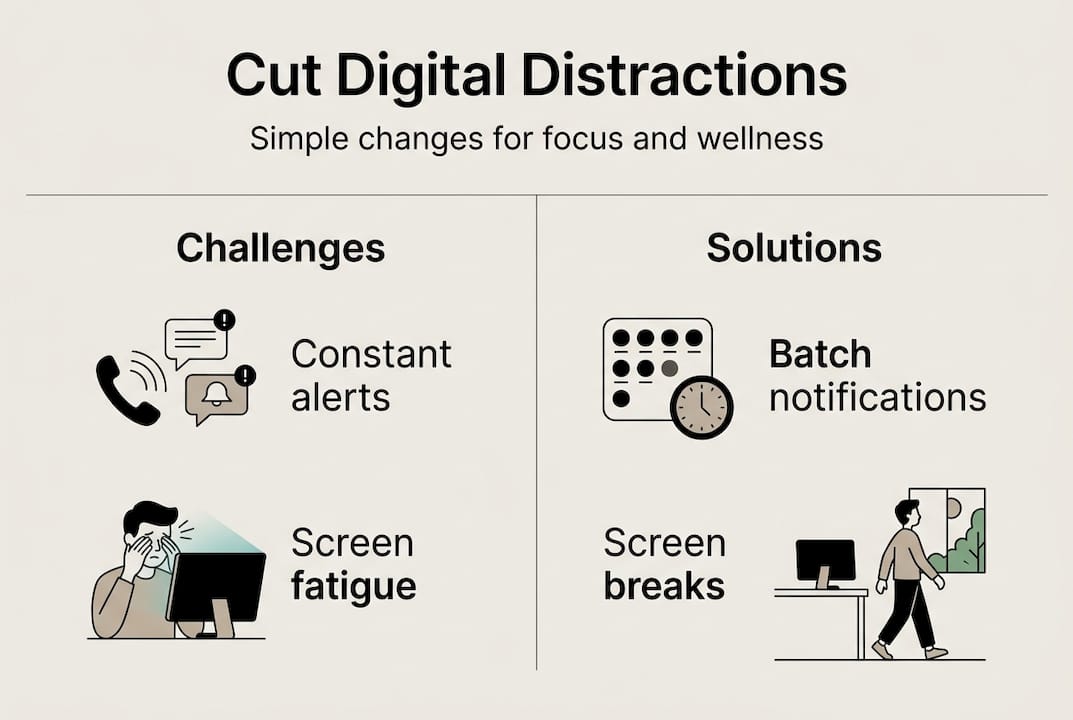
Understanding device distraction minimization becomes essential for anyone seeking to reclaim productive time. The solution isn't working longer hours to compensate for lost focus. Instead, you need systematic approaches to protect attention and create genuine focus blocks.
Pro Tip: Batch notifications into specific time windows and use 90-minute focus blocks to minimize attention fragmentation. Turn off all non-essential alerts and check messages only during designated breaks.
The cognitive and mental health costs of excessive screen time
Beyond productivity losses, digital distractions fundamentally impair cognitive functions essential for work, learning, and daily decision-making. Excessive screen time reduces working memory, focus, creativity, and decision-making, with depression risk increasing sharply over 2.5 hours of daily recreational screen use. Your brain's executive functions, which manage planning, impulse control, and complex reasoning, become measurably weaker with prolonged digital engagement.

Working memory, the cognitive system that holds and manipulates information during tasks, suffers particularly dramatic declines. When you constantly switch between digital inputs, your brain never consolidates information into long-term storage. This creates the frustrating experience of reading an article yet remembering nothing, or attending a meeting while simultaneously checking messages and retaining minimal content from either activity.
The mental health implications extend far beyond simple distraction. Research reveals depression risk increases sharply over 2.5 hours daily screen use, with higher daily use correlating strongly with increased anxiety and chronic stress. The relationship isn't simply correlation; controlled studies demonstrate causation through intervention trials.
RCTs show small to medium improvements in well-being and reduced depression from social media deactivation. These improvements appear within weeks, suggesting the damage from excessive digital engagement reverses relatively quickly once healthier patterns emerge. Quality of engagement matters enormously: passive scrolling worsens mental health far more than purposeful, intentional use of technology for specific goals.
Understanding screen time effects on wellness helps contextualize these findings within your daily life. The cognitive costs accumulate gradually, making them difficult to perceive until they've already caused significant damage. You might attribute declining focus to aging, stress, or workload rather than recognizing the true culprit: fragmented attention from constant digital engagement.
Sleep quality deteriorates alongside cognitive function. Blue light exposure suppresses melatonin production, but the stimulating content itself creates mental arousal that prevents quality rest. Checking your phone before bed doesn't just delay sleep onset; it reduces sleep depth and quality throughout the night, creating a vicious cycle of fatigue and increased reliance on digital stimulation.
Pro Tip: Replace 30 minutes of daily screen time with physical activity to mediate mental health risks. Exercise provides proven benefits for mood, cognition, and sleep quality while breaking the passive consumption pattern. For additional strategies, explore essential mental health tips that complement digital wellness practices.
Intentional digital minimalism for sustained clarity and productivity
The solution to digital distraction isn't abandoning technology entirely. Intentional tech use aligned with values outperforms blunt detoxes, avoiding rebound anxiety and unsustainable habits that characterize extreme approaches. Digital minimalism focuses on using technology purposefully rather than reactively, ensuring every digital interaction serves your goals and values.
Personal methods for implementing digital minimalism include several evidence-based strategies:
- Declutter devices by removing apps that don't serve clear purposes
- Prune notifications aggressively, allowing only truly urgent alerts
- Implement time-blocking with designated focus periods and digital breaks
- Convert screens to grayscale to reduce psychological appeal of colorful interfaces
- Establish phone-free zones in bedrooms, dining areas, and during conversations
These individual tactics become exponentially more effective when supported by organizational policies. Combining personal strategies with organizational policies like asynchronous communication enhances efficacy for workplace productivity. Companies implementing quiet hours, reducing meeting frequency, and normalizing delayed responses see measurable improvements in employee focus and output.
Extreme detoxes, despite their appeal, often fail because they don't build sustainable skills for managing technology. Complete digital abstinence can cause FOMO, anxiety about missing important information, and social isolation. When the detox period ends, people typically rebound to previous or worse habits because they haven't developed frameworks for intentional use.
The key distinction lies in developing awareness and agency rather than relying on willpower or external restrictions. Understanding screen time reduction tips helps families implement these principles together, creating supportive environments rather than isolated struggles. Similarly, learning screen time management methods provides frameworks for sustainable habit change.
Successful digital minimalism requires honest assessment of which technologies genuinely enhance your life versus which create compulsive, low-value engagement. Social media might provide real connection when used to maintain meaningful relationships, yet become toxic when used for passive comparison and validation-seeking. Email enables essential communication yet becomes a distraction when checked constantly rather than in batches.
Pro Tip: Track your digital habits for one week without judgment, noting which activities align with your values and which feel compulsive or regrettable. Use this data to design personalized rules that eliminate low-value engagement while preserving beneficial uses. Iterate gradually rather than attempting dramatic overnight transformation.
Practical strategies to reduce digital distractions for improved well-being
Transforming awareness into action requires specific, evidence-backed steps you can implement immediately. These strategies work synergistically, with each reinforcing the others to create sustainable behavior change. The goal isn't perfection but consistent improvement in how you engage with technology.
1. Start with comprehensive tracking of screen time and identification of main distraction sources. Most smartphones include built-in tracking features that reveal shocking patterns about actual usage versus perceived usage. You might believe you spend 30 minutes daily on social media when the reality exceeds two hours.
2. Implement aggressive notification pruning and batch communication to reduce interruptions. Disable all notifications except truly urgent ones like calls from family or critical work alerts. Check email, messages, and social media during designated windows rather than continuously throughout the day.
3. Use time-blocking with 90-minute focus cycles and scheduled breaks. Human attention naturally operates in ultradian rhythms of roughly 90 minutes. Structure your day around these cycles, working intensely during focus blocks and taking genuine breaks between them rather than half-working continuously.
4. Replace screen time with offline leisure, physical exercise, or mindfulness activities. The vacuum created by reduced digital engagement needs filling with genuinely satisfying alternatives. Reading physical books, outdoor activities, creative hobbies, and face-to-face socializing provide deeper satisfaction than digital substitutes.
5. Experiment iteratively and customize approaches to personal needs and contexts. What works for a freelancer differs from strategies for corporate employees. Parents need different tactics than students. Test various approaches and refine based on results rather than rigidly following generic advice.
A 4-week smartphone break improves mental health for 71% of participants, demonstrating how quickly benefits emerge from sustained behavior change. You don't need months or years to experience meaningful improvements in focus, mood, and well-being. Consistent implementation of these strategies produces noticeable results within weeks.
Practical implementation might look like this:
- Morning: Leave phone charging in another room until after breakfast and morning routine
- Work blocks: Use focus mode or app blockers during 90-minute deep work sessions
- Lunch: Take a genuine break outdoors without devices
- Afternoon: Check messages in batched windows rather than continuously
- Evening: Establish a digital sunset one hour before bed with phone left outside bedroom
Understanding natural screen time reduction provides additional context for making these changes feel effortless rather than restrictive. The goal is creating an environment and routine where healthy digital habits become the path of least resistance. Similarly, learning how to boost productivity with screen time reduction connects these wellness practices to tangible performance improvements.
Monitoring progress requires more than tracking screen time numbers. Pay attention to subjective experiences like focus quality during work, sleep quality, mood stability, and relationship satisfaction. These qualitative measures often reveal benefits before quantitative metrics show dramatic changes. You might notice improved concentration and reduced anxiety while daily screen time decreases gradually rather than dramatically.
Pro Tip: Use apps and device features to monitor habits and set reminders for breaks, but avoid becoming obsessed with tracking itself. The numbers serve as feedback for behavior change, not goals in themselves. Focus on how you feel and what you accomplish rather than optimizing metrics.
Improve your focus and well-being with Well O'Clock
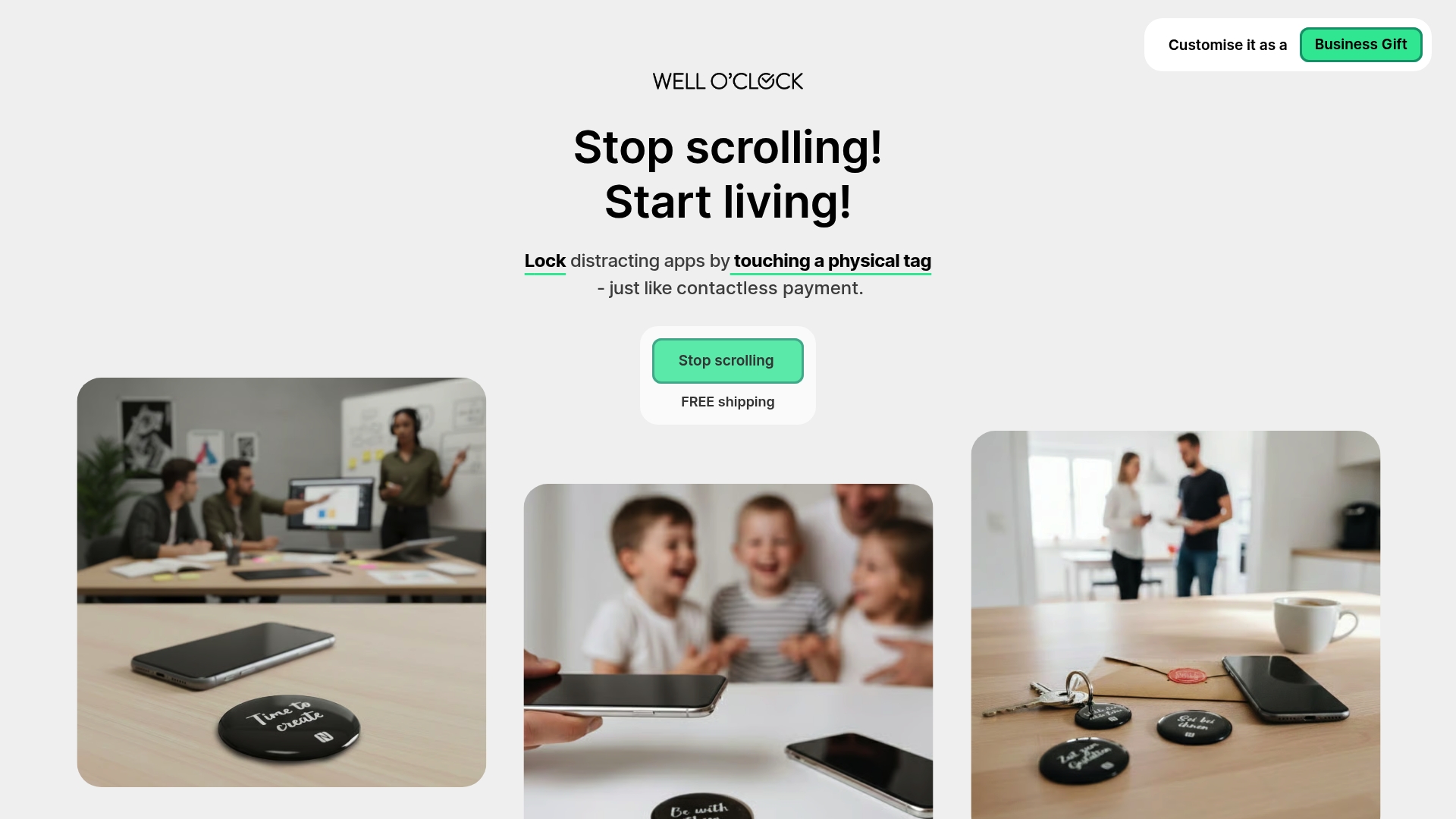
Reducing digital distractions requires more than willpower; it demands practical tools that make healthy habits easier than unhealthy ones. Well O'Clock offers a unique system combining physical NFC tags with a mobile app to help you physically interrupt phone usage and break autopilot behaviors. The tangible, outside-the-phone solution provides the friction needed to pause automatic reaching for devices.
Explore Well O'Clock for resources, practical tips, and habit-tracking tools that support your focus goals. The platform emphasizes user-friendly setup and customizable options that adapt to your specific needs and contexts. Join a community committed to mindful digital use, improved productivity, and enhanced well-being through intentional technology habits.
FAQ
How long does it take to recover focus after a digital interruption?
Recovery from digital interruptions takes on average 23 minutes per interruption, creating massive productivity losses throughout the day. With 10 interruptions, you lose nearly 4 hours of productive time. This cognitive switching cost accumulates because your brain must rebuild mental context after each distraction, not simply pause and resume work.
Can reducing screen time improve mental health?
Studies show reduced screen time improves happiness and reduces anxiety and depression symptoms measurably. Controlled trials of social media deactivation demonstrate small to medium improvements in well-being within weeks. Depression risk increases sharply above 2.5 hours of daily recreational screen use, suggesting even moderate reductions provide meaningful mental health benefits.
What is the best approach to digital distractions: detox or moderation?
Intentional digital minimalism aligned with personal values proves more effective than blanket detoxes, which often cause rebound anxiety and fail to build sustainable skills. Extreme detoxes can trigger FOMO and social isolation without addressing root causes of compulsive use. Value-aligned, purposeful technology use creates lasting behavior change by developing awareness and agency rather than relying on willpower alone.
How can I start reducing distractions in my daily routine?
Begin by tracking your screen time for one week to identify main distraction sources and patterns. Prune notifications aggressively, allowing only truly urgent alerts. Schedule 90-minute focus blocks with batched communication windows rather than continuous checking. Replace screen time with offline activities like physical exercise, reading, or face-to-face socializing. Explore natural screen time reduction strategies for additional practical guidance tailored to sustainable habit formation.

Mak Kordić
Co founder
Mak Kordić is the founder and CEO of CNJ Digital, an agency based in Ljubljana, where he and his team develop UX/UI and digital products for demanding B2B projects. Over his career, he has led and co-created hundreds of digital solutions and worked with international clients.








Why reduce digital distractions for better focus and well-being
Mak Kordić
,
April 17, 2026
Every ping, buzz, and notification feels harmless, yet recovery from each digital interruption takes 23 minutes, resulting in up to 3.8 hours of lost productivity per day with just 10 interruptions. Most people drastically underestimate how these seemingly minor distractions fragment attention, sabotage focus, and erode mental clarity. Digital distractions create an invisible productivity drain that compounds stress, weakens cognitive performance, and damages overall well-being. This guide explains the cognitive, mental health, and productivity reasons to reduce distractions, backed by research, and provides practical strategies to reclaim your focus and improve your quality of life.
Table of Contents
- Key takeaways
- How digital distractions fragment attention and reduce productivity
- The cognitive and mental health costs of excessive screen time
- Intentional digital minimalism for sustained clarity and productivity
- Practical strategies to reduce digital distractions for improved well-being
- Improve your focus and well-being with Well O'Clock
- FAQ
How digital distractions fragment attention and reduce productivity
Digital interruptions create a cascade of attention fragmentation that most people fail to recognize. When you switch from a focused task to check a notification, your brain doesn't simply pause and resume. Instead, it must disengage from the original task, process the interruption, and then laboriously rebuild the mental context needed to continue productive work. This cognitive switching cost accumulates rapidly throughout your day.
Recovery from each digital interruption takes 23 minutes, resulting in up to 3.8 hours of lost productivity per day with 10 interruptions. Consider what this means in practical terms: if you check your phone during a morning meeting, respond to a Slack message mid-task, glance at an email notification, and scroll social media during a brief break, you've already surrendered more than an hour of potential deep work. The math becomes devastating when you realize most knowledge workers face far more than 10 daily interruptions.
" Frequent notifications are the primary disruptors for nearly half of people, creating a perpetual state of partial attention that prevents genuine focus and creative thinking. "
The compounding nature of attention fragmentation creates a productivity paradox. You feel busy and responsive, yet accomplish less meaningful work than colleagues who appear less available. Lost productive time accumulates rapidly over the day, transforming minor interruptions into major inefficiency. This pattern generates stress and frustration as deadlines approach and important projects remain incomplete despite long working hours.
Common examples reveal how insidious this problem becomes:
- Constant smartphone pings during focused work sessions destroy concentration
- Multitasking between messaging apps and core tasks creates illusion of productivity
- Email notifications trigger immediate responses that derail strategic thinking
- Social media checks fragment attention into increasingly shorter intervals
Understanding device distraction minimization becomes essential for anyone seeking to reclaim productive time. The solution isn't working longer hours to compensate for lost focus. Instead, you need systematic approaches to protect attention and create genuine focus blocks.
Pro Tip: Batch notifications into specific time windows and use 90-minute focus blocks to minimize attention fragmentation. Turn off all non-essential alerts and check messages only during designated breaks.
The cognitive and mental health costs of excessive screen time
Beyond productivity losses, digital distractions fundamentally impair cognitive functions essential for work, learning, and daily decision-making. Excessive screen time reduces working memory, focus, creativity, and decision-making, with depression risk increasing sharply over 2.5 hours of daily recreational screen use. Your brain's executive functions, which manage planning, impulse control, and complex reasoning, become measurably weaker with prolonged digital engagement.
Working memory, the cognitive system that holds and manipulates information during tasks, suffers particularly dramatic declines. When you constantly switch between digital inputs, your brain never consolidates information into long-term storage. This creates the frustrating experience of reading an article yet remembering nothing, or attending a meeting while simultaneously checking messages and retaining minimal content from either activity.
The mental health implications extend far beyond simple distraction. Research reveals depression risk increases sharply over 2.5 hours daily screen use, with higher daily use correlating strongly with increased anxiety and chronic stress. The relationship isn't simply correlation; controlled studies demonstrate causation through intervention trials.
RCTs show small to medium improvements in well-being and reduced depression from social media deactivation. These improvements appear within weeks, suggesting the damage from excessive digital engagement reverses relatively quickly once healthier patterns emerge. Quality of engagement matters enormously: passive scrolling worsens mental health far more than purposeful, intentional use of technology for specific goals.
Understanding screen time effects on wellness helps contextualize these findings within your daily life. The cognitive costs accumulate gradually, making them difficult to perceive until they've already caused significant damage. You might attribute declining focus to aging, stress, or workload rather than recognizing the true culprit: fragmented attention from constant digital engagement.
Sleep quality deteriorates alongside cognitive function. Blue light exposure suppresses melatonin production, but the stimulating content itself creates mental arousal that prevents quality rest. Checking your phone before bed doesn't just delay sleep onset; it reduces sleep depth and quality throughout the night, creating a vicious cycle of fatigue and increased reliance on digital stimulation.
Pro Tip: Replace 30 minutes of daily screen time with physical activity to mediate mental health risks. Exercise provides proven benefits for mood, cognition, and sleep quality while breaking the passive consumption pattern. For additional strategies, explore essential mental health tips that complement digital wellness practices.
Intentional digital minimalism for sustained clarity and productivity
The solution to digital distraction isn't abandoning technology entirely. Intentional tech use aligned with values outperforms blunt detoxes, avoiding rebound anxiety and unsustainable habits that characterize extreme approaches. Digital minimalism focuses on using technology purposefully rather than reactively, ensuring every digital interaction serves your goals and values.
Personal methods for implementing digital minimalism include several evidence-based strategies:
- Declutter devices by removing apps that don't serve clear purposes
- Prune notifications aggressively, allowing only truly urgent alerts
- Implement time-blocking with designated focus periods and digital breaks
- Convert screens to grayscale to reduce psychological appeal of colorful interfaces
- Establish phone-free zones in bedrooms, dining areas, and during conversations
These individual tactics become exponentially more effective when supported by organizational policies. Combining personal strategies with organizational policies like asynchronous communication enhances efficacy for workplace productivity. Companies implementing quiet hours, reducing meeting frequency, and normalizing delayed responses see measurable improvements in employee focus and output.
Extreme detoxes, despite their appeal, often fail because they don't build sustainable skills for managing technology. Complete digital abstinence can cause FOMO, anxiety about missing important information, and social isolation. When the detox period ends, people typically rebound to previous or worse habits because they haven't developed frameworks for intentional use.
The key distinction lies in developing awareness and agency rather than relying on willpower or external restrictions. Understanding screen time reduction tips helps families implement these principles together, creating supportive environments rather than isolated struggles. Similarly, learning screen time management methods provides frameworks for sustainable habit change.
Successful digital minimalism requires honest assessment of which technologies genuinely enhance your life versus which create compulsive, low-value engagement. Social media might provide real connection when used to maintain meaningful relationships, yet become toxic when used for passive comparison and validation-seeking. Email enables essential communication yet becomes a distraction when checked constantly rather than in batches.
Pro Tip: Track your digital habits for one week without judgment, noting which activities align with your values and which feel compulsive or regrettable. Use this data to design personalized rules that eliminate low-value engagement while preserving beneficial uses. Iterate gradually rather than attempting dramatic overnight transformation.
Practical strategies to reduce digital distractions for improved well-being
Transforming awareness into action requires specific, evidence-backed steps you can implement immediately. These strategies work synergistically, with each reinforcing the others to create sustainable behavior change. The goal isn't perfection but consistent improvement in how you engage with technology.
1. Start with comprehensive tracking of screen time and identification of main distraction sources. Most smartphones include built-in tracking features that reveal shocking patterns about actual usage versus perceived usage. You might believe you spend 30 minutes daily on social media when the reality exceeds two hours.
2. Implement aggressive notification pruning and batch communication to reduce interruptions. Disable all notifications except truly urgent ones like calls from family or critical work alerts. Check email, messages, and social media during designated windows rather than continuously throughout the day.
3. Use time-blocking with 90-minute focus cycles and scheduled breaks. Human attention naturally operates in ultradian rhythms of roughly 90 minutes. Structure your day around these cycles, working intensely during focus blocks and taking genuine breaks between them rather than half-working continuously.
4. Replace screen time with offline leisure, physical exercise, or mindfulness activities. The vacuum created by reduced digital engagement needs filling with genuinely satisfying alternatives. Reading physical books, outdoor activities, creative hobbies, and face-to-face socializing provide deeper satisfaction than digital substitutes.
5. Experiment iteratively and customize approaches to personal needs and contexts. What works for a freelancer differs from strategies for corporate employees. Parents need different tactics than students. Test various approaches and refine based on results rather than rigidly following generic advice.
A 4-week smartphone break improves mental health for 71% of participants, demonstrating how quickly benefits emerge from sustained behavior change. You don't need months or years to experience meaningful improvements in focus, mood, and well-being. Consistent implementation of these strategies produces noticeable results within weeks.
Practical implementation might look like this:
- Morning: Leave phone charging in another room until after breakfast and morning routine
- Work blocks: Use focus mode or app blockers during 90-minute deep work sessions
- Lunch: Take a genuine break outdoors without devices
- Afternoon: Check messages in batched windows rather than continuously
- Evening: Establish a digital sunset one hour before bed with phone left outside bedroom
Understanding natural screen time reduction provides additional context for making these changes feel effortless rather than restrictive. The goal is creating an environment and routine where healthy digital habits become the path of least resistance. Similarly, learning how to boost productivity with screen time reduction connects these wellness practices to tangible performance improvements.
Monitoring progress requires more than tracking screen time numbers. Pay attention to subjective experiences like focus quality during work, sleep quality, mood stability, and relationship satisfaction. These qualitative measures often reveal benefits before quantitative metrics show dramatic changes. You might notice improved concentration and reduced anxiety while daily screen time decreases gradually rather than dramatically.
Pro Tip: Use apps and device features to monitor habits and set reminders for breaks, but avoid becoming obsessed with tracking itself. The numbers serve as feedback for behavior change, not goals in themselves. Focus on how you feel and what you accomplish rather than optimizing metrics.
Improve your focus and well-being with Well O'Clock
Reducing digital distractions requires more than willpower; it demands practical tools that make healthy habits easier than unhealthy ones. Well O'Clock offers a unique system combining physical NFC tags with a mobile app to help you physically interrupt phone usage and break autopilot behaviors. The tangible, outside-the-phone solution provides the friction needed to pause automatic reaching for devices.
Explore Well O'Clock for resources, practical tips, and habit-tracking tools that support your focus goals. The platform emphasizes user-friendly setup and customizable options that adapt to your specific needs and contexts. Join a community committed to mindful digital use, improved productivity, and enhanced well-being through intentional technology habits.
FAQ
How long does it take to recover focus after a digital interruption?
Recovery from digital interruptions takes on average 23 minutes per interruption, creating massive productivity losses throughout the day. With 10 interruptions, you lose nearly 4 hours of productive time. This cognitive switching cost accumulates because your brain must rebuild mental context after each distraction, not simply pause and resume work.
Can reducing screen time improve mental health?
Studies show reduced screen time improves happiness and reduces anxiety and depression symptoms measurably. Controlled trials of social media deactivation demonstrate small to medium improvements in well-being within weeks. Depression risk increases sharply above 2.5 hours of daily recreational screen use, suggesting even moderate reductions provide meaningful mental health benefits.
What is the best approach to digital distractions: detox or moderation?
Intentional digital minimalism aligned with personal values proves more effective than blanket detoxes, which often cause rebound anxiety and fail to build sustainable skills. Extreme detoxes can trigger FOMO and social isolation without addressing root causes of compulsive use. Value-aligned, purposeful technology use creates lasting behavior change by developing awareness and agency rather than relying on willpower alone.
How can I start reducing distractions in my daily routine?
Begin by tracking your screen time for one week to identify main distraction sources and patterns. Prune notifications aggressively, allowing only truly urgent alerts. Schedule 90-minute focus blocks with batched communication windows rather than continuous checking. Replace screen time with offline activities like physical exercise, reading, or face-to-face socializing. Explore natural screen time reduction strategies for additional practical guidance tailored to sustainable habit formation.
Mak Kordić
Co founder
Mak Kordić is the founder and CEO of CNJ Digital, an agency based in Ljubljana, where he and his team develop UX/UI and digital products for demanding B2B projects. Over his career, he has led and co-created hundreds of digital solutions and worked with international clients.
Why reduce digital distractions for better focus and well-being
Mak Kordić
,
April 17, 2026
Every ping, buzz, and notification feels harmless, yet recovery from each digital interruption takes 23 minutes, resulting in up to 3.8 hours of lost productivity per day with just 10 interruptions. Most people drastically underestimate how these seemingly minor distractions fragment attention, sabotage focus, and erode mental clarity. Digital distractions create an invisible productivity drain that compounds stress, weakens cognitive performance, and damages overall well-being. This guide explains the cognitive, mental health, and productivity reasons to reduce distractions, backed by research, and provides practical strategies to reclaim your focus and improve your quality of life.
Table of Contents
- Key takeaways
- How digital distractions fragment attention and reduce productivity
- The cognitive and mental health costs of excessive screen time
- Intentional digital minimalism for sustained clarity and productivity
- Practical strategies to reduce digital distractions for improved well-being
- Improve your focus and well-being with Well O'Clock
- FAQ
How digital distractions fragment attention and reduce productivity
Digital interruptions create a cascade of attention fragmentation that most people fail to recognize. When you switch from a focused task to check a notification, your brain doesn't simply pause and resume. Instead, it must disengage from the original task, process the interruption, and then laboriously rebuild the mental context needed to continue productive work. This cognitive switching cost accumulates rapidly throughout your day.
Recovery from each digital interruption takes 23 minutes, resulting in up to 3.8 hours of lost productivity per day with 10 interruptions. Consider what this means in practical terms: if you check your phone during a morning meeting, respond to a Slack message mid-task, glance at an email notification, and scroll social media during a brief break, you've already surrendered more than an hour of potential deep work. The math becomes devastating when you realize most knowledge workers face far more than 10 daily interruptions.
" Frequent notifications are the primary disruptors for nearly half of people, creating a perpetual state of partial attention that prevents genuine focus and creative thinking. "
The compounding nature of attention fragmentation creates a productivity paradox. You feel busy and responsive, yet accomplish less meaningful work than colleagues who appear less available. Lost productive time accumulates rapidly over the day, transforming minor interruptions into major inefficiency. This pattern generates stress and frustration as deadlines approach and important projects remain incomplete despite long working hours.
Common examples reveal how insidious this problem becomes:
- Constant smartphone pings during focused work sessions destroy concentration
- Multitasking between messaging apps and core tasks creates illusion of productivity
- Email notifications trigger immediate responses that derail strategic thinking
- Social media checks fragment attention into increasingly shorter intervals
Understanding device distraction minimization becomes essential for anyone seeking to reclaim productive time. The solution isn't working longer hours to compensate for lost focus. Instead, you need systematic approaches to protect attention and create genuine focus blocks.
Pro Tip: Batch notifications into specific time windows and use 90-minute focus blocks to minimize attention fragmentation. Turn off all non-essential alerts and check messages only during designated breaks.
The cognitive and mental health costs of excessive screen time
Beyond productivity losses, digital distractions fundamentally impair cognitive functions essential for work, learning, and daily decision-making. Excessive screen time reduces working memory, focus, creativity, and decision-making, with depression risk increasing sharply over 2.5 hours of daily recreational screen use. Your brain's executive functions, which manage planning, impulse control, and complex reasoning, become measurably weaker with prolonged digital engagement.
Working memory, the cognitive system that holds and manipulates information during tasks, suffers particularly dramatic declines. When you constantly switch between digital inputs, your brain never consolidates information into long-term storage. This creates the frustrating experience of reading an article yet remembering nothing, or attending a meeting while simultaneously checking messages and retaining minimal content from either activity.
The mental health implications extend far beyond simple distraction. Research reveals depression risk increases sharply over 2.5 hours daily screen use, with higher daily use correlating strongly with increased anxiety and chronic stress. The relationship isn't simply correlation; controlled studies demonstrate causation through intervention trials.
RCTs show small to medium improvements in well-being and reduced depression from social media deactivation. These improvements appear within weeks, suggesting the damage from excessive digital engagement reverses relatively quickly once healthier patterns emerge. Quality of engagement matters enormously: passive scrolling worsens mental health far more than purposeful, intentional use of technology for specific goals.
Understanding screen time effects on wellness helps contextualize these findings within your daily life. The cognitive costs accumulate gradually, making them difficult to perceive until they've already caused significant damage. You might attribute declining focus to aging, stress, or workload rather than recognizing the true culprit: fragmented attention from constant digital engagement.
Sleep quality deteriorates alongside cognitive function. Blue light exposure suppresses melatonin production, but the stimulating content itself creates mental arousal that prevents quality rest. Checking your phone before bed doesn't just delay sleep onset; it reduces sleep depth and quality throughout the night, creating a vicious cycle of fatigue and increased reliance on digital stimulation.
Pro Tip: Replace 30 minutes of daily screen time with physical activity to mediate mental health risks. Exercise provides proven benefits for mood, cognition, and sleep quality while breaking the passive consumption pattern. For additional strategies, explore essential mental health tips that complement digital wellness practices.
Intentional digital minimalism for sustained clarity and productivity
The solution to digital distraction isn't abandoning technology entirely. Intentional tech use aligned with values outperforms blunt detoxes, avoiding rebound anxiety and unsustainable habits that characterize extreme approaches. Digital minimalism focuses on using technology purposefully rather than reactively, ensuring every digital interaction serves your goals and values.
Personal methods for implementing digital minimalism include several evidence-based strategies:
- Declutter devices by removing apps that don't serve clear purposes
- Prune notifications aggressively, allowing only truly urgent alerts
- Implement time-blocking with designated focus periods and digital breaks
- Convert screens to grayscale to reduce psychological appeal of colorful interfaces
- Establish phone-free zones in bedrooms, dining areas, and during conversations
These individual tactics become exponentially more effective when supported by organizational policies. Combining personal strategies with organizational policies like asynchronous communication enhances efficacy for workplace productivity. Companies implementing quiet hours, reducing meeting frequency, and normalizing delayed responses see measurable improvements in employee focus and output.
Extreme detoxes, despite their appeal, often fail because they don't build sustainable skills for managing technology. Complete digital abstinence can cause FOMO, anxiety about missing important information, and social isolation. When the detox period ends, people typically rebound to previous or worse habits because they haven't developed frameworks for intentional use.
The key distinction lies in developing awareness and agency rather than relying on willpower or external restrictions. Understanding screen time reduction tips helps families implement these principles together, creating supportive environments rather than isolated struggles. Similarly, learning screen time management methods provides frameworks for sustainable habit change.
Successful digital minimalism requires honest assessment of which technologies genuinely enhance your life versus which create compulsive, low-value engagement. Social media might provide real connection when used to maintain meaningful relationships, yet become toxic when used for passive comparison and validation-seeking. Email enables essential communication yet becomes a distraction when checked constantly rather than in batches.
Pro Tip: Track your digital habits for one week without judgment, noting which activities align with your values and which feel compulsive or regrettable. Use this data to design personalized rules that eliminate low-value engagement while preserving beneficial uses. Iterate gradually rather than attempting dramatic overnight transformation.
Practical strategies to reduce digital distractions for improved well-being
Transforming awareness into action requires specific, evidence-backed steps you can implement immediately. These strategies work synergistically, with each reinforcing the others to create sustainable behavior change. The goal isn't perfection but consistent improvement in how you engage with technology.
1. Start with comprehensive tracking of screen time and identification of main distraction sources. Most smartphones include built-in tracking features that reveal shocking patterns about actual usage versus perceived usage. You might believe you spend 30 minutes daily on social media when the reality exceeds two hours.
2. Implement aggressive notification pruning and batch communication to reduce interruptions. Disable all notifications except truly urgent ones like calls from family or critical work alerts. Check email, messages, and social media during designated windows rather than continuously throughout the day.
3. Use time-blocking with 90-minute focus cycles and scheduled breaks. Human attention naturally operates in ultradian rhythms of roughly 90 minutes. Structure your day around these cycles, working intensely during focus blocks and taking genuine breaks between them rather than half-working continuously.
4. Replace screen time with offline leisure, physical exercise, or mindfulness activities. The vacuum created by reduced digital engagement needs filling with genuinely satisfying alternatives. Reading physical books, outdoor activities, creative hobbies, and face-to-face socializing provide deeper satisfaction than digital substitutes.
5. Experiment iteratively and customize approaches to personal needs and contexts. What works for a freelancer differs from strategies for corporate employees. Parents need different tactics than students. Test various approaches and refine based on results rather than rigidly following generic advice.
A 4-week smartphone break improves mental health for 71% of participants, demonstrating how quickly benefits emerge from sustained behavior change. You don't need months or years to experience meaningful improvements in focus, mood, and well-being. Consistent implementation of these strategies produces noticeable results within weeks.
Practical implementation might look like this:
- Morning: Leave phone charging in another room until after breakfast and morning routine
- Work blocks: Use focus mode or app blockers during 90-minute deep work sessions
- Lunch: Take a genuine break outdoors without devices
- Afternoon: Check messages in batched windows rather than continuously
- Evening: Establish a digital sunset one hour before bed with phone left outside bedroom
Understanding natural screen time reduction provides additional context for making these changes feel effortless rather than restrictive. The goal is creating an environment and routine where healthy digital habits become the path of least resistance. Similarly, learning how to boost productivity with screen time reduction connects these wellness practices to tangible performance improvements.
Monitoring progress requires more than tracking screen time numbers. Pay attention to subjective experiences like focus quality during work, sleep quality, mood stability, and relationship satisfaction. These qualitative measures often reveal benefits before quantitative metrics show dramatic changes. You might notice improved concentration and reduced anxiety while daily screen time decreases gradually rather than dramatically.
Pro Tip: Use apps and device features to monitor habits and set reminders for breaks, but avoid becoming obsessed with tracking itself. The numbers serve as feedback for behavior change, not goals in themselves. Focus on how you feel and what you accomplish rather than optimizing metrics.
Improve your focus and well-being with Well O'Clock
Reducing digital distractions requires more than willpower; it demands practical tools that make healthy habits easier than unhealthy ones. Well O'Clock offers a unique system combining physical NFC tags with a mobile app to help you physically interrupt phone usage and break autopilot behaviors. The tangible, outside-the-phone solution provides the friction needed to pause automatic reaching for devices.
Explore Well O'Clock for resources, practical tips, and habit-tracking tools that support your focus goals. The platform emphasizes user-friendly setup and customizable options that adapt to your specific needs and contexts. Join a community committed to mindful digital use, improved productivity, and enhanced well-being through intentional technology habits.
FAQ
How long does it take to recover focus after a digital interruption?
Recovery from digital interruptions takes on average 23 minutes per interruption, creating massive productivity losses throughout the day. With 10 interruptions, you lose nearly 4 hours of productive time. This cognitive switching cost accumulates because your brain must rebuild mental context after each distraction, not simply pause and resume work.
Can reducing screen time improve mental health?
Studies show reduced screen time improves happiness and reduces anxiety and depression symptoms measurably. Controlled trials of social media deactivation demonstrate small to medium improvements in well-being within weeks. Depression risk increases sharply above 2.5 hours of daily recreational screen use, suggesting even moderate reductions provide meaningful mental health benefits.
What is the best approach to digital distractions: detox or moderation?
Intentional digital minimalism aligned with personal values proves more effective than blanket detoxes, which often cause rebound anxiety and fail to build sustainable skills. Extreme detoxes can trigger FOMO and social isolation without addressing root causes of compulsive use. Value-aligned, purposeful technology use creates lasting behavior change by developing awareness and agency rather than relying on willpower alone.
How can I start reducing distractions in my daily routine?
Begin by tracking your screen time for one week to identify main distraction sources and patterns. Prune notifications aggressively, allowing only truly urgent alerts. Schedule 90-minute focus blocks with batched communication windows rather than continuous checking. Replace screen time with offline activities like physical exercise, reading, or face-to-face socializing. Explore natural screen time reduction strategies for additional practical guidance tailored to sustainable habit formation.
Mak Kordić
Co founder
Mak Kordić is the founder and CEO of CNJ Digital, an agency based in Ljubljana, where he and his team develop UX/UI and digital products for demanding B2B projects. Over his career, he has led and co-created hundreds of digital solutions and worked with international clients.