
Manage screen time trends for better health and focus
Mak Kordić
,
April 13, 2026


Screen time is climbing again in 2026, reaching levels not seen since the pandemic peak. Adults now average 7 hours daily on screens, with older generations surprisingly outpacing younger users. This surge affects mental health, sleep quality, and productivity across all age groups. Understanding these trends and their underlying risks empowers you to make informed choices about your digital habits. Whether you're a parent concerned about your children's development or an adult seeking better focus and well-being, knowing how to navigate the evolving screen time landscape is essential for thriving in our hyperconnected world.
Table of Contents
- Key takeaways
- Understanding screen time trends in 2026
- Health impacts of excessive screen time and underlying mechanisms
- Updated 2026 screen time guidelines and quality-focused management
- Strategies to reduce recreational screen time and boost productivity
- Take control of your screen time with Well O'Clock
- FAQ
Understanding screen time trends in 2026
The numbers tell a compelling story about our digital habits. Global average daily screen time has climbed back to approximately 6 hours 45 minutes to 7 hours, representing a 2.2% increase from 2025. This rebound brings us back to pandemic-era peaks, signaling that remote work and digital entertainment habits have become permanent fixtures in our lives.
US adults average 7 hours on screens daily, with mobile devices commanding a significant portion of that time. What surprises most people is that older adults aged 36 and above actually surpass younger users in total screen time. This contradicts the widespread belief that only teenagers and young adults are glued to their devices. The data reveals that digital engagement spans all demographics, making screen time management a universal concern rather than a youth-specific issue.
Breaking down usage by age group reveals fascinating patterns:
- Gen Z averages 9 hours of daily screen time, the highest of any generation
- Teenagers consistently log 8 to 9 hours per day across various activities
- Young children aged 0 to 8 average 2 hours 27 minutes daily, lower than older groups but still substantial
- Adults over 36 spend more time on mobile devices than millennials, averaging over 350 minutes daily
These patterns challenge our assumptions about who needs screen time intervention most. While youth usage remains high, the reality is that screen dependence cuts across all age groups. Understanding your own usage patterns is the first step toward implementing practical screen time reduction tips that work for your lifestyle.
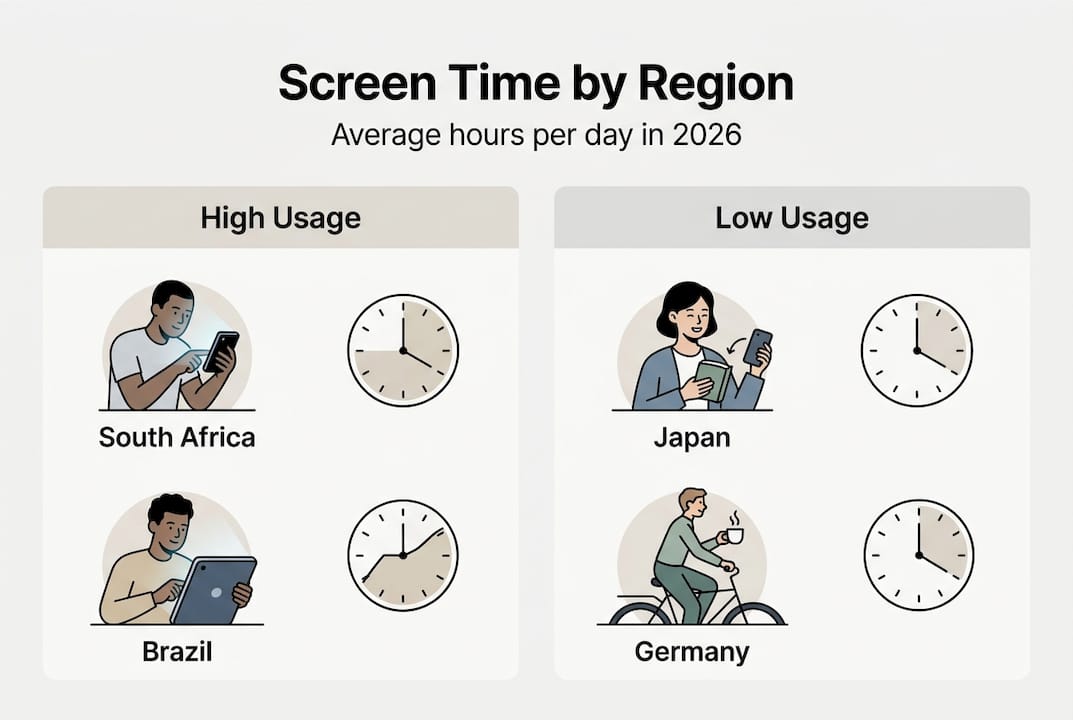
The regional variations are equally noteworthy. South Africa leads globally with the highest average screen time, while Japan reports among the lowest. These differences reflect cultural attitudes toward technology, work-life balance policies, and social norms around digital engagement. Regardless of where you live, the upward trend is consistent, making proactive screen time management increasingly important for maintaining mental and physical health.
Health impacts of excessive screen time and underlying mechanisms
The connection between screen time and mental health has become impossible to ignore. Research consistently shows that excessive screen time beyond 4 hours daily significantly increases mental health risks in children and adolescents. Specifically, anxiety risk jumps with an adjusted odds ratio of 1.45, while depression risk increases to 1.61. These aren't trivial increases. They represent measurable harm affecting millions of young people navigating formative developmental years.
University students face their own set of challenges. Studies reveal that screen time exceeding 2.5 hours daily correlates with elevated risks of depression, digital eye strain, anxiety, and poor sleep quality. The college years, already stressful with academic pressures and social transitions, become even more challenging when excessive screen use compounds existing vulnerabilities. Many students report feeling trapped in a cycle where screens provide temporary escape but ultimately worsen their mental state.
" Children and adolescents with 4 or more hours of daily screen time show anxiety rates 45% higher and depression rates 61% higher compared to those with minimal screen exposure. "
The mechanisms behind these effects involve multiple pathways. First, screen time displaces essential activities like physical exercise, face-to-face social interaction, and adequate sleep. When you spend hours scrolling or gaming, you're not moving your body, building real-world relationships, or getting restorative rest. Second, blue light exposure from screens suppresses melatonin production, disrupting your natural sleep-wake cycle. Poor sleep then cascades into mood problems, reduced cognitive function, and weakened immune response.
Third, constant mental stimulation from digital content keeps your brain in a state of heightened arousal. Your nervous system never fully relaxes, leading to chronic stress responses. The dopamine hits from notifications, likes, and new content create addictive patterns that are hard to break. Over time, this rewires your brain's reward system, making it harder to find satisfaction in slower-paced, real-world activities.
Key factors mediating mental health risks include:
- Low physical activity levels due to sedentary screen use
- Irregular bedtime routines disrupted by late-night device use
- Shortened sleep duration from delayed sleep onset
- Reduced outdoor time and nature exposure
- Decreased quality of family and peer interactions
Pro Tip: Track not just how much time you spend on screens, but what you're doing and how you feel afterward. Quality and context matter enormously. Two hours of video calls with loved ones affects you differently than two hours of passive social media scrolling.
Understanding these mechanisms helps you target interventions effectively. If sleep disruption is your primary issue, blue light filters and evening screen curfews make sense. If physical inactivity is the problem, scheduling active breaks and outdoor time becomes priority. The benefits of reduced screen time extend beyond just feeling better. They include measurable improvements in sleep quality, mood stability, relationship satisfaction, and overall life engagement.
Updated 2026 screen time guidelines and quality-focused management
Screen time recommendations have evolved significantly as researchers recognize that rigid hour limits miss the bigger picture. The American Academy of Pediatrics guidelines for 2026 emphasize a nuanced framework called the 5Cs: Child, Content, Context, Connection, and Communication. Instead of prescribing exact daily limits for older children, the AAP encourages families to consider what children are watching, who they're engaging with, and how screen time fits into their overall lifestyle.
This shift acknowledges that not all screen time is equal. A child video chatting with grandparents experiences something fundamentally different from a child mindlessly watching random YouTube videos. Educational content that sparks curiosity and creativity serves development better than passive entertainment. The context matters too. Screens used during family time or as background noise create different effects than intentional, focused viewing.
The World Health Organization maintains stricter recommendations, particularly for young children. WHO guidelines recommend zero screen time for children under 2 years and no more than 1 hour daily for ages 2 to 5. However, reality diverges sharply from these ideals. Data shows that 98% of toddlers use screens daily, often far exceeding the recommended limits. This gap between guidelines and practice highlights the challenge parents face in our screen-saturated environment.
Implementing quality-focused screen time management requires intentional planning:
1. Evaluate content quality regularly by previewing apps, games, and shows before allowing access
2. Create tech-free zones in bedrooms, dining areas, and other spaces meant for connection and rest
3. Establish screen-free times during meals, before bedtime, and first thing in the morning
4. Co-view and discuss content with children to enhance learning and critical thinking
5. Model healthy screen habits yourself, as children mirror adult behavior more than they follow rules
6. Replace screen time with engaging alternatives like outdoor play, creative projects, and family activities
Pro Tip: Involve children in conversations about screen time rather than imposing rules unilaterally. When kids understand the reasons behind limits and participate in setting boundaries, they develop intrinsic motivation for healthy habits and lower addiction risk.
The emphasis on communication reflects research showing that authoritative parenting styles produce better outcomes than authoritarian approaches. When you explain why you're monitoring kids screen time and involve them in decision-making, they're more likely to internalize healthy values. This collaborative approach builds media literacy skills that serve them throughout life.
For adults seeking to improve their own habits, the same principles apply. Consider the quality of your screen activities. Are you learning, connecting, or creating? Or are you numbing out and wasting time? Honest self-assessment enables targeted changes. Explore comprehensive screen time management strategies that address both quantity and quality. For families wanting structured guidance, resources like a screen time health course can provide systematic approaches to building healthier digital habits.
Strategies to reduce recreational screen time and boost productivity
Excessive recreational screen time drains your focus, undermines academic and work performance, and diminishes overall productivity. The good news is that reducing recreational screen time can improve your productivity by over 30%. This isn't about becoming a digital hermit. It's about reclaiming time and attention for activities that genuinely matter to you.

Start with simple environmental modifications. Switch your phone to grayscale mode. Color triggers dopamine responses that make apps more addictive. Grayscale makes your screen less appealing, reducing the magnetic pull to check your device constantly. This small change can significantly decrease mindless scrolling without requiring willpower.
Notification management is equally critical. Turn off non-essential notifications ruthlessly. Every ping fractures your attention and triggers a stress response. You don't need real-time alerts for social media, news, or promotional emails. Batch-check these apps at designated times rather than letting them interrupt your flow throughout the day.
Effective screen time reduction methods include:
- Scheduling regular screen breaks using the 20-20-20 rule: every 20 minutes, look at something 20 feet away for 20 seconds
- Designating specific screen-free hours, particularly the first and last hour of your day
- Using app blockers or timers to enforce limits on high-usage apps
- Placing charging stations outside bedrooms to avoid nighttime and morning screen use
- Setting daily screen time goals and tracking progress with built-in device tools
- Replacing one screen habit with a physical alternative, like reading physical books instead of e-books
Pro Tip: Combine screen breaks with physical movement. Stand up, stretch, or take a brief walk. This counteracts the sedentary nature of screen use and promotes better sleep by increasing daytime activity levels. Even five minutes of movement per hour makes a measurable difference.
The impact on wellness and focus extends beyond productivity metrics. Reduced screen time improves your ability to concentrate deeply, enhances creativity by allowing mind-wandering and boredom, and strengthens relationships through more present interactions. You'll likely notice better mood stability as your nervous system gets regular breaks from digital stimulation.
Gradual reduction works better than cold turkey approaches for most people. Start by identifying your highest-waste screen activities. Maybe it's social media scrolling, random YouTube binges, or compulsive news checking. Target one habit at a time for reduction. Replace it with something genuinely rewarding, not just another screen activity. This substitution approach prevents the vacuum that leads to relapse.
Explore natural ways to reduce screen time that don't rely solely on restriction. Building a life rich with engaging offline activities makes screens naturally less appealing. Pursue hobbies, strengthen relationships, spend time in nature, and invest in personal growth. When your real life becomes more interesting than your digital life, screen time reduction happens organically.
For systematic improvement, follow step-by-step productivity improvement protocols that integrate screen reduction with broader time management and goal-setting practices. The synergy between reduced digital distraction and enhanced focus creates a virtuous cycle. As you accomplish more meaningful work and experience deeper satisfaction, the appeal of mindless screen time diminishes further.
Take control of your screen time with Well O'Clock
Managing screen time effectively requires more than good intentions. You need practical tools and evidence-based strategies that fit your real life. Well O'Clock offers a unique approach combining physical NFC tags with a mobile app to help you break autopilot phone habits. When you tap a physical tag, distracting apps lock, creating a tangible barrier between you and mindless scrolling.
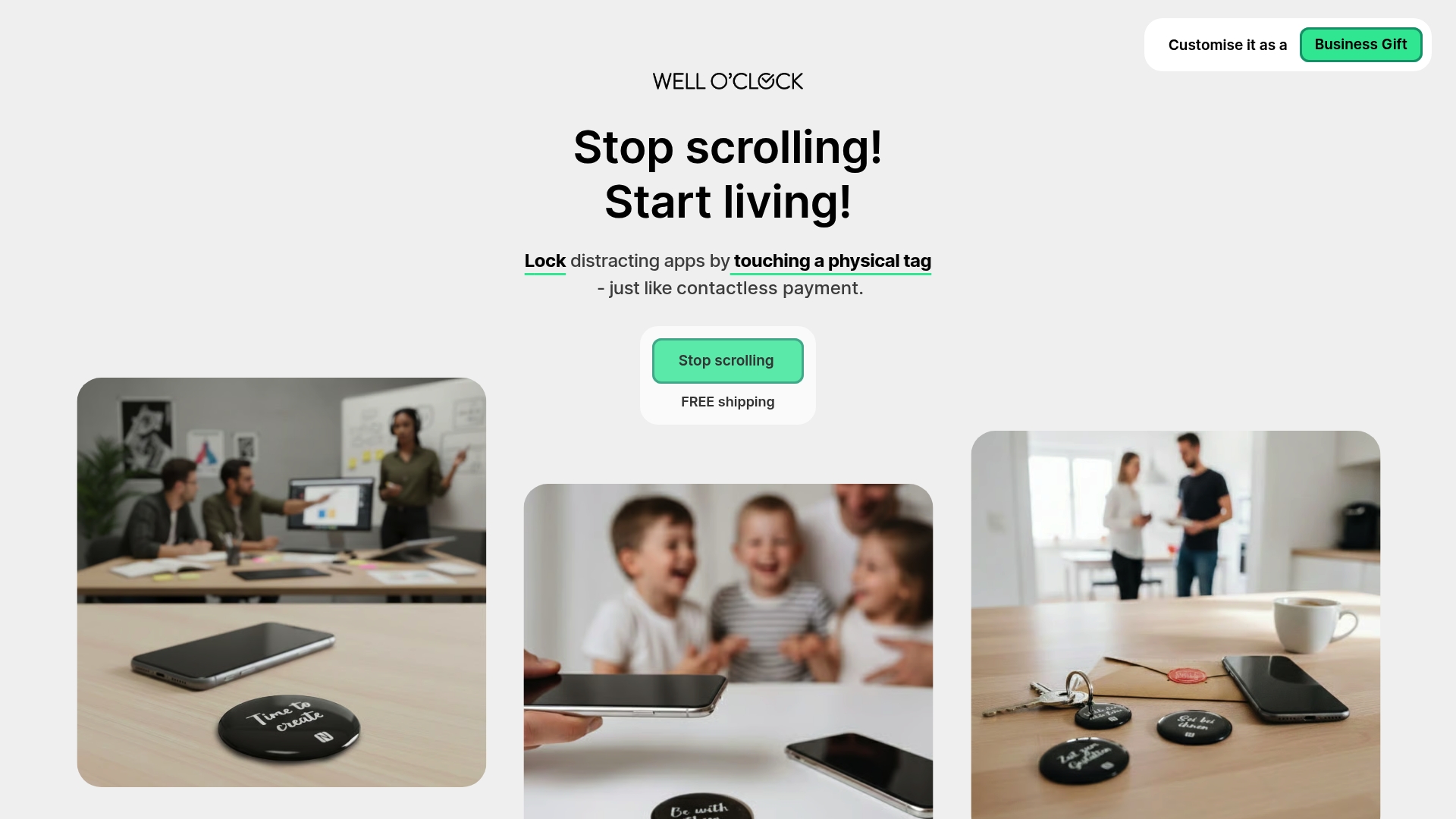
This outside-the-phone solution addresses a core challenge: your phone can't effectively regulate itself. Well O'Clock provides the external structure needed to interrupt ingrained patterns. Whether you're seeking mental clarity, improved productivity, or healthier family dynamics, the platform delivers customizable solutions for individuals and organizations alike.
Explore practical screen time tips for families and discover natural screen time reduction methods that work with your lifestyle rather than against it. Start your journey toward balanced screen use and improved well-being today.
FAQ
What is the recommended daily screen time for different age groups?
The American Academy of Pediatrics focuses on quality and context rather than strict hour limits for children over 5 years. They recommend avoiding screens for infants under 18 months except for video chatting, and limiting toddlers to high-quality co-viewed content. The World Health Organization recommends zero screen time for children under 2 years and a maximum of 1 hour daily for ages 2 to 5. For older children and adults, guidelines emphasize balancing screen use with physical activity, sleep, and face-to-face interaction rather than prescribing specific time limits.
How does excessive screen time affect mental health?
Excessive screen time beyond 4 hours daily correlates with significantly higher anxiety and depression risks, especially in children and young adults. The mechanisms include displacement of physical activity and sleep, blue light exposure disrupting circadian rhythms, and chronic mental overstimulation preventing nervous system relaxation. University students using screens more than 2.5 hours daily face elevated risks of depression, anxiety, and poor sleep quality. These effects are partially mediated by reduced physical activity, irregular sleep schedules, and shortened sleep duration.
What are effective ways to reduce screen time in daily life?
Practical strategies include switching devices to grayscale mode to reduce visual appeal, disabling non-essential notifications to minimize interruptions, and scheduling regular breaks using the 20-20-20 rule. Establish screen-free zones in bedrooms and dining areas, and designate specific screen-free times like the first and last hour of your day. Use app blockers or timers to enforce limits on high-usage apps. Increase physical activity and prioritize quality content over passive consumption. Replace screen habits with engaging offline alternatives like outdoor activities, creative projects, or face-to-face social interaction.
Are older adults spending more time on screens in 2026?
Yes, adults aged 36 and older are spending more screen time than younger groups, contradicting common assumptions that only youth have heavy screen use. Older users average over 350 minutes daily on mobile devices alone, surpassing millennials in total screen time. This trend reflects the integration of screens into work, communication, news consumption, and entertainment across all adult age groups. The data reveals that screen time management is a universal concern spanning all demographics, not just a youth-specific issue requiring intervention.

Mak Kordić
Co founder
Mak Kordić is the founder and CEO of CNJ Digital, an agency based in Ljubljana, where he and his team develop UX/UI and digital products for demanding B2B projects. Over his career, he has led and co-created hundreds of digital solutions and worked with international clients.








Manage screen time trends for better health and focus
Mak Kordić
,
April 13, 2026
Screen time is climbing again in 2026, reaching levels not seen since the pandemic peak. Adults now average 7 hours daily on screens, with older generations surprisingly outpacing younger users. This surge affects mental health, sleep quality, and productivity across all age groups. Understanding these trends and their underlying risks empowers you to make informed choices about your digital habits. Whether you're a parent concerned about your children's development or an adult seeking better focus and well-being, knowing how to navigate the evolving screen time landscape is essential for thriving in our hyperconnected world.
Table of Contents
- Key takeaways
- Understanding screen time trends in 2026
- Health impacts of excessive screen time and underlying mechanisms
- Updated 2026 screen time guidelines and quality-focused management
- Strategies to reduce recreational screen time and boost productivity
- Take control of your screen time with Well O'Clock
- FAQ
Understanding screen time trends in 2026
The numbers tell a compelling story about our digital habits. Global average daily screen time has climbed back to approximately 6 hours 45 minutes to 7 hours, representing a 2.2% increase from 2025. This rebound brings us back to pandemic-era peaks, signaling that remote work and digital entertainment habits have become permanent fixtures in our lives.
US adults average 7 hours on screens daily, with mobile devices commanding a significant portion of that time. What surprises most people is that older adults aged 36 and above actually surpass younger users in total screen time. This contradicts the widespread belief that only teenagers and young adults are glued to their devices. The data reveals that digital engagement spans all demographics, making screen time management a universal concern rather than a youth-specific issue.
Breaking down usage by age group reveals fascinating patterns:
- Gen Z averages 9 hours of daily screen time, the highest of any generation
- Teenagers consistently log 8 to 9 hours per day across various activities
- Young children aged 0 to 8 average 2 hours 27 minutes daily, lower than older groups but still substantial
- Adults over 36 spend more time on mobile devices than millennials, averaging over 350 minutes daily
These patterns challenge our assumptions about who needs screen time intervention most. While youth usage remains high, the reality is that screen dependence cuts across all age groups. Understanding your own usage patterns is the first step toward implementing practical screen time reduction tips that work for your lifestyle.
The regional variations are equally noteworthy. South Africa leads globally with the highest average screen time, while Japan reports among the lowest. These differences reflect cultural attitudes toward technology, work-life balance policies, and social norms around digital engagement. Regardless of where you live, the upward trend is consistent, making proactive screen time management increasingly important for maintaining mental and physical health.
Health impacts of excessive screen time and underlying mechanisms
The connection between screen time and mental health has become impossible to ignore. Research consistently shows that excessive screen time beyond 4 hours daily significantly increases mental health risks in children and adolescents. Specifically, anxiety risk jumps with an adjusted odds ratio of 1.45, while depression risk increases to 1.61. These aren't trivial increases. They represent measurable harm affecting millions of young people navigating formative developmental years.
University students face their own set of challenges. Studies reveal that screen time exceeding 2.5 hours daily correlates with elevated risks of depression, digital eye strain, anxiety, and poor sleep quality. The college years, already stressful with academic pressures and social transitions, become even more challenging when excessive screen use compounds existing vulnerabilities. Many students report feeling trapped in a cycle where screens provide temporary escape but ultimately worsen their mental state.
" Children and adolescents with 4 or more hours of daily screen time show anxiety rates 45% higher and depression rates 61% higher compared to those with minimal screen exposure. "
The mechanisms behind these effects involve multiple pathways. First, screen time displaces essential activities like physical exercise, face-to-face social interaction, and adequate sleep. When you spend hours scrolling or gaming, you're not moving your body, building real-world relationships, or getting restorative rest. Second, blue light exposure from screens suppresses melatonin production, disrupting your natural sleep-wake cycle. Poor sleep then cascades into mood problems, reduced cognitive function, and weakened immune response.
Third, constant mental stimulation from digital content keeps your brain in a state of heightened arousal. Your nervous system never fully relaxes, leading to chronic stress responses. The dopamine hits from notifications, likes, and new content create addictive patterns that are hard to break. Over time, this rewires your brain's reward system, making it harder to find satisfaction in slower-paced, real-world activities.
Key factors mediating mental health risks include:
- Low physical activity levels due to sedentary screen use
- Irregular bedtime routines disrupted by late-night device use
- Shortened sleep duration from delayed sleep onset
- Reduced outdoor time and nature exposure
- Decreased quality of family and peer interactions
Pro Tip: Track not just how much time you spend on screens, but what you're doing and how you feel afterward. Quality and context matter enormously. Two hours of video calls with loved ones affects you differently than two hours of passive social media scrolling.
Understanding these mechanisms helps you target interventions effectively. If sleep disruption is your primary issue, blue light filters and evening screen curfews make sense. If physical inactivity is the problem, scheduling active breaks and outdoor time becomes priority. The benefits of reduced screen time extend beyond just feeling better. They include measurable improvements in sleep quality, mood stability, relationship satisfaction, and overall life engagement.
Updated 2026 screen time guidelines and quality-focused management
Screen time recommendations have evolved significantly as researchers recognize that rigid hour limits miss the bigger picture. The American Academy of Pediatrics guidelines for 2026 emphasize a nuanced framework called the 5Cs: Child, Content, Context, Connection, and Communication. Instead of prescribing exact daily limits for older children, the AAP encourages families to consider what children are watching, who they're engaging with, and how screen time fits into their overall lifestyle.
This shift acknowledges that not all screen time is equal. A child video chatting with grandparents experiences something fundamentally different from a child mindlessly watching random YouTube videos. Educational content that sparks curiosity and creativity serves development better than passive entertainment. The context matters too. Screens used during family time or as background noise create different effects than intentional, focused viewing.
The World Health Organization maintains stricter recommendations, particularly for young children. WHO guidelines recommend zero screen time for children under 2 years and no more than 1 hour daily for ages 2 to 5. However, reality diverges sharply from these ideals. Data shows that 98% of toddlers use screens daily, often far exceeding the recommended limits. This gap between guidelines and practice highlights the challenge parents face in our screen-saturated environment.
Implementing quality-focused screen time management requires intentional planning:
1. Evaluate content quality regularly by previewing apps, games, and shows before allowing access
2. Create tech-free zones in bedrooms, dining areas, and other spaces meant for connection and rest
3. Establish screen-free times during meals, before bedtime, and first thing in the morning
4. Co-view and discuss content with children to enhance learning and critical thinking
5. Model healthy screen habits yourself, as children mirror adult behavior more than they follow rules
6. Replace screen time with engaging alternatives like outdoor play, creative projects, and family activities
Pro Tip: Involve children in conversations about screen time rather than imposing rules unilaterally. When kids understand the reasons behind limits and participate in setting boundaries, they develop intrinsic motivation for healthy habits and lower addiction risk.
The emphasis on communication reflects research showing that authoritative parenting styles produce better outcomes than authoritarian approaches. When you explain why you're monitoring kids screen time and involve them in decision-making, they're more likely to internalize healthy values. This collaborative approach builds media literacy skills that serve them throughout life.
For adults seeking to improve their own habits, the same principles apply. Consider the quality of your screen activities. Are you learning, connecting, or creating? Or are you numbing out and wasting time? Honest self-assessment enables targeted changes. Explore comprehensive screen time management strategies that address both quantity and quality. For families wanting structured guidance, resources like a screen time health course can provide systematic approaches to building healthier digital habits.
Strategies to reduce recreational screen time and boost productivity
Excessive recreational screen time drains your focus, undermines academic and work performance, and diminishes overall productivity. The good news is that reducing recreational screen time can improve your productivity by over 30%. This isn't about becoming a digital hermit. It's about reclaiming time and attention for activities that genuinely matter to you.
Start with simple environmental modifications. Switch your phone to grayscale mode. Color triggers dopamine responses that make apps more addictive. Grayscale makes your screen less appealing, reducing the magnetic pull to check your device constantly. This small change can significantly decrease mindless scrolling without requiring willpower.
Notification management is equally critical. Turn off non-essential notifications ruthlessly. Every ping fractures your attention and triggers a stress response. You don't need real-time alerts for social media, news, or promotional emails. Batch-check these apps at designated times rather than letting them interrupt your flow throughout the day.
Effective screen time reduction methods include:
- Scheduling regular screen breaks using the 20-20-20 rule: every 20 minutes, look at something 20 feet away for 20 seconds
- Designating specific screen-free hours, particularly the first and last hour of your day
- Using app blockers or timers to enforce limits on high-usage apps
- Placing charging stations outside bedrooms to avoid nighttime and morning screen use
- Setting daily screen time goals and tracking progress with built-in device tools
- Replacing one screen habit with a physical alternative, like reading physical books instead of e-books
Pro Tip: Combine screen breaks with physical movement. Stand up, stretch, or take a brief walk. This counteracts the sedentary nature of screen use and promotes better sleep by increasing daytime activity levels. Even five minutes of movement per hour makes a measurable difference.
The impact on wellness and focus extends beyond productivity metrics. Reduced screen time improves your ability to concentrate deeply, enhances creativity by allowing mind-wandering and boredom, and strengthens relationships through more present interactions. You'll likely notice better mood stability as your nervous system gets regular breaks from digital stimulation.
Gradual reduction works better than cold turkey approaches for most people. Start by identifying your highest-waste screen activities. Maybe it's social media scrolling, random YouTube binges, or compulsive news checking. Target one habit at a time for reduction. Replace it with something genuinely rewarding, not just another screen activity. This substitution approach prevents the vacuum that leads to relapse.
Explore natural ways to reduce screen time that don't rely solely on restriction. Building a life rich with engaging offline activities makes screens naturally less appealing. Pursue hobbies, strengthen relationships, spend time in nature, and invest in personal growth. When your real life becomes more interesting than your digital life, screen time reduction happens organically.
For systematic improvement, follow step-by-step productivity improvement protocols that integrate screen reduction with broader time management and goal-setting practices. The synergy between reduced digital distraction and enhanced focus creates a virtuous cycle. As you accomplish more meaningful work and experience deeper satisfaction, the appeal of mindless screen time diminishes further.
Take control of your screen time with Well O'Clock
Managing screen time effectively requires more than good intentions. You need practical tools and evidence-based strategies that fit your real life. Well O'Clock offers a unique approach combining physical NFC tags with a mobile app to help you break autopilot phone habits. When you tap a physical tag, distracting apps lock, creating a tangible barrier between you and mindless scrolling.
This outside-the-phone solution addresses a core challenge: your phone can't effectively regulate itself. Well O'Clock provides the external structure needed to interrupt ingrained patterns. Whether you're seeking mental clarity, improved productivity, or healthier family dynamics, the platform delivers customizable solutions for individuals and organizations alike.
Explore practical screen time tips for families and discover natural screen time reduction methods that work with your lifestyle rather than against it. Start your journey toward balanced screen use and improved well-being today.
FAQ
What is the recommended daily screen time for different age groups?
The American Academy of Pediatrics focuses on quality and context rather than strict hour limits for children over 5 years. They recommend avoiding screens for infants under 18 months except for video chatting, and limiting toddlers to high-quality co-viewed content. The World Health Organization recommends zero screen time for children under 2 years and a maximum of 1 hour daily for ages 2 to 5. For older children and adults, guidelines emphasize balancing screen use with physical activity, sleep, and face-to-face interaction rather than prescribing specific time limits.
How does excessive screen time affect mental health?
Excessive screen time beyond 4 hours daily correlates with significantly higher anxiety and depression risks, especially in children and young adults. The mechanisms include displacement of physical activity and sleep, blue light exposure disrupting circadian rhythms, and chronic mental overstimulation preventing nervous system relaxation. University students using screens more than 2.5 hours daily face elevated risks of depression, anxiety, and poor sleep quality. These effects are partially mediated by reduced physical activity, irregular sleep schedules, and shortened sleep duration.
What are effective ways to reduce screen time in daily life?
Practical strategies include switching devices to grayscale mode to reduce visual appeal, disabling non-essential notifications to minimize interruptions, and scheduling regular breaks using the 20-20-20 rule. Establish screen-free zones in bedrooms and dining areas, and designate specific screen-free times like the first and last hour of your day. Use app blockers or timers to enforce limits on high-usage apps. Increase physical activity and prioritize quality content over passive consumption. Replace screen habits with engaging offline alternatives like outdoor activities, creative projects, or face-to-face social interaction.
Are older adults spending more time on screens in 2026?
Yes, adults aged 36 and older are spending more screen time than younger groups, contradicting common assumptions that only youth have heavy screen use. Older users average over 350 minutes daily on mobile devices alone, surpassing millennials in total screen time. This trend reflects the integration of screens into work, communication, news consumption, and entertainment across all adult age groups. The data reveals that screen time management is a universal concern spanning all demographics, not just a youth-specific issue requiring intervention.
Mak Kordić
Co founder
Mak Kordić is the founder and CEO of CNJ Digital, an agency based in Ljubljana, where he and his team develop UX/UI and digital products for demanding B2B projects. Over his career, he has led and co-created hundreds of digital solutions and worked with international clients.
Manage screen time trends for better health and focus
Mak Kordić
,
April 13, 2026
Screen time is climbing again in 2026, reaching levels not seen since the pandemic peak. Adults now average 7 hours daily on screens, with older generations surprisingly outpacing younger users. This surge affects mental health, sleep quality, and productivity across all age groups. Understanding these trends and their underlying risks empowers you to make informed choices about your digital habits. Whether you're a parent concerned about your children's development or an adult seeking better focus and well-being, knowing how to navigate the evolving screen time landscape is essential for thriving in our hyperconnected world.
Table of Contents
- Key takeaways
- Understanding screen time trends in 2026
- Health impacts of excessive screen time and underlying mechanisms
- Updated 2026 screen time guidelines and quality-focused management
- Strategies to reduce recreational screen time and boost productivity
- Take control of your screen time with Well O'Clock
- FAQ
Understanding screen time trends in 2026
The numbers tell a compelling story about our digital habits. Global average daily screen time has climbed back to approximately 6 hours 45 minutes to 7 hours, representing a 2.2% increase from 2025. This rebound brings us back to pandemic-era peaks, signaling that remote work and digital entertainment habits have become permanent fixtures in our lives.
US adults average 7 hours on screens daily, with mobile devices commanding a significant portion of that time. What surprises most people is that older adults aged 36 and above actually surpass younger users in total screen time. This contradicts the widespread belief that only teenagers and young adults are glued to their devices. The data reveals that digital engagement spans all demographics, making screen time management a universal concern rather than a youth-specific issue.
Breaking down usage by age group reveals fascinating patterns:
- Gen Z averages 9 hours of daily screen time, the highest of any generation
- Teenagers consistently log 8 to 9 hours per day across various activities
- Young children aged 0 to 8 average 2 hours 27 minutes daily, lower than older groups but still substantial
- Adults over 36 spend more time on mobile devices than millennials, averaging over 350 minutes daily
These patterns challenge our assumptions about who needs screen time intervention most. While youth usage remains high, the reality is that screen dependence cuts across all age groups. Understanding your own usage patterns is the first step toward implementing practical screen time reduction tips that work for your lifestyle.
The regional variations are equally noteworthy. South Africa leads globally with the highest average screen time, while Japan reports among the lowest. These differences reflect cultural attitudes toward technology, work-life balance policies, and social norms around digital engagement. Regardless of where you live, the upward trend is consistent, making proactive screen time management increasingly important for maintaining mental and physical health.
Health impacts of excessive screen time and underlying mechanisms
The connection between screen time and mental health has become impossible to ignore. Research consistently shows that excessive screen time beyond 4 hours daily significantly increases mental health risks in children and adolescents. Specifically, anxiety risk jumps with an adjusted odds ratio of 1.45, while depression risk increases to 1.61. These aren't trivial increases. They represent measurable harm affecting millions of young people navigating formative developmental years.
University students face their own set of challenges. Studies reveal that screen time exceeding 2.5 hours daily correlates with elevated risks of depression, digital eye strain, anxiety, and poor sleep quality. The college years, already stressful with academic pressures and social transitions, become even more challenging when excessive screen use compounds existing vulnerabilities. Many students report feeling trapped in a cycle where screens provide temporary escape but ultimately worsen their mental state.
" Children and adolescents with 4 or more hours of daily screen time show anxiety rates 45% higher and depression rates 61% higher compared to those with minimal screen exposure. "
The mechanisms behind these effects involve multiple pathways. First, screen time displaces essential activities like physical exercise, face-to-face social interaction, and adequate sleep. When you spend hours scrolling or gaming, you're not moving your body, building real-world relationships, or getting restorative rest. Second, blue light exposure from screens suppresses melatonin production, disrupting your natural sleep-wake cycle. Poor sleep then cascades into mood problems, reduced cognitive function, and weakened immune response.
Third, constant mental stimulation from digital content keeps your brain in a state of heightened arousal. Your nervous system never fully relaxes, leading to chronic stress responses. The dopamine hits from notifications, likes, and new content create addictive patterns that are hard to break. Over time, this rewires your brain's reward system, making it harder to find satisfaction in slower-paced, real-world activities.
Key factors mediating mental health risks include:
- Low physical activity levels due to sedentary screen use
- Irregular bedtime routines disrupted by late-night device use
- Shortened sleep duration from delayed sleep onset
- Reduced outdoor time and nature exposure
- Decreased quality of family and peer interactions
Pro Tip: Track not just how much time you spend on screens, but what you're doing and how you feel afterward. Quality and context matter enormously. Two hours of video calls with loved ones affects you differently than two hours of passive social media scrolling.
Understanding these mechanisms helps you target interventions effectively. If sleep disruption is your primary issue, blue light filters and evening screen curfews make sense. If physical inactivity is the problem, scheduling active breaks and outdoor time becomes priority. The benefits of reduced screen time extend beyond just feeling better. They include measurable improvements in sleep quality, mood stability, relationship satisfaction, and overall life engagement.
Updated 2026 screen time guidelines and quality-focused management
Screen time recommendations have evolved significantly as researchers recognize that rigid hour limits miss the bigger picture. The American Academy of Pediatrics guidelines for 2026 emphasize a nuanced framework called the 5Cs: Child, Content, Context, Connection, and Communication. Instead of prescribing exact daily limits for older children, the AAP encourages families to consider what children are watching, who they're engaging with, and how screen time fits into their overall lifestyle.
This shift acknowledges that not all screen time is equal. A child video chatting with grandparents experiences something fundamentally different from a child mindlessly watching random YouTube videos. Educational content that sparks curiosity and creativity serves development better than passive entertainment. The context matters too. Screens used during family time or as background noise create different effects than intentional, focused viewing.
The World Health Organization maintains stricter recommendations, particularly for young children. WHO guidelines recommend zero screen time for children under 2 years and no more than 1 hour daily for ages 2 to 5. However, reality diverges sharply from these ideals. Data shows that 98% of toddlers use screens daily, often far exceeding the recommended limits. This gap between guidelines and practice highlights the challenge parents face in our screen-saturated environment.
Implementing quality-focused screen time management requires intentional planning:
1. Evaluate content quality regularly by previewing apps, games, and shows before allowing access
2. Create tech-free zones in bedrooms, dining areas, and other spaces meant for connection and rest
3. Establish screen-free times during meals, before bedtime, and first thing in the morning
4. Co-view and discuss content with children to enhance learning and critical thinking
5. Model healthy screen habits yourself, as children mirror adult behavior more than they follow rules
6. Replace screen time with engaging alternatives like outdoor play, creative projects, and family activities
Pro Tip: Involve children in conversations about screen time rather than imposing rules unilaterally. When kids understand the reasons behind limits and participate in setting boundaries, they develop intrinsic motivation for healthy habits and lower addiction risk.
The emphasis on communication reflects research showing that authoritative parenting styles produce better outcomes than authoritarian approaches. When you explain why you're monitoring kids screen time and involve them in decision-making, they're more likely to internalize healthy values. This collaborative approach builds media literacy skills that serve them throughout life.
For adults seeking to improve their own habits, the same principles apply. Consider the quality of your screen activities. Are you learning, connecting, or creating? Or are you numbing out and wasting time? Honest self-assessment enables targeted changes. Explore comprehensive screen time management strategies that address both quantity and quality. For families wanting structured guidance, resources like a screen time health course can provide systematic approaches to building healthier digital habits.
Strategies to reduce recreational screen time and boost productivity
Excessive recreational screen time drains your focus, undermines academic and work performance, and diminishes overall productivity. The good news is that reducing recreational screen time can improve your productivity by over 30%. This isn't about becoming a digital hermit. It's about reclaiming time and attention for activities that genuinely matter to you.
Start with simple environmental modifications. Switch your phone to grayscale mode. Color triggers dopamine responses that make apps more addictive. Grayscale makes your screen less appealing, reducing the magnetic pull to check your device constantly. This small change can significantly decrease mindless scrolling without requiring willpower.
Notification management is equally critical. Turn off non-essential notifications ruthlessly. Every ping fractures your attention and triggers a stress response. You don't need real-time alerts for social media, news, or promotional emails. Batch-check these apps at designated times rather than letting them interrupt your flow throughout the day.
Effective screen time reduction methods include:
- Scheduling regular screen breaks using the 20-20-20 rule: every 20 minutes, look at something 20 feet away for 20 seconds
- Designating specific screen-free hours, particularly the first and last hour of your day
- Using app blockers or timers to enforce limits on high-usage apps
- Placing charging stations outside bedrooms to avoid nighttime and morning screen use
- Setting daily screen time goals and tracking progress with built-in device tools
- Replacing one screen habit with a physical alternative, like reading physical books instead of e-books
Pro Tip: Combine screen breaks with physical movement. Stand up, stretch, or take a brief walk. This counteracts the sedentary nature of screen use and promotes better sleep by increasing daytime activity levels. Even five minutes of movement per hour makes a measurable difference.
The impact on wellness and focus extends beyond productivity metrics. Reduced screen time improves your ability to concentrate deeply, enhances creativity by allowing mind-wandering and boredom, and strengthens relationships through more present interactions. You'll likely notice better mood stability as your nervous system gets regular breaks from digital stimulation.
Gradual reduction works better than cold turkey approaches for most people. Start by identifying your highest-waste screen activities. Maybe it's social media scrolling, random YouTube binges, or compulsive news checking. Target one habit at a time for reduction. Replace it with something genuinely rewarding, not just another screen activity. This substitution approach prevents the vacuum that leads to relapse.
Explore natural ways to reduce screen time that don't rely solely on restriction. Building a life rich with engaging offline activities makes screens naturally less appealing. Pursue hobbies, strengthen relationships, spend time in nature, and invest in personal growth. When your real life becomes more interesting than your digital life, screen time reduction happens organically.
For systematic improvement, follow step-by-step productivity improvement protocols that integrate screen reduction with broader time management and goal-setting practices. The synergy between reduced digital distraction and enhanced focus creates a virtuous cycle. As you accomplish more meaningful work and experience deeper satisfaction, the appeal of mindless screen time diminishes further.
Take control of your screen time with Well O'Clock
Managing screen time effectively requires more than good intentions. You need practical tools and evidence-based strategies that fit your real life. Well O'Clock offers a unique approach combining physical NFC tags with a mobile app to help you break autopilot phone habits. When you tap a physical tag, distracting apps lock, creating a tangible barrier between you and mindless scrolling.
This outside-the-phone solution addresses a core challenge: your phone can't effectively regulate itself. Well O'Clock provides the external structure needed to interrupt ingrained patterns. Whether you're seeking mental clarity, improved productivity, or healthier family dynamics, the platform delivers customizable solutions for individuals and organizations alike.
Explore practical screen time tips for families and discover natural screen time reduction methods that work with your lifestyle rather than against it. Start your journey toward balanced screen use and improved well-being today.
FAQ
What is the recommended daily screen time for different age groups?
The American Academy of Pediatrics focuses on quality and context rather than strict hour limits for children over 5 years. They recommend avoiding screens for infants under 18 months except for video chatting, and limiting toddlers to high-quality co-viewed content. The World Health Organization recommends zero screen time for children under 2 years and a maximum of 1 hour daily for ages 2 to 5. For older children and adults, guidelines emphasize balancing screen use with physical activity, sleep, and face-to-face interaction rather than prescribing specific time limits.
How does excessive screen time affect mental health?
Excessive screen time beyond 4 hours daily correlates with significantly higher anxiety and depression risks, especially in children and young adults. The mechanisms include displacement of physical activity and sleep, blue light exposure disrupting circadian rhythms, and chronic mental overstimulation preventing nervous system relaxation. University students using screens more than 2.5 hours daily face elevated risks of depression, anxiety, and poor sleep quality. These effects are partially mediated by reduced physical activity, irregular sleep schedules, and shortened sleep duration.
What are effective ways to reduce screen time in daily life?
Practical strategies include switching devices to grayscale mode to reduce visual appeal, disabling non-essential notifications to minimize interruptions, and scheduling regular breaks using the 20-20-20 rule. Establish screen-free zones in bedrooms and dining areas, and designate specific screen-free times like the first and last hour of your day. Use app blockers or timers to enforce limits on high-usage apps. Increase physical activity and prioritize quality content over passive consumption. Replace screen habits with engaging offline alternatives like outdoor activities, creative projects, or face-to-face social interaction.
Are older adults spending more time on screens in 2026?
Yes, adults aged 36 and older are spending more screen time than younger groups, contradicting common assumptions that only youth have heavy screen use. Older users average over 350 minutes daily on mobile devices alone, surpassing millennials in total screen time. This trend reflects the integration of screens into work, communication, news consumption, and entertainment across all adult age groups. The data reveals that screen time management is a universal concern spanning all demographics, not just a youth-specific issue requiring intervention.
Mak Kordić
Co founder
Mak Kordić is the founder and CEO of CNJ Digital, an agency based in Ljubljana, where he and his team develop UX/UI and digital products for demanding B2B projects. Over his career, he has led and co-created hundreds of digital solutions and worked with international clients.